Summary
Editor's rating
Is it actually good value or just another Amazon paddle?
Shape, feel, and that gritty surface up close
In-hand feel, balance, and how it plays over a full session
Carbon fiber, honeycomb core, and where they cut corners
How it’s holding up and early wear issues
Power, spin, and control on the court
What you actually get when you buy this thing
Pros
- Good power and pop on serves and drives thanks to thermoformed carbon design
- Gritty carbon fiber surface gives noticeable spin on serves, drives, and slices
- Solid, stable feel with 16mm core and foam-injected walls for blocks and mishits
Cons
- Cosmetic durability is mediocre; paint and surface show wear fairly quickly
- Slightly heavy and a bit head-heavy, which can tire the arm and feel slower in fast hand battles

Specifications
View full product page →| Brand | Friday |
A budget thermoformed paddle that actually feels legit
I’ve been playing pickleball a few times a week for the last couple of years, and I’ve gone through the usual progression: cheap Amazon paddle, then a mid-range brand, then borrowing friends’ high-end thermoformed paddles to see what the fuss is about. I picked up the Friday Pickleball Paddle because I was curious if a no-name brand could give me that same stiff, powerful thermoformed feel without the usual premium price tag.
I’ve used it for about three weeks now, roughly 10–12 sessions, mostly rec play and a small local round-robin. So this isn’t a “hit three balls and review” situation. I’ve played dinks, drives, resets, and a bunch of serves with it, and I’ve also let a couple of 4.0-ish buddies try it so I could compare notes. We all have slightly different styles, which helped highlight where this paddle shines and where it’s just okay.
The short version: it hits hard, it gives good spin, and it feels like a modern thermoformed carbon paddle, not a toy. But it’s not flawless. There are some build quality quirks, and one Amazon review about paint coming off quickly isn’t totally out of nowhere. Mine hasn’t flaked badly yet, but I can already see some early cosmetic wear that you don’t expect to see so fast, even on a cheaper paddle.
If you’re expecting a top-tier pro-level weapon, you’ll probably nitpick it. If you’re coming from a basic fiberglass or wooden paddle, this will feel like a big step up in power and control. I’d call it a pretty solid “weekend warrior” paddle: good enough to take your game more seriously without emptying your wallet, as long as you accept a few compromises on finish and long-term polish.
Is it actually good value or just another Amazon paddle?
Value really depends on what you’re upgrading from. If you’re coming from a cheap two-pack set from a random marketplace seller, this is a clear step up in feel and performance. You get modern features – thermoformed unibody, carbon fiber face, gritty texture, foam-injected walls – that you normally see on paddles that cost quite a bit more. On court, it genuinely plays closer to those mid- to high-range paddles than to the bargain-basement stuff. In that sense, it’s good value for money.
Where the equation shifts is if you’re already used to big-name paddles. If you’ve played with higher-end models from the bigger brands, you’ll probably notice the difference in finish, durability, and overall refinement. The Friday paddle can hang on power and spin, but the cosmetic wear, basic packaging, and slightly rough edges (literally and figuratively) remind you that it’s a budget-friendly option. That Amazon review saying it doesn’t feel much different than cheap eBay paddles is, in my opinion, a bit harsh on performance but fair on perceived quality.
For casual players, weekend warriors, or someone getting more serious without wanting to drop top-tier money, I think the value is there. You’re paying for performance more than polish, and in that trade-off, they deliver. If you play 3–4 times a week and care about long-term durability and a clean finish, you might want to spend more and get something that holds up better visually and structurally over a year or two.
So in plain terms: if you want a strong-hitting, spin-friendly paddle at a reasonable price and you’re okay with it looking a bit beat up sooner than a premium model, this is a solid deal. If you’re picky about build quality and expect your gear to stay pretty and pristine, you’ll probably feel it’s only average value and might be happier saving up for a bigger brand.
Shape, feel, and that gritty surface up close
The design is pretty straightforward: elongated shape, 16.5" long with a 7.5" width. That gives you a bit more reach at the net compared to a standard widebody. I noticed the extra reach on overheads and on those awkward kitchen balls that are just out of normal range. The trade-off is a slightly smaller sweet spot compared to a wider paddle, but it’s not tiny. If you’ve used other elongated paddles, this will feel familiar. If you’re coming from a very wide beginner paddle, you’ll need a couple of sessions to adjust.
The surface is where things get more interesting. It’s a carbon fiber face with a gritty, textured coating. Running a finger over it, you can clearly feel the roughness. It’s not sandpaper-level harsh, but it’s a lot grippier than cheap smooth paddles. On court, that translates into real spin. My topspin drives dipped more than with my old fiberglass paddle, and I could get decent slice on serves without having to over-swing. The Amazon reviewer who said the rough surface is great for spin wasn’t lying; it’s one of the better parts of this paddle.
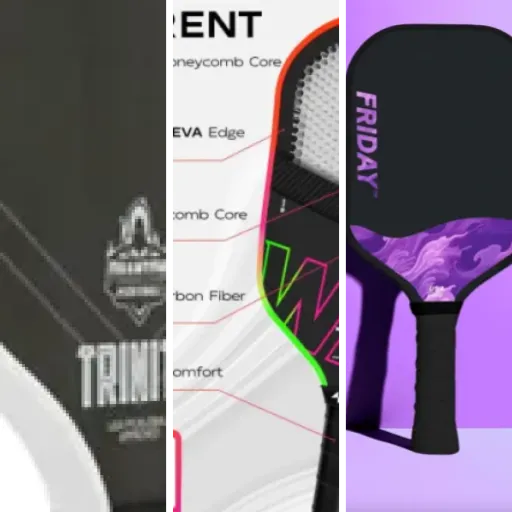
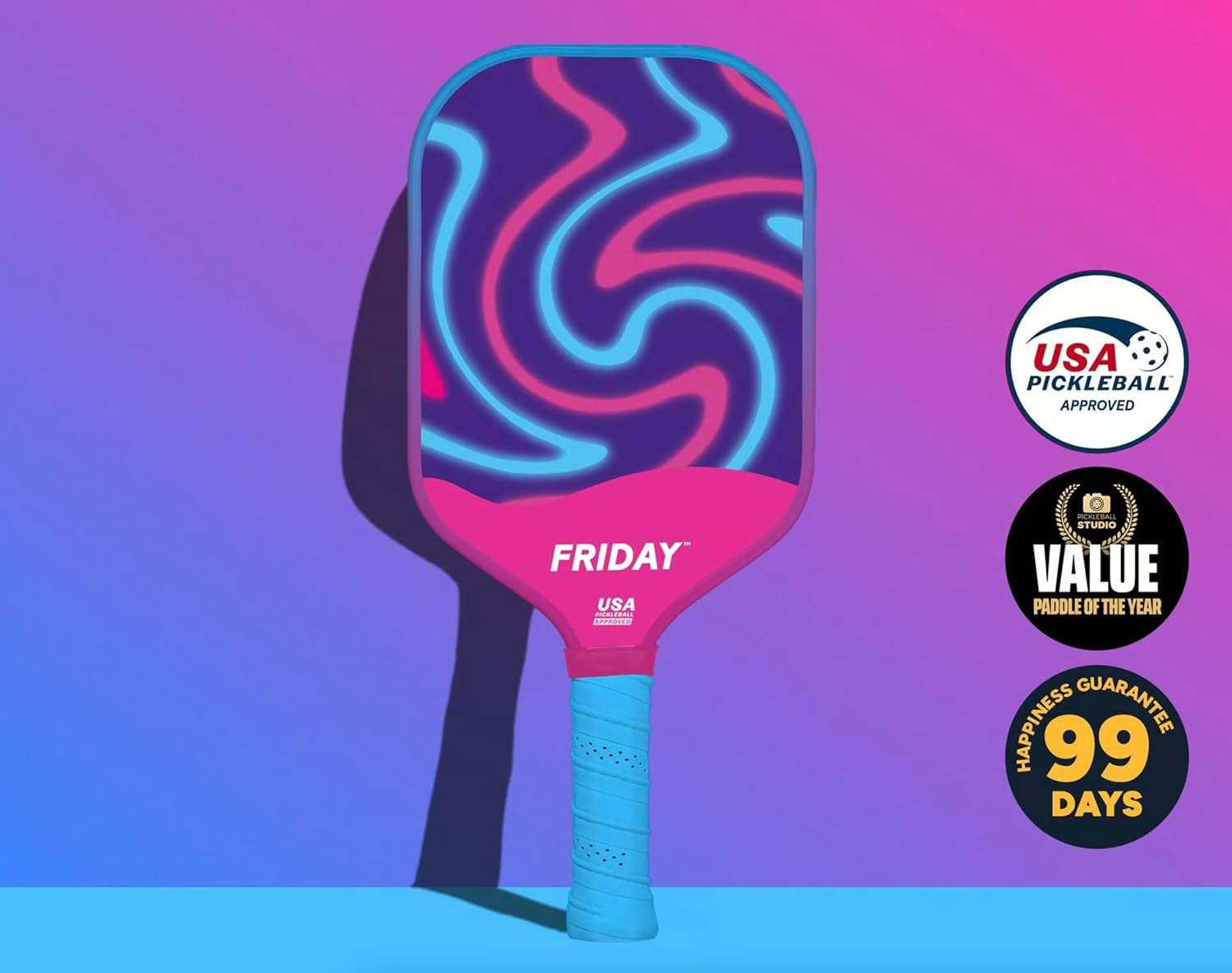
Visually, it’s pretty clean. No loud colors or wild graphics. That might be a plus or minus depending on your taste. I personally like that it doesn’t scream for attention. The edge guard is low-profile, and you can see the thermoformed unibody build when you look closely around the edges. It has that stiff, one-piece feel that’s become common in higher-end paddles. The downside is that the paint and outer finish don’t seem super tough. One buyer mentioned paint coming off after two uses. Mine hasn’t chipped badly yet, but after about 10 sessions I’m already seeing small scuffs and light wear around the edges and hitting surface that look a bit ahead of schedule.
In practice, the design is focused on power and spin more than plush control. The shape and stiffness push it into the "offensive" category. If you like to drive, roll volleys, and put pressure on people, the design makes sense. If you’re a pure soft-game player who loves a very forgiving, plush feel, this design will feel a little rigid and poppy. Not unusable, just not tailored for that style.
In-hand feel, balance, and how it plays over a full session
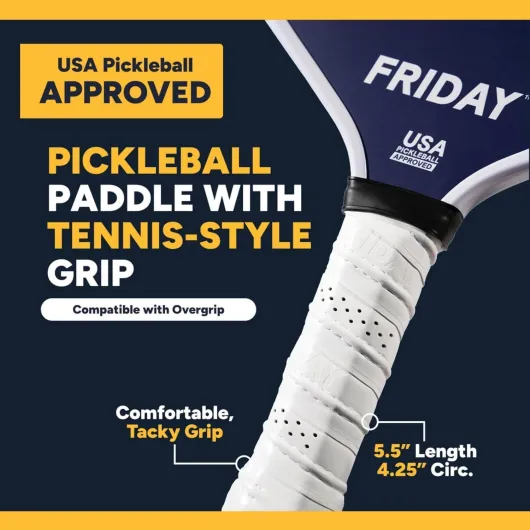
Comfort-wise, this paddle sits in a decent middle ground. The grip size is listed at 4 1/4 inches, and it feels accurate. For my medium-sized hands, it felt natural right away. If you have very small hands, you might want an overgrip that’s a bit thinner, and if you’ve got big paws you’ll probably wrap an extra overgrip to bulk it up. The handle length is long enough for a comfortable two-handed backhand if you like that, without feeling like a tennis racket.
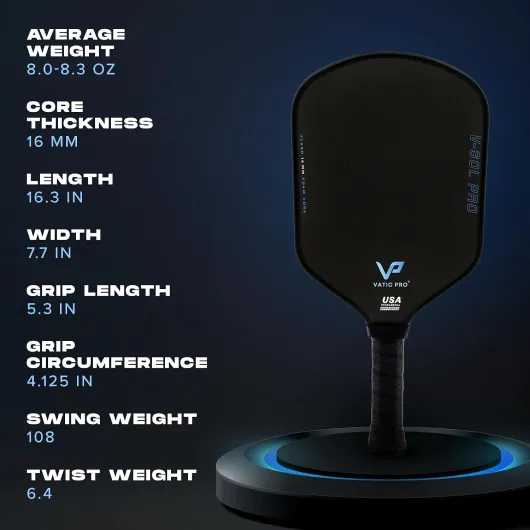
The weight, around 8.0–8.3 oz, is noticeable. It’s not a featherweight paddle. The balance feels slightly head-heavy, which helps with power on drives and overheads but can be a bit tiring if you’re used to lighter gear. After a couple of two-hour sessions, I could feel it in my forearm more than with my lighter control paddle. It wasn’t painful or anything, just more fatigue. One Amazon reviewer mentioned it felt weightier than their old paddle but liked the extra power, and that lines up with my experience.
Shock and vibration are handled pretty well. Even on mishits near the edge, the paddle doesn’t send a sharp sting into your hand. That’s where the foam-injected walls and thermoformed build help. I’ve used cheaper paddles where a hard mishit feels like your hand is buzzing; this one is much more controlled. It’s firm, but not harsh. If you have elbow or wrist issues, I’d still be a bit cautious with any stiff carbon paddle, but this one isn’t the worst offender.
Over a full session, comfort is mostly about whether you like a slightly heavier, powerful paddle. If you’re a banger who swings big, you’ll probably enjoy the stability and pop. If you prefer a light, whippy feel for fast hand battles, you might find this a bit sluggish. I found it fine for quick exchanges at the net once I adjusted, but it’s definitely not a super-light control paddle. Comfort score for me: solid, with the main downside being the weight and slight head-heaviness if you’re sensitive to that.
Carbon fiber, honeycomb core, and where they cut corners
On the spec sheet, the materials look pretty serious: 100% carbon fiber surface, polypropylene honeycomb core, foam-injected walls, and a thermoformed unibody construction. That’s basically the recipe used by a lot of more expensive paddles. When you tap the face or press on it, it has that firm, solid feel you expect from a thermoformed carbon design, not the hollow, cheap feel of low-end paddles.
The core is 16mm, which usually means a bit more control and stability compared to 13mm, but the thermoformed build and the weight (around 8.0–8.3 oz) keep it on the lively side. You can feel the foam-injected edges working when you block hard drives. The paddle doesn’t buzz or vibrate much on off-center hits, which is nice. It’s not dead-feeling, but it doesn’t sting your hand either, even on mishits. That part feels closer to mid-range or better paddles than to the bargain bin stuff.
Where the materials show their price point is in the outer finish and paint. One Amazon reviewer complained that the paint started coming off after just two uses and said their cheap eBay paddles didn’t feel that different. I don’t fully agree on the feel part – this does feel more solid and powerful than those super-cheap sets – but I get the frustration about the finish. After a couple of weeks of play, I can already see surface marks and light wear in the gritty layer. It’s mostly cosmetic for now, but it doesn’t exactly scream long-term durability.
The grip material is standard synthetic, nothing fancy. It’s grippy enough out of the box and has a slight cushion. After several sweaty sessions, it hasn’t unraveled or peeled, but I did notice it getting a bit slick when very wet. That’s pretty normal, and if you’re picky you’ll probably add an overgrip anyway. Overall, the materials are solid where it matters for performance – core, face, and structure – and a bit cheaper in the cosmetic and finish department. That’s probably how they keep the price down while still delivering the modern thermoformed feel.
How it’s holding up and early wear issues
Durability is where I’m a bit more cautious with this paddle. Structurally, after about three weeks and a dozen sessions, it’s still solid. No rattles, no weird buzzing sounds, no soft spots in the face. The edges haven’t crushed or cracked, and the handle feels firmly attached. So in terms of basic construction, it seems fine so far. That’s the good news.
The not-so-good part is the cosmetic and surface durability. One Amazon review said the paint started coming off after just two uses and compared it to really cheap paddles. I haven’t had it peel that fast, but I can see the concern. The gritty surface shows scuffs and light wear pretty quickly, especially if you’re playing on rough courts or if the ball scrapes the ground before you swing. I also see minor marks near the edges where the finish looks a bit thin. It doesn’t affect play yet, but it doesn’t inspire long-term confidence either.
The edge area also feels a bit more exposed than on some thicker, rubber-guard paddles. I’ve had a couple of clashes with a partner’s paddle at the net (it happens), and while nothing cracked, the marks were more visible than on my more expensive paddle. If you’re someone who babies your gear, you’ll probably be annoyed by how quickly it starts to look used. If you don’t care how it looks as long as it plays fine, you can probably live with it.
Long-term, I’d guess the core and structure will outlast the pretty finish. My main worry is whether the gritty surface will smooth out too quickly and reduce spin over time. Too early to say for sure, but the early wear makes me think it won’t age as nicely as higher-end brands. So I’d rate durability as okay but not great: it should last a decent amount of time for rec and league play, but don’t expect it to look fresh or keep its surface texture forever.
Power, spin, and control on the court
This is where the Friday paddle actually holds its own. On power, it’s clearly stronger than the typical cheap Amazon fiberglass paddles. Serves jump off the face, and drives have some real pop. I didn’t have to swing as hard to get depth, which is nice when you’re tired or playing longer sessions. One Amazon reviewer mentioned it being more powerful than their previous paddle, and I felt the same. If you’re used to dead, soft paddles, this will feel like someone turned the volume up.
Spin is one of its better features. The gritty carbon surface grabs the ball nicely. My topspin drives had a more noticeable dip, and I could shape slices on returns and serves without needing perfect technique. It’s not magic – you still need to hit the ball correctly – but the surface actually helps. Compared to a smoother mid-range paddle I own, the Friday definitely gives me more confidence when I try to roll the ball or add heavy slice to keep shots low.
Control is decent but not outstanding. At the kitchen, dinks and drops are fine once you adjust to the pop. The paddle is stiff, so you need to soften your hands a bit more than with a very plush, control-focused paddle. Resetting hard drives from the baseline actually felt pretty good because the solid structure doesn’t wobble much. Where I had to adjust the most was on soft third-shot drops; the ball tended to go a bit deeper until I dialed in the touch. After a few sessions, it was manageable, but if you’re a pure control player you might call it a little too lively.
For hand battles at the net, the weight and stiffness make it stable, but not the quickest. I was able to win plenty of exchanges, but it doesn’t flick around as fast as some lighter paddles. So performance-wise: strong power, good spin, acceptable control once you adapt, and average maneuverability. For the price bracket this lives in, I’d say the on-court performance is pretty solid and one of the main reasons to consider it.
What you actually get when you buy this thing
Out of the box, the Friday paddle feels like a serious piece of gear, not a toy. There’s no fancy case or extra grip tape or anything like that in the package, at least in my case. You basically get the paddle and that’s it. The packaging is minimal: a thin plastic wrap and a basic cardboard box. One Amazon reviewer mentioned it being wrapped pretty lightly with no bubble wrap, and that matches what I saw. Mine arrived fine, but I can see how a bad shipping day could ding it up a bit.
The branding is pretty simple. It just says Friday, nothing flashy, and the design is clean enough that you don’t feel like you’re holding a discount-store paddle. It looks like the kind of thing someone who knows a bit about pickleball might use, not some random toy set from a big-box store. The paddle specs printed or listed are: 16.5" long, 7.5" wide, 16mm thick, and around 8.0–8.3 oz. In hand, that weight range feels right. Mine felt closer to the heavier side, which I personally like for drives and blocks.
There’s no mystery about what this is trying to be: a budget-friendly thermoformed carbon fiber paddle similar to what the bigger brands are pushing. They call out the 100% carbon fiber surface, polypropylene honeycomb core, foam-injected walls, and gritty surface for spin. On paper, it checks all the modern buzzwords. If you’ve looked at paddles two or three times the price, the tech list looks very similar, which is clearly their whole pitch: same general tech, lower price.
Overall, presentation is functional, not fancy. It gets the job done: you open the box, pull off the plastic, and you’re ready to play. If you like unboxing experiences and accessories, you’ll be underwhelmed. If you just want a paddle that feels like it belongs on a proper court, this one looks the part once you get past the plain packaging.
Pros
- Good power and pop on serves and drives thanks to thermoformed carbon design
- Gritty carbon fiber surface gives noticeable spin on serves, drives, and slices
- Solid, stable feel with 16mm core and foam-injected walls for blocks and mishits
Cons
- Cosmetic durability is mediocre; paint and surface show wear fairly quickly
- Slightly heavy and a bit head-heavy, which can tire the arm and feel slower in fast hand battles
Conclusion
Editor's rating
After a few weeks with the Friday Pickleball Paddle, my takeaway is pretty simple: it plays better than it looks and costs, but it’s not perfect. You get legit thermoformed carbon performance – good power, real spin, and a solid, modern feel – without paying top-dollar brand prices. For rec players, casual league folks, and weekend warriors who want to hit harder and add spin without overthinking gear, it does the job well. The gritty surface helps your spin, the elongated shape gives you extra reach, and the 16mm core plus foam edges keep it stable on blocks and drives.
Where it falls short is mainly in finish and long-term polish. The cosmetic wear shows up early, and the paint/surface don’t feel as tough as the big names. It’s also on the heavier, slightly head-heavy side, so if you prefer super-light, soft, control paddles, this won’t be your favorite. I’d recommend it to players stepping up from cheap starter paddles who want more power and spin on a budget. More advanced players who are picky about touch, durability, and build quality might want to treat this as a backup or training paddle rather than their main weapon.
Overall, it’s a pretty solid budget thermoformed paddle: strong on performance for the price, average on durability and finish. If you know what you’re getting into and keep your expectations realistic, it can be a good buy.