Summary
Editor's rating
Value for money: fair price if you need the extra width
Design: chunky, plain, and very white
Comfort: finally width, but a bit on the firm side
Materials: functional mix of mesh, microfiber, and rubber
Durability: looks like they’ll last a good while
Performance on court: stable, grippy, but not super nimble
What you actually get when you buy these FitVille shoes
Pros
- Genuinely wide toe box and extra wide fit, very comfortable for broad feet
- Good grip and stability for court sports like badminton, tennis, and pickleball
- Solid build quality and materials for the price, likely to last regular club use
Cons
- Runs large in length, many people will need to size down
- A bit firm and bulky compared to lighter, more performance-focused court shoes
- Plain design and all-white color get dirty quickly and won’t appeal to everyone

Specifications
View full product page →| Brand | FitVille |
Finally, court shoes that don’t crush your toes
I’ve been fighting with narrow sports shoes for years, especially for badminton and a bit of pickleball. Most “wide” models from big brands are still too tight around the forefoot for me. So I grabbed these FitVille Men’s Extra Wide Tennis/Badminton/Squash shoes in UK size 10 X-Wide, mainly because they’re marketed as proper extra wide, not just “kinda wide”. I’ve used them for a few weeks now, roughly three badminton sessions a week plus some general walking.
First impression when I put them on: they are genuinely wide, not just in name. My toes finally had space to spread, and I didn’t get that usual squeeze on the little toe. Compared to my Skechers wide fit trainers, these feel about half a size longer and noticeably wider in the toe box. So the Amazon note saying they run large is accurate. If you’re between sizes or already wear wide fits, you might want to size down.
I mainly tested them on indoor badminton courts and a bit of casual tennis on hard courts. I’m around 90 kg, so I’m not light on my shoes, and I tend to notice cushioning and support quite a lot. With these, the dual density EVA midsole and TPU shank do give a stable base. They don’t feel like running shoes; they feel more like proper court shoes with a flat, stable platform.
Overall, my first weeks with them were pretty positive: very comfy width-wise, decent cushioning, and good grip, but they’re not perfect. There are a few details around firmness and bulk that might bother some people, especially if you like very light, flexible shoes. I’ll break it down by topic so you can see if they match what you’re looking for.
Value for money: fair price if you need the extra width
Price-wise, these sit in that mid-range Amazon bracket: not bargain-bin cheap, but clearly more affordable than top-tier Nike/Asics/Yonex court shoes. For that money, you’re mainly paying for the extra wide fit, the decent materials, and the versatility across multiple court sports. If you have normal-width feet, you can probably find lighter, more performance-oriented shoes at similar prices from the big brands, especially on sale. But if you genuinely need extra width, the options are much fewer, and that’s where these start to make sense.
What I liked is that they don’t feel like a compromise in comfort just because they’re wide. You get real width plus proper support and grip, not just a wide slipper. For everyday wear and club-level play, they get the job done without any drama. The build quality seems good enough that you won’t be replacing them after two months, so the cost per use should be reasonable, especially if you also wear them casually for walking or work.
On the downside, you’re not getting any cutting-edge tech or super light construction. They’re a bit firm and a bit bulky, and the design is pretty bland. If you’re chasing the best on-court performance for competitive matches, you might feel you’re paying the same as for a more advanced shoe but not getting the same agility. In that case, the value drops.
Overall, I’d say value is solid if your main problem is wide feet and you’re playing at a recreational or club level. You’re paying for comfort and fit more than for performance bragging rights. If that’s what you care about, the price is justified. If your feet are normal width and you want speed and lightness, your money might be better spent elsewhere.
Design: chunky, plain, and very white
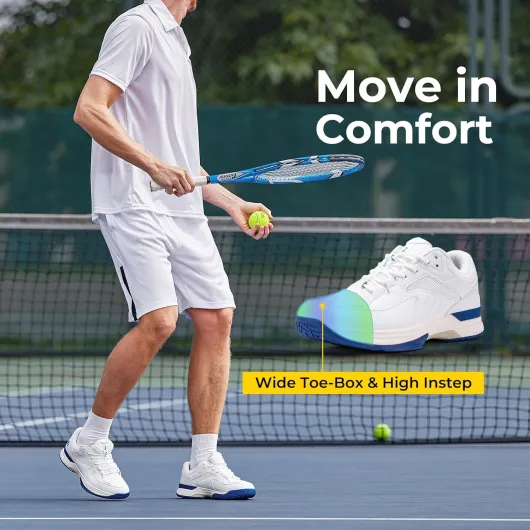
Visually, these shoes are pretty plain. All white, low-top, with some mesh panels and synthetic suede overlays. If you like simple shoes that don’t scream for attention, you’ll probably be fine with them. If you want something sharp and sporty-looking like Nike or Asics court shoes, these look a bit more like orthopedic trainers than performance gear. Personally, I don’t care too much as long as they feel good, but I wouldn’t call them stylish.
On foot, they look slightly bulky, mainly because of the extra width and the thicker sole. You can definitely tell they’re wider than standard trainers when you look down at your feet. That wider platform does help with stability on court, but if you’re used to slim, sleek shoes, the first impression is “whoa, these are big”. The white color is clean out of the box but obviously picks up dirt pretty fast on outdoor courts or dusty halls.
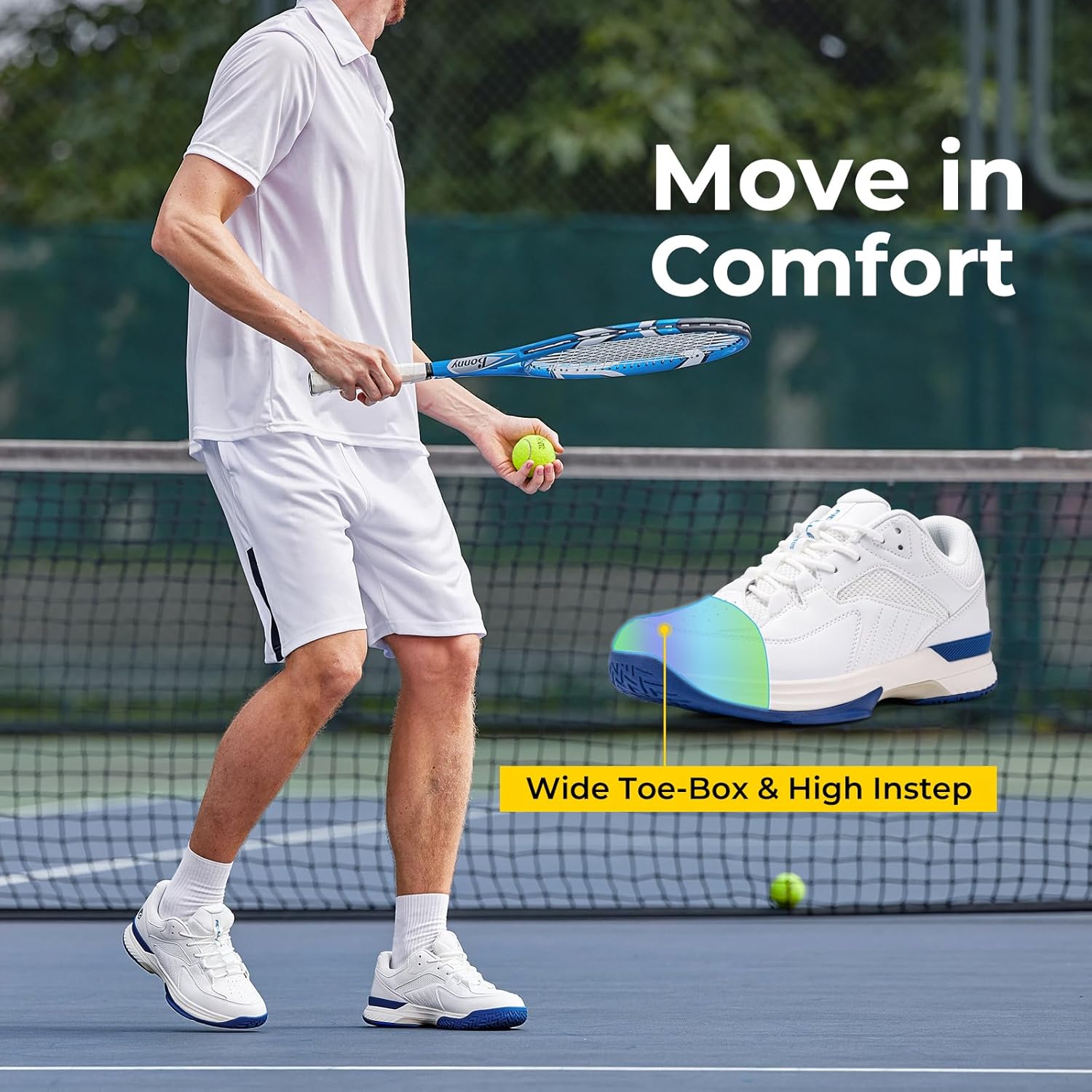
Functionally, the design choices make sense. The round toe and wide forefoot give room for toe splay. The lacing system is standard, nothing fancy, but it lets you cinch down the midfoot while keeping the front relatively relaxed. There’s no silly oversized tongue or weird heel tab; it’s all very basic. The heel counter is firm enough to hold your heel in place, and the collar padding is moderate – enough to be comfortable but not massive.
In practice, the design is more about practicality than looks. After a few sessions, I stopped thinking about how they looked and just appreciated that my toes weren’t rubbing the sides. If you want good-looking court shoes for matches where you care about style, you might find these a bit boring. For club nights and pickup games, they’re fine. The main thing is: they look wide and feel wide, which is the whole point of this model.
Comfort: finally width, but a bit on the firm side
Comfort is where these shoes actually stand out, at least for people with wide feet. The toe box is genuinely spacious. I could wiggle all my toes, and even after long badminton sessions with a lot of side steps and lunges, I didn’t get my usual hotspots on the outer toes. Compared to Skechers wide fit, these are wider and feel less constricting around the front. One Amazon reviewer mentioned dropping a size compared to Skechers, and I agree: they run a bit long, so if you’re on the fence, go half or one size down.
The cushioning is described as moderate, and that’s accurate. The Ortholite-style insole and EVA midsole give enough padding so you don’t feel the floor too harshly, but it’s not a super soft, squishy ride. One reviewer said they’re slightly too firm, and I had the same impression in the first couple of sessions. After breaking them in for a week, they softened a bit but still lean more towards firm support than plush comfort. For court sports, that’s not necessarily a bad thing – you get better stability and less of that “sinking in” feeling.
Breathability is decent. The mesh and anti-odor tech keep things under control. After two-hour indoor sessions, my feet were warm but not soaked. They dry out reasonably fast. I didn’t notice any strong smell building up in the first weeks, which is always a good sign. The heel and tongue padding are comfortable; no rubbing, no blisters for me, even without special socks. The flat heel and round toe also make them nice for walking around or casual wear; they feel like supportive trainers more than stiff court shoes.
For me, the only comfort downside is the overall bulk and firmness. If you like light, flexible shoes that almost disappear on your feet, these will feel a bit clunky. But if your main problem has been width and toe pain, these are a clear upgrade. I’d say they’re very comfortable for wide feet, just don’t expect running-shoe softness.

Materials: functional mix of mesh, microfiber, and rubber
The upper uses a combo of mesh and super soft microfiber/suede-like material. The mesh panels are there for breathability, mostly on the top and sides of the forefoot. The microfiber overlays give structure so the shoe doesn’t collapse sideways when you move. The inside is lined with what they call OrthoLite foam, which basically means a cushioned, slightly springy insole that doesn’t flatten immediately. The midsole is EVA, which is standard for sports shoes, and there’s a TPU anti-torsion piece in the middle for support. The outsole is full rubber with a grippy pattern.
To the touch, the materials feel decent but not premium. This doesn’t feel like top-tier Asics Gel or high-end Nike stuff, but it also doesn’t feel cheap or plasticky like some low-budget Amazon brands. The suede parts are soft enough and don’t crease in an ugly way. The mesh is a bit thicker than on some ultra-breathable running shoes, which is probably why the shoe feels more supportive but slightly warmer.
After a few weeks of use, there’s no obvious damage: no peeling rubber, no stitching coming undone, no holes in the mesh. The sole has some normal wear from badminton and a bit of outdoor use, but the grip pattern is still clearly visible. The insole kept its shape; it compressed slightly where my heel lands, but nothing unusual. So on the durability front, the materials seem solid enough for regular club-level play and everyday walking.
If you’re picky about eco-friendly materials, there’s nothing special here – it’s the usual EVA, TPU, rubber combo. If you just want something that holds up to a couple of sessions per week, it does the job. I’d put the material quality at mid-range: not cheap junk, but not high-end performance either. For the price point these usually sit at on Amazon, that feels about right.
Durability: looks like they’ll last a good while
Durability is always hard to judge long-term, but after several weeks of use, I can at least say there are no early red flags. The outsole rubber is wearing evenly, with only minor smoothing on the spots where I push off the most. No chunks missing, no peeling at the edges. That’s in line with the idea of a dual-density EVA midsole and a proper rubber sole – it’s not the super soft foam that chews up quickly on rough surfaces.
The upper is holding up well too. The microfiber/suede overlays still look intact, and the stitching hasn’t started to fray anywhere. The mesh hasn’t torn or stretched out. I’ve done a few awkward lunges and toe drags in badminton, and while you can see some scuff marks on the front, it’s purely cosmetic. Nothing that affects performance. I’d expect these to survive regular 1–3 sessions per week for quite a while before they start to feel tired.
Inside, the Ortholite-style insole has compressed slightly under the heel, which is normal, but it hasn’t gone completely flat. The lining around the heel isn’t pilling or tearing, which is something I’ve had with cheaper shoes after just a month. So far, these feel more solid than the random budget trainers I’ve bought off Amazon in the past, and closer to mid-range sports shoes from known brands.
Of course, if you’re playing high-intensity tennis or badminton several times a week, you’ll wear down any shoe faster. But for the typical use case – club nights, casual games, and general walking – these look like they’ll hold up well enough to justify the price. I wouldn’t baby them; they can take normal indoor and outdoor court abuse without falling apart quickly.
Performance on court: stable, grippy, but not super nimble
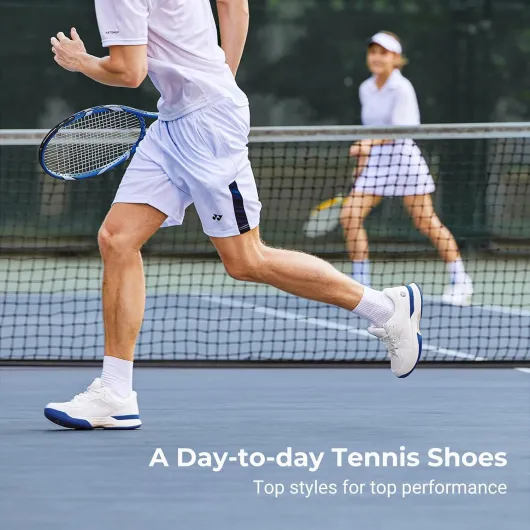
On court, I tested them mainly for badminton on indoor surfaces and a couple of casual tennis hits on hard courts. Grip is one of the strong points: the rubber outsole and tread pattern hold up well during quick stops and lateral moves. I didn’t have any scary slips, even on slightly dusty badminton courts where my old shoes sometimes skidded. One Amazon reviewer also mentioned good grip on badminton courts, and I’d back that up – they’re reliable in that area.
Stability is also good. The wide base and the TPU anti-torsion shank in the midfoot keep the shoe from twisting too much. When you plant your foot for a lunge or a quick change of direction, the shoe feels solid, not wobbly. The flat heel helps you feel connected to the ground. If you’ve ever worn very soft running shoes on a court and felt unstable, this is the opposite. These are clearly built with court movements in mind.
The trade-off is agility and lightness. They’re not super heavy, but compared to my dedicated badminton shoes from Yonex, these feel bulkier and slightly slower. It’s not a huge issue for casual or club-level play, but if you’re very competitive and want the lightest, most responsive shoe, you might find them a bit sluggish. The firmness of the cushioning also means you feel the impact more than in a bouncy running shoe, though it’s still within normal court-shoe territory.
For multi-sport use – tennis, badminton, pickleball, squash, volleyball – they’re versatile enough. They handle side-to-side movements and short sprints well. For long-distance running, I wouldn’t use them; they’re simply not built for that. As walking shoes, they’re comfortable and supportive, especially if you’re on your feet for long periods. Overall, performance is solid for recreational players, with the clear emphasis on stability and grip over speed and lightness.
What you actually get when you buy these FitVille shoes
On paper, these are sold as multi-sport court shoes: tennis, badminton, squash, volleyball, pickleball, plus general walking. They’re low-top, lace-up, with a flat rubber sole and a round toe. The model name is Court Tennis Amadeus V1, and the pair I tried is all white in extra wide. They come from China, like most shoes in this price range, and they sit at the top of Amazon’s men’s tennis shoes category, with a 4.3/5 rating from over 3,000 reviews. So they’re not some random no-name model with three reviews.
In the hand, they feel like a mix between a classic tennis shoe and a slightly chunky trainer. The weight is on the heavier side compared to my Yonex badminton shoes, but in line with a lot of recreational tennis shoes. The sole is thick with visible cushioning, and the upper mixes mesh and synthetic suede/microfiber. They’re clearly built more around comfort and support than ultra-light performance.
The insole is a honeycomb-style insert made with Ortholite-type foam, removable if you use your own orthotics. The midsole is EVA foam with a TPU anti-torsion piece, which you can actually feel if you twist the shoe in your hands; it doesn’t bend easily in the middle, which is good for court stability. The outsole is full rubber with a non-slip pattern that looks more like a generic indoor/outdoor court tread rather than a specific clay or grass pattern.
In daily use, they feel like comfort-first court trainers. If you’re expecting the super snug, locked-in race shoe feeling, that’s not what this is. If you’re tired of your pinky toe getting murdered by narrow shoes, this is much closer to what you want. The presentation is very straightforward: no gimmicky air bubbles or flashy tech names everywhere, just a wide, cushioned, flat court shoe aimed at people with big or wide feet.
Pros
- Genuinely wide toe box and extra wide fit, very comfortable for broad feet
- Good grip and stability for court sports like badminton, tennis, and pickleball
- Solid build quality and materials for the price, likely to last regular club use
Cons
- Runs large in length, many people will need to size down
- A bit firm and bulky compared to lighter, more performance-focused court shoes
- Plain design and all-white color get dirty quickly and won’t appeal to everyone
Conclusion
Editor's rating
After a few weeks of use, I’d sum these FitVille extra wide court shoes up like this: great if your feet are wide and you’re sick of cramped shoes, decent overall performers, but not the lightest or flashiest option. The main selling point is the genuinely wide toe box, which actually gives your toes space instead of just slapping “wide” on the label. For me, that alone made a big difference in comfort during badminton and casual tennis sessions.
Performance-wise, they’re stable, grippy, and supportive, with cushioning that sits on the firmer side. Good for court sports, fine for walking, but not the shoe I’d pick for long runs or serious high-level competition. They feel a bit bulky compared to top-brand court shoes, and the design is pretty plain, so don’t expect compliments on style. Durability seems solid so far, and for the price, I think the value is fair, especially given how few extra wide court options there are.
I’d recommend these to guys with wide or extra wide feet who play badminton, pickleball, squash, tennis, or just want a comfortable, supportive trainer for everyday use. If your feet are normal width and you’re chasing light, fast, performance shoes, you’ll probably be happier with something from Asics, Nike, or Yonex. For wide-footed players, though, these are a pretty solid, no-nonsense option that finally lets your toes breathe.