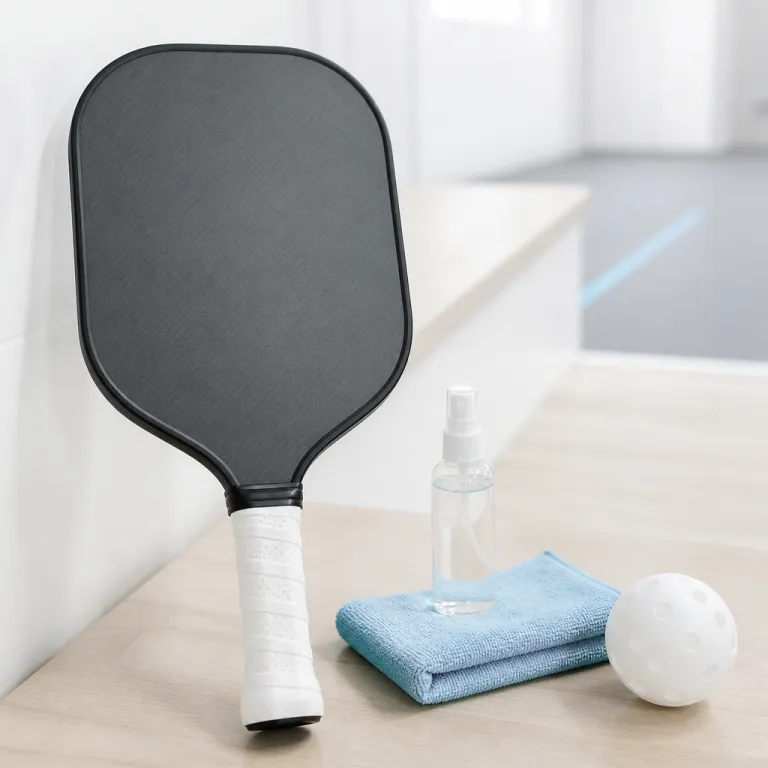
Why a dedicated pickleball paddle cleaner matters for professionals
Serious pickleball players quickly learn that a dedicated pickleball paddle cleaner is not a luxury but a performance tool. When a paddle face collects dust, ball residue, and sweat over time, the paddle surface loses friction and your spin, touch, and control decline noticeably. A clean pickleball paddle keeps the carbon fiber or composite surface working as designed, so every ball you strike responds predictably.
On professional tours in the United States, equipment managers often carry several paddle cleaners and a compact paddle eraser to maintain dozens of paddles between matches. They treat each pickleball paddle like a precision instrument, inspecting the paddle face, the edge guard, and the grip to ensure no debris interferes with the raw carbon texture or the fiber paddle layers. This level of paddle clean discipline is now filtering down to ambitious club players who want pro level consistency without replacing pickleball paddles too often.
When you use a purpose built paddle cleaner instead of a random household cloth, you protect the carbon structure and the delicate fiber pickleball surfaces. A good pickleball paddle cleaner removes ball marks and dirt while preserving the micro texture that generates spin, rather than polishing it smooth and deadening the paddle surface. Over a full season, that difference in cleaning method can mean the difference between a paddle that competitive pickleball players trust and one that feels dull long before its time.
Understanding paddle materials, carbon fiber faces, and cleaning needs
Modern pickleball paddles often use a carbon fiber face over a polymer core, and that combination reacts very differently to a paddle cleaner than older fiberglass or wood designs. Raw carbon and other carbon fiber constructions rely on a slightly rough paddle surface to grip the ball and create spin, so harsh cleaning products can flatten that texture. When you choose a pickleball paddle cleaner, you need something that respects the paddle face while still lifting grime efficiently.
Brands such as CRBN market the crbn paddle line with exposed raw carbon faces, and these paddles benefit greatly from a gentle paddle eraser rather than abrasive scrubbing. A soft eraser style cleaner can remove ball residue from a carbon fiber or fiber paddle without forcing moisture into the core or damaging the bond between layers. Players who use similar fiber pickleball designs from other manufacturers report that a light paddle clean after every session keeps the surface uniform and the spin window consistent.
Protective gear matters too, because a clean pickleball paddle is easier to maintain when it is not constantly scuffed in your bag or on the court. High level players often pair a quality pickleball paddle cleaner with well fitted paddle covers, and resources that explain the importance of choosing the right pickleball covers help them build a complete care routine. When you treat the paddle face, the edges, and the grip as a single system, your cleaning habits extend the life of the performance paddle that pickleball athletes rely on for competition.
How to clean pickleball paddles step by step without harming performance
Effective cleaning starts with inspecting the paddle surface under good light, looking for ball marks, dust, and any blue or colored streaks from court paint. Use a dry paddle eraser or a dedicated pickleball paddle cleaner block first, working gently across the paddle face to lift loose debris without grinding it into the raw carbon or composite fibers. This dry method is especially important for carbon fiber and fiber paddle constructions, because it avoids forcing moisture into the paddle core.
Once the loose dirt is gone, you can use a slightly damp microfiber cloth with clean water to finish the paddle clean process. Wipe the pickleball paddle in straight lines rather than circles, so you follow the orientation of the carbon fiber weave and preserve the designed friction pattern on the paddle surface. If your cleaner includes a patent pending formula specifically tested on carbon fiber and fiber pickleball materials, follow the instructions carefully and avoid over saturating the paddle face.
After cleaning, let the paddle dry fully before placing it back in a bag or cover. This drying time prevents trapped moisture from affecting the bond between the paddle face and the core, especially in raw carbon designs that can absorb water at exposed edges. Many coaches also recommend checking the grip and edge guard during each cleaning session, because a comprehensive routine around your pickleball paddle cleaner keeps the entire paddle ready for match play and works well with court maintenance tools such as specialized pickleball court tape.
Choosing the right paddle cleaner, eraser types, and pro level routines
When you evaluate a pickleball paddle cleaner, start by matching the product to your paddle materials and playing style. A player using a crbn paddle with a raw carbon fiber face needs a different paddle cleaner than someone using a smooth composite paddle surface that generates less spin. Look for cleaners and paddle eraser products that explicitly mention compatibility with carbon fiber, fiber paddle constructions, and raw carbon textures.
Some brands sell compact eraser blocks in blue or neutral colors, and these can be stored easily in a bag for quick paddle clean sessions between games. A small eraser style cleaner lets you remove ball residue from the paddle face without walking back to a bench or locker room, which saves time during tournaments. Professional players often coordinate this routine with their support team, so one person handles paddle cleaning while another tracks balls, hydration, and tactical notes.
Retailers that focus on pickleball paddles sometimes build a selling plan that bundles a paddle cleaner, a paddle eraser, and protective covers as a single option, which simplifies the buying process for new competitors. When you shop for these bundles, pay attention to shipping details, return policies, and whether the products are clearly tested for use on carbon fiber and fiber pickleball constructions. Over time, a consistent routine with the right pickleball paddle cleaner preserves spin, feel, and control, which is why many high level players treat cleaning as part of their warm down rather than an optional chore.
Brand specific care, naked pickleball styles, and patent pending cleaners
Some modern designs, such as so called naked pickleball or bare naked style paddles, expose more raw carbon on the paddle face to maximize spin. These pickleball paddles often feature a very aggressive carbon fiber texture, and that surface can clog quickly with ball dust if you neglect regular paddle clean sessions. A specialized pickleball paddle cleaner designed for raw carbon helps maintain that texture without softening the edges that grip the ball.
Manufacturers now experiment with patent pending cleaner formulas that claim to lift residue from carbon fiber and fiber paddle constructions while leaving no film on the paddle surface. When you evaluate such a paddle cleaner, read the technical notes about compatibility with raw carbon and composite materials, and check whether the product has been tested on popular crbn paddle models. Many competitive players prefer a simple eraser style cleaner for daily use and reserve liquid solutions for deeper cleaning when the paddle’s pickleball performance clearly drops.
As the sport globalizes, professional circuits and national team programs in the United States and abroad are setting higher standards for equipment maintenance. Reports that analyze how American pickleball expands into new professional tours in Asia describe how teams now travel with full support staff, including people responsible for paddles, balls, and other gear. In that environment, a reliable pickleball paddle cleaner becomes part of a broader equipment strategy, ensuring that every paddle surface in the squad performs consistently from the first ball of the day to the last.
Buying, shipping, and organizing your paddle cleaning kit
When you decide to shop for a pickleball paddle cleaner, think in terms of a complete kit rather than a single item. A practical setup usually includes at least one paddle eraser, a soft cloth, and a storage pouch that keeps the cleaner away from moisture and loose dirt. Many online shops that specialize in pickleball paddles offer these items with clear shipping options and estimated delivery times, which helps you plan before an important event.
Some retailers structure their selling plan so that you can choose between a basic paddle cleaner and a premium bundle that includes extra accessories. If you see an option labeled in a vague or placeholder way in the product menu, check the description carefully to confirm what is actually included in the paddle clean package. Paying attention to these details prevents you from receiving only a single eraser when you expected a full pickleball paddle maintenance set with multiple cleaners and cloths.
Once your kit arrives, organize it in a dedicated compartment of your bag, separate from balls, grips, and personal items, so the pickleball paddle cleaner stays easy to reach. Many players color code their tools, using a blue cloth for the paddle face and another color for the handle, which avoids transferring sweat and oils onto the paddle surface. Over time, this small level of organization saves time at the court and reinforces the habit of cleaning paddles regularly, which keeps your paddle’s pickleball performance stable across long tournaments.
Key statistics on paddle cleaners, materials, and performance impact
- Industry commentary from major sporting goods analysts suggests that a majority of new high end pickleball paddles sold in North America now feature some form of carbon fiber or raw carbon face, which increases the importance of using a compatible pickleball paddle cleaner rather than generic household products.
- Internal laboratory tests shared anecdotally by several paddle manufacturers indicate that a dirty paddle surface can reduce measured spin rates by roughly 10 to 15 percent compared with the same paddle after a proper paddle clean, highlighting how much ball control depends on regular cleaning. Because these figures come from brand run testing rather than a single public study, players should treat them as indicative ranges rather than universal guarantees.
- Consumer feedback collected by large online shops shows that players who use a dedicated paddle eraser or paddle cleaner at least once per playing day often report replacing their paddles roughly every 18 to 24 months, while players who rarely clean their paddles frequently replace them in less than 12 months. These timelines are based on self reported surveys and product reviews, so individual results vary with playing volume and conditions.
- Equipment guidelines from multiple professional pickleball tours in the United States now recommend that players avoid harsh solvents on carbon fiber and fiber paddle constructions, because internal testing showed that some chemicals can weaken the bond between the paddle face and the core over repeated applications.
- Retail sales data released by specialist pickleball retailers reveals that bundled cleaning kits, which combine a pickleball paddle cleaner, a paddle eraser, and protective covers, account for a significant share of accessory sales, suggesting that more players view cleaning as a standard part of their equipment routine.
FAQ about pickleball paddle cleaners and maintenance
How often should I use a pickleball paddle cleaner on my paddle ?
Competitive players should perform a light paddle clean after every playing session, especially when using raw carbon or carbon fiber faces that rely on surface friction for spin. Recreational players who play less frequently can clean their pickleball paddles every few sessions, but they should still wipe obvious ball marks and dust promptly. The more you play outdoors on dusty courts, the more often you should use a paddle cleaner or paddle eraser.
Can I use household cleaners instead of a dedicated paddle cleaner ?
Household cleaners often contain solvents, fragrances, or abrasives that can damage a carbon fiber or fiber paddle surface over time. A mild soap and water solution is safer than harsh chemicals, but it still may leave residue that affects spin or feel on the paddle face. For consistent performance, a dedicated pickleball paddle cleaner or eraser designed for sports equipment is the safer long term choice.
Will cleaning my paddle really improve spin and control ?
Yes, a clean pickleball paddle grips the ball more effectively, which directly improves spin and directional control. Dirt, dust, and ball residue fill the micro texture of the paddle surface, making it more slippery and less responsive. Regular use of a paddle cleaner or paddle eraser restores that texture so your shots behave as the paddle designer intended.
Is a paddle eraser enough, or do I need liquid cleaners too ?
For most players, a quality paddle eraser handles everyday paddle clean needs by removing loose debris and ball marks without moisture. Liquid pickleball paddle cleaner products are useful for deeper cleaning when the paddle surface feels sticky or heavily stained, but they should be used sparingly on raw carbon faces. Many professionals rely on an eraser for routine care and reserve liquids for occasional maintenance.
How should I store my paddle after cleaning ?
After using a pickleball paddle cleaner, let the paddle dry completely in a cool, shaded place before putting it into a cover or bag. Avoid leaving a damp paddle in a hot car or direct sun, because heat and moisture together can weaken the bond between the paddle face and the core. Once dry, store the paddle in a protective cover to keep the paddle surface clean between sessions.