Summary
Editor's rating
Is It Worth the Money Compared to Bigger Brands?
Edgeless Shape, Longer Handle, and How It Feels in Hand
Grip, Vibration, and Fatigue After Longer Sessions
Carbon Face, 16mm Core: Good on Paper, Decent on Court
How It Holds Up to Scrapes, Miss-Hits, and Regular Use
Spin, Control, and Power on the Court
What You Actually Get in the Box
Pros
- Good spin and control thanks to carbon face and 16mm core
- Extended grip works well for two-handed backhands and larger hands
- Solid performance for the price, with USA Pickleball approval
Cons
- Slightly head-heavy and can cause wrist fatigue in long sessions
- Edgeless design scuffs easily when scraping the court

Specifications
View full product page →| Brand | ZOEA |
A Budget Carbon Paddle I Actually Kept in My Bag
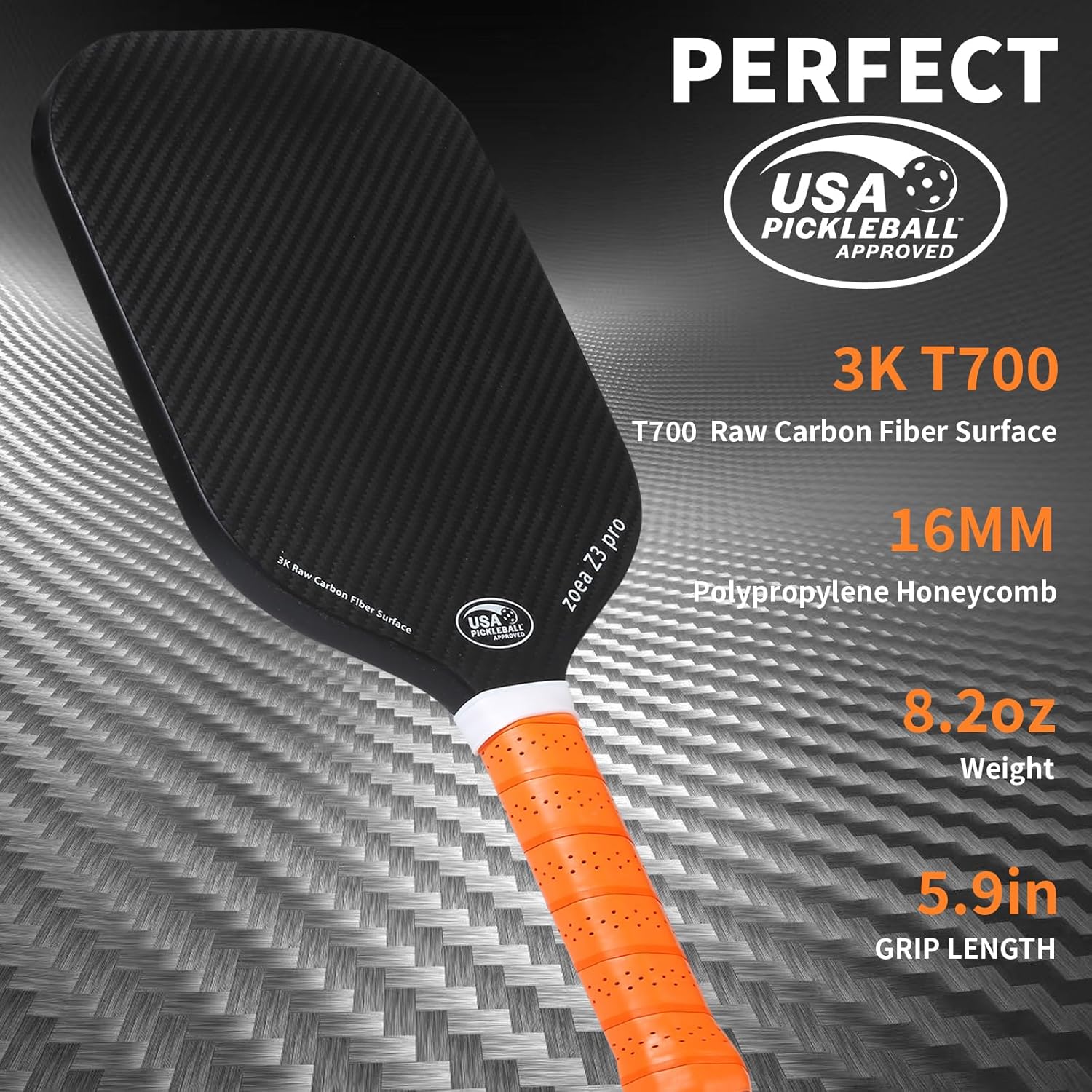
I’ve been playing pickleball regularly for a while now, and I’ve gone through the usual progression: cheap wooden paddles, then basic fiberglass, then finally into the carbon fiber stuff that everyone seems to be using now. I picked up this ZOEA paddle mostly out of curiosity, because it’s from a brand I didn’t really know, but the specs looked similar to more expensive paddles: 16mm polypropylene honeycomb core, raw carbon surface, USA Pickleball approved. On paper, it sounded like a mid-range or even higher-end setup at a much lower price.
I used it for about two weeks, roughly 8–10 sessions, including rec play and a small local round-robin. I swapped between this ZOEA and my usual carbon paddle that costs roughly twice as much. I wanted to see if this one felt like a real upgrade from the typical Amazon starter set paddles, or just another cheap knockoff with fancy words in the description. Spoiler: it’s not junk, but it’s not magic either.
Right away, I noticed the paddle feels a bit on the heavier side of the typical range (the listing says 8.0–8.5 oz), but not to the point of being a brick. The extended 5.5" grip was actually the first thing I liked; I play with a semi-western grip and sometimes two hands on the backhand, so that extra length made a difference. The edgeless design also jumped out visually and in play, both good and bad, which I’ll get into later.
Overall, my first impression after a couple of sessions was: this is a pretty solid step up from beginner paddles, especially if you’ve been using those $10–$20 sets. It has decent spin, the control is good enough for dinks and drops, and it doesn’t feel cheap in the hand. It’s not perfect—balance and long-session comfort could be better—but if you’re an improving player looking for a budget-friendly carbon option, it absolutely gets the job done.
Is It Worth the Money Compared to Bigger Brands?
Value-wise, this is where the ZOEA paddle makes the most sense. You’re basically getting a modern spec sheet—raw-style carbon surface, 16mm core, extended handle, USA Pickleball approval—for considerably less than what the big-name brands charge for similar features. If you’re moving up from a $20–$40 starter paddle, this will feel like a real upgrade in terms of spin, control, and overall feel, without jumping straight into the $150+ range.
Compared to higher-end paddles I’ve used, you do give up some things: the balance isn’t as dialed in, the finish isn’t as clean, and the long-term durability of the edgeless face is still a question mark. But for the typical rec or intermediate player who plays a few times a week, I’d say the performance per dollar is very good. You’re not paying for a big logo; you’re paying for a paddle that actually plays in the same general category as pricier options.
The included bag and extra grips aren’t huge value-adds, but they’re nice to have and save you a bit of money and hassle. If you were to buy a similar-spec paddle from a more famous brand, plus a cover and grips, you’d probably spend significantly more. So in that sense, this setup feels like a practical buy if you’re budget-conscious but still care about how your paddle performs.
Overall, I’d say the ZOEA hits a sweet spot for people who are past the beginner phase but not ready to blow a big chunk of cash on a premium paddle. It’s not the best paddle on the market, but for the price, it’s pretty solid and gets the job done for most everyday players.
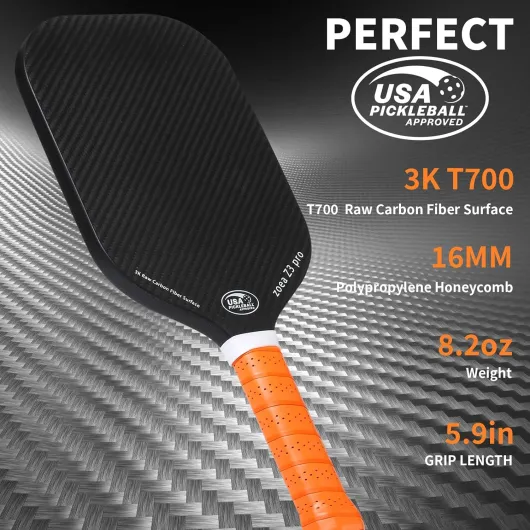
Edgeless Shape, Longer Handle, and How It Feels in Hand
The design is pretty simple: elongated shape (16.5" x 7.5") with a 5.5" handle and an edgeless construction. That combo matters. The elongated face gives you a bit more reach at the net and on lobs, which I actually noticed right away when poaching and when trying to save balls near my feet. The trade-off with elongated paddles is usually a slightly smaller sweet spot, but the 16mm core here helps keep the middle forgiving enough for most intermediate players.
The edgeless style is both a plus and a minus. On the plus side, it looks clean and gives you a bit more usable surface, especially near the top and sides. You don’t get those weird mishits off the plastic edge that you sometimes get with thick edge guards. On the downside, if you’re the type who digs low balls or occasionally drags the paddle on the ground, you’re going to scuff the carbon face faster. After a week of play, I had visible marks along the top edge. Nothing catastrophic, but if you baby your gear, be prepared to wince a bit.
The grip size is listed around 4.25" with a 5.5" length, which in practice felt slightly on the thicker side of medium to me. I don’t have huge hands, and I was still comfortable, but if you’re used to very thin grips, you might want to throw a thinner overgrip on instead of using the included ones. The extra length was nice for two-handed backhands; I could actually fit both hands without feeling cramped, which is not always the case on cheaper paddles.
Weight-wise, it’s in that 8.0–8.5 oz range. Mine felt closer to the higher end, and a bit head-heavy compared to my more expensive paddle. That head-heaviness gives you some extra punch on drives and serves, but at the cost of faster hand speed at the net. If you rely a lot on quick hand battles and flicks, you’ll notice it. If you like to drive hard and don’t mind a bit more heft, you might actually prefer it. Overall, the design is practical and player-focused, but it’s not the lightest or most finely balanced paddle out there.
Grip, Vibration, and Fatigue After Longer Sessions
Comfort-wise, the ZOEA paddle is good but not perfect. The grip is wrapped in a soft artificial leather with ventilation holes, and out of the box it feels nice in the hand: not too tacky, not too slippery. During normal rec play (about 1.5–2 hours), I had no issues with blisters or hot spots. The length of the grip is a plus; I could adjust my hand position easily and even sneak in a two-handed backhand without feeling cramped.
Vibration is well controlled thanks to the 16mm core. On clean hits, the paddle feels solid and stable. On mishits near the edge, you do feel some feedback, but it’s not harsh or painful. I’ve used cheaper paddles where a mishit sends a sharp buzz up your arm; this one doesn’t do that. I’d say it’s friendly enough for people with mild elbow or wrist sensitivity, though if you have serious joint issues, you might still want something a bit lighter and better balanced.
Where the comfort takes a small hit is in the overall balance and weight. After a longer 3-hour session with mostly fast kitchen play, I did feel some fatigue in my wrist and forearm. The paddle has a slightly head-heavy feel, which helps with power but makes quick hands a bit more work. If you’re used to very light paddles, this will feel heavier. If you’re used to mid-weight paddles, you’ll probably be fine but still notice it on marathon days.
In short, the comfort is perfectly acceptable for most players. The grip is decent, the core damps vibration fairly well, and I never felt like I was fighting the paddle. It’s just not that "effortless" feeling you get with some of the more balanced, pricier models. For the money, though, the comfort level is more than reasonable and definitely a step up from entry-level wooden or cheap composite paddles.
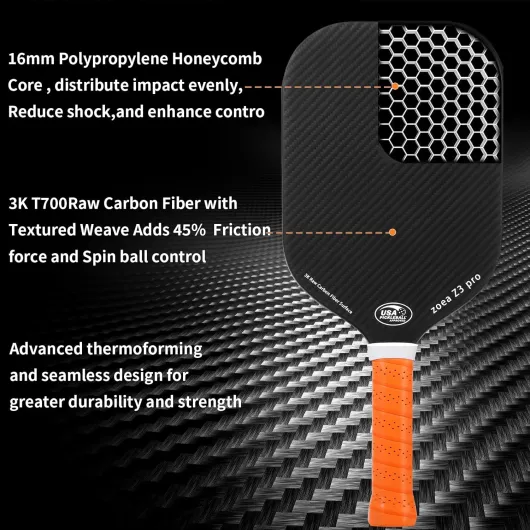
Carbon Face, 16mm Core: Good on Paper, Decent on Court
On the materials side, ZOEA is clearly trying to tick all the trendy boxes: 3K raw carbon fiber surface, a carbon abrasion layer (they call it CAS), and a 16mm polypropylene honeycomb core. That’s basically the same formula you see on a lot of paddles that cost quite a bit more. The question is whether it actually feels like those paddles in real play, or if it’s just marketing jargon slapped on cheap materials.
In practice, the face does grab the ball pretty well. When I compared it to an older fiberglass paddle I still have, the spin difference was obvious. I could hit topspin drives and slice serves much more easily with the ZOEA. Compared to my main raw carbon paddle from a bigger brand, the spin felt slightly less aggressive, but still very respectable, especially considering the price gap. The surface texture is there, but not as pronounced as the top-tier stuff.
The 16mm polypropylene core gives the paddle a more controlled, softer feel than thin, cheap paddles. On dinks and drops, the ball doesn’t rocket off the face; you can actually take some pace off and feel the ball sit on the paddle for a moment. That’s good if you’re trying to develop a soft game. On the flip side, if you’re coming from a bouncy, thin paddle, you might initially feel like you’re losing some power until you adjust your swing.
Overall, the materials feel genuinely decent, not fake or flimsy. The carbon doesn’t feel like a plastic sticker, and the core doesn’t buzz or rattle, even on off-center hits. It’s not at the same level as the higher-end $150+ paddles in terms of pure feel and refinement, but it’s closer than you’d expect for a budget-friendly stick. If you want real carbon and a thick core without paying top dollar, this is pretty much what you’d hope for.
How It Holds Up to Scrapes, Miss-Hits, and Regular Use
Durability is always a bit of a guess early on, but after about two weeks of regular play, I can at least say how it’s holding up so far. The face itself feels sturdy. I’ve had a few clashes with partners’ paddles at the net (it happens), and while there are some cosmetic marks, there’s no cracking or delamination. The carbon surface hasn’t started peeling or bubbling, which I’ve actually seen on some ultra-cheap paddles before.
The main wear I noticed is along the top and sides because of the edgeless design. Any time you reach for a low ball and scrape the court, you’re hitting carbon, not a plastic edge guard. After a handful of those, you can definitely see scuffs and small chips in the clear coat. It hasn’t affected play yet, but if you’re rough on your gear or often play on rough outdoor courts, expect the paddle to look "used" pretty fast. Functionally fine, visually a bit beat up.
The grip and handle area seem solid. No looseness, no creaking, and the grip wrap stayed in place without unraveling. I did replace the grip once just to test the extras they include, and the underlying handle felt well-built, not hollow or flimsy. That’s a good sign for long-term use, since a weak handle is usually where cheaper paddles eventually fail.
In short, durability so far is reassuring for the price, with the one caveat being that the edgeless style will show battle scars sooner than a paddle with a thick edge guard. If you care more about performance than cosmetics and you’re not constantly slamming it into the ground, it should last a fair amount of time. If you want something that stays pretty and pristine, this might annoy you visually, even if it’s still structurally fine.
Spin, Control, and Power on the Court
Let’s talk about how it actually plays, because that’s what matters. In terms of spin, the ZOEA holds its own. The raw carbon + abrasion combo does give you enough grip on the ball to hit reliable topspin drives, heavy slices, and spin serves. When I switched back and forth with my more expensive carbon paddle, I could feel a small drop in spin potential, but not enough to change my game plan. For most rec and intermediate players, it’s more than enough to start using spin effectively.
Control is where the 16mm core really helps. At the kitchen, dinks felt predictable. The paddle has a slightly muted, softer response, so you’re not constantly fighting trampoline effect. I was able to drop third shots from the baseline into the kitchen with decent consistency after a short adjustment period. If you’re coming from a really stiff or thin paddle, you might initially leave some shots short, but once you get used to the feel, it’s pretty forgiving.
Power is solid but not crazy. The slightly head-heavy balance gives you good pop on drives and overheads, but this isn’t a pure power paddle. You can finish points and hit through people, but you still have to swing. On serves, I could get good depth and speed, just not quite the same punch as my stiffer, more offensive paddle. For most players, that’s actually a nice middle ground: enough power to be dangerous, without losing control.
Overall, performance is well-rounded. It doesn’t dominate in any one area, but it also doesn’t have a glaring weakness. If I had to sum it up: very solid spin, good control, decent power, slightly slower in fast hand battles due to the weight and balance. If you’re an improving player working on both your soft game and your drives, this paddle supports that pretty well. If you’re an advanced player chasing tiny performance gains, you’ll probably notice the limits, but you’re also not the main target for this price range.
What You Actually Get in the Box
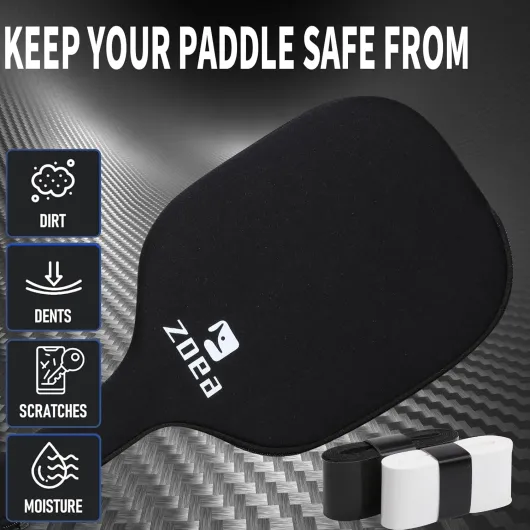
Out of the box, the ZOEA paddle is pretty straightforward. You get the paddle, a soft carry bag, and two replacement grips. No balls, no wrist strap, nothing fancy. For the price point, that’s fine. I’d rather they put the money into the paddle itself than into random extras I won’t use. The bag is basic but useful: thin, lightweight, zipper works, and it protects the face from scratches in your car or backpack. Don’t expect a padded, premium case, but it’s good enough for everyday use.
The paddle itself looks clean. The version I got has that simple carbon pattern and minimal branding, which I personally like. It doesn’t scream “cheap Amazon paddle” at first glance, which is nice when you’re on court with people who have bigger-name brands. The edgeless style makes it look more modern too. Just be aware: edgeless also means you don’t have that plastic edge guard to take the hit when you scrape the ground.
The two extra grips are a small but useful addition. The stock grip is decent, but if you play a lot or sweat heavily, it’s nice to have replacements ready. They’re not high-end overgrips like you’d buy separately, but they’re perfectly usable. I ended up swapping one on after a week just to see, and installation was simple enough if you’ve ever regripped a tennis or pickleball handle.
Overall, the presentation is functional and no-nonsense. You get what you need to start playing right away: a paddle that’s tournament-legal, a bag to carry it, and spare grips. Nothing here feels premium, but nothing feels like a toy either. For a brand that’s not a big name, the first impression is surprisingly solid and doesn’t scream corner-cutting.
Pros
- Good spin and control thanks to carbon face and 16mm core
- Extended grip works well for two-handed backhands and larger hands
- Solid performance for the price, with USA Pickleball approval
Cons
- Slightly head-heavy and can cause wrist fatigue in long sessions
- Edgeless design scuffs easily when scraping the court
Conclusion
Editor's rating
If you’re currently playing with a cheap starter paddle and you’re starting to take pickleball more seriously, the ZOEA carbon paddle is a sensible next step. You get a legit 16mm core, a carbon face that actually gives you spin, and a shape that works well for both soft game and drives. It feels like a real performance paddle, not a toy, and it’s approved for tournaments if you ever go that route. The main trade-offs are a slightly head-heavy feel, some wrist fatigue on very long sessions, and an edgeless design that will show cosmetic wear faster if you scrape the court a lot.
I’d recommend this most for intermediate players or improving beginners who play regularly and want to see what a proper carbon paddle feels like without spending top dollar. If you’re an advanced player super picky about balance and feel, or you want something ultra-light for hand battles, you’ll probably be happier spending more on a higher-end model. But for everyday rec play, local leagues, and people on a budget, this paddle offers good value for money and a noticeable step up in control and spin compared to basic paddles. It’s not perfect, but it absolutely gets the job done and earns a spot in the bag for a lot of casual and intermediate players.