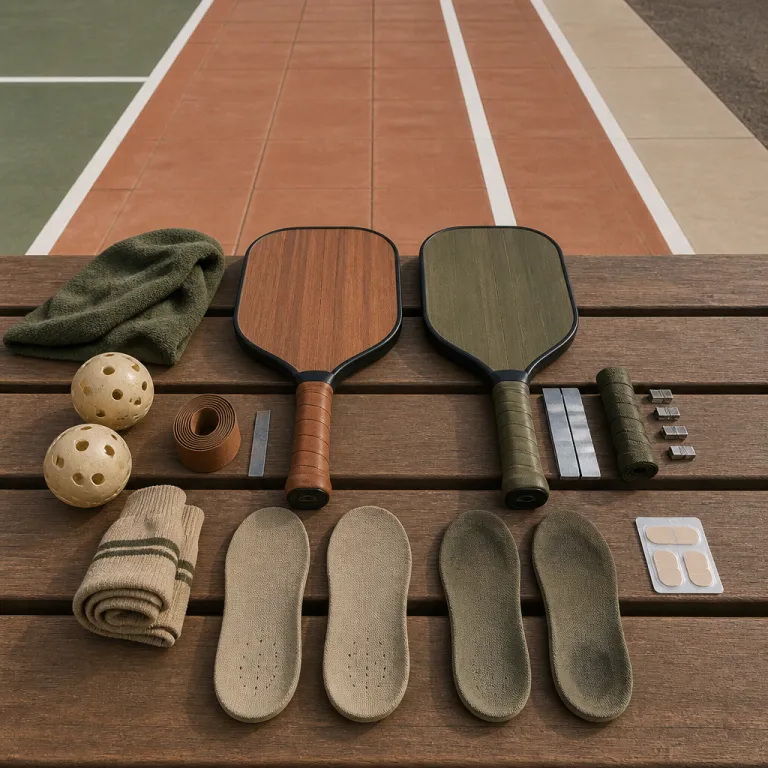
Why paddle weight matters more in game three than game one
A pickleball paddle feels very different at minute ten than at minute ninety. The same paddle weight that seems explosive in warmup can turn your forearm into concrete by the third game, especially when rallies stretch and players grind at the kitchen. This pickleball paddle weight guide starts with that simple reality and treats weight as the spec that shapes how long your game actually holds up.
Most weekend players obsess over surface grit, carbon fiber weaves, and polymer cores, while the static weight number on the sticker gets a quick glance at best. Yet that static weight, combined with swing weight and twist weight, dictates how fast your hand moves, how stable the paddle face stays on contact, and how your arm feels driving home from the park. When a weight paddle choice is wrong, you feel it first in your grip, then in your elbow, and finally in your confidence to swing freely.
Think of a 7.8 oz pickleball paddle as your baseline for this guide, sitting in the lower midweight range that many pickleball paddles target. Move up to an 8.4 oz paddle and the extra weight placement, especially toward the paddle face, changes everything about how the paddle feels in hand. The goal is not chasing the heaviest or lightest paddles, but finding the best weight range where your power, control, and hand speed all survive a full ninety minute session.
The real weight spectrum: from feather quick to bruiser stable
On paper, a 7.3 oz paddle and an 8.6 oz paddle are separated by just over 35 grams, but on court that gap feels massive. Lightweight pickleball paddles under about 7.5 oz prioritize hand speed and quick swing changes at the kitchen, while heavy paddles above 8.0 oz trade that speed for raw power and stability on drives. The middle ground from roughly 7.5 to 8.0 oz is where most players should start their personal pickleball paddle weight guide experiments.
In that midweight range, a paddle feels balanced enough for fast exchanges yet still offers enough mass behind the ball to keep your third shot drops from floating. A 7.8 oz paddle weight often hits the sweet spot for adult rec players in their forties and fifties who play two or three times a week and want both forgiveness and comfort. Shift to an 8.4 oz weight pickleball setup and you gain more plow through and stability, but you also increase the static weight load on your wrist and forearm every time you swing.
Singles specialists and power baseliners in places like Mesa, Arizona or Naples, Florida often favor heavier paddles because the extra weight placement toward the paddle face helps them drive through the ball. Doubles players who live at the kitchen in crowded city courts, from Brooklyn Bridge Park to Seattle’s Green Lake, usually benefit from a lighter weight paddle that keeps their hand speed high in hand battles. If you already own a midweight paddle and want to push it heavier without buying a new one, you can always add weight with lead tape or tungsten tape and test how your body responds over a full session.
For intermediate and advanced players trying to match weight to a more aggressive style, a dedicated guide on how to choose performance oriented pickleball paddles can help you pair core thickness and shape with the right weight range. When you combine that kind of performance focused paddle choice with a thoughtful approach to swing weight and twist weight, you end up with a setup that feels like an extension of your hand instead of a random club. Weight is not a standalone spec ; it is the backbone that lets every other design choice actually show up in your game.
Swing weight, twist weight, and why 7.8 oz can feel heavier than 8.4 oz
Static weight is the number printed on the sticker, but swing weight is the number your shoulder actually cares about. Swing weight measures how heavy the paddle feels when you swing it, which depends on where the mass sits along the length of the paddle, not just the total grams. A head heavy 7.8 oz paddle can feel more demanding than a handle heavy 8.4 oz paddle, because the weight placement toward the paddle face increases the effort needed to start and stop your swing.
Twist weight is the other hidden spec that shapes how a paddle feels on off center hits, especially when you catch the ball near the edge guard instead of the sweet spot. Higher twist weight means more stability and less twisting in your hand when you miss the center, which is why some players add weight with lead tape at 3 and 9 o’clock on the paddle face. That kind of adding weight increases both swing weight and twist weight, so the paddle feels more solid on blocks but slightly slower when you try to flick a late backhand.
When you compare pickleball paddles in a shop or online, remember that two paddles listed at the same paddle weight can feel completely different once you start hitting. A more elongated shape with extra mass high on the paddle face will raise swing weight and make the paddle feel heavier in motion, even if the static weight matches a more compact design. If you are shopping in the under 100 dollars category and want to keep your arm fresh, look for the best value paddles that sit in the midweight range and avoid extreme head heavy builds unless you truly need maximum power.
Players who care about both budget and longevity should treat this pickleball paddle weight guide as a filter before chasing fancy surface technologies. A well chosen weight range paired with manageable swing weight and supportive twist weight will do more for your consistency than any marketing term about spin or grit. Once you understand how swing weight and twist weight change how a paddle feels, you can use adding weight with small strips of lead tape or tungsten tape to fine tune your setup instead of constantly buying new paddles.
The 90 minute fatigue test: how 7.8 oz vs 8.4 oz really feels
The only honest way to judge paddle weight is to feel it late, not early. For this pickleball paddle weight guide, imagine two nearly identical paddles, one at 7.8 oz and one at 8.4 oz, both with the same core, shape, and grip size. In the first twenty minutes, the heavier paddle feels like the best option because the extra power makes your drives jump and your blocks feel rock solid.
By minute forty five, the story starts to change as your forearm extensors and small stabilizing muscles in your hand work harder on every swing. The 8.4 oz paddle now taxes your grip more on quick resets, and your hand speed at the kitchen line drops just enough that you start losing a few hand battles you would normally win. With the 7.8 oz paddle, you may give up a touch of raw power, but the lighter static weight and slightly lower swing weight keep your reactions crisp and your paddle face more relaxed.
At the full ninety minute mark, the difference between the two paddles is no longer subtle, especially for players over forty or anyone with a history of elbow or shoulder issues. The heavier weight paddle can make your paddle feels like a club, and your ability to add last second adjustments to the paddle face on dinks or counters fades. The 7.8 oz option usually leaves you with enough reserve to keep your swing compact, your sweet spot contact consistent, and your confidence high heading into a tiebreaker game.
If you want to run your own fatigue test, tape a small strip of lead tape or tungsten tape under the edge guard at 12 o’clock to add weight in 5 to 6 gram increments. Play a full ninety minute session with each new weight placement and note when your grip starts to tire, when your swing slows, and how the paddle feel changes on off center hits. That kind of deliberate adding weight process turns a generic pickleball paddle into a custom tool tuned to your body, your schedule, and your style of play.
Where to add weight: lead tape, tungsten tape, and the clock face map
Once you know whether you prefer something closer to 7.8 oz or 8.4 oz, the next step is deciding where to add weight on the paddle. Think of the paddle face as a clock, with 12 o’clock at the tip, 3 and 9 o’clock on the sides, and 6 o’clock near the handle above the grip. Each weight placement changes swing weight, twist weight, power, and stability in a slightly different way, so your paddle feels new even before you change the total grams much.
Adding weight at 12 o’clock under the edge guard increases power and swing weight the most, which helps drives and deep serves but slows hand speed at the kitchen. Placing lead tape or tungsten tape at 3 and 9 o’clock boosts twist weight and stability on off center hits, shrinking the dead zones near the edge guard and effectively enlarging the sweet spot. If you want the paddle to feel heavier in the hand without making it sluggish, add weight closer to the handle at 5 and 7 o’clock or even under the grip, which raises static weight but keeps swing weight manageable.
Players who struggle with tennis elbow or shoulder fatigue should start with very small strips of tape, adding weight in roughly 0.2 oz steps and tracking how the paddle feels over several sessions. A good rule is to never jump more than about 0.3 oz in paddle weight at once, especially if you are moving from a lighter weight pickleball setup toward something more stable. Remember that every change in weight placement also changes how the paddle face presents to the ball, so give your body and timing a few outings to adapt before judging whether the new configuration is truly the best for you.
Once you settle on a configuration that keeps your hand speed high and your arm fresh, protect that setup by storing your paddle carefully and using a quality bag that keeps the edge guard and lead tape from peeling. A dedicated guide to choosing a practical pickleball paddle bag can help you keep both your paddle and your custom weight placement intact between sessions. Treat your weight tuned paddle like a fitted tool, not a disposable toy, and it will reward you with a consistent paddle feel every time you step on court.
Who should go lighter, who should stay heavy, and how to test at home
Not every player should chase the same paddle weight, even if they share a rating or play on the same public courts. Seniors, players with a history of elbow or shoulder pain, and anyone logging four or more sessions per week usually benefit from a lighter weight pickleball setup in the 7.5 to 7.9 oz range. That lighter static weight and lower swing weight reduce cumulative load on the joints, so the paddle feels playable deep into long rec nights or round robin events.
On the other hand, singles players, power oriented baseliners, and athletes with strong grip strength and no injury history can often handle an 8.2 to 8.6 oz paddle without trouble. For them, the extra paddle weight and higher twist weight translate into more stability on drives, cleaner blocks against heavy hitters, and a more forgiving sweet spot when they attack from mid court. The key is that even these players should run a ninety minute test, because what feels like the best weapon in the first game can become a liability when fatigue slows their swing.
Testing at home is simple and cheap if you already own a midweight pickleball paddle. Start with your current paddle weight, then add weight using short strips of lead tape or tungsten tape at 12 o’clock and 6 o’clock to keep the balance familiar, increasing by about 0.2 oz each time. After each change, play a full session and track how your hand, wrist, and shoulder feel, how your hand speed holds up at the kitchen, and whether the paddle face still goes where you expect under pressure.
Over a few weeks, you will build your own practical pickleball paddle weight guide based on real sensations instead of marketing claims. When a certain weight range consistently leaves you fresher after ninety minutes, lock that in as your personal target for future pickleball paddles. From there, you can fine tune weight placement to dial in power, stability, and paddle feel, knowing that your arm health and long term enjoyment are already protected.
Key figures on paddle weight, fatigue, and player preferences
- Surveys from major pickleball retailers show that more than half of recreational players choose paddles in the midweight range between roughly 7.5 and 8.0 oz, reflecting a broad preference for a balance between power and hand speed.
- Sports medicine research on racket sports indicates that increasing implement weight by as little as 10 percent can significantly raise joint torque at the elbow and shoulder, which helps explain why moving from 7.8 oz to 8.4 oz can change how your arm feels late in matches.
- Industry sales data from leading paddle brands report that lightweight paddles under about 7.5 oz account for a smaller but growing share of purchases, driven largely by senior players and those managing prior arm injuries.
- Biomechanics studies on swing weight in tennis and similar sports suggest that higher swing weight improves stability and power on off center hits, but also increases the muscular effort required to accelerate and decelerate the implement on every stroke.
Frequently asked questions about pickleball paddle weight
Is 7.8 oz or 8.4 oz better for most recreational players ?
For many adult recreational players, a paddle around 7.8 oz offers a safer starting point because it balances power, control, and hand speed without overloading the arm. An 8.4 oz paddle can work well for stronger players who hit a lot of drives or play singles, but it should be tested over a full ninety minute session to ensure it does not cause fatigue or discomfort. The better choice is the weight that still feels comfortable and responsive in the third game, not just the first ten minutes.
How do I know if my paddle is too heavy for my arm ?
Warning signs that a paddle is too heavy include forearm tightness, wrist soreness, or elbow discomfort that appears during or after play, especially late in longer sessions. You may also notice your hand speed slowing in kitchen exchanges and your ability to control the paddle face dropping as you tire. If these issues improve when you switch to a lighter paddle or remove some added weight, your previous setup was likely too demanding.
Can adding lead tape or tungsten tape damage my paddle ?
Properly applied lead tape or tungsten tape placed under the edge guard or along the sides of the paddle face should not damage the paddle, as long as the surface is clean and the tape is pressed down firmly. Problems usually arise when players wrap tape over the edge guard in thick layers that can catch on the court or other paddles and peel. Keeping the tape thin, smooth, and protected by the edge guard helps preserve both the paddle and the custom weight placement.
Should players with arm injuries always use the lightest possible paddle ?
Players managing arm injuries often benefit from lighter paddles, but going to the extreme lightest option is not always ideal because very low weight can reduce stability and force the arm to work harder to control the paddle face. A moderate midweight paddle with a comfortable grip size, slightly lower swing weight, and stable twist weight can sometimes be easier on the arm than an ultra light but unstable model. Working with a medical professional and testing different weights over full sessions is the safest way to find a supportive setup.
How often should I recheck my preferred paddle weight ?
Your ideal paddle weight can change as your technique, strength, and playing volume evolve, so it is wise to reassess at least once a season or whenever your schedule or health shifts. If you start playing more frequently, move from mostly dinking to more aggressive drives, or notice new fatigue patterns, run another ninety minute comparison between your current paddle and a slightly lighter or heavier option. Treat paddle weight as an adjustable variable in your long term pickleball routine, not a one time decision.