Summary
Editor's rating
Value for money: solid choice if you catch them at a good price
Looks: simple, sporty, nothing flashy
Comfort: good once sized right, but narrow and quite flat
Materials: basic synthetic build that feels light but not premium
Durability: decent so far, but not built like a tank
Performance on court: grip and stability are the strong points
What you actually get out of the box
Pros
- Very good grip on indoor courts (synthetic and wooden)
- Low, stable profile that works well for quick lateral movements
- Lightweight and breathable synthetic upper
- Good value for money, especially if found on sale
Cons
- Runs small and quite narrow – sizing up is almost mandatory
- Firm cushioning that can feel hard on longer or high-impact sessions
- Not ideal for very wide feet or players needing lots of support

Specifications
View full product page →| Brand | adidas |
Indoor shoes that don’t try to be fancy
I’ve been using the Adidas Speedcourt Indoor Shoes (11.5 UK, Core Black/Cloud White/Gum) mainly for badminton and a bit of casual indoor football with friends. I’m not sponsored, I just wanted a basic pair of indoor court shoes that weren’t going to wreck my ankles or my wallet. I’ve used them around 3–4 times per week over a few weeks, sessions of about 1.5–2 hours each, so enough to see their strengths and weak spots.
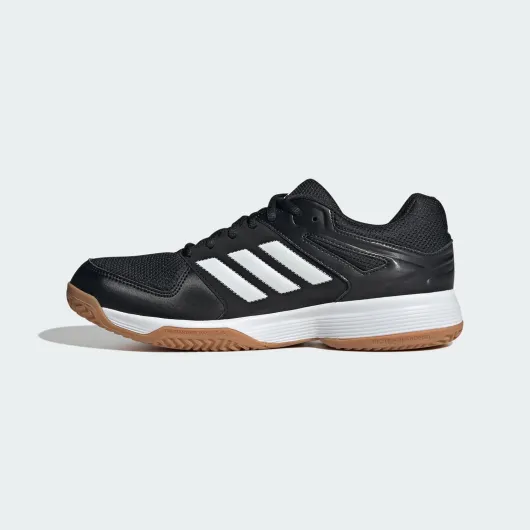
First impression: they look like exactly what they are – simple indoor court shoes. No flashy gimmicks, no weird plastic wings or giant logos. If you’re expecting some high-tech, bouncy, ultra-cushioned shoe, this isn’t that. It’s more old-school: flat, grippy gum sole, fairly low profile, and a straightforward synthetic upper.
What pushed me to try them was the price and the reviews saying the grip was good. I mostly play on synthetic indoor badminton courts and sometimes on wooden handball-style floors, so I need something that sticks well for lateral movements and sudden stops. My previous cheap no-name shoes were sliding all over the place once the floor got a bit dusty, which was getting annoying and a bit risky for my knees.
Overall, my first takeaway after a few sessions is: these shoes are practical and solid, not exciting. They do most of the basics right – grip, stability, decent comfort – but they’re not perfect. There are some sizing quirks and they’re not the best choice if you have wide feet or want big cushioning. But if you just want a reliable indoor shoe without spending a fortune, they’re worth a look.
Value for money: solid choice if you catch them at a good price
In terms of value, the Adidas Speedcourt sit in that sweet spot where you get a known brand and decent performance without paying top-tier prices. You’re not getting any fancy tech, but you are getting reliable grip, a stable platform, and a recognizable brand that usually has okay quality control. Compared to the really cheap no-name indoor shoes I’ve used before, these feel more secure on court and a bit better built, especially in the sole and upper reinforcements.
If you compare them to more expensive indoor shoes from Adidas, Asics, or Mizuno, you obviously lose some things: less cushioning, fewer support features, and less premium materials. But honestly, for a lot of casual players and club-level people, you don’t need all that. If your sessions are a couple of times a week and you’re not doing high-level competition, this level of shoe is often enough. The main trade-off is comfort over long sessions and maybe slightly shorter lifespan compared to high-end models.
Where the value is a bit mixed is the sizing and width. Because they run small and narrow, some people will have to size up more than usual or skip them altogether. If you end up having to return and reorder, that’s just a hassle. If you have average-width feet and follow the advice to go half to one size up, you’ll likely be fine and get good bang for your buck. If you have wide feet, the value drops because they may simply not work for you.
Overall, I’d say the Speedcourt offer good value for money for someone looking for a straightforward indoor shoe with strong grip and no nonsense. They’re not the best on the market, but for the price bracket they sit in, they perform well enough to justify picking them over random budget brands. If you find them on sale, they’re an even better deal.
Looks: simple, sporty, nothing flashy
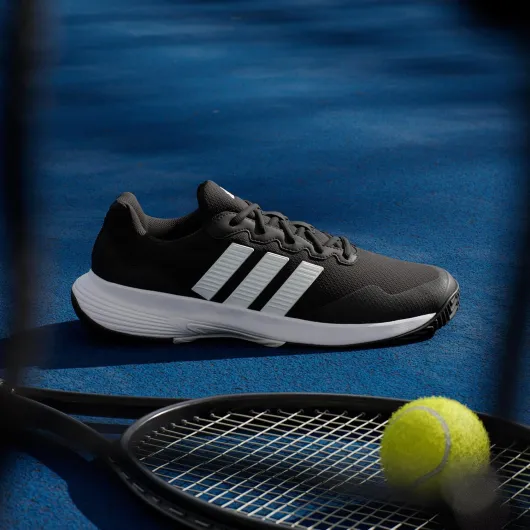
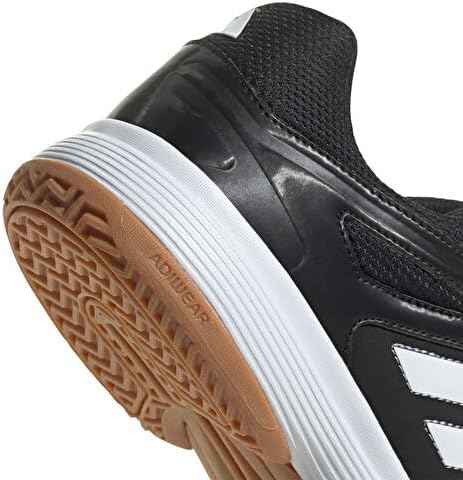
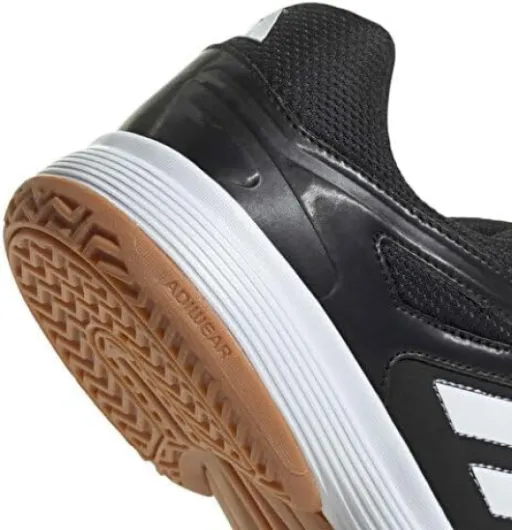
Design-wise, these Speedcourt shoes are pretty tame, in a good way. The Core Black / Cloud White / Gum combo is classic: black upper, white Adidas stripes, and a gum-colored sole. On court, they just look like standard indoor shoes. If you like neutral shoes that don’t scream for attention, you’ll probably like this colorway. I can wear them with shorts or tracksuit bottoms and they just blend in.
The silhouette is low-profile with a round toe and no heel lift to speak of. That gives you a stable, flat platform, which is great for quick changes of direction, but visually they do look more like basic training shoes than modern, chunky sneakers. Personally, I’m fine with that. For indoor sports, I’d rather have function than some weird shape that looks good on Instagram but feels unstable.
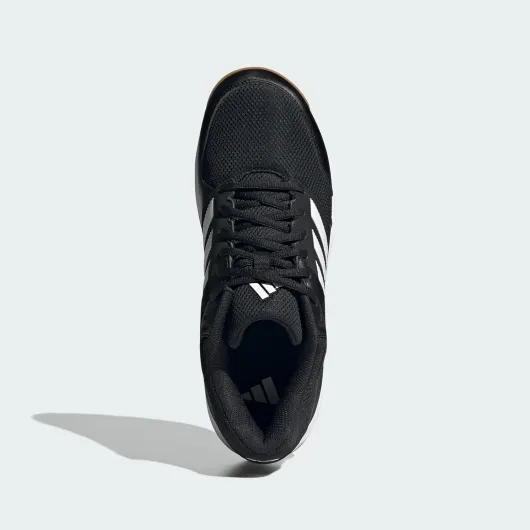
There are no unnecessary plastic parts or weird overlays. The upper is mostly textile with synthetic reinforcements in the toe and sides where you drag your foot during lunges or side steps. The branding is obvious but not overkill: three stripes on the side, small Adidas logo on the tongue and heel. From a distance, they look like any other Adidas indoor shoe, so if you’re used to the brand, there’s nothing surprising here.
One thing to note: the shoe looks quite narrow through the midfoot. That matches how it feels – it hugs the foot. If you have wide feet, you can already tell from the shape that it might be tight. For me, with fairly normal-width feet, they look and feel reasonably proportioned, but I can see why some people in the reviews said they had to return them for being too narrow. Overall, the design is clean and practical, not stylish in a streetwear way, but totally fine for sports and even casual wear to and from the gym.
Comfort: good once sized right, but narrow and quite flat
Comfort is where you really need to pay attention with these. I normally wear an 11 UK in most brands, but based on reviews saying they run small, I went up to 11.5 UK. That was the right call for me. Length-wise, the 11.5 fits like a normal 11 – I have about a thumb’s width at the front, which is what I want for sports. So my advice: go at least half a size up, maybe a full size if you’re between sizes.
The main issue is width. The shoe is quite narrow through the midfoot. I have average-width feet and I can feel the sides hugging my foot pretty snugly. It’s not painful, but it’s close to the limit. If you have wider feet, I can see this being uncomfortable, and some reviews confirm that. After about 30–40 minutes of my first session, I felt some pressure on the outer side of my foot, but by the second session, the upper had loosened slightly and it felt better. So there is a bit of break-in, but don’t expect miracles if your feet are really wide.
Cushioning is on the firm and low side. These are closer to minimalist indoor shoes than to cushioned running trainers. Personally, I like feeling close to the ground for badminton – I feel more stable and quicker on direction changes – but if you’re used to soft, bouncy shoes, these will feel hard. After long sessions, I can feel it a bit in my heels and knees, especially on harder wooden floors. Swapping the insole for a more cushioned one helped a lot, so if you need more comfort, that’s an easy upgrade.
The heel and ankle area are moderately padded, enough to avoid rubbing but not plush. I haven’t had any blisters, even on the first day, which is a good sign. The tongue is thin but doesn’t dig in once laced properly. In short, comfort is decent once you get the sizing right, but this is not a soft, relaxed shoe. It’s more for people who prefer a secure, snug fit over a cushy, roomy feel.
Materials: basic synthetic build that feels light but not premium
The materials on the Speedcourt are pretty straightforward. The upper is mainly textile with synthetic overlays. Adidas mentions at least 20% recycled content, which is nice to see, but in hand it just feels like regular synthetic mesh and overlays. The mesh areas are reasonably breathable; after long sessions my feet are warm but not soaked, which is an improvement over my old, all-synthetic brick-like indoor shoes that felt like plastic bags.
The overlays around the toe and sides give the shoe a bit more structure and protect against scuffs when you drag your foot on lunges or quick side steps. After a few weeks of use, I’ve got some marks on the toe area, but nothing is peeling or coming off yet. The stitching looks decent, not super reinforced like high-end court shoes, but solid enough for regular hobby-level play. The lining is textile and feels fine against the foot, no rough seams that rub, at least for me.
The sole is rubber – Adidas lists it as rubber outsole and natural rubber lining, with that typical gum-style finish that grips well on indoor floors. The tread pattern isn’t super aggressive; it’s more of a standard indoor pattern with multiple small grooves. On dusty courts, this still grips better than the cheaper non-brand shoes I used before, which often felt like skating once dust built up. The insole is thin and removable, made from basic foam. It’s not very cushioned, but at least you can swap it for something better if you need extra support.
Overall, the materials feel functional but budget-friendly. Nothing screams high-end, but nothing feels flimsy either. If you’re expecting thick, plush padding and fancy foams, you’ll be disappointed. If you just want a light, breathable, synthetic shoe that can take regular indoor use, these do the job. I’d rate the materials as decent for the price, but not something you’ll be excited about.
Durability: decent so far, but not built like a tank
Durability is always tricky to judge long term, but after several weeks of regular use, I can at least say how they’re holding up. I play around 3–4 times a week, and so far the outsole shows some mild wear on the forefoot, where I push off the most, but the tread is still clearly visible. No bald spots or chunks missing. For a gum-style sole, that’s about what I expected. If you use them only indoors and don’t walk around outside in them, the sole should last a good while.
The upper has a few cosmetic scuffs around the toe and medial side from lunges and dragging my foot, but nothing serious. No tearing, no stitching coming undone yet. The synthetic overlays seem to be doing their job of taking the hits. The mesh areas haven’t stretched out too much either, which is good because the snug fit is part of what keeps the shoe stable. If anything, the shoe has just softened slightly to become more comfortable without losing its shape.
Inside, the insole is starting to show the usual imprint of my foot, but it hasn’t flattened completely. The heel padding and lining are intact – no holes or worn spots, which I’ve had happen pretty quickly on some cheaper indoor shoes. The laces are standard, nothing special, but they haven’t frayed or slipped during play. As long as you stick to indoor use and don’t abuse them outdoors on concrete, I’d say the build quality is good enough for the price range.
That said, if you’re a heavy player or you train daily at a high intensity, I wouldn’t expect these to last as long as top-tier indoor shoes that cost a lot more. They feel more like solid mid-range shoes: good for regular club play, but not indestructible. For a casual or intermediate player using them a few times a week, I think you’ll get decent life out of them before the grip or cushioning starts to fade.
Performance on court: grip and stability are the strong points
On court, the Speedcourt does what it’s supposed to do. The grip is clearly the best part. On synthetic badminton courts, I can plant, stop, and change direction without sliding, even when the floor gets slightly dusty. Compared to my previous cheap indoor shoes, the difference is clear. I used to have to wipe my soles constantly; with these, I still wipe now and then, but it’s not a constant battle. On wooden indoor floors, the gum sole also holds up well, no unexpected slips during lateral movements or quick sprints.
Stability is solid thanks to the low profile. Because you’re closer to the ground, you feel more secure when lunging forward or sideways. There’s no wobbly feeling in the heel, and the shoe doesn’t feel like it’s rolling over on sharp cuts. For badminton and casual handball-style games, that’s exactly what you want. There isn’t much torsional support like you’d get on some premium court shoes, but for hobby level or regular club play, I haven’t felt limited.
Where the shoe is a bit weaker is impact protection. Jumps, hard landings, and long sessions do add up. After a two-hour badminton session with lots of jumps and smashes, my feet feel more tired than in more cushioned shoes I’ve tried in the past. The firm sole is good for responsiveness but not so great if you have knee or joint issues. Again, a better insole helps, but out of the box, it’s more on the firm side.
In terms of lockdown, once laced tightly, my foot doesn’t slide around inside the shoe. No heel lift, no sliding forward into the toe box on sudden stops. The grip plus the snug fit give you confidence when moving aggressively. Overall, performance is pretty solid for indoor sports: great grip, good stability, enough support for most casual to intermediate players. If you’re an advanced or heavy player who jumps a lot, you might want something with more cushioning and structure, but for regular use these hold up well.
What you actually get out of the box
Out of the box, the Adidas Speedcourt look like standard indoor trainers: low top, lace-up, gum outsole, classic black and white 3-stripes. Nothing fancy in the packaging either – just a normal Adidas shoe box, paper stuffing, and that’s it. No extra insoles, no bag, no spare laces. For the price point, I wasn’t expecting any extras anyway. It’s a simple, no-nonsense package.
The model I have is the Core Black / Cloud White / Gum version in size 11.5 UK. The shoe profile is pretty low and they sit close to the ground. If you’re used to chunky running shoes with a lot of foam, these will feel much flatter and more direct. The sole is rubber with a gum-style color, and the upper is mainly textile/synthetic with some overlays. The whole shoe feels fairly light in hand, not super light like top-end performance models, but light enough that you don’t feel like you’re dragging bricks on court.
Function-wise, Adidas markets them for badminton, handball, and volleyball, and that matches how they feel: they’re built more for side-to-side stability and grip than for long-distance comfort. They have regular laces, no straps or fancy lockdown systems, just a traditional lace-up closure. Inside, you get a basic insole – nothing high-tech, but it’s removable if you want to swap it for your own orthotics or a thicker insole.
My overall impression of the presentation is: basic but consistent with the price. You’re paying for a straightforward pair of indoor shoes from a known brand, not an experience. If you want a shoe that just shows up, laces up, and is ready to hit the court, this fits that description. If you enjoy unboxing premium stuff with lots of details, this is going to feel pretty plain.
Pros
- Very good grip on indoor courts (synthetic and wooden)
- Low, stable profile that works well for quick lateral movements
- Lightweight and breathable synthetic upper
- Good value for money, especially if found on sale
Cons
- Runs small and quite narrow – sizing up is almost mandatory
- Firm cushioning that can feel hard on longer or high-impact sessions
- Not ideal for very wide feet or players needing lots of support
Conclusion
Editor's rating
After using the Adidas Speedcourt Indoor Shoes regularly, my summary is pretty simple: they’re solid, functional indoor court shoes that do the basics right without trying to be fancy. The grip on indoor surfaces is strong, the low profile gives good stability, and the overall build is decent for the price. They’re light enough that you don’t think about them too much while playing, which is usually a good sign.
They’re not perfect. The fit runs small and quite narrow, so you almost certainly want to size up, and people with wide feet may struggle. Cushioning is on the firm side, so if you have sensitive joints or you like a soft, plush feel, you might want to look elsewhere or plan to add a better insole. Durability so far is good but not bulletproof – fine for regular club use, probably not ideal for heavy daily training at a high level.
I’d recommend these to players who: play badminton, handball, or volleyball a few times a week; prefer a flat, stable shoe over a soft, bouncy one; and want a known brand at a reasonable price. If you have wide feet, need a lot of cushioning, or are training very intensively, I’d look at higher-end models instead. For most casual to intermediate indoor players, though, the Speedcourt get the job done without costing a fortune.