Summary
Editor's rating
Good value if you want power and trust Paddletek, less so if you chase new tech
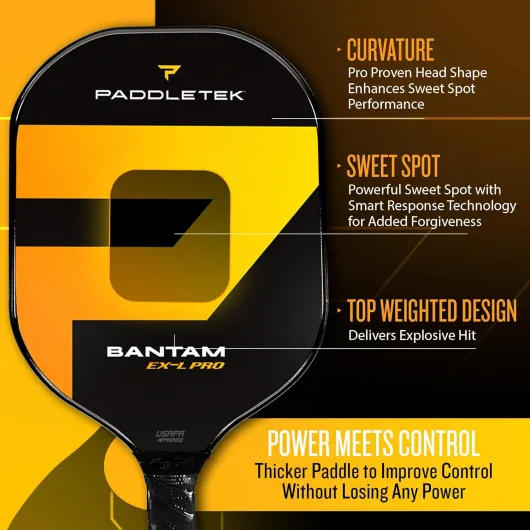
Head-heavy shape that clearly leans toward power
Comfort depends a lot on your grip choice and tolerance for weight
Polycarbonate face and carbon shaft: solid, but not cutting-edge
Feels sturdy, but watch for shipping damage and long-term wear
Big power, decent control, and spin that’s good but not wild
What you actually get out of the box
Pros
- Strong power on drives, serves, and put-aways thanks to head-heavy design
- Comfortable, cushioned standard grip with decent vibration control
- Solid, consistent build quality and feel across the hitting surface
Cons
- On the heavy, head-heavy side, which can tire your arm and slow hand speed
- Spin and forgiveness are only average compared to newer raw carbon paddles
- Thin grip version feels cheap and lets you feel the core structure

Specifications
View full product page →| Brand | Paddletek |
A power paddle that doesn’t baby your mistakes
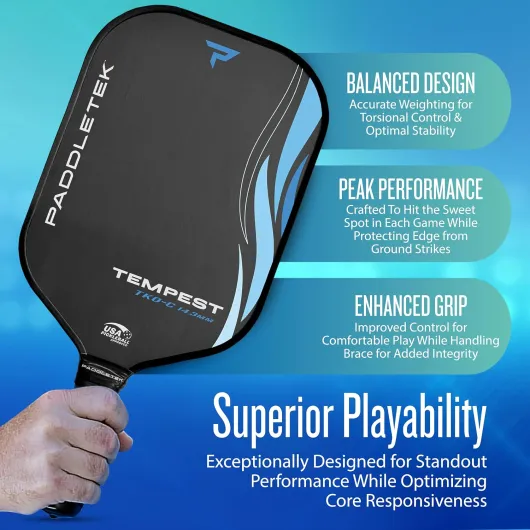
I’ve been playing pickleball 3–4 times a week for a couple of years now, mostly at an intermediate level, and I picked up the Paddletek Bantam EX-L Pro (Horizon / yellow, standard grip) because I wanted more pop than my old control-focused paddle. I used it for about three weeks, both indoors and outdoors, before writing this. So this isn’t a “hit 10 balls and review” situation; it’s based on league play and a few long drill sessions.
The first thing that stood out is that this is a head-heavy, power-oriented paddle. You feel the weight up top as soon as you start swinging. If you’re coming from a lighter or more balanced paddle, there’s a short adjustment period. My drives and put-aways got noticeably stronger, but I also sailed a few more balls long the first couple of sessions until I dialed it in.
What surprised me is the mix of pop and control. The face has that classic Paddletek feel: not super gritty, but the ball stays on the paddle long enough that you can shape shots. I wouldn’t call it a pure control paddle though. If you’re lazy with your hands at the kitchen, the extra pop will expose you. I had to tighten up my soft game to keep dinks low.
Overall, my first impression after a week was: great for aggressive play, decent for touch once you adjust, but not ideal if you’re sensitive to weight. If you like to drive, counter, and finish points instead of just dinking all day, it’s worth a look. If your elbow is already complaining with heavier paddles, I’d be careful with this one.
Good value if you want power and trust Paddletek, less so if you chase new tech
Price-wise, the Bantam EX-L Pro sits in that mid-to-high range where you start asking, “Is this really worth it over a cheaper paddle?” After using it a few weeks, I’d say it’s good value for a certain type of player, but not for everyone. If you specifically want a head-heavy, power-focused paddle from a known brand and you don’t care about having the latest raw carbon tech, it makes sense. It gives you strong performance, a solid build, and a feel that a lot of players already trust.
On the other hand, if you’re mainly after spin or a super-light, whippy paddle, your money might be better spent elsewhere. There are newer paddles in a similar price bracket with more aggressive spin surfaces and lighter swing weights. For example, my raw carbon paddle in a similar price range gives me more spin and a bigger sweet spot, but slightly less free power. So you’re basically choosing what you want to pay for: proven power and feel vs. newer tech and spin.
Compared to budget paddles, yes, this is a clear step up in feel, consistency, and finish. You don’t get the hollow, buzzy sensation you get from many cheap options, and the grip and core are noticeably nicer. If you’re moving from a $50–$70 paddle to this, you’ll feel the difference. Whether that difference justifies the full price depends on how often you play and how serious you are. If you’re on court a few times a week, I’d say it’s reasonable. If you only play once a month, it’s probably overkill.
So in terms of value: good, but targeted. Great if you want Paddletek’s power feel and plan to use it a lot. Just okay if you’re more curious about the latest spin monsters or if you’re a very casual player.

Head-heavy shape that clearly leans toward power
The main design choice you notice with the Bantam EX-L Pro is the top-weighted balance. Paddletek leans into this on purpose to give you more power on drives and overheads. In practice, that means your swing has more momentum once it gets going, but it also means your wrist and forearm do more work when you’re at the net. After two long sessions of fast hands battles, I felt more forearm fatigue than with my lighter, more evenly balanced paddle.
The overall shape is pretty standard: around 16" long and about 7 7/8" wide. That gives you a decent sweet spot but not a huge one. Compared to some wider, more forgiving paddles, the EX-L Pro punishes you a bit more on off-center hits. When I caught the ball closer to the edge guard, I could feel a little twist in my hand and a drop in power. If your contact is clean most of the time, it’s fine. If you’re still working on consistent strokes, you’ll probably notice more mishits.
The edge guard is fairly low profile and didn’t get in the way, but like any edged paddle, you will occasionally get a dead-ish response if you hit too close to it. The handle length is around 5" (grip length listed as 4 3/4–5 depending on version), which worked for me with a one-handed backhand. If you like to fully two-hand your backhand with a lot of space, it might feel a bit short. For most rec players, it’s totally workable.
In short, the design is purpose-built for people who want power first, control second. It’s not an all-court, super-forgiving shape. If you like feeling the paddle head whip through the ball and you’re okay putting in a bit more effort on your soft game, the design lines up with that style. If you want a big, forgiving sweet spot and light hands at the kitchen, there are better options.
Comfort depends a lot on your grip choice and tolerance for weight
Comfort is where this paddle can be hit-or-miss depending on your preferences. I went with the standard grip (4 3/8"), and for my medium-sized hands that was the right call. It fills the hand nicely without feeling bulky. The stock grip is cushioned and tacky enough; I didn’t feel the need to add an overgrip right away. In hot weather, it got a bit slick after a while, but nothing dramatic. Some players, like one of the Amazon reviewers, actually prefer the smaller grip so they can add an overwrap and customize the tackiness, which makes sense if you play in high heat and humidity.
About the thin grip version: I tried a friend’s EX-L Pro with the thin grip, and I agree with the Amazon review that called it “kind of terrible.” You can feel a bit of the honeycomb pattern through the thinner grip wrap, and it just doesn’t feel as solid in the hand. If you have very small hands and absolutely need a thin grip, maybe, but personally I’d either stick to the standard grip or look at a different paddle that’s designed with a thinner handle from the start.
In terms of weight comfort, at 8.3–8.7 oz and head-heavy, you feel this paddle over a long session. During a two-hour open play, my arm and wrist were more tired than with my 7.8–8.0 oz balanced paddle. The trade-off is you get easier power on drives and overheads. If you have any history of elbow, wrist, or shoulder issues, I’d be cautious. The core and construction do a good job limiting vibration, so it doesn’t feel harsh, but the sheer swing weight is there.
So comfort-wise: standard grip = good, thin grip = meh, and the weight is fine if you’re relatively strong or used to heavier paddles. If you’re coming from very light gear or dealing with joint problems, this might feel like too much after an hour or two.
Polycarbonate face and carbon shaft: solid, but not cutting-edge
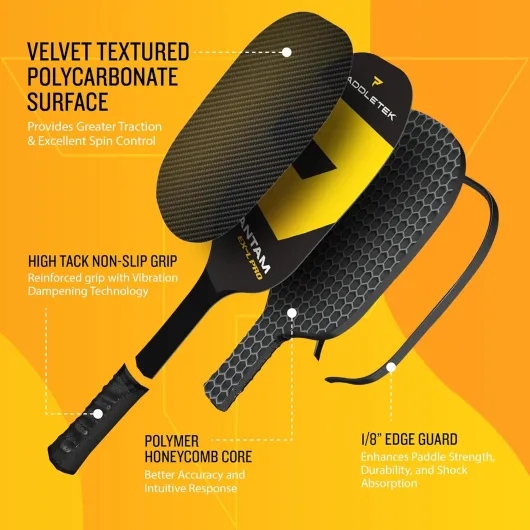
The Bantam EX-L Pro uses a velvet textured polycarbonate face and a polymer honeycomb core, with a carbon fibre shaft area. On paper, it’s a bit old-school compared to the newer raw carbon fiber paddles that are all over the courts now. In practice, though, it still feels pretty solid. The face has a slightly soft, cushioned feel on impact rather than that crisp, pingy feel some carbon paddles have. That soft feel helps with control a bit, especially on blocks and dinks.
Spin-wise, the polycarbonate surface does an okay job. It’s not dead, but it’s also not in the same league as raw carbon surfaces. When I really brushed up on the ball on topspin drives or heavy serves, I could get decent rotation, but it took more effort than with spin-focused paddles. One Amazon reviewer mentioned there’s “not a lot of grit” but he can still get spin, and I’d agree. If you rely heavily on spin to win rallies, this might feel a bit limited. If you just need moderate spin, it’s fine.
The core feels consistent across most of the face. You don’t get weird hot spots or dead zones in the center, which is good. Off-center hits near the edges lose some power, but that’s normal. I didn’t notice excessive vibration; in fact, compared to a couple of cheaper paddles I own, this one felt friendlier on my joints. One reviewer mentioned the vibration reduction helps their hands not get sore, and that lines up with my experience. I’ve had some mild elbow complaints in the past, and this paddle didn’t make them worse.
So overall, the materials are solid but not bleeding-edge. You’re not getting the latest raw carbon tech or crazy spin, but you are getting a dependable, cushioned feel and decent durability from what I can tell so far. If you want the most modern, techy surface, this isn’t it. If you want something proven that just plays consistently, it does the job.
Feels sturdy, but watch for shipping damage and long-term wear
In the few weeks I’ve used the Bantam EX-L Pro, durability has been fine. I’ve knocked it on the court a couple of times going for low balls and had the usual paddle clashes at the kitchen, and the edge guard has held up. No peeling, no cracks, no weird rattles. The face has a few cosmetic scuffs from outdoor balls and fence brushes, but nothing out of the ordinary. The texture is still there; it hasn’t gone glassy-smooth yet.
One Amazon reviewer did mention receiving the paddle damaged out of the box. Mine arrived fine, but that’s something to be aware of: check the edges and face as soon as you get it. With international shipping or third-party sellers, stuff gets tossed around. If you see dents in the edge guard or a warped face, send it back right away. That’s more of a logistics issue than a design flaw, but it still matters to the buying experience.
Compared to cheaper paddles I’ve owned, the EX-L Pro feels more solid. The handle doesn’t creak or twist, and the grip wrapping hasn’t started unraveling. I’ve seen some low-end paddles start buzzing or develop soft spots in the core pretty quickly; nothing like that so far here. Obviously, I can’t comment on year-long durability yet, but based on the build and other owners who have multiple EX-L Pros, it seems like it holds up decently over time.
So from a durability standpoint, I’d call it pretty solid for regular play. Not indestructible, but nothing fragile either. Just inspect it when it arrives, and don’t expect it to look brand new forever if you’re playing several times a week and diving for balls.
Big power, decent control, and spin that’s good but not wild
On court, the Bantam EX-L Pro is clearly tuned for power and pop. My drives, serves, and overheads all had more pace compared to my control paddle. I noticed it especially on third-shot drives and counter-attacks at the kitchen. If someone gave me a high ball, it was easier to put it away. One Amazon reviewer mentioned her husband wins often with it and never complains, and I can see why: if your mechanics are solid, this paddle rewards you with extra punch without having to swing out of your shoes.
The flip side is that you need to respect the power on softer shots. For the first few sessions, I popped up way more dinks and resets than usual. The paddle just sends the ball off the face quicker. Once I adjusted my touch and focused on a shorter, softer stroke, things settled down. At that point, I’d say the control is good but not automatic. You can definitely play a solid soft game with it, but it’s not as forgiving as a true control paddle. Mishits or lazy hands at the net will fly.
Spin performance is in the “good enough” category. I could hit some topspin drives and serves, and I could get decent cut on slices, but compared directly to a raw carbon paddle I own, the spin is clearly lower. For rec and intermediate play, that’s probably fine. If you’re in higher-level, spin-heavy play, you might find yourself working harder to get the same kick.
Fast hands and blocking are a mixed bag. The head-heavy balance gives you solid stability on blocks—hard drives into your body are easier to absorb and redirect. But in rapid-fire exchanges at the kitchen, the extra swing weight slows you down a bit. I noticed I was just a hair late in some hand battles compared to my lighter paddle. So if your game is built on quick volleys and hand speed, this might not be ideal. If you rely more on power and strong counters, it fits better.
What you actually get out of the box
When the Bantam EX-L Pro showed up, the packaging was nothing fancy: a simple plastic sleeve and a tag. No case, no extras. For the price point, I wouldn’t have minded at least a basic cover, but in the end it’s not a deal-breaker. The paddle came fully strung (well, it’s a paddle, so no strings to worry about) and ready to play. The Horizon (yellow) color is bright and easy to spot on the courts, which I actually like when I toss it in a pile with other paddles.
Specs-wise, mine weighed in at about 8.5 oz on a kitchen scale, which lands right in the middle of the stated 8.3–8.7 oz range. Grip size on the standard version is listed as 4 3/8" and that felt accurate compared to my other paddles. Length is 16" and width around 7 7/8", so it’s a fairly standard shape, not one of those long skinny “blade” paddles. You can feel the top-weighted design even before swinging; the balance point is clearly higher than on something like a Selkirk S2 or a lighter Joola.
Right out of the plastic, the build looked clean: no obvious glue blobs, no edge guard gaps, no weird warping. The surface has a velvet-textured polycarbonate feel. It’s not super rough like some carbon paddles, but you can feel a light texture with your fingers. The branding is big but not ridiculous. If you care about looks, it’s modern enough without screaming “look at me.”
So in terms of presentation, it’s pretty straightforward: you pay for the paddle, not the unboxing experience. If you like simple, no-nonsense gear, that’s fine. If you expect premium packaging or included accessories at this price, you’ll probably shrug and move on.
Pros
- Strong power on drives, serves, and put-aways thanks to head-heavy design
- Comfortable, cushioned standard grip with decent vibration control
- Solid, consistent build quality and feel across the hitting surface
Cons
- On the heavy, head-heavy side, which can tire your arm and slow hand speed
- Spin and forgiveness are only average compared to newer raw carbon paddles
- Thin grip version feels cheap and lets you feel the core structure
Conclusion
Editor's rating
The Paddletek Bantam EX-L Pro is a power-first pickleball paddle that rewards clean mechanics and an aggressive style. If you like ripping drives, punching counters, and putting balls away whenever you get a sitter, it does a good job. The head-heavy balance and 8.3–8.7 oz weight give you easy pace, and the cushioned polycarbonate face keeps the feel from getting too harsh. Control and spin are decent once you adjust, but they’re not the main selling points here.
Comfort and fit are heavily tied to the grip and your tolerance for weight. The standard grip feels solid and cushioned; the thin grip, in my opinion and based on another user’s comment, is not great and makes the handle feel uneven. If you’ve had elbow or wrist issues or prefer ultra-light paddles, this might feel like too much after long sessions. Durability looks solid so far, though you should check for shipping damage right away.
Who is it for? Intermediate to advanced rec players who play often, hit hard, and want a reliable, powerful paddle from a known brand. Who should skip it? Players chasing maximum spin, people who want a very light, fast paddle for hand battles, and anyone with sensitive joints who struggles with heavier gear. For the right player, it’s a pretty solid, no-nonsense workhorse. For others, it’ll feel like a bit of an outdated tank compared to newer options.