Summary
Analysis score
Average of the criteria rated below
Is the JOOLA Perseus Heat Vision worth the money?
Shape, balance and the Perseus identity
Carbon fiber build and SK film: solid on paper
Build quality, vibration and long-term outlook
Control, power and spin: what users say on court
Specs and positioning: what this JOOLA paddle really offers
Pros
- Textured carbon fiber face and 16 mm core for a strong mix of control and spin
- Thermoformed construction with SK film aimed at stability and reduced vibration
- USAP certified, Ben Johns‑branded, and generally viewed as good value around the £80 mark
Cons
- At least one buyer reports noticeable dead spots and less forgiveness than a cheaper paddle
- Not the cheapest option for beginners who just want an easy, entry‑level paddle

Specifications
View full product page →| Brand | JOOLA |
A Ben Johns-branded paddle that aims high
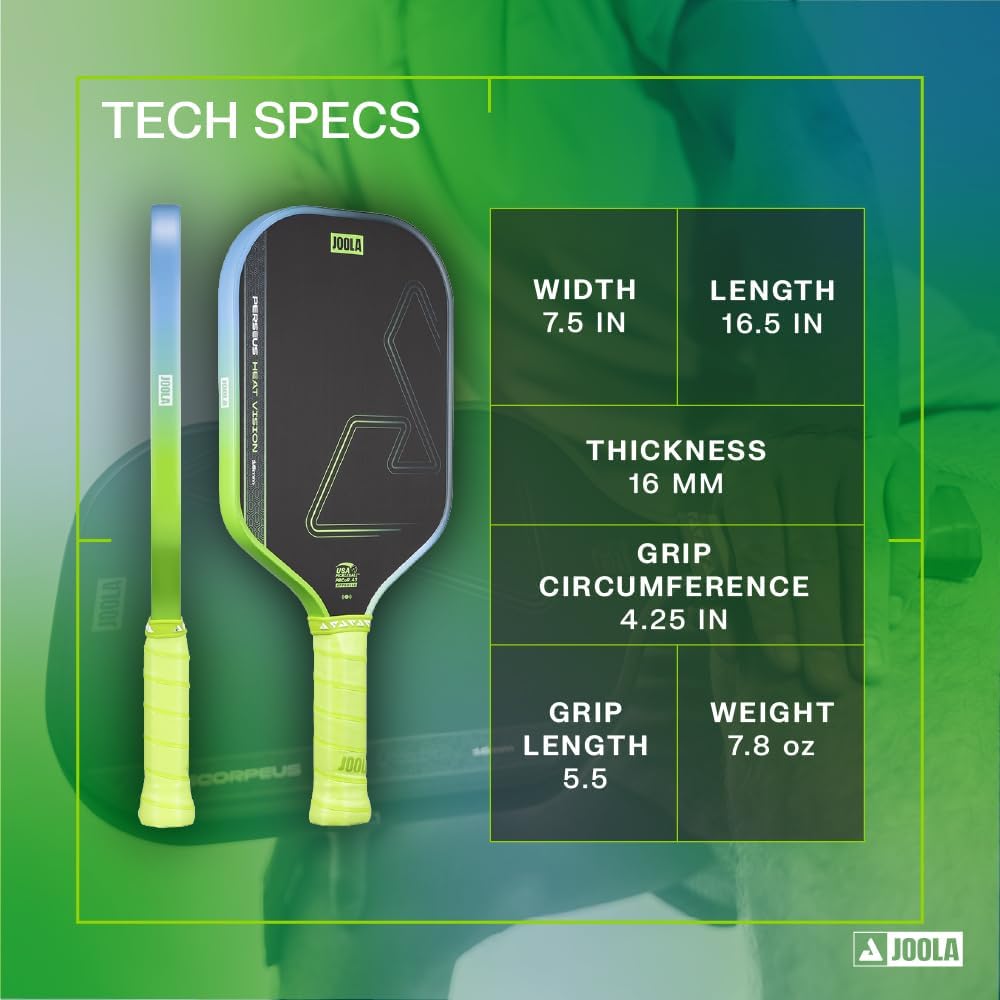
The JOOLA Vision/Double Vision Perseus Heat Vision 16 mm is clearly aimed at players who want something more serious than an entry-level composite paddle. It carries the JOOLA name, the Ben Johns association, and a spec sheet that leans toward control and spin: 16.5" length, 7.5" width, around 7.8 oz, with a textured carbon fiber face. On paper, it sits in the popular thermoformed carbon category that many competitive players now look for.
The published rating sits at 4.4/5 from 24 reviews, which suggests that most buyers are happy with it, but it is not without criticism. Several comments highlight good responsiveness, decent power, and easy spin, while one or two point out possible dead spots on the face. This mix of praise and reservations gives a more nuanced picture than the brand’s marketing speech.
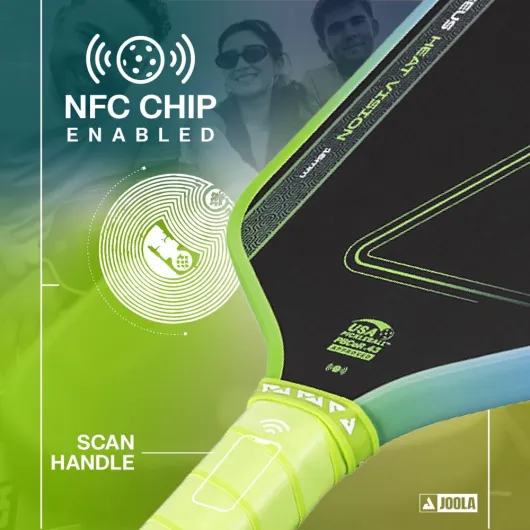
JOOLA also throws in some modern touches: an embedded NFC chip that links to the JOOLA Connect app for registration and content, plus a 12‑month warranty once registered. That kind of connected feature is still rare in pickleball gear and shows JOOLA is trying to build an ecosystem around its paddles rather than just selling hardware.
Overall, this paddle looks like a mid‑to‑upper range option that tries to balance control, spin, and power in a pro‑inspired shape. In my opinion, it targets ambitious beginners through to solid club players who want something more advanced than a cheap starter paddle, without necessarily going all the way to the most expensive pro models. The rest of the analysis comes down to whether the materials and user feedback justify the price level and the Ben Johns branding.
Is the JOOLA Perseus Heat Vision worth the money?
From a value perspective, this paddle sits in an interesting spot. One buyer explicitly calls it “good value for the money £79.99”, which lines up with its position as a mid‑range to mid‑high paddle rather than a bargain‑basement option. For that price level, you get a textured carbon fiber face, a thermoformed construction, an SK film layer for vibration control, USAP certification, and the Ben Johns association. On paper, that’s a fairly complete package compared with many anonymous Amazon paddles at similar or slightly lower prices.
The overall user rating of 4.4/5 from 24 reviews supports the idea that most buyers feel they got a fair deal. Beginners mention that they quickly got a feel for the paddle and would recommend it to others starting out but wanting their own gear. Intermediate players around the 3.5 level say they are enjoying the paddle and find it responsive. Fast delivery and basic quality impressions are also mentioned, which adds to the perception of a solid purchase, even if those aspects are more about the seller than the paddle itself.
The main caveat on value comes from the comment about dead spots and the comparison to a cheaper £40 paddle. That buyer felt they played better with the less expensive alternative, which underlines an important point: a higher price and better materials do not automatically mean better performance for every player. If you are a newer player with inconsistent contact, a more forgiving, cheaper paddle might actually feel easier, even if the JOOLA is theoretically superior.
In my opinion, the JOOLA Perseus Heat Vision offers good value for players who know they want a carbon, tournament‑ready paddle from a recognized brand and are ready to spend more than basic starter money, but not top pro prices. If your priority is pure forgiveness at the lowest cost, there are cheaper paddles that will do the job. If you are aiming for long‑term use, like the idea of an NFC‑linked warranty, and care about spin and control, then the feature set and the largely positive feedback make the price easier to justify.
Shape, balance and the Perseus identity
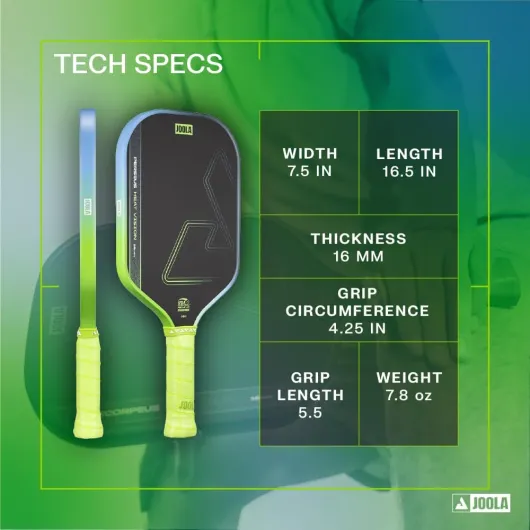
The design here revolves around the “iconic Perseus shape” that JOOLA pushes in its higher‑end range. That means an elongated 16.5" by 7.5" profile, which should give extra reach at the net and on wide balls, compared with more classic 16" x 8" shapes. This kind of profile typically shifts the sweet spot slightly higher on the face and rewards players who like to attack and use their length to poach or counter at the kitchen line.
The handle length of 5.5 inches stands out. Many paddles hover closer to 5.0". That extra half‑inch can matter for those with a tennis background, especially for two‑handed backhands. It also affects balance: a longer handle can pull the center of mass slightly closer to the hand, which, combined with the 7.8 oz weight, should give a controlled swing that is neither too head‑heavy nor too whippy. A couple of buyers mention that the paddle feels light and easy to swing, which suggests the balance point is fairly user‑friendly.
Aesthetically, the "Surge Green" colorway and "Heat Vision" branding give it a modern, sport‑oriented look rather than a plain club paddle feel. While the reviews do not go into visual details, the fact that one beginner says it "caught my eye" indicates that the graphics do their job at least as a shelf appeal factor. In my opinion, JOOLA is clearly trying to make this paddle look like part of a pro‑level lineup, not a generic Amazon paddle.
Functionally, the thermoformed construction is an important design choice. Thermoforming usually means the edge and body are fused together for better structural rigidity and consistency over time. Combined with the SK film, the design is meant to control vibration and maintain a solid feel across the hitting surface. One buyer does mention perceived dead spots, which might indicate that the practical sweet spot isn’t as large as some competing paddles, especially for off‑center hits. If design consistency across the face is your top priority, that’s something to keep in mind.
Carbon fiber build and SK film: solid on paper
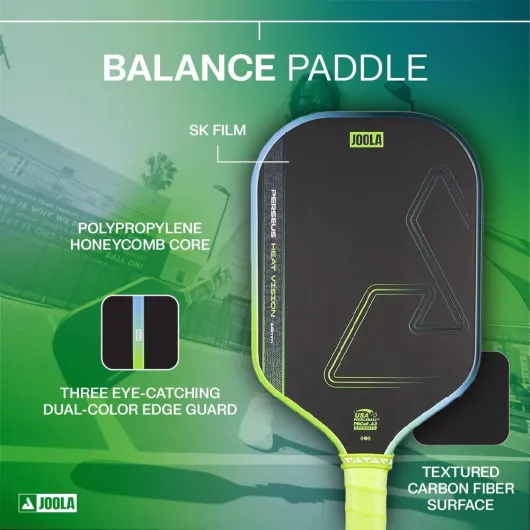
The materials are one of the main selling points. The paddle uses a carbon fiber face, carbon fiber frame, and a honeycomb core. Carbon fiber is now the standard for higher‑end pickleball paddles because it combines stiffness, durability, and the ability to generate spin when textured. Here, JOOLA highlights an "advanced textured finish" designed for durability, power, control, and spin. Several reviews back this up partially: one buyer talks about good spin potential and a nice lightweight feel, which matches what you’d expect from a textured carbon surface in this weight range.
The core is a honeycomb structure bonded by JOOLA’s SK film layer. This extra layer is supposed to reduce vibration and improve the responsiveness of the paddle face. On paper, that should mean a more consistent feel on contact and a bit less sting on mishits, especially compared with very basic polymer or wooden paddles. The manufacturer also mentions thermoforming, which usually improves structural stability by integrating the edge and body into a single shell rather than gluing separate parts.
However, materials are not everything. One review mentions "many dead spots" across the paddle face compared with a cheaper £40 model, after trading paddles during a session. That buyer still gives 4 stars and acknowledges being a beginner, but the comment suggests that either the sweet spot is more concentrated or the player expected a more forgiving feel from a carbon thermoformed paddle. This doesn’t contradict the materials themselves, but it shows that real‑world consistency may not match the theoretical promise for everyone.
In my opinion, the materials list is strong for the price: full carbon construction, textured face, thermoformed build, and a vibration‑reducing film are usually features seen on pricier paddles. If you are specifically chasing a carbon fiber setup with spin potential and tournament approval, this JOOLA ticks those boxes. The flip side is that expectations rise with this kind of spec sheet, and any inconsistency in feel or sweet spot will stand out more than on a cheaper, less ambitious paddle.
Build quality, vibration and long-term outlook
Durability is always tricky to judge without long‑term lab data, but a few clues stand out. First, the paddle is thermoformed, which generally provides better structural integrity compared to traditional edge‑guard‑plus‑face builds. Thermoforming tends to reduce the risk of early delamination between face and core, a known issue on some cheaper composite paddles. The use of carbon fiber for both frame and face also suggests better resistance to warping and surface wear than basic fiberglass or plastic options.
The SK film layer is promoted as a way to reduce vibration and create a more consistent bond between the honeycomb core and the carbon surface. While the reviews do not go into technical detail, no one mentions excessive buzzing or discomfort, and several buyers refer to the paddle as light and easy to handle. That indirectly hints that vibration is at least under control for most players. The 12‑month warranty accessible through the NFC registration also shows that JOOLA is confident enough in the build to back it for a full year.
Interestingly, the only strong negative remark about the hitting surface is the comment about "dead spots". The buyer and their hitting partner concluded that inconsistent response across the face was the issue. This is more about performance consistency than pure structural durability, but if it stems from minor variances in the core bond, it could also be related to quality control. Still, there are no widespread complaints in the 24 reviews about cracks, peeling, or early breakage, which you often see quickly if a paddle has major durability flaws.
In my opinion, the durability outlook is generally positive for this price segment: carbon, thermoforming, and a brand with a reputation in racket sports are reassuring elements. It’s not immune to potential QC issues, and a few more detailed long‑term reviews would be useful, but nothing in the comments suggests a common structural problem. If you register through the NFC chip and keep an eye on the face over the first months, you should have a decent safety net via the warranty if something abnormal shows up.
Control, power and spin: what users say on court
Performance‑wise, this paddle is marketed as a balance of power, control, and reach. The 16 mm core thickness usually leans toward control and stability, while the carbon fiber face and elongated shape give enough pop for finishing shots. Among the reviews, one 3.5‑level player says the paddle is "very responsive" and that they are enjoying it, which suggests that the combination of core and face can deliver precise feedback for intermediate‑level play.
Spin is a recurring theme. JOOLA’s textured carbon surface is designed to grip the ball, and one buyer explicitly mentions that it is "good for spin" and "nice and lightweight" around 7.8 oz. For players who rely on topspin drives, heavy serves, or spinny dinks, this should be a plus. The USAP PBCoR.43 certification also implies that the paddle meets performance standards for sanctioned competition, which matters if you plan to enter tournaments or local leagues.
However, performance feedback is not entirely one‑sided. The most critical review brings up "dead spots" on the face, saying that they played better with a cheaper £40 paddle during a swap. They felt that missing the sweet spot led to noticeably weaker shots. While this is one person’s experience and they still rated the paddle 4 stars, it indicates that the sweet spot might be more defined and less forgiving for beginners who don’t consistently find the center. For advanced players who strike cleanly, that may be less of an issue; for newer players, it could mean a steeper learning curve.
In my opinion, the overall performance profile looks like this: good spin, decent power, strong control potential, but not the most forgiving face. If you are coming from a very soft, wide‑body beginner paddle, the Perseus shape and 16 mm carbon build may initially feel less forgiving on mishits. On the other hand, if you are a 3.0–4.0 player wanting to shape the ball more and play a controlled game near the kitchen, the specs and most comments suggest it should get the job done well.
Specs and positioning: what this JOOLA paddle really offers
On paper, the JOOLA Perseus Heat Vision 16 mm is a thermoformed carbon fiber paddle with a 16 mm core, aimed at players looking for control and spin with enough power to finish points. The listed dimensions are 16.5 inches long and 7.5 inches wide, which fits the standard elongated shape many attacking players like for extra reach. The weight is around 0.57 kg (about 7.8 oz), putting it in a midweight zone: not a featherweight control paddle, but not a sledgehammer either.
The paddle uses a textured carbon fiber surface and a honeycomb core bonded with JOOLA’s SK film layer. That SK film is advertised as reducing vibration and improving response across the face. The paddle is USAP PBCoR.43 certified, so it is legal for tournament play, which matters for league and competition players. The grip length is listed at 5.5 inches, which is on the longer side and should suit players who like two‑handed backhands or a more tennis‑like feel.
A key marketing angle is the link with Ben Johns, currently the top name in pickleball. JOOLA is his official paddle sponsor, and this Perseus family shape is described as one trusted by pros. That doesn’t automatically make it the right fit for everyone, but it explains why the paddle aims for a performance segment rather than casual recreation use. In the reviews, one buyer specifically mentions using it around the 3.5 level and finding it responsive, which lines up with this positioning.
From a value standpoint, one review calls it "good value for the money" at around £79.99, which puts it in a mid‑range to mid‑high price bracket depending on your market. It is clearly more expensive than basic fiberglass paddles around £30–40, but cheaper than some top‑tier carbon paddles that go well above £150. In my opinion, everything about the spec sheet suggests JOOLA is targeting players ready to invest in serious gear, but still watching price and not just chasing the most expensive flagship model.
Pros
- Textured carbon fiber face and 16 mm core for a strong mix of control and spin
- Thermoformed construction with SK film aimed at stability and reduced vibration
- USAP certified, Ben Johns‑branded, and generally viewed as good value around the £80 mark
Cons
- At least one buyer reports noticeable dead spots and less forgiveness than a cheaper paddle
- Not the cheapest option for beginners who just want an easy, entry‑level paddle
Conclusion
Analysis score
The JOOLA Vision/Double Vision Perseus Heat Vision 16 mm looks like a solid mid‑to‑upper range pickleball paddle built around carbon fiber, an elongated pro‑inspired shape, and modern extras like the NFC chip and SK film. The spec sheet is strong for the price: textured carbon face for spin, 16 mm core for control, 7.8 oz weight for manageable swing speed, and USAP certification for competitive play. With an average of 4.4/5 from 24 reviews, most buyers seem satisfied, especially beginners and 3.0–3.5 players who want to step up from club or budget paddles.
It’s not perfect, though. At least one buyer reports noticeable dead spots and felt more comfortable with a cheaper paddle, which suggests that the sweet spot might be more demanding than some expect. If you tend to mishit a lot and just want a very forgiving, cheap tool to learn the basics, this JOOLA may not feel like a dramatic upgrade. But if you want a recognizable brand, a carbon build with good spin potential, and a shape trusted by high‑level players, the overall package is convincing for the money.
In my opinion, this paddle suits ambitious beginners through solid intermediates who want to invest in a quality, tournament‑legal paddle without going to the absolute top price tier. Players who prioritize maximum forgiveness at the lowest price, or who are very sensitive to face consistency, might want to compare it with a few alternatives before committing. Overall, it’s a well‑equipped paddle with more strengths than weaknesses, as long as your expectations match its performance‑oriented profile.