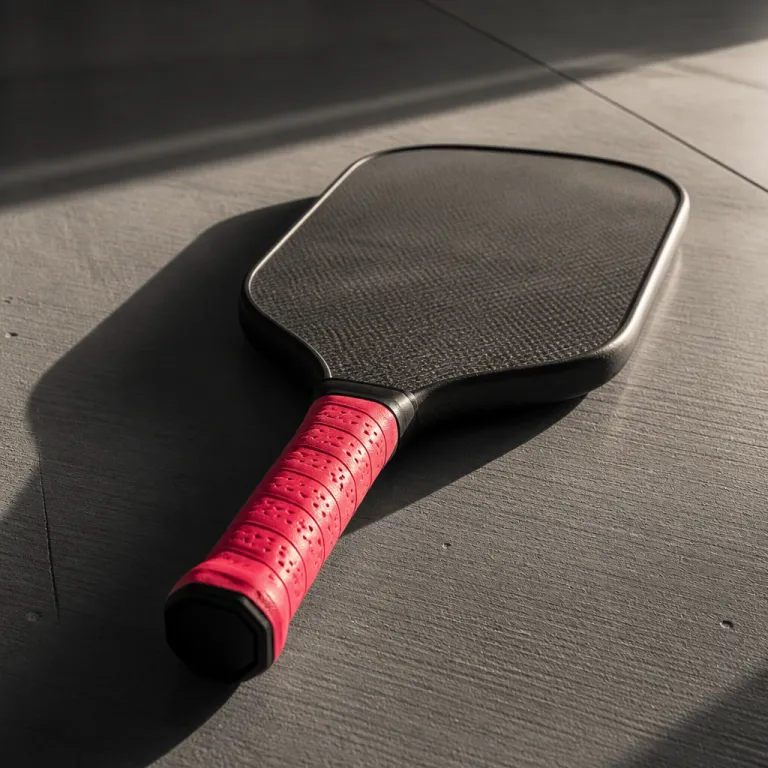
Why the best pickleball paddles for beginners to intermediate players matter
The best pickleball paddles for beginners to intermediate players shape how quickly you gain control and confidence on court. A well balanced paddle is designed to forgive mishits, reduce vibration, and help you place the ball where you intend, which lets beginners focus on footwork and tactics instead of fighting their equipment. When players move into the intermediate category, they need pickleball paddles that still feel simple and stable but also respond fast enough for sharp volleys and a great soft game near the kitchen.
Many new players try to find the best paddles by copying what advanced tournament athletes use, yet those models often feel too heavy or too powerful for developing technique. A better strategy is to select a paddle in the all court category with a medium weight around 215 to 235 grams, because this range offers full support for both control and power without overloading your arm. When you match your paddle weight and grip size to your body, you earn more consistent contact, fewer mishits, and less strain on your wrist and elbow.
Price often becomes the first filter when people search for the best pickleball equipment, but the cheapest paddles rarely provide the stable feel that beginners need. Instead of chasing the lowest price, think about long term value and how a reliable paddle can help you work on skills for several seasons before you outgrow it. When you invest in one of the best pickleball paddles for beginners to intermediate players, you send a clear signal to yourself that your practice time matters and that you expect your gear to support your progress.
Core materials, shapes, and how to find the right feel
Every pickleball paddle starts with a core, and for most beginners the best option is a polymer honeycomb core that balances touch and power. This type of core is designed to dampen vibration, which helps beginners and intermediate players keep a relaxed grip and maintain control during fast exchanges at the net. When you compare paddles side by side, you will quickly find that polymer cores sound softer and feel more stable than aluminum or Nomex cores, which can be too loud and too stiff for many new players.
The face material also shapes how the paddle will work for you, with fiberglass faces offering more pop and graphite or carbon fiber faces giving finer control and a great sense of the ball on the strings. For the best pickleball paddles for beginners to intermediate players, a graphite face on a polymer core often sits in the sweet spot, because it lets you send accurate dinks while still having enough power for serves and drives. As a practical example, many entry-to-mid-level paddles in this category use a 13 mm to 16 mm polymer core, a graphite face, and a midweight build around 220 grams to help players find a predictable, arm friendly response.
Shape and grip size complete the picture when you try to find the best paddles for your style and body. Standard shapes give a full sweet spot and are usually the best match for beginners, while elongated shapes can help advanced players reach wider but demand better timing. Choose a grip circumference that lets your fingers wrap comfortably without overlap, because a grip that is too large will send extra stress into your elbow, while a grip that is slightly smaller allows your hand to work naturally and adjust during play.
Weight, balance, and how power evolves from beginners to advanced
Weight is one of the most important specifications when selecting the best pickleball paddles for beginners to intermediate players, because it directly affects swing speed and fatigue. Light paddles around 200 to 215 grams feel fast and simple to maneuver, which can help beginners react at the net but may reduce stability on off center hits. Midweight paddles in the 215 to 235 gram range usually offer the best match between control and power, giving you enough mass to send deep serves while still allowing quick hand battles.
Heavier paddles above roughly 235 grams can generate great power with less swing effort, yet they demand stronger wrists and shoulders and are often better suited to advanced players who already have efficient technique. As you progress from the beginners category toward intermediate and then advanced levels, you may gradually earn the strength and timing to handle a slightly heavier paddle without losing control. When that happens, you can start exploring models that shift the balance toward the head, which will help you send heavier drives and more penetrating volleys.
Players who already compete at a high level often look for the best paddles with specialized features such as thermoformed carbon faces and extended handles, and these designs can be studied in depth through this overview of top advanced player paddles for serious competitors. However, the best pickleball paddles for beginners to intermediate players should prioritize arm friendly weight, a neutral balance, and a forgiving sweet spot rather than extreme power. When you respect this progression, your equipment will support your growth step by step, instead of forcing you into a style that does not yet fit your current level of play.
Grip comfort, injury prevention, and on court support
Grip comfort often separates the best pickleball paddles for beginners to intermediate players from cheap entry level options that feel harsh after a few games. A quality grip is designed to absorb sweat, cushion impact, and help your hand maintain a relaxed hold, which reduces the risk of elbow and wrist pain during long sessions. When you test a paddle, pay attention to whether the grip feels secure without squeezing hard, because that simple detail can earn you many extra hours of comfortable practice.
Players who come from tennis sometimes choose a paddle grip that is too large, assuming that more bulk will provide better support for the arm. In pickleball, a slightly smaller grip often works better, since it allows your fingers to wrap fully and lets the wrist move freely during dinks, drops, and roll volleys. If you feel tingling or strain after play, it may be a sign that your paddle weight or grip size does not match your body, and adjusting these factors is a fast way to help your joints recover.
Beyond the paddle itself, carrying your gear in a well organized bag can make your routine feel simple and professional, especially when you start bringing multiple paddles, balls, and accessories to the courts. A dedicated sling or backpack with space for four paddles and a water bottle offers great day to day support, and you can see an example of this kind of pickleball bag designed for organized players. When your equipment is protected and easy to transport, you arrive at the court focused on your game, ready to send your best shots without worrying about forgotten gear.
Price, value, and how to earn more from your paddle choice
For many people, the best pickleball paddles for beginners to intermediate players sit in a mid range price bracket rather than at the very bottom or top of the market. Entry level paddles under a modest price threshold can work for casual play, but they often lack the consistent response and durable edges that serious beginners need as they start to drill regularly. On the other hand, the most expensive best paddles are usually designed for advanced competitors who can fully exploit their extra spin and power, so paying that premium early does not always earn better results.
When you evaluate price, think about cost per hour of play instead of the sticker number alone, because a reliable paddle that lasts hundreds of hours will help you progress steadily and avoid the frustration of early breakage. Many of the best pickleball paddles for beginners to intermediate players use composite or graphite faces with polymer cores, which offer great durability and performance without the extreme cost of cutting edge carbon fiber layups. By choosing a paddle that fits this balanced category, you send your money toward features that actually support your learning curve rather than toward marketing extras you may not yet need.
Some clubs and retailers now offer demo programs where you can test several paddles before you buy, and this is one of the simplest ways to find a model that truly matches your swing. Trying different weights, shapes, and grip sizes in real games will help you feel how each paddle responds under pressure, which is more valuable than any spec sheet alone. Over time, this careful approach to selection will earn you a setup that feels like an extension of your hand, letting you work on strategy and shot selection instead of constantly adjusting to your equipment.
From first rallies to confident intermediate play with the best pickleball paddles
As you move from your first rallies into regular league or ladder matches, the best pickleball paddles for beginners to intermediate players become partners in your development. Early on, a control oriented paddle will help you keep the ball in play, send consistent dinks, and build reliable serves without overhitting. Once those foundations are stable, you can gradually shift toward paddles that offer a bit more power and spin, which lets your game evolve without sacrificing the simple, predictable response you relied on as a beginner.
Coaches often recommend that beginners and rising intermediate players focus on placement and patience, and the right paddle can support that mindset by giving clear feedback on every contact. A medium weight, polymer core, graphite faced paddle in a standard shape usually offers the best balance for this stage, because it rewards clean technique while still forgiving small timing errors. When your equipment behaves in a stable and transparent way, you earn the confidence to work on advanced patterns such as third shot drops, speed ups, and counter attacks at the kitchen line.
The phrase best pickleball can mean different things depending on whether you value power, touch, or comfort, yet for most players in this range the true best paddles are those that quietly support their goals without demanding constant adjustment. By paying attention to weight, grip, core, and face materials, you can find a paddle or a small set of paddles that stay with you from the beginners category well into solid intermediate play. That continuity lets you send your focus toward tactics, communication with partners, and mental resilience, which are the qualities that ultimately separate recreational players from confident competitors.
Key figures about pickleball participation and equipment trends
- According to USA Pickleball’s 2023 Annual Growth Report (published 2023), total participation in the United States surpassed 8.9 million players in 2022, showing rapid growth that increases demand for beginner friendly paddles and structured coaching.
- Data from the Sports & Fitness Industry Association’s 2023 Topline Participation Report (covering 2019–2022) reported that pickleball participation grew by more than 150 percent over that three year span, which has pushed manufacturers to expand their paddle lines across beginners, intermediate, and advanced categories.
- Industry analyses from major sporting goods retailers in 2022 and 2023 indicate that mid range paddles between roughly 60 and 120 euros account for a large share of sales in North America and Europe, confirming that most players seek a balance between price and performance rather than the cheapest or most premium options.
- Several leading brands now release dozens of new paddle models each product cycle, with a noticeable shift toward polymer cores and carbon or graphite faces, reflecting a consensus that these constructions offer the best mix of control and power for a wide range of players.
FAQ: best pickleball paddles for beginners to intermediate players
What weight is best for a beginner pickleball paddle ?
Most beginners do well with a midweight paddle between about 215 and 235 grams, because this range offers enough stability for solid contact while remaining light enough for fast reactions at the net. Very light paddles can feel unstable on off center hits, while very heavy paddles may strain the wrist and elbow before your technique is established. Choosing a midweight model gives you room to grow into intermediate play without needing an immediate upgrade.
Should beginners choose graphite or fiberglass pickleball paddles ?
Graphite faced paddles usually provide a slightly softer, more controlled feel, which helps beginners and intermediate players focus on placement and touch. Fiberglass faces tend to offer more raw power and pop, which can be fun but sometimes makes it harder to keep the ball in the court while you are still learning. For most players starting out, a graphite or carbon fiber face on a polymer core is a safe and versatile choice.
How much should I spend on my first serious pickleball paddle ?
A reasonable budget for a first serious paddle typically falls in the mid range, where you can expect solid construction and consistent performance without paying for highly specialized features aimed at professionals. Very cheap paddles may feel dead or inconsistent, which can slow your progress and reduce enjoyment. Investing in a quality mid priced model usually delivers better long term value as you move from beginner into intermediate levels.
When should I upgrade from a beginner paddle to an intermediate model ?
You should consider upgrading when you notice that your current paddle limits your ability to generate spin, control depth, or handle faster exchanges, even though your technique and footwork have improved. If you consistently outplay opponents but feel your shots lack penetration or precision, a more responsive intermediate paddle can unlock the next step. The transition often happens once you play organized matches several times per week and start drilling specific patterns.
Is it useful to own more than one pickleball paddle ?
Owning more than one paddle can be helpful once you play frequently, because different weights or face textures may suit indoor versus outdoor balls or specific playing conditions. Many intermediate players keep a primary paddle for competition and a backup with a slightly different feel for practice or windy days. However, in the early stages, it is usually better to commit to one well chosen paddle so that your muscle memory develops around a consistent response.