Summary
Editor's rating
Is it worth the money or should you save for a big brand?
Big, adjustable, and a bit fiddly
Iron frame and nylon net: solid enough but clearly budget
Will it survive a season (or more) of use?
Bounce quality, stability, and real-world use
What you actually get out of the box
Does it actually help you practice pickleball?
Pros
- Large 6.5 x 6.5 ft hitting area that’s forgiving and useful for real practice
- Adjustable tilt allows different types of drills and ball trajectories
- Good bounce and relatively quiet operation, suitable for garages and driveways
Cons
- Instructions are confusing and assembly can be frustrating and time-consuming
- Frame alignment and stability require careful setup and occasional tightening
- Materials and finish feel mid-range, not ideal for heavy or long-term outdoor use
Specifications
View full product page →| Brand | Zovcsxn |
A practice partner when nobody wants to play
I picked up this Zovcsxn pickleball rebounder because I wanted something I could use in the driveway or garage when I couldn’t find a partner. I’m not a coach or a pro, just someone who plays a few times a week and wanted more reps on my groundstrokes and volleys without driving to the courts. On paper, a 6.5 x 6.5 ft rebound net with adjustable tilt sounded pretty solid, especially at this kind of price compared to the big-name brands.
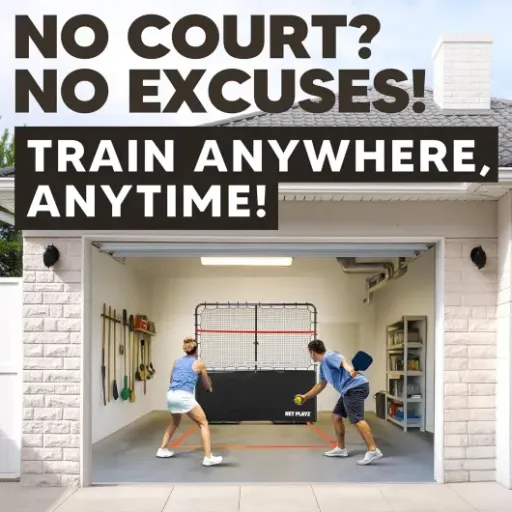
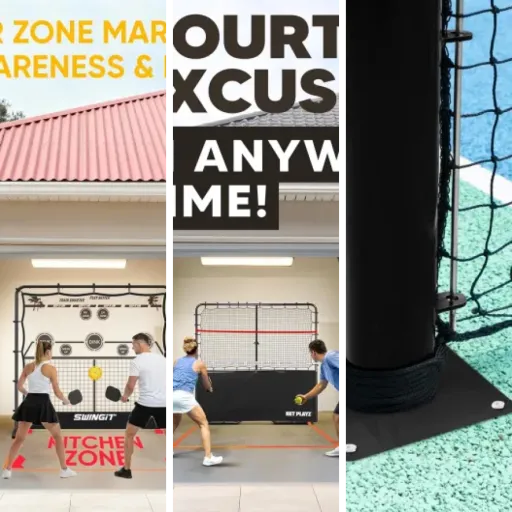
First thing to know: this thing is big. 6.5 x 6.5 ft doesn’t sound huge when you read it, but once you build it and stand it up, it fills a good chunk of space. In my case it fits in a typical garage, but it’s not something you casually tuck in a corner while it’s assembled. If you have a small yard or a tight driveway, measure first. It’s closer to a portable wall than just a little target net.
My overall impression after using it a bit: it does what it’s supposed to do, but it’s not plug-and-play. You need patience to build it, and you’ll probably swear at the instructions at least once. Once it’s up and dialed in, the rebound is decent and consistent enough for solo practice, but you can tell it’s not a premium product. It feels more like a mid-range training tool that’s good for practice, with a few rough edges in the design and finish.
If you want a simple way to hit balls without chasing them all over the place, it gets the job done. But if you’re expecting a super polished, super stable, super easy system, this isn’t that. It’s more like: you save money, but you pay with your time and a bit of DIY effort. Whether that trade-off is worth it depends on how handy and patient you are, and how often you’ll actually use it.
Is it worth the money or should you save for a big brand?
Value-wise, this sits in that budget-to-mid bracket of rebounders: cheaper than the big-name tennis/pickleball walls, more expensive than the tiny kid nets. For what you pay, you get a large hitting surface, adjustable tilt, and a frame that’s decent as long as you’re not brutal with it. The trade-off is obvious: you save cash, but you pay with time (assembly) and you don’t get the same level of finish or ease of use you’d get from higher-end options.
If you compare it to simply renting extra court time or paying for a ball machine, it’s actually pretty good value. You can walk into your driveway or garage and hit a few hundred balls without spending anything else. For beginners, families, or casual players who just want more touches on the ball, that’s hard to argue with. You don’t need power, you don’t need a partner, and you’re not burning court fees. It’s a one-time purchase that opens up more practice windows.
On the other hand, if you’re picky about build quality or you hate dealing with bad instructions, you might feel like the money would be better put toward a more polished product. The Amazon rating of 3.4/5 says a lot: people aren’t blown away, but they’re not totally disappointed either. It’s in that middle zone of “does the job, but with compromises.” If you’re the type who gets angry when assembly isn’t smooth, factor that into your decision.
My take: if you’re handy, patient, and mainly care about function over form, the value is pretty solid. You get a big, usable practice tool for less than the big brands. If you want something your kids or non-handy partner can set up easily without help, or you want long-term, zero-fuss durability, you might want to either spend more or look for a smaller, simpler net. It’s not a bad deal, but it’s also not a hidden gem. It’s just decent gear at a fair price, with some rough edges you have to accept.
Big, adjustable, and a bit fiddly
The design idea is actually pretty good: a large rectangular frame with an adjustable tilt so you can change how high and how fast the ball comes back. In theory, that lets you work on different shots: flatter hits, higher lobs, softer dinks, etc. In practice, the adjustable tilt works, but it’s not super refined. You’re basically loosening and tightening support arms and shifting angles, which is fine, but it’s not a quick one-hand adjustment. You’ll probably need to step behind it and fiddle for a minute or two to get the angle how you like.
One user mentioned struggling to get it to sit flat without one side lifting off the ground, and I had a similar kind of experience. The frame is square, but if you don’t line up everything perfectly and tighten evenly, it can twist slightly. Then you end up with one corner wanting to float. Fixing that means loosening some bolts, realigning, and trying again. It’s not impossible, just annoying. This is where you feel the difference between a cheaper frame and a more engineered one from a bigger brand.
When it’s properly assembled and squared up, the design works: the base is reasonably wide for stability, the net tension is good enough for a consistent bounce, and the overall footprint is stable as long as you’re not absolutely smashing balls at it from three meters away. For normal pickleball and light tennis practice, it stays put. I wouldn’t use it for full-on tennis serves unless you weigh it down or put it against a wall, but for groundstrokes and volleys it’s okay.
In terms of usability, I like the large hitting area. You don’t spend your whole session annoyed at every mishit. The adjustable red line is a simple but useful design touch. On the downside, I’d say the adjustment system and the way the legs and arms lock in place feel a bit rough. No quick-release pins, no clear angle markers, just basic bolts and holes. If you’re fine with that old-school DIY feel, it’s workable. If you want a super polished training station, this will feel a bit cheap and homemade.
Iron frame and nylon net: solid enough but clearly budget
The frame is made of iron pipes and the net is a 3-strand polyester/nylon mesh. On paper, that’s pretty standard for this kind of rebounder: metal for structure, synthetic net for durability and bounce. In the hand, the tubes feel decent but not heavy-duty. The wall thickness of the pipes isn’t huge, so don’t expect something that feels like gym equipment. It’s more like a mid-range soccer goal frame. Good enough for backyard use, but you’re not leaving it out in a storm and expecting it to shrug it off.
The netting itself feels okay. The mesh isn’t super thick, but for pickleball and casual tennis practice it’s fine. The rebound is firm enough that the ball actually comes back with some speed when you hit it properly. I didn’t feel like the net was sagging or dead. Tension is mostly controlled by how carefully you attach and adjust it, so if you rush the installation, you’ll end up with a looser feel and weaker bounce. Take an extra 10 minutes to pull it evenly and you’ll notice the difference.
Hardware (bolts, nuts, etc.) is basic. This is the kind of set where you’ll be happier if you grab your own tools instead of relying on whatever is included. I’d also recommend checking and re-tightening everything after your first couple of sessions. With repeated ball impacts and some movement, things can loosen a bit. That’s not unique to this brand, but it’s worth mentioning. Don’t just build it once and assume it’s good forever.
For the price point and for a lesser-known brand, the materials are pretty solid but not impressive. I wouldn’t use this in a public facility with heavy daily use, but for home practice a few times a week, it seems fine. I’d keep it out of the rain as much as possible to avoid rust on the iron pipes and fading on the net. If you’re expecting premium powder coating and industrial-grade netting, you’ll be disappointed. If you just want something that holds together and gives you a decent bounce, it does that.
Will it survive a season (or more) of use?
Durability is always the question with cheaper training gear. There aren’t hundreds of long-term reviews on this one yet, but based on the materials and build, I’d say it should hold up fine for home use as long as you’re not abusing it and you treat it like mid-range gear, not industrial equipment. The iron pipes are sturdy enough for repeated hits from pickleballs, and the netting doesn’t look like it’ll tear easily under normal use.
The weak points are more likely to be the joints and hardware. If you move it around a lot, drag it across rough concrete, or leave the bolts slightly loose, you might see some wobble or misalignment over time. That’s why I’d recommend checking the screws after the first few weeks and occasionally after that. It’s the same kind of maintenance you’d do on a portable basketball hoop or a cheap soccer goal. Nothing crazy, but you can’t just ignore it for a year and expect it to feel brand new.
Weather is another factor. The listing doesn’t scream “weatherproof” anywhere. It’s just iron and nylon, which means: if you leave it outside in the rain and sun constantly, you’ll probably get rust on the frame and fading or brittleness on the net over time. If you can at least store it in a garage or under a roof when not using it, you’ll easily stretch its life. The included storage bag is more for transport than long-term outdoor protection, so don’t count on that as a cover.
Given the 3.4/5 average rating on Amazon, I’d say people’s experiences are mixed, which matches what I’d expect: some will build it carefully and be happy, others will rush it, struggle with alignment, and feel like it’s flimsy. With a bit of care, I think it’s realistically good for at least a couple of seasons of regular backyard practice. If you want something you can bolt down and forget for years, you probably need to spend more. If you’re okay with basic maintenance and indoor storage, this should be enough.
Bounce quality, stability, and real-world use
Performance-wise, I looked at three things: bounce quality, stability, and noise. The bounce is probably the best part. For pickleball balls, the rebound is firm and predictable if you’ve set the net tension properly. You hit, it comes back roughly on the same line, and you can string together long rallies with yourself. If you’re using low-compression tennis balls or foam balls, it still works, though the feel is a bit softer. Regular tennis balls work too, but I wouldn’t go full power all the time unless you brace the frame somehow.
Stability is okay but not bulletproof. The base is wide enough that it’s not constantly tipping, but if the ground is uneven or you’re hitting from close range with real pace, you’ll see some movement. One Amazon review said, “the base is sturdy (it is not going to fall over),” which I mostly agree with as long as you’re using it for what it’s meant for: pickleball and moderate tennis practice. If you’re worried, you can always put sandbags or dumbbells on the base tubes, or push it up against a wall for extra support.
Noise is actually surprisingly low. You’re hitting a net, not a solid wall, so you don’t get that loud echo or bang. In a garage or driveway with neighbors nearby, that’s a big plus. You’ll hear the ball hit, but it’s more of a dull thud than a sharp crack. That makes it more realistic to use early in the morning or in the evening without annoying everyone around you. For indoor garages especially, it’s pretty comfortable to practice with.
In everyday use, I found that setup time and minor adjustments are part of the experience. It’s not something you pop up and down every single session unless you really want to. Once built, you’ll leave it assembled and maybe just tilt it or drag it a few feet. Performance during drills is decent: you can work up a sweat and get a lot of contacts in 20–30 minutes. I wouldn’t rate it as professional-grade, but for a home setup, it performs well enough to justify the space it takes—if you actually use it regularly.
What you actually get out of the box
Out of the box, you get a pile of iron tubes, a big nylon net with a red line, hardware, and a storage bag. No surprises, but also nothing fancy. There’s no pre-assembled frame section, everything is separate. If you’re used to Ikea-style furniture, imagine that, but with worse drawings and no labeled parts. The manufacturer is Zovcsxn, which I’d never heard of before, so I didn’t expect high-end documentation, and that’s pretty much what I got.
The net size is about 6.5 x 6.5 ft, which is a nice, forgiving target. You don’t have to be super accurate, especially useful if you’re a beginner or you’re just working on rhythm. The red line on the net can be adjusted and used as a reference for pickleball net height, which is actually handy. I set mine roughly at regulation height and used it to check if my drives and volleys were staying in a realistic window instead of just blasting them at a random wall.
Weight-wise, around 16 pounds for the whole thing is reasonable. It’s light enough that one person can drag it or tilt it and move it, but heavy enough that it doesn’t feel like a toy. The included storage bag is nice in theory, but realistically, once you fully assemble the frame, you’re not going to take it apart every time to put it back in the bag. The bag makes more sense if you plan to keep it disassembled and only build it occasionally, or if you need to transport it in a car to a different location.
Overall, the presentation is pretty basic: functional parts, no nonsense, no extra accessories like ground stakes or fancy adjustment knobs. If you like simple and you’re okay figuring things out yourself, it’s fine. If you like clear labels, color-coded parts and clean manuals, you’ll probably roll your eyes at this one. It feels like a budget training tool that focuses on giving you the core function (a big rebound surface) and cuts corners on the user experience around it.
Does it actually help you practice pickleball?
From a pure training standpoint, this rebounder is useful. Once it’s set up and the angle is dialed in, you can get a decent rhythm going. I used it mainly for forehand and backhand drives, and for quick reaction volleys standing closer to the net. The bounce is consistent enough that you can work on timing, footwork, and contact point without constantly chasing balls. It’s not the same as a real opponent, obviously, but for solo reps it’s way better than staring at a wall.
The adjustable tilt is what makes it flexible. With a steeper angle, the ball comes back higher and shorter, so you can work on volley reactions or dink-like shots. With a flatter angle and standing further back, you can simulate baseline drives. One of the Amazon reviewers mentioned being able to get a volley going against themselves if they stand close and hit hard, and I had a similar experience. It’s actually pretty fun when you find the right angle and speed, and it feels like a quick-fire drill without needing someone on the other side.
Where it’s a bit weaker is simulating real match conditions. You don’t get topspin variation or different shot types coming at you, so it’s mostly good for repetition and muscle memory: contact, swing path, consistency. For beginners or casual players, that’s already a big win. For more advanced players, it’s more of a warm-up and groove tool than a full training solution. Also, because the frame can move a bit if you hit too hard and you haven’t weighted it down, you’ll probably learn to hit with control instead of trying to crush every ball.
Overall, I’d say the effectiveness is good but not mind-blowing. It does help you get more touches on the ball and clean up your strokes. It’s especially helpful if you don’t always have access to a court or partner. Just don’t expect it to magically fix your strategy or shot selection. It’s a repetition tool, and in that role, it works fine as long as you’re willing to spend some time tweaking the angle and distance to match what you want to practice.
Pros
- Large 6.5 x 6.5 ft hitting area that’s forgiving and useful for real practice
- Adjustable tilt allows different types of drills and ball trajectories
- Good bounce and relatively quiet operation, suitable for garages and driveways
Cons
- Instructions are confusing and assembly can be frustrating and time-consuming
- Frame alignment and stability require careful setup and occasional tightening
- Materials and finish feel mid-range, not ideal for heavy or long-term outdoor use
Conclusion
Editor's rating
Overall, the Zovcsxn Pickleball Rebounder Net is decent but not mind-blowing. It gives you a big 6.5 x 6.5 ft practice surface, an adjustable tilt, and a reasonably sturdy frame for solo pickleball or light tennis training at home. Once it’s built and adjusted, the bounce is consistent enough to work on drives, volleys, and basic control without chasing balls all over the place. Noise is low, so it works fine in a garage or driveway without annoying the neighborhood.
The flip side: assembly is a pain. The instructions are vague, the drawings aren’t clear, and it’s easy to put parts together wrong and have to redo them. Getting the frame perfectly flat and square can take some fiddling, and the adjustment system is basic. Materials are okay for the price, but not premium, and you’ll want to store it out of the weather and occasionally check the bolts if you want it to last.
I’d recommend this to players who are reasonably handy, don’t mind a bit of DIY, and just want a practical way to hit more balls at home. It’s good for beginners, kids, and casual adults who care more about reps than perfect build quality. If you’re very picky about finish, want plug-and-play assembly, or plan to use it heavily in a club environment, I’d skip this and look at a higher-end rebounder. For home training on a budget, it gets the job done, with some compromises you need to be okay with.