Summary
Editor's rating
Value for money: good if you prioritize width and cushioning
Chunky, sporty look – more comfort shoe than sleek court weapon
Where these shoes actually shine: comfort and room for wide feet
Synthetic build, thick foam, and what that means day-to-day
Holding up fine so far, but long-term outdoor use might wear them quicker
On-court performance: stable and cushioned, but not the most agile
What you actually get with these Skechers pickleball shoes
Pros
- Genuinely comfortable with soft cushioning, especially good for sore knees and heels
- Extra-wide (4E) fit with roomy toe box, great for wide or sensitive feet
- Non-marking rubber outsole with good grip on indoor and outdoor courts
Cons
- Runs a bit large and can feel bulky, not ideal for narrow feet or players wanting a very snug fit
- Less agile and less ground feel than lighter, more performance-focused court shoes
- Breathability is only average due to synthetic upper and thick padding

Specifications
View full product page →| Brand | Skechers |
Comfort-first court shoes for people with wide feet
I’ve been playing pickleball 2–3 times a week, and I picked up the Skechers Men's Viper Court Smash in 9.5 UK X-Wide because I’ve got duck feet and my usual tennis shoes were starting to crush my toes. I’m not sponsored, I paid for these myself, and I’m not a pro player – just a regular guy who plays league nights and the odd weekend tournament. I’ve used them mainly on indoor courts and a few times outdoors on painted concrete.
The first thing that stood out is the fit and cushioning. These are clearly built for comfort more than for feeling super connected to the court. If you’re used to very firm, low-profile court shoes, they’ll feel a bit like stepping into a padded slipper with a grippy sole. If, on the other hand, your knees and feet are already complaining, this kind of shoe starts to make sense very fast.
I’ve put roughly 15–18 hours of play into them so far, plus some casual walking and wearing them to the gym. That’s enough to see how they behave once they’re broken in, how the sole grips when dusty, and whether the cushioning bottoms out. I also compared them with my older Asics court shoes and a pair of cheaper Decathlon indoor trainers, just to have a reference.
Overall, they’re pretty solid for comfort and support, especially if you need an extra-wide fit. They’re not perfect: they run a bit large, they’re not light, and they don’t feel super agile for quick lateral cuts. But they do what they say on the box: lots of cushioning, stable base, and a forgiving fit for wide feet and sore joints.
Value for money: good if you prioritize width and cushioning
In terms of value, these sit in that mid-range zone: not bargain-basement, not top-tier performance pricing either. For what you pay, you’re getting a very cushioned, extra-wide court shoe from a big brand, with a non-marking outsole and enough versatility to double as a casual trainer. If you have normal-width feet and don’t need all that cushioning, you could probably find lighter, more agile shoes at a similar or slightly lower price. But if you specifically need the X-Wide fit and joint-friendly cushioning, the value starts to look better.
Compared to cheaper indoor trainers I’ve used (Decathlon, generic brands), the Skechers feel more supportive under the heel and forefoot, and the build quality looks a bit more solid. Compared to more performance-focused shoes (Asics, Mizuno, some Nike models), you usually get better court feel and sometimes better breathability from those, but often at the cost of width and cushioning. So it really depends what you’re optimizing for. For my use – regular club play and dodgy knees – I’m okay paying a bit more for something that leaves my joints less sore.
I also factor in that these are multi-use. I can wear them to the gym, for walking, and for casual outings without feeling like I’m in super niche sports shoes. That spreads the cost over more hours of use. If you only want a pure pickleball shoe and you’re chasing performance, you might feel your money is better spent elsewhere. If you’re more on the comfort side and you want one pair that does a bit of everything, the price is easier to justify.
So overall, I’d rate the value as good but not mind-blowing. You’re paying for comfort, width, and a big brand name rather than bleeding-edge performance tech. If that’s what you’re after, it’s money reasonably well spent. If you’re a lighter, fast-moving player with narrow feet, you can probably get more performance per euro elsewhere.
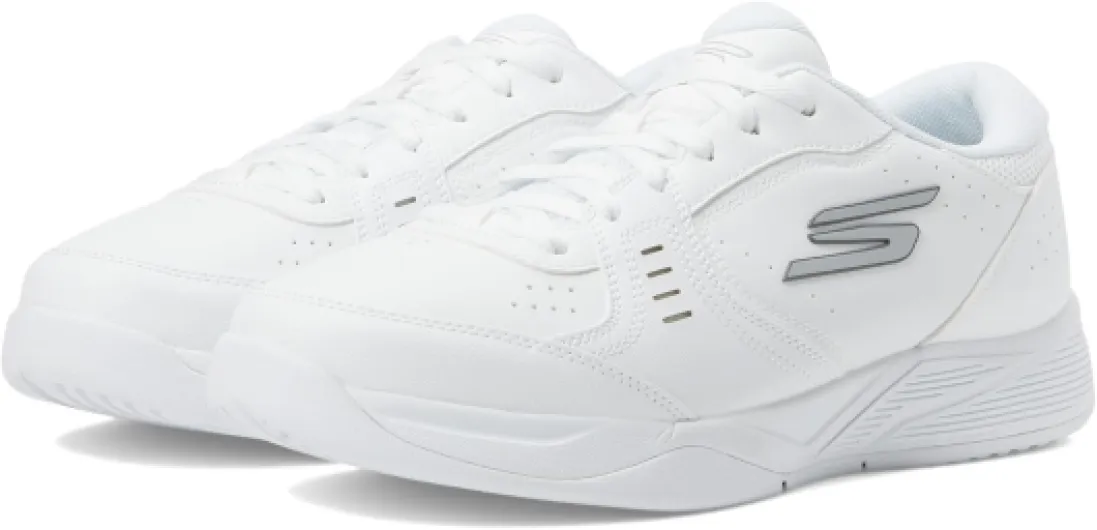
Chunky, sporty look – more comfort shoe than sleek court weapon
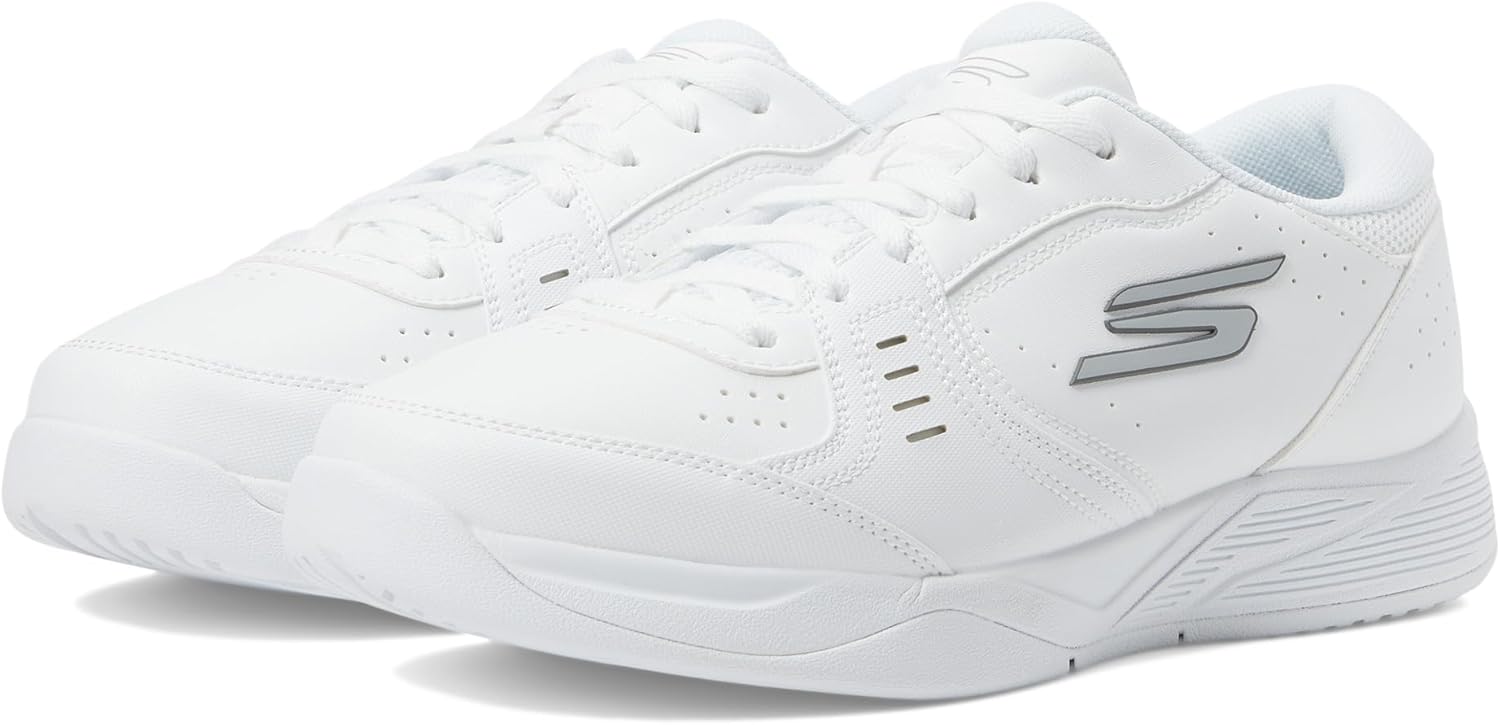
Design-wise, these lean more towards chunky comfort sneaker than a sharp, low-profile court shoe. The white faux leather upper with colored Opulent Garden accents looks clean enough, but you can instantly tell it’s synthetic when you touch it. That’s not necessarily a bad thing – it’s easier to clean – but if you like the look and feel of real leather, you won’t find it here. There are perforations on the upper for ventilation and some panel stitching that gives it a bit of structure.
On foot, they look slightly bigger than my usual court shoes, partly because of the extra-wide last and the 1.25-inch platform. If you have narrow feet, they might look and feel like boats. On my wide feet, they look normal, just a bit bulkier. The low-top profile gives good ankle freedom, but because the midsole is fairly thick, you don’t get that super-low-to-the-ground feeling that some players like for quick direction changes.
In terms of layout, the lacing system is straightforward: standard eyelets, no fancy cables or straps. You can adjust tension fairly well across the midfoot. The tongue is padded but not overdone, and the collar has enough cushioning to stop rubbing around the ankle. There’s a visible Skechers logo on the side and tongue – nothing crazy, but if you don’t like visible branding, you might find it a bit loud. For me it’s fine; I’m there to play, not walk a runway.
My personal take: design is functional, not stylish. They look like what they are – a cushioned trainer from Skechers. If you’re chasing a sleek, aggressive court aesthetic like some Asics or Nike models, this isn’t it. If you don’t care much about style and just want something that looks reasonably clean and sporty, they get the job done. After a couple of games, I stopped thinking about how they looked and focused more on how they felt, which is what matters to me on court.
Where these shoes actually shine: comfort and room for wide feet
This is the main reason to buy these: comfort, especially if you have wide or sensitive feet. I have a broad forefoot and usually end up going half a size up in normal-width shoes just to avoid my toes getting squeezed. With the X-Wide (4E) fit on the Viper Court Smash, my toes finally had space. No pinching on the little toe, no numbness after long sessions. The relaxed fit upper really does give extra room in the toe box and forefoot.
The cushioning is maximum-level soft. The Ultra Flight midsole plus the molded EVA insole give a plush ride. When I first tried them, it almost felt too soft for a court shoe, but after a couple of sessions I got used to it. Where I really noticed the benefit was after back-to-back games: usually my heels and knees ache a bit in firmer shoes, but with these, the soreness was clearly reduced. I also did a couple of days using them just for walking and errands, and they were comfortable all day, no hotspots or blisters.
There are a few trade-offs though. Because they run a little large, I’d say if you’re between sizes, consider going down half a size. My 9.5 feels more like a roomy 10 in length. I had to play with the lacing to get the midfoot snug enough so my foot wouldn’t slide forward on hard stops. The heel lockdown is fine, but not as locked-in as some more performance-focused models. For casual and club-level play, it’s okay; if you’re super aggressive with your movements, you might wish for a slightly tighter, more performance fit.
Ventilation is average. The perforations help a bit, but with a mostly synthetic upper and thick padding, my feet got warm after long indoor sessions. Not swampy, but definitely warmer than in a mesh-heavy shoe. No major smell issues yet, but I also air them out and occasionally remove the insole. Overall: comfort is genuinely good, especially if you value cushioning and width over a very tight, locked-in feel. For older knees, heavier players, or anyone with joint issues, they make a lot of sense.
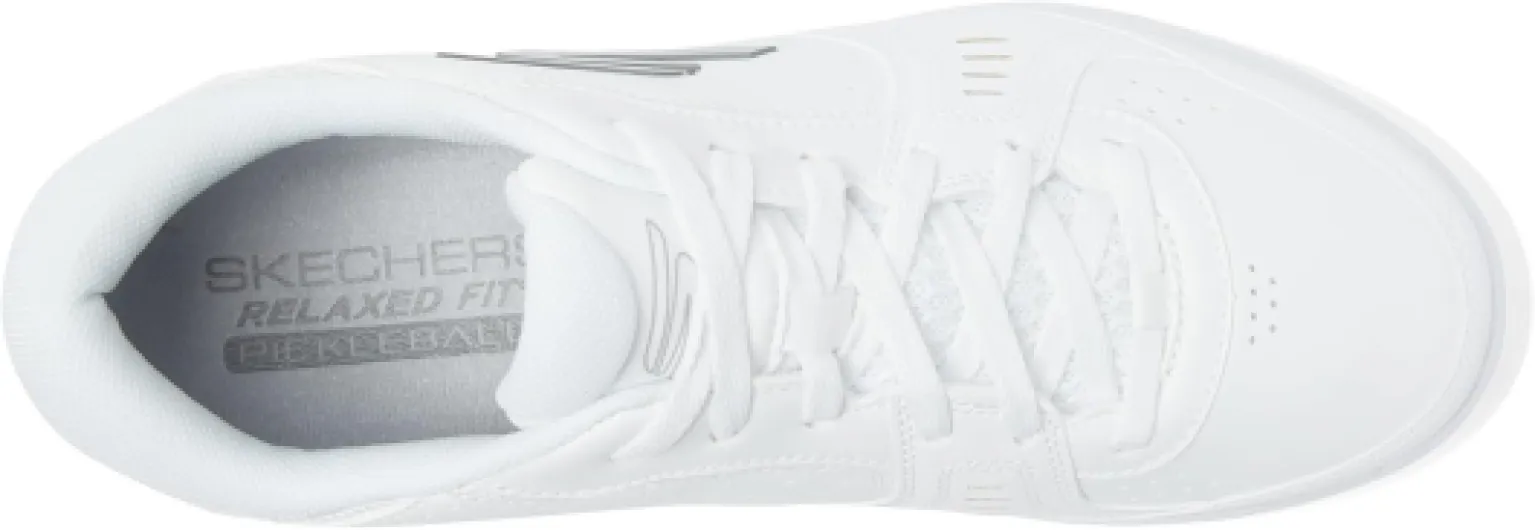
Synthetic build, thick foam, and what that means day-to-day
The shoe is mostly faux leather (synthetic) on the outside, synthetic lining inside, foam insole, and a full rubber outsole. No real leather anywhere. The synthetic upper is smooth and pretty easy to wipe down – I’ve cleaned off dust and scuff marks with a damp cloth and they come back to looking decent. The downside is that synthetic doesn’t mold to your foot like leather over time, so the fit you get after a few sessions is basically what you’ll keep.
The foam insole and Ultra Flight cushioning are the main materials you feel. Underfoot, it’s soft and quite thick. When you press the midsole with your fingers, it compresses easily, and you can feel that same squish when you land from small jumps or make quick stops. There’s no fancy gel window or visible tech, just a big slab of foam. For impact protection, that’s great. For court feel, it dulls things a bit. You don’t feel the surface as clearly as with a thinner, firmer shoe.
The outsole is non-marking rubber and covers the full length of the shoe. The tread pattern is fairly fine and designed for court grip rather than trail or street. On indoor courts, it grips well as long as the floor isn’t covered in dust. When the floor got dusty, I had to wipe the soles with my hand or on a damp towel every now and then, which is pretty normal. On outdoor painted concrete, the rubber held up okay for now; I haven’t seen big chunks peeling or anything, but long term outdoor use will obviously eat rubber faster.
Overall, the materials feel decent but nothing special. You’re not getting premium fabrics or fancy mesh; you’re getting sturdy synthetic and a lot of foam. For the price bracket, that’s acceptable. The upside is: easy to clean, vegan-friendly, and quite protective. The downside: not very breathable compared to a mesh-heavy shoe, and the overall feel is more like a comfy trainer than a precise sports tool.
Holding up fine so far, but long-term outdoor use might wear them quicker
Durability is always tricky to judge early, but after around 15–18 hours of play plus casual use, here’s what I’ve seen. The synthetic upper is holding up well – no peeling, no major creasing beyond normal flex lines near the toes. Because it’s faux leather, I don’t expect it to crack quickly as long as you don’t abuse it. The stitching around the toe and sides still looks solid, no loose threads yet.
The outsole shows normal wear for the time I’ve used them. On indoor courts, there’s barely any visible wear. On outdoor concrete, you can see a bit of smoothing on the contact points, but nothing alarming. If you mainly play outdoors on rough surfaces, you’ll obviously chew through them faster, but that’s true for most court shoes. For mixed indoor/outdoor use, I’d expect a reasonable lifespan, especially given the full rubber coverage.
The cushioning so far hasn’t noticeably packed down. The midsole still feels soft and bouncy, similar to day one. Usually, cheaper foam starts to feel dead quite fast, but here it’s holding up okay after a few weeks. I’ll be more curious to see how it feels after 3–6 months of constant use. The insole hasn’t flattened too much either, and you can always swap it for an aftermarket insole if you need more arch support or a firmer feel.
One small concern is breathability and moisture over time: synthetic plus foam can trap sweat if you don’t air them out. I’ve been careful to pull the insoles halfway out after games and let them dry, and so far there’s no bad smell or internal damage. Overall, I’d say durability looks pretty solid for the price, as long as you don’t treat them like disposable outdoor beaters. Use them mainly on courts, keep them reasonably clean, and they should last a decent season or more for regular play.
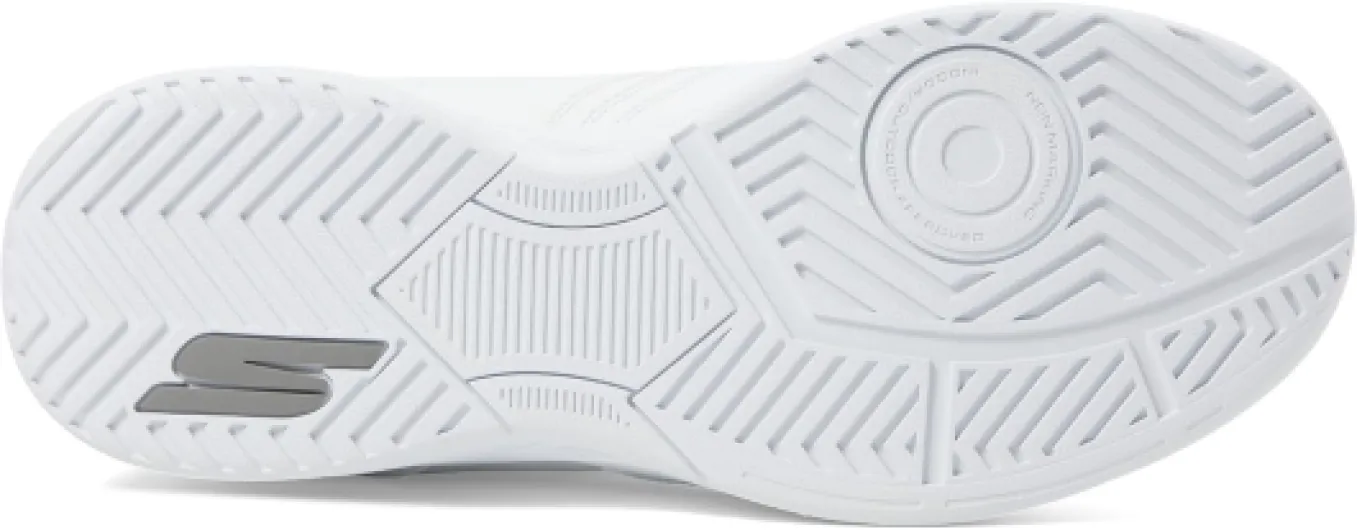
On-court performance: stable and cushioned, but not the most agile
On the court, the traction and stability are the main positives. The full rubber outsole grips well on typical indoor pickleball surfaces. I didn’t have issues with slipping on clean courts, and the shoe feels quite stable side-to-side thanks to the wide base. During quick lateral moves to chase dinks or cover cross-court shots, the shoe didn’t feel wobbly. The platform is thick but reasonably flat, so you don’t get that high-heel feeling.
Where performance is a bit weaker is in agility and court feel. Because of the heavy cushioning and slightly higher stack, you don’t feel as connected to the ground as with more minimal court shoes. For fast direction changes and very quick split steps, they feel a bit slower and less responsive. They’re not bricks, but you notice the bulk compared to something like a lighter Asics or a dedicated volleyball shoe. If you’re a highly competitive player who relies on explosive moves, you might find them a bit too soft and forgiving.
For mixed use – pickleball, a bit of badminton, some treadmill walking – they actually work well. The cushioning is nice on the treadmill and during warm-up jogging. For gym sessions (machines, light lifting), they’re okay too. I wouldn’t pick them for heavy squats or deadlifts because of the soft sole, but for general training they’re fine. The non-marking sole also means you’re safe on any indoor court rules-wise.
In practice, I’d sum it up like this: very comfortable, decent grip, average agility. If your priority is protecting your joints and having a stable, padded ride, they do a good job. If your priority is speed, fast footwork, and feeling every move on the court, there are better options. For my level (intermediate club player), they’re good enough, but I’m aware I’m trading a bit of performance for comfort.
What you actually get with these Skechers pickleball shoes
On paper, the Viper Court Smash are sold as men’s pickleball sneakers with an extra-wide fit (4E), synthetic upper, thick cushioning (Ultra Flight foam + EVA insole), and a non-marking rubber outsole for indoor and outdoor courts. Mine are the White Opulent Garden colorway, which basically means white with some colored accents, not anything fancy. They’re listed as 9.5 UK X-Wide, and I usually wear 9–9.5 in most brands depending on the width.
Out of the box, you get the shoes and that’s it – no extra laces, no carry bag, nothing. Basic packaging: a standard Skechers box with some paper stuffing. For a sports shoe, that’s fine. I care more about how they feel on court than fancy packaging. The shoes themselves look like a typical Skechers trainer: a bit chunky, lots of foam, big logo on the side, and a fairly thick sole with a 1.25-inch platform according to the specs.
According to Amazon, they’re vegan-friendly, made from faux leather with synthetic lining and foam insole. They’re also advertised as machine washable, which is nice if you play on dirty outdoor courts. They’re marketed as versatile: pickleball, tennis, cross-training, walking, gym, etc. In practice, I’ve used them for: pickleball (main use), some light badminton, and everyday walking to test comfort over longer periods. They don’t feel like a pure running shoe; they’re clearly more of a court/training style.
The Amazon rating sits around 4.4/5 with comments mainly praising comfort and support. A few reviews mention they run a bit large, which I agree with. Overall, the presentation matches what you get: a comfort-oriented court shoe, not a sleek performance rocket. If you go in expecting a cushioned, roomy trainer for racket sports, the product lines up with the description pretty well.
Pros
- Genuinely comfortable with soft cushioning, especially good for sore knees and heels
- Extra-wide (4E) fit with roomy toe box, great for wide or sensitive feet
- Non-marking rubber outsole with good grip on indoor and outdoor courts
Cons
- Runs a bit large and can feel bulky, not ideal for narrow feet or players wanting a very snug fit
- Less agile and less ground feel than lighter, more performance-focused court shoes
- Breathability is only average due to synthetic upper and thick padding
Conclusion
Editor's rating
After a few weeks with the Skechers Men's Viper Court Smash, my take is pretty simple: great comfort and width, average performance feel. They’re clearly built for players who want cushioning and space for their feet more than they want razor-sharp court feedback. My wide feet were happy, my knees complained less after long sessions, and I could also use them for walking and gym without issues. The non-marking outsole grips well enough on both indoor and outdoor courts, and so far durability looks fine for regular use.
They’re not perfect. They run a bit large, they’re not the most breathable, and they feel a bit bulky if you’re used to lighter, low-profile court shoes. If you’re a serious competitor who cares about every millisecond of movement, you’ll probably prefer something firmer and more locked-in. But if you’re an intermediate or recreational player, especially with wide feet, sore joints, or a heavier build, these make a lot of sense. They get the job done, keep your feet comfortable, and don’t fall apart after a few sessions.
I’d recommend them to: players with wide feet, anyone with knee or foot discomfort who wants more cushioning, and people looking for a single pair that works for pickleball plus general training. I’d say skip them if: you have narrow feet, you want ultra-light shoes, or you care more about court feel than comfort. In short: a solid comfort-focused pickleball shoe, not a high-performance rocket, but very usable for most everyday players.