Summary
Editor's rating
Value: fair price for a real step up from entry-level
Design: simple look, functional shape
Comfort and grip: good, as long as you accept the weight
Materials: honeycomb core and poly surface in real life
Durability: mostly solid, but keep an eye on the handle
On-court performance: control first, then power
What you actually get with the Phoenix G6
Pros
- Large sweet spot and good control, especially for dinks and resets
- Comfortable, tacky grip with decent vibration damping
- Solid mid-range value and a clear step up from cheap starter paddles
Cons
- On the heavier side, which can feel tiring and less maneuverable
- Spin and raw power are decent but not standout compared to higher-end paddles
Specifications
View full product page →| Brand | Paddletek |
A popular paddle that actually gets used, not just hyped
I’ve been playing pickleball regularly for a while now, and the Paddletek Phoenix G6 is one of those paddles you see all the time on public courts. I picked it up because I wanted something a bit more serious than cheap Amazon starter paddles, but I didn’t feel like dropping premium money on the fanciest models. So I treated this as a realistic upgrade for a casual-to-intermediate player.
Over a few weeks, I used the Phoenix G6 in mixed doubles, rec games, and some ladder matches. I also swapped paddles with friends using Selkirk, Head, and cheaper no-name paddles, just to feel the difference. That helped me see where this one sits: it’s not ultra high-end, but it’s clearly a step up from the basic $40 paddles.
The first clear thing: this paddle is on the heavier side of what I personally like. It’s not a brick, but compared to lighter graphite paddles, you feel it in quick hand battles at the kitchen. On the other hand, that extra weight gives you decent punch on drives and serves without having to swing like crazy. So it’s a trade-off: more power, a bit less maneuverability.
Overall, my impression is that the Phoenix G6 is a pretty solid all-rounder with a bias toward control and comfort rather than pure power or insane spin. It’s not perfect, and there are some details that bug me, but for the price and the brand’s reputation, it mostly gets the job done. Just don’t expect it to magically fix your game if your technique is still all over the place.
Value: fair price for a real step up from entry-level
In terms of value for money, the Phoenix G6 sits in that mid-range spot where you’re clearly getting more than a basic starter paddle, but you’re not paying top-tier prices. For most casual to intermediate players, that’s exactly where it makes sense to spend: enough quality that the paddle doesn’t hold you back, but not so expensive that you feel stupid if you chip it on the court.
Compared to cheap no-name Amazon paddles, this one feels more stable, more comfortable, and more predictable. The sweet spot is larger, the vibration is lower, and the grip is better. If you’re currently using a $30–$40 paddle, you will probably notice the difference. Your shots won’t magically become pro-level, but you’ll get fewer random mishits and a nicer feel overall.
Compared to higher-end paddles (Selkirk, Joola, etc.), you do give up some things: less spin, not as light or as specialized, and the tech isn’t cutting-edge. But you also save a decent chunk of money. If you’re not playing tournaments every weekend and obsessing over every detail, the Phoenix G6 hits a good middle ground. It’s good value if you want a reliable, brand-name paddle from a known pickleball company without going all-in on premium.
So, is it the best deal on the market? Not necessarily; there are always sales and newer models popping up. But for a stable, well-reviewed, widely used paddle that many players keep using for years, the price feels justified. If you’re upgrading from a cheap starter and want something you can grow with as you reach intermediate level, the value here is pretty solid.
Design: simple look, functional shape
Design-wise, the Phoenix G6 is pretty low-key. The Riptide (Blue) version I tried has a basic graphic and color scheme. It doesn’t scream for attention, and honestly I’m fine with that. On court, it just looks like a normal, decent paddle, not some flashy toy. If you’re the type who cares a lot about style, this might feel a bit plain; if you just want a tool that works, it’s fine.
The shape is a standard wide-body, which matters more than the paint. That wider face helps with forgiveness. When I compared it to a more elongated paddle I own, I noticed I had fewer mishits near the upper corners, especially on block volleys at the kitchen. It feels like you’ve got a bit more margin for error, which is helpful if your footwork is not perfect.
The edge guard is a regular 1/8" shock guard. It adds a tiny bit of bulk around the rim, but nothing crazy. I clipped the court surface a couple of times going for low balls and only saw minor scuffing on the guard, no big chips. So the design choice there is clearly about protecting the paddle more than shaving every gram of weight. If you’re super picky about swing speed and aerodynamics, there are sleeker paddles out there, but for normal rec play this does the job.
One thing to mention: the proportions feel balanced. The paddle doesn’t feel head-heavy or weirdly weighted toward the handle. When I did quick dink rallies, I could still move it around reasonably fast. Not as quick as a very light paddle, but the design doesn’t feel clumsy. Overall, the design is practical and no-nonsense: nothing fancy, but it feels like a proper sports tool, not a toy from a discount bin.
Comfort and grip: good, as long as you accept the weight
Comfort is one of the stronger points of the Phoenix G6. The high-tack, cushioned grip is actually pretty nice out of the box. It’s thicker and softer than what you get on many budget paddles. During longer sessions, my hand didn’t feel beat up or numb, even when I was gripping a bit too tight (which I tend to do under pressure). The tackiness is good enough that the paddle doesn’t twist much in your hand on off-center hits.
The vibration damping is also noticeable. When blocking fast drives at the kitchen, cheaper paddles often send a sharp sting into my hand if I catch the ball near the edge. Here, the impact feels more muted. You still feel the hit, but it’s more of a dull feedback than a jolt. For older players or anyone with joint issues, that’s not just a minor detail; it can be the difference between playing three games or calling it a day after one.
The flip side is the weight. At around 230 g, this is not a featherweight paddle. After back-to-back matches, I did feel my forearm working more than with a lighter paddle I own. In fast hand battles, I had a split second less to react, and I noticed I lost a few exchanges just because I couldn’t get the paddle into position fast enough. If you’re coming from tennis, you might not mind the weight. If you’re smaller framed or have shoulder issues, you might find it a bit tiring over time.
Overall, comfort is good as long as you’re okay with that medium-heavy feel. The handle size (4.25") should fit most adults, but if you have very small hands you might need a thinner grip or skip an overgrip. For me, with average hands and some elbow sensitivity, the Phoenix G6 felt comfortable and secure, just a bit tiring in very long sessions compared to lighter paddles.
Materials: honeycomb core and poly surface in real life
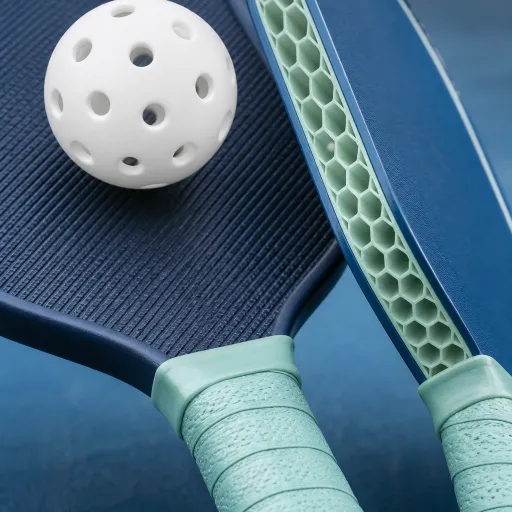
The Phoenix G6 uses a polymer honeycomb core with a graphite-reinforced layer and a polycarbonate surface. On paper that sounds like the usual marketing soup, but in practice it means two things: the paddle is quieter than cheap wood/composite paddles, and the feel in the hand is fairly soft, not harsh. When I hit hard drives, there’s a muted “thud” instead of a loud “clack,” which some people will like if they play on noise-sensitive courts.
The polycarbonate face has a kind of velvet texture. It’s not super gritty like some spin-focused paddles, but it’s not glass-smooth either. When I tried to really brush up on the ball for topspin, I could get some action, but it’s nothing crazy. Compared to a more textured paddle from Selkirk a buddy uses, the Phoenix G6 clearly produces less spin, especially on aggressive topspin serves and roll volleys. So the material gives you decent traction, but not spin-focused performance.
The graphite/polymer core combo helps with vibration. I have a bit of elbow sensitivity, and after a couple of longer sessions I didn’t feel any extra soreness from this paddle. With stiffer paddles, my arm sometimes complains after two hours. Here, impact feels a bit damped, which fits what Paddletek claims about reducing vibration and sound. If you’re prone to elbow or wrist pain, that softer feel is a plus.
Overall, the materials feel solid for the price range. You’re not getting the newest experimental tech, but you are getting a modern core and face that behave like a real, mid-range performance paddle. The only small concern is that one Amazon review mentions a handle breaking on first use. Mine didn’t have that issue, and I didn’t feel any flex in the handle, but it’s still something I’d keep an eye on when you first get it. Give the handle a good squeeze and twist to make sure nothing creaks or feels loose.
Durability: mostly solid, but keep an eye on the handle
From my use and what I’ve seen at local courts, the Phoenix G6 holds up fairly well over time. I’ve seen people using the same Phoenix paddles for over a year with only cosmetic wear: scuffs on the face, some fading on the graphics, and normal grip wear. The edge guard does its job when you scrape the ground or hit the fence; it gets scratched, but it protects the core from immediate damage.
In my own testing, I bumped it against the court a few times going for low balls and had a couple of paddle clashes at the net. No cracks, no weird rattling, and the face didn’t start separating from the core. The surface texture does smooth out a bit with use, which is normal. You’ll probably lose a bit of spin over many months, but since this paddle isn’t a spin monster to begin with, it’s not a massive change in how it plays.
The main red flag is that one Amazon review where the handle broke on the first use. That’s clearly not typical, given the overall 4.4/5 rating and many people saying they’ve used theirs for years. It sounds more like a bad unit or shipping damage. Still, it’s something I’d take seriously: when you get the paddle, I’d recommend checking the handle carefully. Twist it gently, press around the neck area, and make sure there’s no flex, cracking sounds, or visible gaps.
Overall, I’d rate durability as good but not bulletproof. It’s not a cheap toy that falls apart, but it’s also not indestructible. If you treat your gear decently and don’t slam it on the ground or into fences, it should last a long time. If you’re super rough on paddles, you might want to consider something even beefier or at least be ready to replace it after heavy use.
On-court performance: control first, then power
On court, the Phoenix G6 leans more toward control and forgiveness than raw power or crazy spin. The big sweet spot is real: dinks, blocks, and resets felt consistent, even when I wasn’t hitting dead center. When I was stuck defending against bangers, the paddle helped me get the ball back with some height and depth without needing a perfect contact every time. For players still working on consistency, that’s a big plus.
In terms of power, the paddle has enough, but it’s not a rocket. The weight helps on drives and serves. When I stepped in and swung properly, I could hit solid, deep shots. But compared to a more poppy, stiff paddle I’ve used, the Phoenix G6 feels a bit more muted. You have to supply a bit more of your own swing to really pressure opponents. That’s not necessarily bad; it just means you won’t accidentally sail everything long, but you also won’t get effortless power.
Spin is probably the most average part of the performance. The surface texture gives you okay spin, but nothing more. My topspin serves had some kick, but when I switched back to a more textured paddle, I immediately noticed more bite. Same with third-shot drops: I could get some shape on the ball, but if your game is heavily spin-based, this probably won’t be your favorite tool.
Where the paddle shines is the short game and control. Dinks, resets, and placement shots feel predictable. I could aim at feet, middle gaps, and sidelines with more confidence than with cheaper paddles that have dead spots. If your style is more about consistency, patience, and smart placement rather than all-out aggression, the Phoenix G6 fits that better than a super poppy, stiff paddle.
What you actually get with the Phoenix G6
The Phoenix G6 is a USAPA-approved paddle with a honeycomb PolyCore interior, a polycarbonate hitting surface, and a graphite-reinforced core. In normal language: it’s built like a standard modern paddle that aims to cut down vibration and noise while keeping a decent blend of power and control. The one I used was around 230 g (about 8.1 oz), which matches the spec and feels like a medium-to-heavy paddle in the hand.
The shape is pretty classic: wide body, nothing fancy like elongated or crazy aero edges. That wider shape gives you a good-sized sweet spot, which I noticed quickly. Mishits near the top and slightly off-center didn’t die instantly like they do on cheap paddles. You still feel you missed, but the ball usually makes it over the net with some control, which is nice if your timing isn’t perfect.
The grip size is 4.25 inches, which suited me fine with an average-sized hand. It comes with a cushioned, tacky grip already on it, so you can play right away. I still added an overgrip after a few sessions because I sweat a lot, but even out of the box it feels more secure than those slippery foam-feeling grips on bargain paddles.
In terms of target player, the branding says beginner to advanced. In practice, I’d say it’s best for beginner to solid intermediate players who want a reliable paddle that doesn’t punish them too much. Advanced players might want more specialized gear (lighter, more spin, or more pop), but if you’re in that middle ground where you’re playing weekly and starting to care about your gear, this is a reasonable step.
Pros
- Large sweet spot and good control, especially for dinks and resets
- Comfortable, tacky grip with decent vibration damping
- Solid mid-range value and a clear step up from cheap starter paddles
Cons
- On the heavier side, which can feel tiring and less maneuverable
- Spin and raw power are decent but not standout compared to higher-end paddles
Conclusion
Editor's rating
The Paddletek Phoenix G6 is a solid mid-range pickleball paddle that leans toward control, comfort, and forgiveness rather than raw power or spin. The honeycomb PolyCore and polycarbonate surface give it a muted, comfortable feel with decent pop, and the large sweet spot makes life easier if your timing or footwork isn’t perfect. The grip is comfortable and tacky, and vibration is well controlled, which is good news if you have sensitive elbows or wrists.
On the downside, it’s on the heavier side, so if you like super quick hands at the kitchen or you have shoulder issues, you might find it a bit tiring over long sessions. Spin is okay but nothing special, and advanced players who want a very light, very spinny or very powerful paddle may find it a bit too middle-of-the-road. There’s also that isolated report of a handle breaking, so it’s worth checking your unit carefully when it arrives.
Overall, I’d recommend the Phoenix G6 to beginners and intermediates who play regularly, want to move past cheap starter paddles, and value control and comfort more than extreme spin or power. If you’re on a mid-range budget and want something trustworthy from a known pickleball brand, it’s a good pick. If you’re chasing the lightest, spinniest paddle out there or you already play at a very high level, you’ll probably be happier looking at more specialized (and more expensive) options.