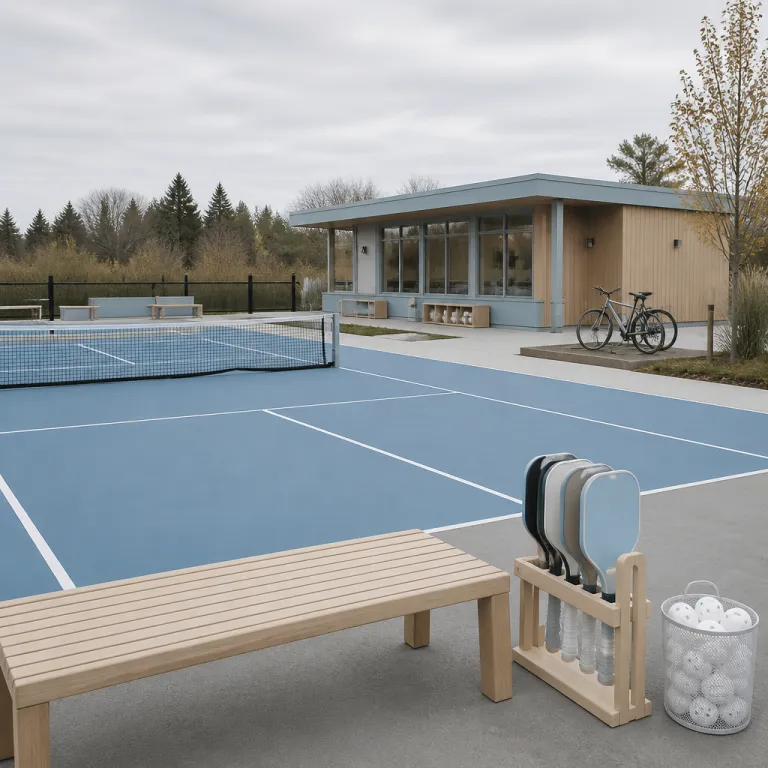
Why finding quality pickleball courts nearby matters for your game
Players who take pickleball seriously quickly realise that the right court environment shapes their progress. When you consistently play on well maintained local pickleball courts in your own city, you gain regular match experience without wasting time on long commutes. Good access to a nearby pickleball court also encourages family members to play, which strengthens both your skills and your social ties.
Many newcomers start in a public park where park courts are shared between tennis and pickleball, and this mix can either help or hinder your development depending on how the courts are managed. If the park pickleball lines are faint, the tennis courts are always full, or the open play schedule is unclear, you will struggle to find predictable game times and balanced opponents. By contrast, a dedicated pickleball center or multi sport athletics complex usually posts clear open play blocks, court reservation rules, and contact details at the main office, which makes it easier to plan your week.
Accessibility also goes beyond distance, because the best courts across a city combine safe lighting, reliable recreation staff, and transparent pricing. In many parts of the USA, municipal parks departments now convert underused tennis courts into permanent pickleball courts that players can reserve online, often using a simple facility code in the booking system. When you evaluate any lake park, neighborhood park, or private athletic club, ask how many pickleball courts they offer, how often they resurface each court, and whether they separate beginner and advanced open play sessions.
How to evaluate parks, centers, and clubs before you commit
Once you have a shortlist of pickleball courts nearby, the next step is to evaluate each location with a critical eye. Start by visiting at peak open play hours to see how many people actually play, how long players wait between games, and whether the park courts feel welcoming to newcomers. A busy lake park with four taped pickleball courts might look attractive, yet a smaller indoor recreation center with two permanent pickleball court layouts and trained staff can offer a better learning environment.
Look closely at how the facility balances tennis and pickleball, because shared tennis courts can create friction if schedules are not enforced. A well run athletics or community recreation center will post clear signage that separates tennis courts from pickleball courts, lists the daily open play windows, and explains how to find the right skill level group. At the front office, ask for the facility code used in their reservation software, then confirm whether you can contact staff easily by phone or email when you need to cancel or adjust a booking.
Some cities now invest in dedicated pickleball hubs, such as the Kickingbird Pickleball Center in Edmond, Oklahoma, which shows how a modern center can shape the future of play with thoughtful design and programming. According to the City of Edmond’s parks and recreation information, this complex includes dozens of outdoor courts, covered seating, and a pro shop, illustrating how a city courts project can support both casual and tournament level play. When you study any courts pickleball development like this, pay attention to lighting, wind protection, and how the main content of their programming separates youth, adult, and senior athletics. If a park pickleball complex or private club offers coaching, ladder leagues, and social game nights, you will usually progress faster than at a basic park where players simply show up and play informal games.
Finding local pickleball clubs that match your level and goals
Locating the right pickleball club near your preferred park or lake park can transform how you experience the sport. A structured club that uses several pickleball courts nearby for organised open play will help you find partners at your level instead of relying on random park courts. When a club collaborates with the city recreation department, it often gains priority access to park pickleball facilities and indoor courts during bad weather.
Serious players in the USA increasingly join clubs that operate across multiple parks, tennis centers, and school athletics complexes, because this network guarantees court access during peak hours. These clubs usually maintain an online main content hub where members can skip main navigation clutter and go straight to weekly schedules, court assignments, and tournament sign ups. For example, many players now use Google Maps listings to locate club operated facilities by searching phrases like “pickleball courts near me” or “park pickleball courts city name,” and national directories such as the USA Pickleball Places 2 Play database or PlayTime Scheduler to coordinate games and track where local groups meet.
When you evaluate any local club, ask how they allocate each pickleball court during open play, whether they rotate players after every game, and how they integrate beginners. A transparent club will publish its code of conduct, list a clear office contact for disputes, and explain how pickleball court usage is prioritised when tennis courts or other park courts are in demand. If the club offers both social game nights and competitive ladders, you will have room to grow without feeling pressured every time you step on court.
Practical tools and steps to find pickleball courts nearby
People who want to find reliable pickleball courts nearby should combine digital tools with old fashioned observation. Start by checking your city parks and recreation website, then filter for park pickleball facilities, indoor recreation centers, and any lake park that lists courts for racket sports. Many USA municipalities now publish interactive maps where you can search by sport, view park courts layouts, and sometimes even see live court occupancy.
Once you have a list, call the main office for each park, center, or athletic complex and ask specific questions about open play schedules, reservation rules, and lighting. Clarify whether the city policy allows you to reserve a pickleball court individually, or whether you must join a club to access prime time slots. If the facility shares tennis courts between sports, ask how they tape or paint pickleball lines, how often they resurface, and whether tennis players have priority during certain seasons.
On site visits remain essential, because no map can show the true playing experience on the courts. Walk around the park courts to check for cracks, poor nets, or standing water near any lake, then watch at least one full game to see how players rotate and welcome newcomers. For players who feel nervous about their first session, a practical first timer’s court survival checklist can help you prepare for open play etiquette, basic scoring, and the unwritten rules that govern most local groups.
Understanding schedules, etiquette, and open play culture
Every cluster of pickleball courts nearby develops its own culture, and understanding that culture will help you integrate smoothly. At many park pickleball locations, open play means that players place paddles in a queue, rotate after each game, and share every court regardless of skill level. Some recreation centers instead divide outdoor park courts and indoor courts by rating, which can feel intimidating at first but often leads to more balanced games.
Before you join any open play session, read the posted code of conduct carefully and ask a regular player to explain local customs. Many USA facilities require players to sign in at the office, wear appropriate athletic shoes, and respect time limits when others are waiting for courts. If the main content on the facility noticeboard is unclear, do not hesitate to contact staff, because clear communication prevents misunderstandings and keeps both tennis and pickleball communities aligned.
Good etiquette also extends to how you treat shared tennis courts and park courts when lines overlap. Avoid stepping onto an adjacent pickleball court or tennis court during a point, call balls honestly, and help retrieve stray balls quickly so the game flows smoothly. When everyone respects these basics, open play at any lake park, city center, or private athletics club becomes more enjoyable, and new players feel safe returning week after week.
From casual park games to structured competition
Many players start with casual games on a single pickleball court at a neighborhood park, then gradually move toward more structured competition. As your skills improve and you seek stronger opponents, you will naturally look for pickleball courts nearby that host leagues, ladders, and sanctioned tournaments. Facilities that combine park courts, indoor courts, and a dedicated pickleball center can support this full journey from beginner to advanced competitor.
Competitive environments often emerge where athletics departments, city recreation offices, and private clubs collaborate around shared courts. A city might provide land and park pickleball infrastructure, while a club manages programming, collects fees, and enforces a consistent code of conduct across all pickleball courts players use. In some regions of the USA, this model already supports youth development pathways similar to tennis, with junior clinics, school partnerships, and collegiate level events that use both tennis courts and pickleball courts on campus.
As you move into more serious play, keep evaluating whether each location still fits your needs in terms of travel time, cost, and competitive balance. Look for venues where the main content of their programming includes rating based open play, skills clinics, and mixed doubles nights, because this variety keeps the game fresh. When a facility or club communicates clearly, maintains safe park courts near any lake or urban center, and offers responsive contact channels, you can focus fully on the game instead of logistics.
Key statistics about pickleball participation and facilities
- According to the Sports & Fitness Industry Association (SFIA) 2023 report on the USA, pickleball participation grew by 158.6 percent between 2020 and 2022, which helps explain the rapid expansion of park pickleball facilities and dedicated centers.
- Many city parks and recreation departments now report that pickleball courts are among the most requested new amenities, often surpassing traditional tennis courts in usage during peak evening hours based on internal facility counts.
- Industry surveys and local recreation reports indicate that a significant share of new players first experience the game at free open play sessions on public park courts, then later join clubs or private centers for more structured competition.
- Several municipalities have converted underused tennis courts into multiple pickleball courts, sometimes fitting up to four pickleball courts onto a single former tennis court footprint to maximise recreation space and reduce construction costs.
FAQ about finding and using pickleball courts nearby
How can I quickly find pickleball courts nearby in my city ?
Start with your city parks and recreation website, then search for park pickleball facilities, indoor centers, and lake park complexes that list courts for racket sports. Combine this with map searches on tools like Google Maps using queries such as “pickleball courts city name,” “park courts pickleball,” or “lake park pickleball,” and national directories such as USA Pickleball’s Places 2 Play or PlayTime Scheduler, then call each office to confirm open play times and reservation rules. Visiting during peak hours will show you which courts actually host active games.
What is the difference between open play and reserved court time ?
Open play usually means that players share courts, rotate after each game, and follow a first come, first served system managed by simple paddle queues. Reserved court time allows you to book a specific pickleball court or group of courts for a set period, often through an online system that uses a facility code. Many centers and parks offer both options, with open play for social games and reservations for lessons or competitive matches.
Are shared tennis courts good places to learn pickleball ?
Shared tennis courts can be excellent learning spaces if lines are clearly marked, nets are adjusted correctly, and schedules separate tennis and pickleball fairly. Problems arise when tennis players and pickleball players compete for the same court without clear rules, so always check posted policies and talk to staff. If conflicts persist, look for dedicated park courts or a pickleball center where the game has priority.
What should I look for in a local pickleball club ?
A strong club offers regular open play sessions, rating based groups, and clear communication about schedules, fees, and etiquette. Check whether the club has access to multiple pickleball courts nearby across different parks or centers, because this ensures reliable court time during busy seasons. Transparent governance, a published code of conduct, and an accessible contact person at the office are also signs of a trustworthy organisation.
Is it better to play at a park, a recreation center, or a private facility ?
Parks usually provide free or low cost access and a relaxed atmosphere, while recreation centers add structure with posted schedules, staff oversight, and indoor options. Private facilities and dedicated pickleball centers often offer the best court surfaces, lighting, and coaching, but they charge membership or court fees. The best choice depends on your budget, your schedule, and how competitive you want your game to become.