Summary
Editor's rating
Value for money: where the Z5 sits in today’s paddle market
Design: widebody head and tennis-style handle that feel familiar
Comfort and grip: easy on the hand, even in longer sessions
Durability and build quality after several weeks
On-court performance: control first, power second
What you actually get with the ONIX Graphite Z5
Pros
- Large sweet spot and good control, especially on dinks and drops
- Comfortable medium-weight feel and grip that suits most hand sizes
- Solid build quality and durability for the price, from a known brand
Cons
- Loud Nomex "pop" sound that some players and venues may dislike
- Technology and spin potential are behind newer high-end carbon paddles

Specifications
View full product page →| Brand | ONIX |
A popular paddle that actually earns its reputation
I’ve been seeing the ONIX Graphite Z5 everywhere at local pickleball courts, so I finally grabbed the purple version to see if it’s actually good or just hype. I’m not sponsored, I paid for it myself, and I used it for about three weeks, roughly 3–4 sessions a week. I’d call myself a solid intermediate player, not a pro, but not a total beginner either. So this review is from someone who plays regularly, not just once a month.
From the first session, the main thing that jumped out at me was control. I switched to this from a cheap Amazon composite paddle, and the difference on dinks and soft shots near the net was pretty clear. I wasn’t suddenly a better player, but I felt like I could actually put the ball where I wanted more often, especially on slow exchanges. Power-wise, it’s decent, but if you’re used to a really poppy paddle, this will feel more controlled than explosive.
I played with it both indoors and outdoors, with different balls, and also let a couple of friends try it. One is a beginner, one is better than me, and both said roughly the same thing: big sweet spot, easy to get used to, and the grip feels comfortable right away. Nobody complained about it feeling too heavy or too light, which is a good sign. It sits in that middle zone where you don’t think about the weight much, you just play.
It’s not perfect though. The sound is that typical Nomex "pop" which some people hate, and if you’re chasing huge power or the latest high-tech carbon face, this isn’t it. But if you want something simple, reliable, and easy to control, especially if you’re moving from beginner to intermediate, it’s a pretty solid option. I’ll break down what I noticed in terms of design, comfort, performance, durability, and whether I think the price makes sense.
Value for money: where the Z5 sits in today’s paddle market
In terms of value, the ONIX Graphite Z5 sits in that mid-range sweet spot. It’s not a bargain-basement paddle, but it’s also nowhere near the price of the latest high-end carbon paddles that cost almost double. For what you pay, you get a proven design, a reputable brand, and performance that suits a pretty wide range of players. If you’re moving up from a $30–$40 starter paddle, you will feel the difference in control and consistency. It feels like money spent on function, not on fancy packaging or gimmicks.
Where it gets tricky is if you’re already deep into the sport and looking at the newest paddles with more advanced carbon faces and better spin. Those do offer real benefits, but they also cost a lot more. The Z5 is a bit old-school now: Nomex core, graphite face, loud pop. It still works very well, but it doesn’t have the latest tech. So if you’re a serious tournament player chasing every edge, you might see this as more of a solid backup or loaner paddle rather than your main stick.
For beginners and intermediates, though, I think the Z5 hits a good price-to-performance ratio. You get:
- Good control and a large sweet spot
- Comfortable grip that most hands can work with
- Decent power without being wild
- A brand that’s established in pickleball, not some random no-name
On the downside, you don’t get a cover, the sound is loud, and the tech is not cutting-edge. But for a paddle that you can confidently use from beginner up through solid intermediate, I’d say the value is pretty solid. If you find it on sale, it’s even better. I don’t feel like I overpaid, and I’d recommend it to friends who want to upgrade from cheap starter paddles without jumping straight into the top price tier.
Design: widebody head and tennis-style handle that feel familiar
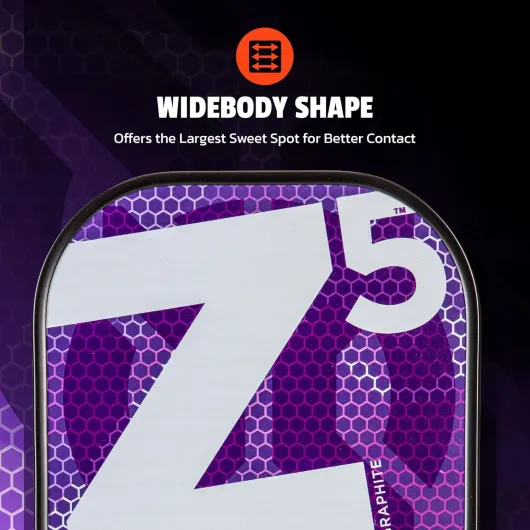
The widebody design is probably the first thing you feel in actual play. The face is broad enough that mishits near the top or sides still have a decent chance of going over the net. Compared to my older narrow paddle, I had fewer complete shanks on fast exchanges at the net. The sweet spot is pretty generous, especially vertically, so even when I was late on a volley, the ball usually stayed in play. For beginners and intermediate players, that extra forgiveness matters way more than some cutting-edge tech.
The handle is shaped like a tennis racket grip, and this matters more than I expected. It gives you a clear sense of orientation in your hand, so you know where the face is without looking. I noticed this when I switched quickly from forehand to backhand during kitchen battles; I didn’t have to constantly adjust my grip mid-rally. If you’re coming from tennis, you’ll probably adapt in a couple of minutes. If you’re new to racket sports, it still feels natural enough – not too long, not too short.
Balance-wise, the Z5 is slightly head-heavy compared to some newer, more expensive paddles I’ve tried. Not dramatically, but enough that you feel a bit of weight in the head when swinging hard. For me, this helped on drives and serves, giving a bit of extra punch without having to muscle every shot. The trade-off is that super quick hand battles at the net feel a tad slower than with a very head-light paddle. I got used to it after a few sessions, but if you only play lightning-fast doubles, you might prefer something lighter in the head.
One thing I did notice: the edge guard is fairly prominent. It protects the paddle well when you scrape the ground or hit the court, but if you tend to hit very close to the edge, you’ll occasionally catch that plastic and lose a bit of control. It didn’t bother me much, but I know some players obsess over edge guards. Overall, the design is practical, forgiving, and easy to pick up and use, with a couple of small quirks that are easy to live with for most people.
Comfort and grip: easy on the hand, even in longer sessions
Comfort-wise, I’d say this is one of the Z5’s strong points. The grip cushioning is pretty decent out of the box. It’s not super squishy, but it has enough padding that you don’t feel the hard handle underneath, even in long sessions. I usually play 2-hour blocks, and I didn’t get any hot spots or blisters, which I did get with a cheaper paddle that had a thinner grip. The 4 1/4" grip size feels like a good middle ground – small enough for smaller hands, big enough that you can always add an overgrip if you want a thicker feel.
In terms of weight, at around 7.8–8.0 ounces (mine specifically), it lands in that comfortable spot where your arm doesn’t feel like it’s dragging, but you also don’t feel like you’re swinging a feather. I had no elbow or wrist pain after several weeks, and I’m someone who’s had mild tennis elbow from heavier paddles. The Nomex core gives a crisp feel, which some people might find a bit harsher than softer polymer cores, but I didn’t find it punishing. It’s firm, not jarring.
The one thing worth mentioning is the sound. Nomex cores are loud, and this paddle is no exception. It has a sharp "pop" that you can hear across the court. It doesn’t affect comfort in your hand, but if you’re sensitive to noise or play somewhere with sound restrictions, it’s something to think about. Personally, I got used to it quickly, but it’s definitely louder than some of the newer carbon-faced polymer paddles. Some players like the audible feedback, others don’t.
Grip texture is slightly tacky without being sticky. Even when my hand got a bit sweaty, I didn’t feel like I was losing control of the paddle. On hotter days, I’d still throw on an overgrip for more absorbency, but that’s true for almost any paddle. Overall, comfort is solid: easy to hold, no weird vibrations, and weight that feels natural. If you struggle with arm fatigue or grip pain, this is a pretty safe paddle to try before jumping into more expensive, heavier options.
Durability and build quality after several weeks
Durability is always hard to judge long-term, but after a few weeks of regular play – about 20+ hours on court – the Z5 is holding up nicely. The edge guard has taken a few scrapes from low pickups and one or two accidental taps on the ground, and it’s only showing minor cosmetic scuffs, nothing structural. The guard is firmly attached; I don’t see any gaps or spots where it’s peeling away, which I’ve seen happen on cheaper paddles after just a couple of sessions.
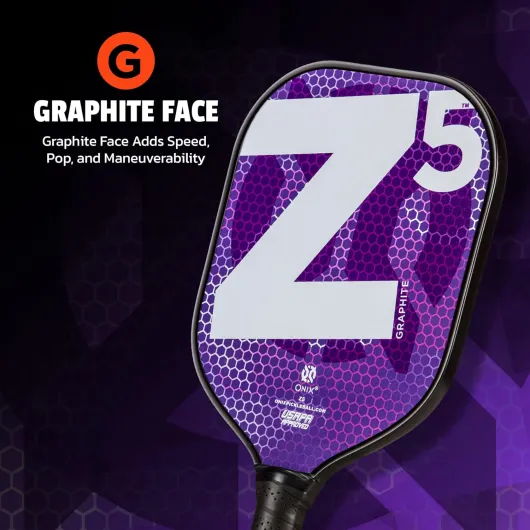
The graphite face still looks good. There are normal ball marks and a few light scratches, but nothing that affects play. I didn’t notice any dead spots or changes in feel, which sometimes happen when the core starts to break down. Given how many Amazon reviews mention using this paddle for months or years, I’m not too worried about short-term failure. It feels like a sturdy, everyday paddle, not a fragile showpiece you’re afraid to drop.
The grip wrap is usually the first thing to go on paddles, and here it’s held up decently. After a few sweaty sessions, the top of the grip started to get a bit smoother, but it didn’t unravel or peel. If you play a lot, you’ll probably end up adding or replacing with an overgrip at some point, which is normal. The core and handle connection feels solid; no creaking, no wobble, even when I intentionally flexed it a bit by hand.
Of course, I can’t speak for a full year of heavy use yet, but based on my time with it and the number of positive long-term reviews, I’d rate the durability above average for the price range. You’re not getting ultra-premium build like some $200+ models, but you’re also not paying that. For recreational and club players who play a few times a week, I’d expect this to last a good while before you need to replace it, unless you’re very rough with your gear.
On-court performance: control first, power second
Performance is where the Z5 makes the most sense. The main thing I noticed is control on soft shots. Dinks, drops from the baseline, and blocks at the net felt predictable. With my old cheaper paddle, my third-shot drops were more hit-or-miss; with the Z5, I was landing more of them in the kitchen instead of sailing them long. It doesn’t magically fix bad technique, but it gives you a more consistent response off the face, which helps you focus on your swing instead of guessing how the ball will bounce.
Power is decent but not crazy. If you like to crush drives and overheads, you’ll get enough pop to finish points, but it’s not in the same league as some of the newer, super-lively paddles. I’d say it’s balanced: you can hit hard when you swing hard, but it doesn’t fire rockets on light swings. For intermediate players, that’s probably a good thing, because it keeps your shots from flying long all the time. Serves had enough pace to be effective, but I didn’t suddenly gain a ton of free power.
Spin is okay. The graphite face has some grip, but it’s not a super-textured surface like some high-end carbon paddles. I could put topspin on drives and slice on returns, but it didn’t feel like the paddle was doing the work for me. You need decent technique to really get heavy spin. For most recreational and intermediate players, it’s plenty. If you’re obsessed with spin and already have good mechanics, you might want a more textured face, but you’ll also pay more.
In doubles play, I felt the Z5 really shines at the net and in the transition zone. Blocking hard shots back into the kitchen was straightforward, and the big sweet spot forgave late or off-center contact. In fast hand battles, it’s good but not the fastest paddle out there because of the slightly head-heavy feel. Still, I rarely felt outgunned. Overall, I’d call the performance reliable and predictable: strong focus on control, enough power to finish points, and spin that’s serviceable but not the main attraction.
What you actually get with the ONIX Graphite Z5
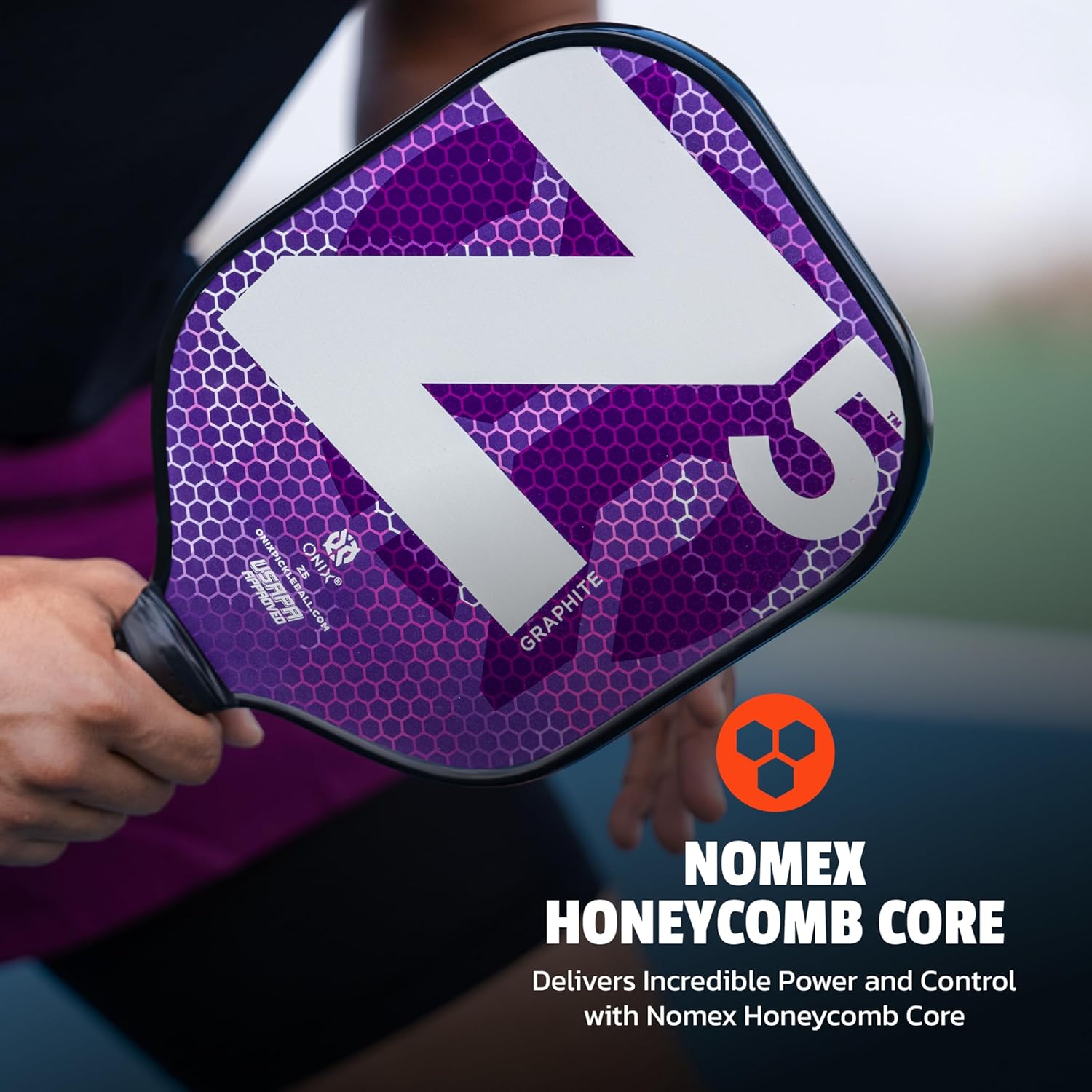
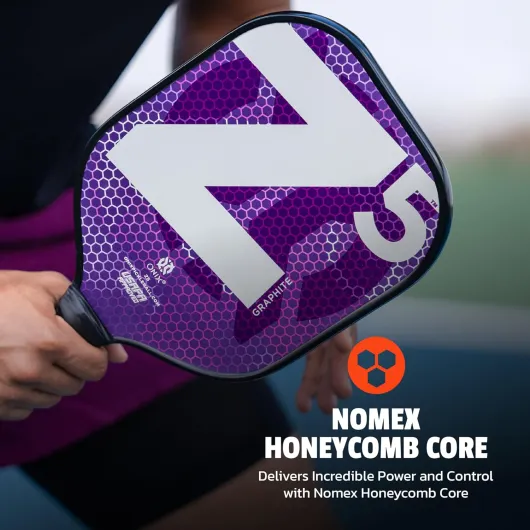
Out of the box, the Z5 is pretty straightforward: you get the paddle and that’s it. No cover, no extras, just the bare paddle. Personally I don’t care too much about fancy packaging, but if you like getting a case included, you won’t find that here. The paddle itself is standard widebody size, with a graphite face and Nomex honeycomb core. The spec weight is around 7.5–8.2 ounces, and mine came in right around the middle when I weighed it on a kitchen scale. So yes, it’s genuinely a medium-weight paddle, not just marketing talk.
The shape is the classic widebody with a tennis-style handle. That means it feels familiar if you’re coming from tennis or table tennis, as the grip is slightly flared and not super chunky. The grip size is about 4 1/4 inches, which for my average-sized hands feels fine. A friend with smaller hands also found it comfortable, and another guy with big hands just added an overgrip and was happy. So grip-wise, it’s pretty flexible. ONIX pushes this as their "most popular" paddle and, based on how many I see at local courts, that seems true.
The purple color is just that: purple. No fancy metallic effect, no weird patterns. The design is simple with the ONIX logo and text. If you like clean and obvious branding, you’ll be fine. If you want something flashy or unique, this one looks like a normal paddle, nothing more. Personally, I like that it doesn’t scream for attention, it just looks like a tool you’re supposed to use, not admire.
Also worth noting: it’s USA Pickleball approved, so if you care about tournaments, you’re covered. For casual players, that just means the paddle meets basic standards and isn’t some sketchy off-brand toy. Overall, the presentation is no-frills. You buy it for how it plays, not for what’s in the box or how it looks on Instagram. That matches how it feels on court: practical and focused on control rather than gimmicks.
Pros
- Large sweet spot and good control, especially on dinks and drops
- Comfortable medium-weight feel and grip that suits most hand sizes
- Solid build quality and durability for the price, from a known brand
Cons
- Loud Nomex "pop" sound that some players and venues may dislike
- Technology and spin potential are behind newer high-end carbon paddles
Conclusion
Editor's rating
After several weeks of regular play, I’d sum up the ONIX Graphite Z5 as a reliable, control-focused paddle that suits a wide range of players, especially beginners and intermediates. The big sweet spot, medium weight, and tennis-style handle make it easy to pick up and start playing confidently. Dinks, drops, and blocks feel predictable, and there’s enough power on tap for drives and put-aways without the ball flying all over the place. Comfort is good, the grip works for most hand sizes, and the build feels solid for the price.
It’s not perfect. The Nomex core is loud, the tech is a bit dated compared to newer carbon paddles, and spin is decent rather than crazy. You also don’t get extras like a cover. If you’re a high-level tournament player chasing maximum spin and the latest materials, you’ll probably want to look higher up the price ladder. But if you’re upgrading from a cheap starter paddle, or you want a trustworthy, no-drama paddle that just gets the job done, the Z5 is a very sensible choice. I’d recommend it for recreational and club players who value control, comfort, and durability over flashy features. If that’s you, this paddle will likely stay in your bag for a long time.