Summary
Editor's rating
Value for money: is it worth the price?
Design: looks, shape, and on-court feel
Comfort: grip, weight, and fatigue over long games
Materials: T700 carbon and 16mm core – does it matter?
Durability: how it holds up after regular use
Performance: power, control, and spin on court
What you actually get in the box
Pros
- Good balance of control, power, and spin for a mid-range paddle
- Comfortable 4.25" grip and 16mm core that reduce vibration and fatigue
- Comes with paddle cover, backpack bag, and spare grip tape, which adds clear value
Cons
- Edge hits feel a bit dull and lose power compared to the sweet spot
- Not as crisp or lively as some higher-end carbon paddles for advanced players

Specifications
View full product page →| Brand | BLUE CUT |
A carbon paddle that doesn’t feel like a toy
I’ve been playing pickleball a few times a week for a while now, and I picked up this BLUE CUT SpinX Force mainly because I wanted to try a T700 carbon paddle without paying top-tier prices. I’ve used cheaper fiberglass paddles and tried a couple of friends’ higher-end carbon ones, so I’m not totally new to this type of gear. I used this paddle for about three weeks, roughly 10–12 sessions, both casual games and some slightly more serious club play.
Right away, the paddle didn’t feel like a random Amazon special. The 16mm core and the 8 oz weight give it a decent presence in the hand. It’s not super light, but it’s not a brick either. It feels like a paddle aimed at someone who already plays a bit or at least wants something more serious than a starter wooden or cheap composite set. The grip size (4.25”) is pretty standard and should work for most adult hands unless you have really big or really small hands.
My first impression on court: the sweet spot is pretty forgiving, and the paddle has a good mix of pop and control. When you hit the center, it feels clean and stable. When you drift toward the edges, you do feel that drop in power and feedback, but that’s pretty normal in this price range. It’s not as lively as some high-end paddles, but it doesn’t feel dead either. I’d call it a controlled, slightly power-leaning paddle.
Overall, after a few sessions, I felt this paddle was good value for someone at an intermediate level or a motivated beginner who wants to skip the basic gear. It’s not perfect, and there are details I’d tweak, but for the price and what you get in the bundle (paddle cover, backpack, extra grip tape), it honestly gets the job done well. If you’re expecting top-tier pro feel, you’ll notice the difference, but if you’re upgrading from a cheap set, it’ll feel like a clear step up.
Value for money: is it worth the price?
Looking at what you pay and what you get, I’d say the value is quite good. You’re getting a T700 carbon face, a 16mm core, USAPA approval, plus a paddle cover, backpack bag, and spare grip tape. Many paddles in this range don’t give you all that. If you’re just starting to take pickleball a bit more seriously and you don’t want to spend top-tier money, this hits a nice middle ground: clearly better than budget starter sets, but not priced like the big-name pro models.
On court, it performs in line with what you’d expect from a mid-range carbon paddle. It’s not magic, but it gives you solid control, reasonable power, and usable spin. You’re not paying for a brand logo alone; you’re actually getting a decent spec and build. Compared to borrowing friends’ higher-end paddles, I could feel the difference—they felt a bit crisper and more responsive—but not enough to justify paying almost double if you’re not super serious or competing all the time.
If you’re already an advanced player chasing every small performance edge, you might feel this paddle is a bit too middle-of-the-road and you’ll probably want to invest in a higher-end model. But if you’re an improving beginner or intermediate who plays weekly and wants something reliable that doesn’t feel cheap, this is a sensible buy. The accessories also make it easier if you’re new and don’t already own a bag or cover.
So in simple terms: good bang for your buck, especially if you’re upgrading from a basic set. Not the best paddle on the market, but for the price, it’s hard to complain. It does what it’s supposed to do, feels solid, and doesn’t feel like you overpaid for a name.
Design: looks, shape, and on-court feel
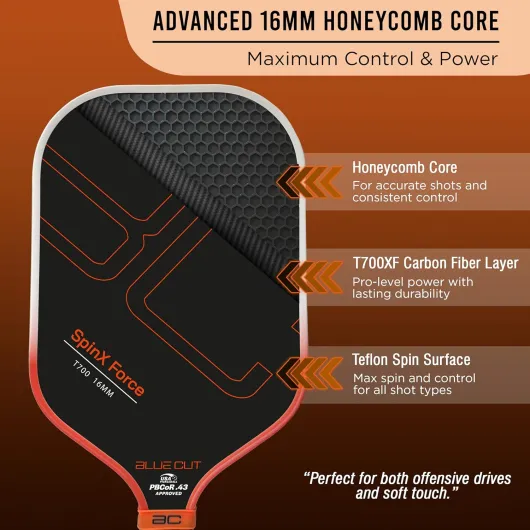
The design is pretty straightforward: standard-shaped paddle, not elongated, with a slightly wider sweet spot feel than the cheaper paddles I’ve used. That wider sweet spot is noticeable right away on dinks and blocks at the kitchen. Off-center hits don’t fly off your paddle as wildly, which helps if your technique isn’t perfect yet. The orange color is bright but not tacky, and the branding is visible but not screaming in your face. It looks like a modern paddle, not a toy from a discount bin.
The 16mm thickness is also a key design point. Compared to thinner paddles I’ve tried, this one feels more stable on volleys and blocks. When a hard drive comes at you, the paddle doesn’t twist as much in your hand. That gives you confidence at the net. On the flip side, because of that thickness and the mid-weight, it’s not the fastest paddle for super quick hand battles. If you’re into really rapid exchanges at the kitchen, you might feel a tiny bit of lag compared to an ultra-light, thinner paddle, but we’re talking small differences.
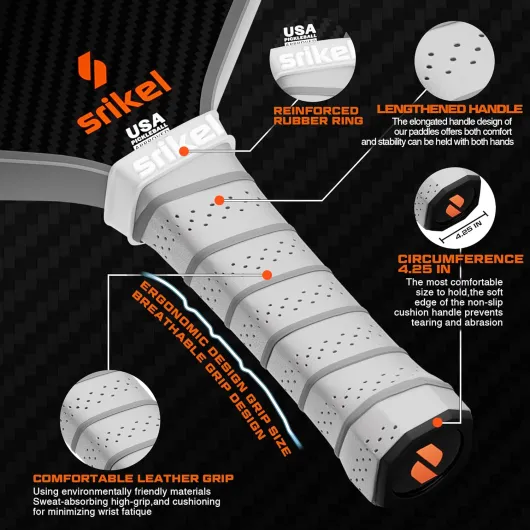
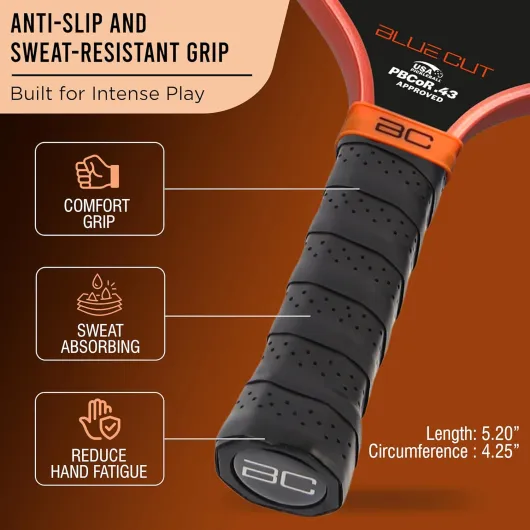
The grip length is 5.2 inches, which is good if you like to occasionally use a two-handed backhand. I tried a few two-handed shots and didn’t feel cramped. The grip circumference (4.25”) is neutral enough that I didn’t feel like I was holding a baseball bat or a pencil. For context, my glove size is medium/large, and this grip felt natural, with enough room for overgrip if needed. That extra grip tape they include is handy if you want a thicker or fresher wrap after a while.
In practice, the overall design is balanced and sensible. It’s not ultra-specialised in power or control; it sits in the middle with a slight lean toward control, thanks to the thicker core. If you want a crazy power paddle or a super fast one for hand speed, there are more specialized models out there. But if you want one paddle that can handle serves, drives, drops, and dinks without you constantly thinking about switching gear, this design is pretty well thought out for that all-round role.
Comfort: grip, weight, and fatigue over long games
Comfort-wise, the paddle is pretty friendly. At around 8 ounces, it sits in that middle ground where you get some power and stability without your arm falling off after an hour. I played a couple of two-hour sessions with short breaks, and my arm and wrist felt fine afterwards. With some heavier paddles I’ve tried, I start feeling a bit of tension in my forearm, but with this one it was manageable. If you’re very sensitive to weight, you might still prefer something lighter, but for most average players, this is a decent compromise.
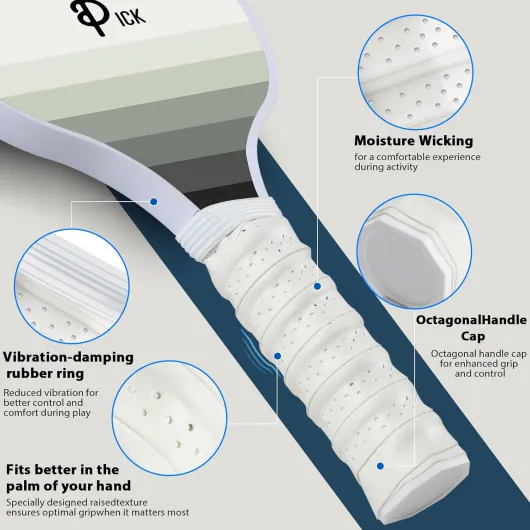
The grip is one of the things I actually liked the most. The 4.25” circumference felt natural, and the length (5.2”) gives enough room to adjust your hand or use a two-handed backhand without feeling cramped. The grip texture soaks up sweat reasonably well. I played outdoors on a warm day, and while my hand did get sweaty, I never felt like the paddle was slipping. The shock absorption from the handle plus the 16mm core means less sting on mishits compared to cheaper paddles I’ve used.
Over a longer session, I noticed that my hand stayed more relaxed because the paddle doesn’t vibrate much. That might sound minor, but when you’re playing a bunch of games back-to-back, that reduced vibration and stable feel make a difference. I didn’t feel any hot spots or blisters forming on my palm or fingers, which I’ve had with some harder, slicker grips. The included spare grip tape is handy if you sweat a lot or if you prefer a slightly thicker grip—you can rewrap it to your taste.
In practice, I’d say comfort is one of its strong points. It’s not ultra-light and whippy, but it’s stable, doesn’t rattle your arm, and the grip does its job without drama. If you’ve been using a very cheap or old paddle and your arm gets tired or sore quickly, this one should feel like an upgrade in terms of comfort and overall playability. Not miracle-level, but clearly a step up from entry-level junk.
Materials: T700 carbon and 16mm core – does it matter?
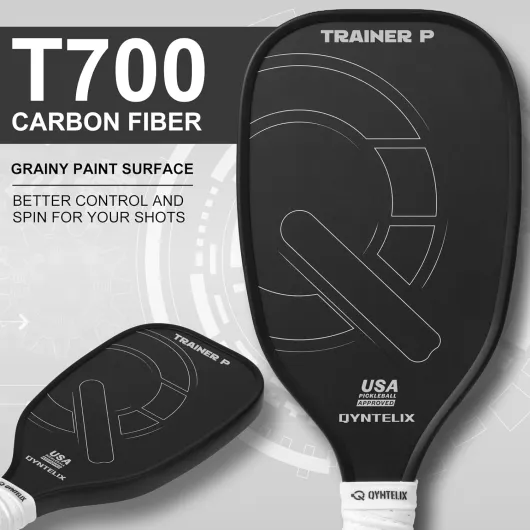
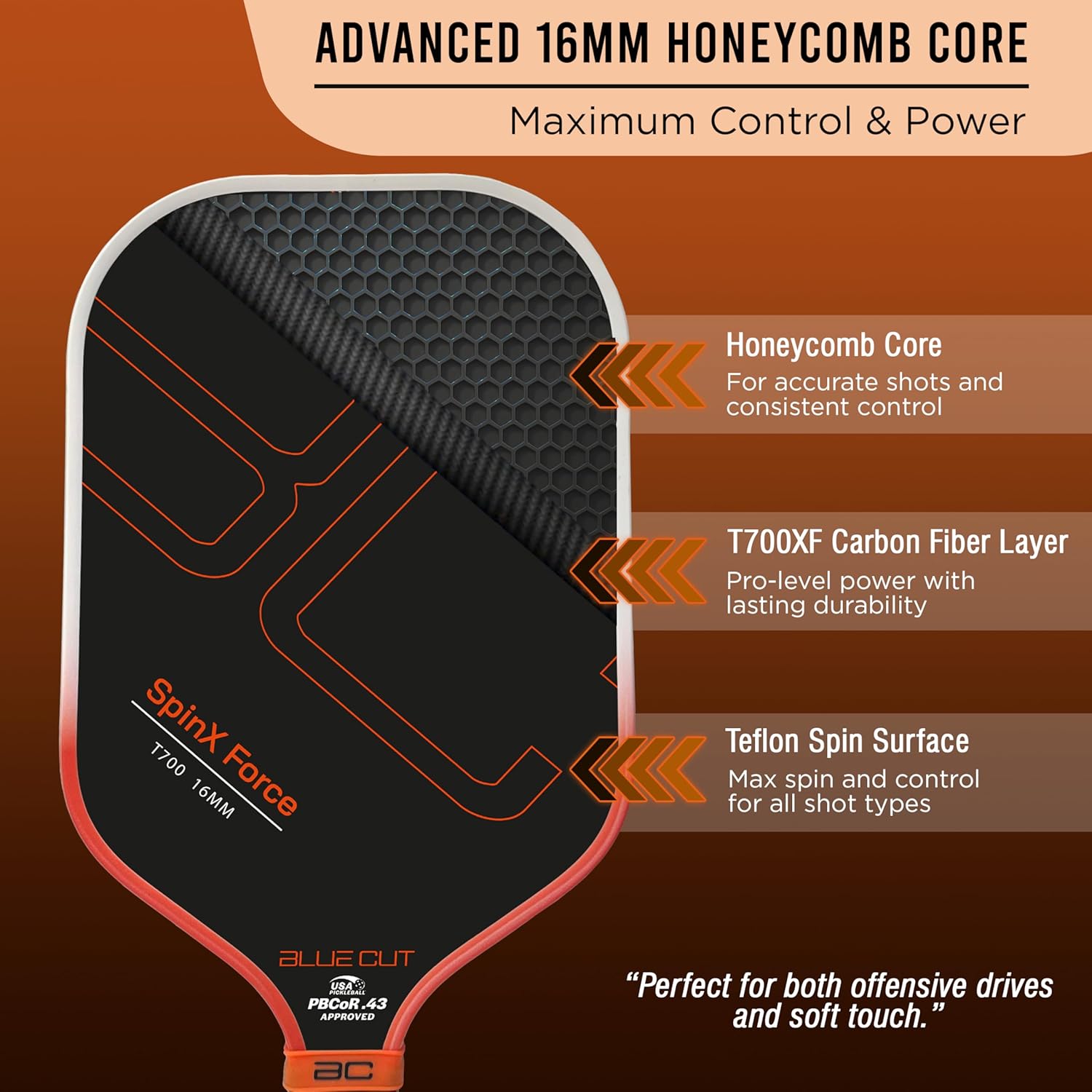
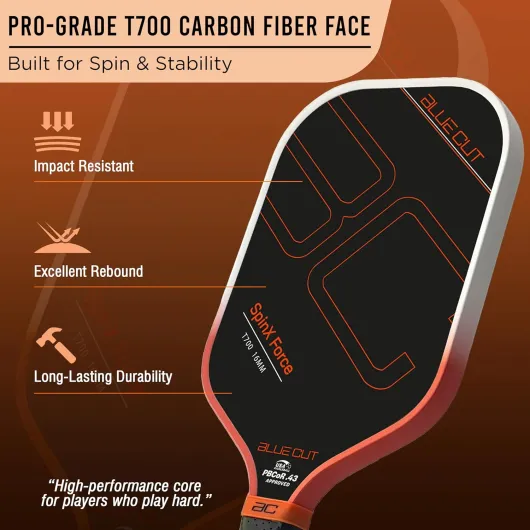
The big selling point here is the T700 carbon fiber face with a 16mm polymer honeycomb core. That’s the same type of spec you see on more expensive paddles, at least on paper. The surface is raw and textured, and you can clearly feel the grip when you rub a ball or your finger across it. It’s not just a printed texture that wears off in two games. After my three weeks of use (around 10–12 sessions), the texture still felt solid and the face didn’t look overly worn, just the usual light marks from ball contact.
The 16mm honeycomb core does make a difference in feel compared to thinner paddles I’ve used. You get less vibration in the hand, especially on mishits. On my older cheap composite paddle, off-center hits used to send a buzz up my arm. With this one, the impact feels more muted and controlled. It’s not completely dead—there’s still feedback—but it’s much more comfortable over a long session. If you have elbow or wrist issues, that thicker core and carbon face combo is a plus.
The frame and shaft being carbon fiber also help with durability and stiffness. I accidentally clipped the ground once on a low shot and once banged it lightly on the net post. No chips or cracks, just a small scuff on the edge guard. The edge guard itself is standard plastic, nothing fancy, but it seems to do its job. I didn’t baby the paddle, and it held up just fine in normal amateur use. Obviously, I can’t speak for a full year of abuse, but so far, no red flags.
Overall, the materials feel solid for the price bracket. It’s not pretending to be some boutique handcrafted paddle, but it doesn’t feel cheap either. The carbon face gives you decent spin and a firmer feel than fiberglass, while the 16mm core keeps things comfortable and stable. If you’re upgrading from a basic set, you’ll notice the jump in feel. If you’re coming from a very high-end carbon paddle, you’ll probably feel that this one is a bit less lively and precise, but that’s expected at this price level.
Durability: how it holds up after regular use
Durability is always tricky to judge long-term, but after a few weeks of regular play, the paddle is holding up well. I used it on both indoor and outdoor courts, tossed it in the trunk, and stored it in the included cover when I remembered. The carbon face has some normal scuff marks from the balls, but no chips or cracks. The textured surface still feels grippy; it hasn’t gone slick after a handful of sessions, which is something I’ve seen with cheaper printed textures.
The edge guard is intact after a couple of minor bumps. I did clip the ground once going for a low ball and grazed the fence another time. The guard has light cosmetic marks, but nothing structural. No separation between the face and the core, no weird buzzing sounds inside, and the handle feels solid with no looseness. On a really low-quality paddle, you sometimes start hearing rattles or feel the handle twist a bit after a while; I haven’t had that here.
The grip has held up too. After around 10–12 sessions, it’s a bit darker from sweat, but it’s not peeling or coming unwrapped. If you’re picky, you can just use the spare grip tape they provide and refresh it. The core still feels consistent—no dead spots that I can notice. Shots feel the same across the face as they did on day one, aside from my own inconsistency as a player.
So, from what I’ve seen, durability seems decent for this price range. I can’t tell you how it’ll look after a year of heavy play, but there are no early signs of failure or cheap construction. If you’re a hardcore daily player, you might eventually move up to a more premium brand, but for regular club and rec play a few times a week, this paddle feels like it’ll last long enough to get your money’s worth.
Performance: power, control, and spin on court
Performance-wise, the paddle sits in that balanced zone with a slight lean toward control. Serves and drives have enough pop to be threatening, but it’s not a rocket launcher. Compared to a very cheap fiberglass paddle I used before, this one gives me more consistent depth on my serves and third-shot drives without having to swing like a maniac. When you hit the sweet spot, the ball comes off cleanly with a predictable trajectory. On edge hits, you do feel a drop in power and responsiveness, but that’s pretty common for this price point and construction.
Where it does well is in the soft game. The 16mm core helps a lot with dinks, drops, and resets. I found it easier to control the ball at the kitchen line and keep shots low over the net. The paddle doesn’t feel overly bouncy, so you’re less likely to launch soft shots too deep if your touch isn’t perfect. That thicker core kind of forgives slightly off timing and still keeps the ball in play. For intermediate players working on consistency, that’s useful.
The textured carbon face does give you some decent spin. I noticed it most on serves and slice returns. You can feel the ball grip the surface a bit longer, which helps you curve it or keep it low. Is the spin as strong as some of the very high-end raw carbon paddles I’ve tried briefly? No, not quite. But it’s clearly better than smooth or fake-texture budget paddles. If you like adding topspin or slice, you’ll be able to do it reliably with this.
In quick net exchanges, the paddle is fine but not lightning fast. The mid-weight and 16mm thickness give stability, but you don’t get the super quick whip of a very light, thin paddle. If your game is all about ultra-fast hands, you might want something lighter. But for mixed play—baseline rallies, drops, dinks, and normal-speed hand battles—it performs well. Overall, I’d rate the performance as pretty solid for the price: good control, enough power, and respectable spin, without any big weak point that ruins the experience.
What you actually get in the box
In terms of what shows up at your door, BLUE CUT doesn’t cheap out on accessories. You get the paddle itself, a fitted paddle cover, and a small backpack-style bag that can carry the paddle plus a few balls and maybe a water bottle. There’s also spare grip tape in the package, which is a nice touch. For a lot of people, that means you don’t have to buy extra stuff right away just to start playing or to protect the paddle.
The paddle is a standard 16mm core model, USAPA-approved, with T700 carbon fiber on the face and a polymer honeycomb core. It’s aimed at intermediate and advanced players according to the label, but honestly I think strong beginners could use it too. The face has a clear textured feel when you run your fingers over it. It’s not just a fake printed pattern; you can feel the grip that helps with spin. Weight is about 8 ounces, which puts it in the middle weight category—fine for most people unless you’re super sensitive to weight.
The backpack bag is simple but useful: one main compartment with room for the paddle and some balls, light material, nothing fancy. It’s not a high-end sports bag, but for casual club nights or tossing in the car, it’s perfectly fine. The paddle cover is actually the more useful accessory for me, because it protects the carbon face from scratching when it’s in a bigger bag with other stuff. Considering many paddles at this price don’t even include a decent cover, that’s a plus.
Overall, the presentation is practical rather than flashy. You’re not getting luxury packaging or anything, but you do get everything you actually need to play and protect the paddle. For someone just getting into the sport or upgrading from a really basic set, it feels like a complete starter bundle. If you already have bags and covers from other paddles, you might not care, but it’s still a nice bonus rather than just a bare paddle in a cardboard box.
Pros
- Good balance of control, power, and spin for a mid-range paddle
- Comfortable 4.25" grip and 16mm core that reduce vibration and fatigue
- Comes with paddle cover, backpack bag, and spare grip tape, which adds clear value
Cons
- Edge hits feel a bit dull and lose power compared to the sweet spot
- Not as crisp or lively as some higher-end carbon paddles for advanced players
Conclusion
Editor's rating
After using the BLUE CUT SpinX Force for a few weeks, I’d sum it up as a solid mid-range carbon paddle that gives you a good mix of control, comfort, and decent power without draining your wallet. The 16mm honeycomb core and T700 carbon face actually make a difference compared to cheap paddles: less vibration, a more stable feel, and a surface that gives you real spin instead of just marketing talk. It’s not ultra-lively like some top-end paddles, but for most club-level players, it’s more than enough.
Where it stands out for me is comfort and value. The grip is comfortable, the weight is manageable for longer sessions, and the paddle doesn’t beat up your arm. Add in the cover, backpack bag, and spare grip tape, and you’re getting a complete setup, not just a bare paddle. It’s not flawless—edge hits feel a bit dull, and advanced players might want more precision and pop—but nothing here is a dealbreaker. For improving beginners and intermediates, it’s a sensible choice. If you’re chasing top-tier performance and play tournaments all the time, you might want to spend more on a higher-end brand, but for most casual and club players, this one gets the job done very well for the price.