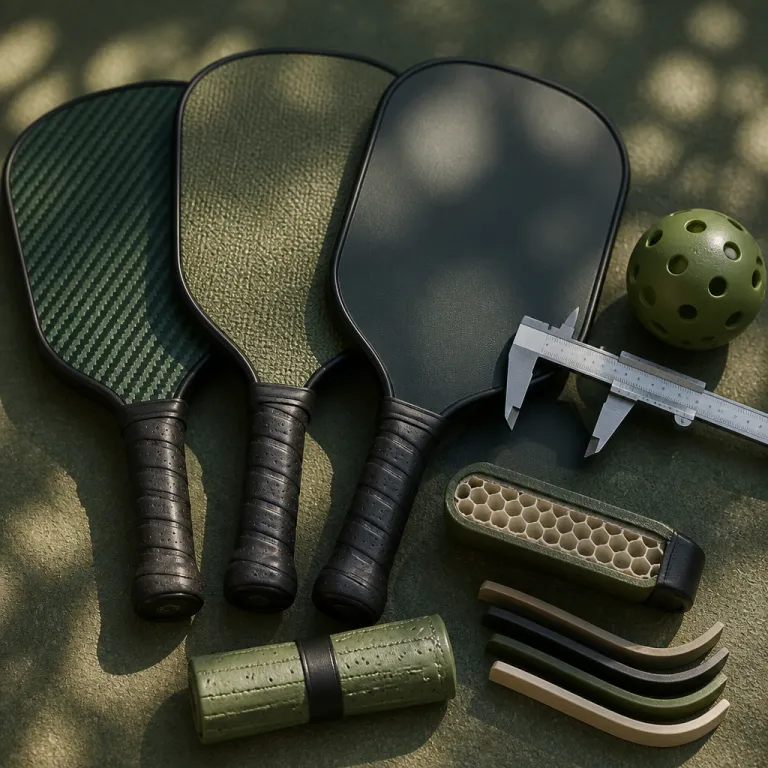
Why pickleball paddles for intermediate to advanced players matter so much
Once you move beyond beginner rallies, your pickleball paddle stops being a simple toy and becomes a precision tool. For intermediate players and seasoned competitors, the right paddle or set of paddles directly shapes power, control, spin, and the feel you get on every ball you strike. A well chosen court paddle lets you attack from the baseline, defend at the kitchen, and hold the sweet spot of performance that matches your style.
At this level, pickleball paddles for intermediate to advanced players must balance power and control rather than chasing only the biggest smash. A pure power paddle can feel thrilling on overheads, yet it often punishes you on touch shots and blocks when the paddle face is too lively near the sweet spot. Control paddles sit at the other extreme, giving you a plush feel on dinks but sometimes leaving you short when you need a penetrating drive from deep in the court.
Modern pickleball paddle design uses carbon fiber faces, foam core inserts, and elongated paddle shapes to fine tune this balance. A carbon surface can boost spin and give you a more predictable paddle face response across the hitting spot. When you test several pickleball paddles side by side, you quickly sense how small changes in weight, balance, and foam distribution alter the feel and power control you experience on every ball.
Core materials, foam technology, and how they change feel on court
The internal core of a pickleball paddle quietly dictates how the paddle behaves under pressure. Many pickleball paddles for intermediate to advanced players now combine a polymer honeycomb with targeted foam to enlarge the sweet spot and soften vibrations on mishits. When foam is added around the perimeter as a foam core ring, it can stabilize the paddle face and turn more of the paddle into a usable spot for clean contact.
Players who prefer a power paddle often choose a slightly denser foam core or a stiffer carbon fiber face, which returns more energy to the ball. This construction helps you generate heavy topspin on drives while still keeping enough control to hold the ball in the court during fast exchanges. By contrast, a dedicated control paddle or a family of control paddles usually relies on a softer core and a more flexible paddle face, giving you extra dwell time and a more cushioned feel on touch shots.
Training with a specialized carbon fiber practice model can accelerate your learning curve. A targeted sweet spot training paddle helps intermediate players understand exactly where the ball should meet the paddle face for maximum control. Once you can repeatedly strike that ideal spot, every pickleball paddle you pick up, from power paddles to softer court paddle designs, will feel more predictable and more forgiving under match pressure.
Shape, weight, and balance for players chasing the best performance
Shape is the first visual cue that separates pickleball paddles for intermediate to advanced players. A traditional shape offers a wide sweet spot and a stable feel, while an elongated paddle trades some width for extra reach and leverage on the ball. Many pro level players now favor elongated paddle designs because the extra length increases power and spin when they accelerate through the shot.
Weight and balance then refine how that paddle behaves in your hand. A heavier pickleball paddle, especially one with a head heavy balance, tends to play as a natural power paddle that drives the ball deep with less effort. Lighter control paddles, often balanced closer to the handle, allow quicker reactions at the net and give intermediate players more confidence when blocking hard drives near the kitchen line.
Serious players should compare several top brands and models rather than chasing a single marketing claim about the best pickleball gear. Resources such as this curated guide to top intermediate performance paddles help you evaluate price, performance, and construction side by side. When you test multiple pickleball paddles, pay attention to how the paddle face feels on off center hits, how easily you can shape spin, and whether the paddle still feels stable late in a long match.
Surface technology, spin potential, and the role of carbon fiber faces
The outer face of a pickleball paddle is where technology meets touch. For pickleball paddles for intermediate to advanced players, the paddle face often uses textured carbon fiber or composite materials to increase friction on the ball. This extra grip lets players generate more spin, which in turn expands tactical options on every part of the court.
When you brush up on the ball with a carbon fiber paddle face, you can bend passing shots into the sideline or drop a heavy topspin drive at an opponent’s feet. That same surface texture also helps control paddles add shape to soft dinks, making it harder for rivals to attack from the kitchen. The best control setups combine a responsive foam core with a slightly gritty face, giving intermediate players the confidence to aim for tight spots near the lines without feeling that the paddle will launch the ball long.
Power paddles use similar materials but tune the layup for more rebound and a firmer feel. Some brands, such as Selkirk and Joola, offer both a control paddle line and a power paddle line built on the same carbon platform, which helps players compare power control differences more easily. When you test these families of pickleball paddles, note how the sweet spot shifts, how the paddle responds on defensive blocks, and whether the feel remains consistent when you strike the ball high or low on the face.
Matching paddle characteristics to playing style, budget, and on court reality
Choosing among the many pickleball paddles for intermediate to advanced players starts with an honest look at your style. If you win points with aggressive drives and overheads, a power paddle with a slightly heavier build and a firm foam core will usually serve you best. Players who rely on dinks, resets, and patient rallies should lean toward control paddles that emphasize feel, touch, and a large sweet spot.
Price is the next filter, because top brands now offer a wide range of pickleball paddles from mid tier to premium. Selkirk, Joola, and other pro focused brands often reserve their most advanced carbon fiber constructions for higher price brackets, yet many intermediate players can find excellent power control in their mid range lines. When you compare price points, consider not only raw power but also durability, warranty support, and whether the paddle includes any free gift such as a cover or grip upgrade that adds value.
Real life play also matters more than marketing language about the best pickleball gear. Test a court paddle on both indoor and outdoor courts, under calm conditions and in wind, to see how the ball comes off the paddle face in different environments. If possible, borrow paddles from teammates so you can feel how various brands, shapes, and balances affect your confidence when you step onto the court for a tight match.
Emerging trends, playful designs, and what serious players should watch next
The market for pickleball paddles for intermediate to advanced players is evolving quickly. Manufacturers are experimenting with new foam placements, variable thickness cores, and hybrid carbon layups to stretch the sweet spot even closer to the paddle edge. Some court paddle designs now use perimeter foam to reduce twisting on off center hits, which helps intermediate players keep the ball in play during fast hands battles.
Visual design is also changing, with playful themes such as jelly bean graphics appearing on both a single paddle and full sets of paddles. While graphics do not change power or control directly, they can make a pickleball paddle feel more personal and easier to identify on a crowded court. Serious players should still prioritize performance, yet there is no harm in choosing power paddles or control paddles that reflect your personality as long as the core specifications match your needs.
For families and social groups, articles such as this guide to resort courts and portable nets show how equipment choices shape the overall experience. As more players progress from casual rallies to competitive leagues, demand for the best control options and the best pickleball power models will keep pushing brands like Selkirk and Joola to refine their designs. Staying informed about these trends helps you choose a paddle or several paddles that will not feel outdated as your skills and ambitions grow.
Key statistics about performance focused pickleball paddles
- According to the Sports & Fitness Industry Association’s 2023 Pickleball Report, pickleball participation in the United States grew by more than 150 percent between 2020 and 2023, which has sharply increased demand for performance oriented pickleball paddles for intermediate to advanced players (see the SFIA 2023 report overview for the latest figures).
- Market research from racket sports analysts, including the 2022 Pickleball Equipment Study by Sports Marketing Surveys USA, shows that carbon fiber and composite paddles now account for well over half of new pickleball paddle sales, reflecting a clear shift away from basic wood paddles among serious players.
- Player surveys conducted by major brands such as Selkirk and Paddletek in 2022 report that more than 60 percent of intermediate players prioritize control over pure power when choosing a new court paddle, while advanced players tend to split more evenly between power paddles and control paddles.
- Independent lab style testing published by equipment review organizations like Pickleball Central’s Gear Guide and Pickleball Studio video reviews has found that textured carbon fiber faces can increase measured spin rates on the ball by roughly 10 to 20 percent compared with smooth fiberglass faces, which directly benefits players who rely on topspin and heavy drives.
- Retail data from specialty shops and online sellers summarized in the 2023 Pickleball Equipment Market Overview by Pickleball Central indicates that premium pickleball paddles with advanced foam core constructions typically cost between 120 and 200 euros, whereas entry level composite models aimed at newer players often sit in the 60 to 90 euro range.
FAQ about pickleball paddles for intermediate to advanced players
How do I know if I should choose a power paddle or a control paddle ?
Think about how you usually win points and where you feel most comfortable on the court. If you rely on big serves, drives, and overheads, a power paddle with a slightly heavier build and a firm carbon fiber face will likely suit you. Players who prefer dinks, resets, and precise placement should prioritize control paddles with a softer foam core and a large, forgiving sweet spot.
What weight range works best for intermediate players ?
Most intermediate players perform well with a pickleball paddle weighing between about 215 and 235 grams. Lighter paddles near the lower end of that range help with quick reactions and control at the net, while heavier paddles near the upper end add power on groundstrokes and serves. Try several weights to see how your arm and shoulder feel after a full match, because comfort over time is as important as raw power.
Is an elongated paddle better than a standard shape for advanced play ?
An elongated paddle offers extra reach and leverage, which can increase power and spin on drives and overheads. However, the narrower face slightly reduces the width of the sweet spot, so mishits near the edge may feel less stable than with a traditional shape. Advanced players who value reach and aggressive play often choose elongated designs, while many control focused players stay with a standard shape for maximum forgiveness.
Do I really need a carbon fiber paddle, or are other materials enough ?
Carbon fiber paddles provide an excellent blend of stiffness, durability, and spin potential, which is why many top brands use carbon faces in their premium lines. Composite and fiberglass paddles can still offer very good performance at a lower price, especially for intermediate players who are refining their technique. If your budget allows, a carbon fiber model with a quality foam core is a strong long term choice, but a well made composite paddle can still deliver the best control for many players.
How often should I replace my pickleball paddle if I play regularly ?
For players who compete several times per week, most performance paddles maintain their optimal feel and power control for roughly one to two years, depending on how hard you hit and how carefully you store the paddle. Over time, the foam core and face materials gradually lose some rebound, which can shrink the effective sweet spot and reduce spin. If you notice a dull feel, reduced power, or visible damage on the paddle face, it is usually time to test new pickleball paddles and consider an upgrade.