Summary
Editor's rating
Value for money: where these shoes make sense
Design: simple, sporty and a bit generic
Comfort: light and easy, but not a plush sofa
Materials: basic but consistent for the price
Durability: decent so far, but not a tank
Performance on court: good for casual, limited for heavy grinders
What you actually get out of the box
Pros
- Light and comfortable enough for 1–2 hour sessions
- Good grip on indoor courts and artificial grass, suitable for padel
- Good value for money from a known brand with a simple, versatile design
Cons
- Cushioning and support are limited for very intense or frequent play
- Durability is decent but not ideal for heavy hard-court grinders

Specifications
View full product page →| Brand | adidas |
Solid court shoes without overthinking it
I’ve been using the Adidas Gamecourt 2 for casual tennis and a bit of padel, and my overall feeling is pretty simple: they’re solid, no-nonsense court shoes. Nothing that blows your mind, but they do the job without fuss. If you mostly play once or twice a week and don’t want to drop a fortune on shoes, this model sits in that sweet spot between cheap unknown brands and the expensive pro lines.
When I first put them on, the thing that stood out was the light weight and easy fit. You don’t get that super locked-in, high-end feeling you get on Adidas Barricade or Asics Gel Resolution, but for the price, I wasn’t expecting that. They feel more like a sporty trainer that’s been adapted for tennis rather than a pure hardcore performance shoe.
I’ve used them mostly on indoor courts and a bit of artificial grass. Grip has been fine so far, no scary slips. One Amazon review mentioned they’re good for padel on artificial grass and I’d agree with that. On hard courts, they’re okay, but I’d say they’re more suited to recreational play than heavy, aggressive sliding and constant sprints.
In short, if you’re a club-level player or just getting into tennis and want something from a known brand that doesn’t kill your wallet, these are pretty good value. If you’re a serious competitor who spends half their week on court and really abuses shoes, you’ll probably want something beefier with more support and a more durable outsole.
Value for money: where these shoes make sense
For me, the main selling point of the Adidas Gamecourt 2 is the value for money. You’re getting a well-known brand, a shoe designed specifically for tennis, and overall solid performance, without paying the sometimes silly prices of top-tier models. When you look at the Amazon rating (4.6/5 with over 200 reviews), it matches what I felt: people are generally happy because the shoe delivers what it promises at a fair price.
Compared to cheaper unknown-brand tennis shoes, this one gives you a bit more trust in the build quality and fit. The materials aren’t luxurious, but they’re consistent, and the sizing is predictable if you’ve worn Adidas before. On the other hand, compared to high-end tennis shoes from Adidas or other brands, you clearly sacrifice some durability, cushioning, and support. So the question is simple: how often and how hard do you play?
If you’re a recreational player hitting once or twice a week, this model makes a lot of sense. You don’t overpay for features you won’t really use, and you still get a shoe that grips properly and supports your foot enough. If you’re a junior or adult just starting tennis or padel and don’t want to blow your budget, this is a good entry point. It’s also a decent choice if you want one pair that can double as casual trainers for walking around.
Where I’d say the value drops is for heavy competitors who play and train several times a week. In that case, it might be smarter to spend more on a model with stronger durability and support, because you’ll probably burn through the Gamecourt 2 pretty fast. But for the average club player, I’d rate the value as pretty strong: you get a reliable shoe that does the job without costing a fortune.
Design: simple, sporty and a bit generic
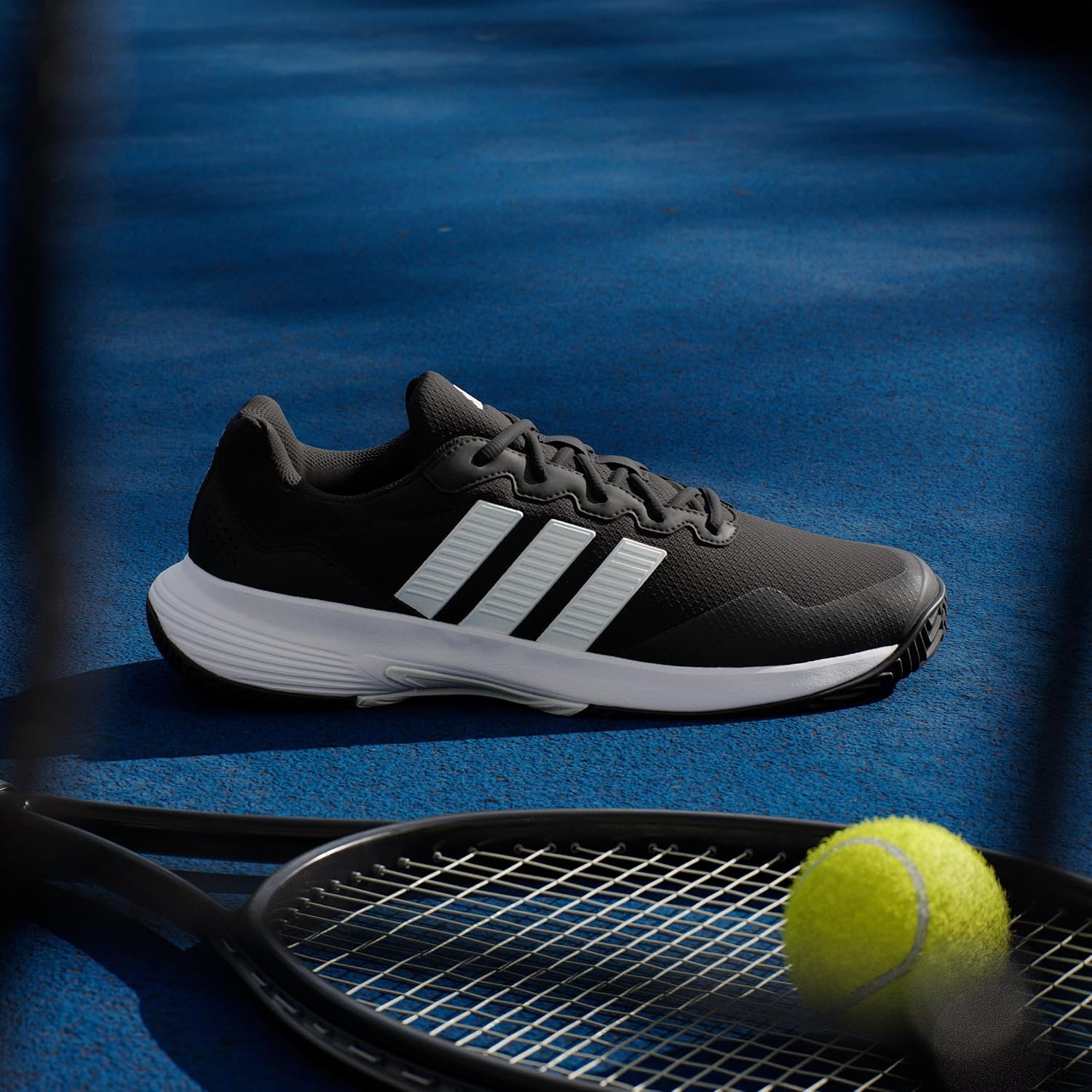
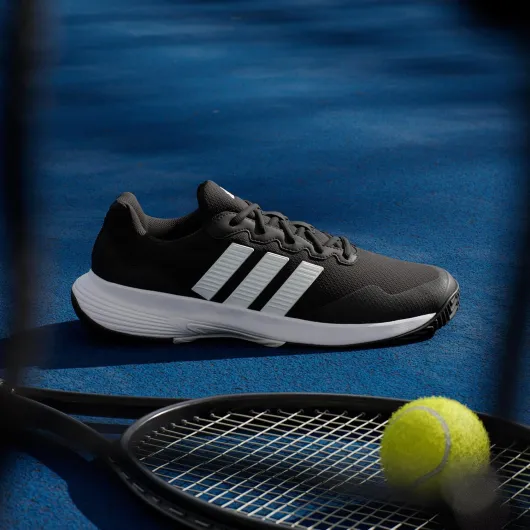
Design-wise, the Gamecourt 2 is pretty straightforward: clean black base with the classic three white Adidas stripes and a bit of silver detail. If you like shoes that just blend in and don’t try to be flashy, you’ll probably like them. Personally, I think they look more like all-court trainers than aggressive tennis shoes, which is not a bad thing if you want to wear them casually as well.
The silhouette is low-cut, with a round toe and a fairly standard tennis last. The toe box doesn’t look super narrow, but if you have wide feet, you might still want to go half a size up, like one of the Amazon reviews mentioned. On my average-width foot, they fit true to size but with a slightly snug midfoot. After a couple of sessions, the upper loosens up a bit and starts to mold better to the foot.
On the visual side, there are no weird plastic pieces sticking out or over-the-top design elements. The upper is mostly textile with synthetic overlays placed in the usual high-wear areas: toe, sides, and heel. You can tell Adidas didn’t try to reinvent the wheel here. The outsole pattern is a multi-directional rubber pattern that works as a kind of all-court setup. It’s not a deep clay pattern, so clay specialists might not be thrilled, but for hard courts and artificial grass it looks appropriate.
Overall, the design is functional and a bit generic. If you want something that screams performance and looks like a pro’s shoe, this isn’t it. If you just want something decent-looking that you can wear with sports shorts or even jeans without drawing too much attention, it ticks that box. Personally, I like that it doesn’t look cheap despite being on the more affordable side of Adidas’ tennis range.
Comfort: light and easy, but not a plush sofa
On the comfort side, the Gamecourt 2 is light, easy to wear, and comfortable enough for most people, but don’t expect a super plush, running-shoe-like feel. When I first put them on, I noticed the low weight and the fairly flexible forefoot, which makes them feel less clunky than some traditional tennis shoes. Walking around in them for an hour before hitting the court was no problem at all.
The fit is regular, but if your feet are on the wider side, I’d listen to the Amazon review that said to go half a size up. The midfoot is a bit snug at first, and the toe box is average. After two or three sessions, the upper loosened slightly and felt more natural. The heel hold is decent, no major heel slip for me, but you don’t get the super locked-in feel of higher-end models. For recreational tennis, that’s perfectly fine; for very intense lateral movements, some players might want more structure.
Cushioning is on the firmer side. The rubber outsole and midsole combo gives enough shock absorption so your knees don’t hate you after an hour, but it’s clearly not a max-cushion shoe. Compared to a typical running shoe, you’ll feel the court more and there’s less bounce. On the positive side, that gives you a better sense of stability and contact with the ground when changing direction. I didn’t feel any hot spots or painful seams, which is always my main concern with cheaper shoes.
Overall, comfort is pretty solid for the price: light, not overly tight, and perfectly usable for 1–2 hour sessions. If you want something super padded for daily walking or if you have sensitive joints and need big cushioning, you might want to look at more cushioned models. But for casual and club-level tennis, I had no major complaints after several uses.
Materials: basic but consistent for the price
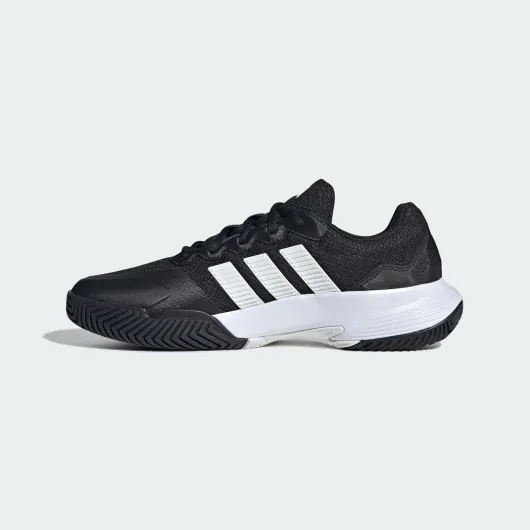
The materials on the Adidas Gamecourt 2 are exactly what you’d expect for this segment: textile and synthetic upper, rubber outsole, synthetic inner lining, and a textile sockliner. You’re not getting premium leather or super advanced foams, but you’re also not getting flimsy no-name stuff. It feels like a standard Adidas build that’s been slightly simplified to keep the cost down.
The upper is mostly textile, which helps keep the weight down and adds some breathability. The synthetic overlays are placed in the areas that usually suffer most on tennis shoes: around the toe, the medial side if you drag your foot, and the heel for structure. When you bend the shoe by hand, there’s enough flexibility in the forefoot, but the midfoot still has a bit of stiffness, which is good for lateral support. Nothing feels like it’s going to rip right away, but it also doesn’t have the thick, armored feeling of top-tier performance models.
The outsole is full rubber, as expected, and it feels reasonably dense. I haven’t worn it long enough to fully kill the sole, but after a few weeks of mixed indoor and artificial grass use, the wear is minimal. If you’re a heavy hard-court grinder sliding on every ball, you might chew through them faster than a more premium model, but for the average club player, the material choice looks adequate. The midsole foam is basic EVA-type cushioning – nothing fancy, but it does its job.
In short, the materials are practical and aligned with the price. You’re paying for a known brand and a decent structure, not for cutting-edge tech. If you want bulletproof durability and more advanced cushioning, you’ll need to move up in the Adidas range and pay more. But if you’re okay with “good enough” materials that can handle a couple of seasons of moderate play, these are fine.
Durability: decent so far, but not a tank
On durability, I’d say the Gamecourt 2 feels decent but not indestructible. The rubber outsole is holding up fine after several weeks of mixed play (indoor and artificial grass), with only light wear on the usual spots near the ball of the foot. I haven’t yet tested them for a full season on abrasive outdoor hard courts, but based on the rubber feel, I’d expect them to last a normal amount of time for a mid-range shoe – not ultra long, not super short.
The upper is textile with synthetic overlays, and that’s usually where cheaper shoes start to show their limits. So far, the stitching and glued areas are holding up. No peeling, no tearing around the toe. If you’re a chronic toe dragger on serves or backhands, you might wear through the front faster, because the protection there is present but not overly thick. Compared to more expensive Adidas models with reinforced toecaps, this one is clearly more lightweight and a bit less armored.
Inside the shoe, the sockliner and inner lining show minimal signs of wear. No early fraying, and the heel padding hasn’t collapsed yet. The shoe is also listed as washable, which is convenient if you sweat a lot or play on dusty courts. Just don’t expect miracles after multiple machine washes; any tennis shoe will eventually lose some structure if you wash it too often.
Overall, for the price and the target user, durability is acceptable. I’d expect a casual player to get at least one solid season out of them, maybe more if you mostly play indoors or on softer surfaces. Competitive players who train several times a week on hard courts will probably burn through them faster and might be better off investing in a more robust, higher-end model with a thicker outsole and reinforced upper.
Performance on court: good for casual, limited for heavy grinders
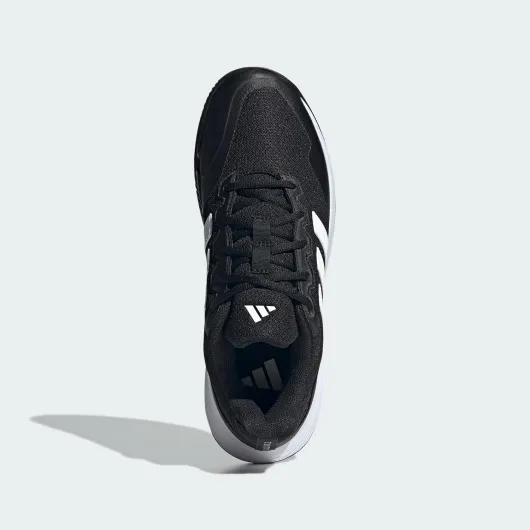
Performance-wise, I’d place the Gamecourt 2 clearly in the recreational to club player zone. It does the basics well: decent grip, enough stability, and acceptable cushioning. If you’re playing once or twice a week and not sliding like Djokovic on every ball, you’ll probably be happy with them. If you’re very explosive and demanding, you’ll start to feel their limits.
On artificial grass and indoor courts, the grip has been good. One Amazon reviewer mentioned they use them for padel on artificial grass and I had the same feeling: the outsole pattern works well for that surface. You feel secure pushing off laterally and stopping doesn’t feel sketchy. On hard courts, grip is fine too, but the outsole pattern isn’t super aggressive, so it feels more like an all-round trainer adapted for tennis rather than a pure hard-court beast.
In terms of stability, the low profile and slightly firm midsole help. You don’t feel like you’re on stilts. Lateral support is acceptable for side-to-side movement, but if you’re a heavy player or you really throw yourself into every change of direction, you might want a shoe with more structural elements and a beefier midfoot. For my weight and play level (medium, nothing crazy), I never felt in danger of rolling an ankle, but I also noticed it’s not as locked-in as high-end models.
For me, the Gamecourt 2 is basically a good training and casual match shoe. It’s not the pair I’d pick for a tournament weekend with back-to-back matches, but for weekly practice, coaching, or casual games with friends, it’s more than enough. It gives you the right mix of comfort and performance without feeling like overkill, and that’s exactly what a lot of players actually need.
What you actually get out of the box
Out of the box, the Adidas Gamecourt 2 looks and feels like a simple, practical tennis shoe. No fancy accessories, no special packaging, just a standard Adidas shoe box with paper inside and the shoes wrapped. It’s exactly what you expect at this price point: it doesn’t feel cheap, but it also doesn’t try to look premium. For someone who just wants to get on court, that’s totally fine.
The model I’m talking about is the Core Black / Ftwr White / Silver Met colorway in size 10 UK. It’s a pretty standard black tennis shoe with white stripes, so you can wear it both for tennis and as a casual trainer without looking weird. The branding is visible but not loud. If you like low-key sports shoes that don’t scream for attention, this one fits that profile.
In hand, the shoe feels fairly light for a tennis shoe, around 950 grams for the pair according to the specs. It’s not ultra-light like some running shoes, but it’s lighter than classic brick-like stability models. The structure is low top, so no extra ankle collar or weird padding around the heel. You get a regular lace-up closure, textile and synthetic upper, rubber outsole, and a basic textile sockliner. Nothing fancy, but it looks consistent and well-assembled.
Overall, the presentation matches the idea: entry to mid-range tennis shoes from a big brand. If you’re looking for lots of tech names, spare insoles, or special bags, you’ll be disappointed. If you just want a pair of shoes you can unbox and take straight to the court the same day, this does exactly that, and that’s honestly all most people need.
Pros
- Light and comfortable enough for 1–2 hour sessions
- Good grip on indoor courts and artificial grass, suitable for padel
- Good value for money from a known brand with a simple, versatile design
Cons
- Cushioning and support are limited for very intense or frequent play
- Durability is decent but not ideal for heavy hard-court grinders
Conclusion
Editor's rating
Overall, the Adidas Gamecourt 2 is a solid, no-drama tennis shoe for recreational and club players. It’s light, reasonably comfortable, and offers good grip on indoor courts and artificial grass, with acceptable performance on hard courts. The materials and build are in line with the price: not premium, but consistent enough that you don’t feel like you’re wearing a cheap knock-off. The design is simple and versatile, so you can easily use them for casual wear too.
They’re not perfect: cushioning is on the firmer side, stability is fine but not at pro level, and durability is decent rather than impressive. If you’re a heavy, explosive player who spends a lot of time on abrasive hard courts, you may want something more robust. But if you play once or twice a week, want a known brand, and don’t want to overthink it, the Gamecourt 2 is a good value option that gets the job done without drama.