Summary
Editor's rating
Is it worth the money?
Smart concept, slightly clumsy execution
Metal frame and poly netting: solid enough, not tank-level
Built for regular home use, not to live outside all year
Rebound quality, stability, and real-world use
What you actually get in the bag
Actually useful for dinks, volleys, and drives if you stick with it
Pros
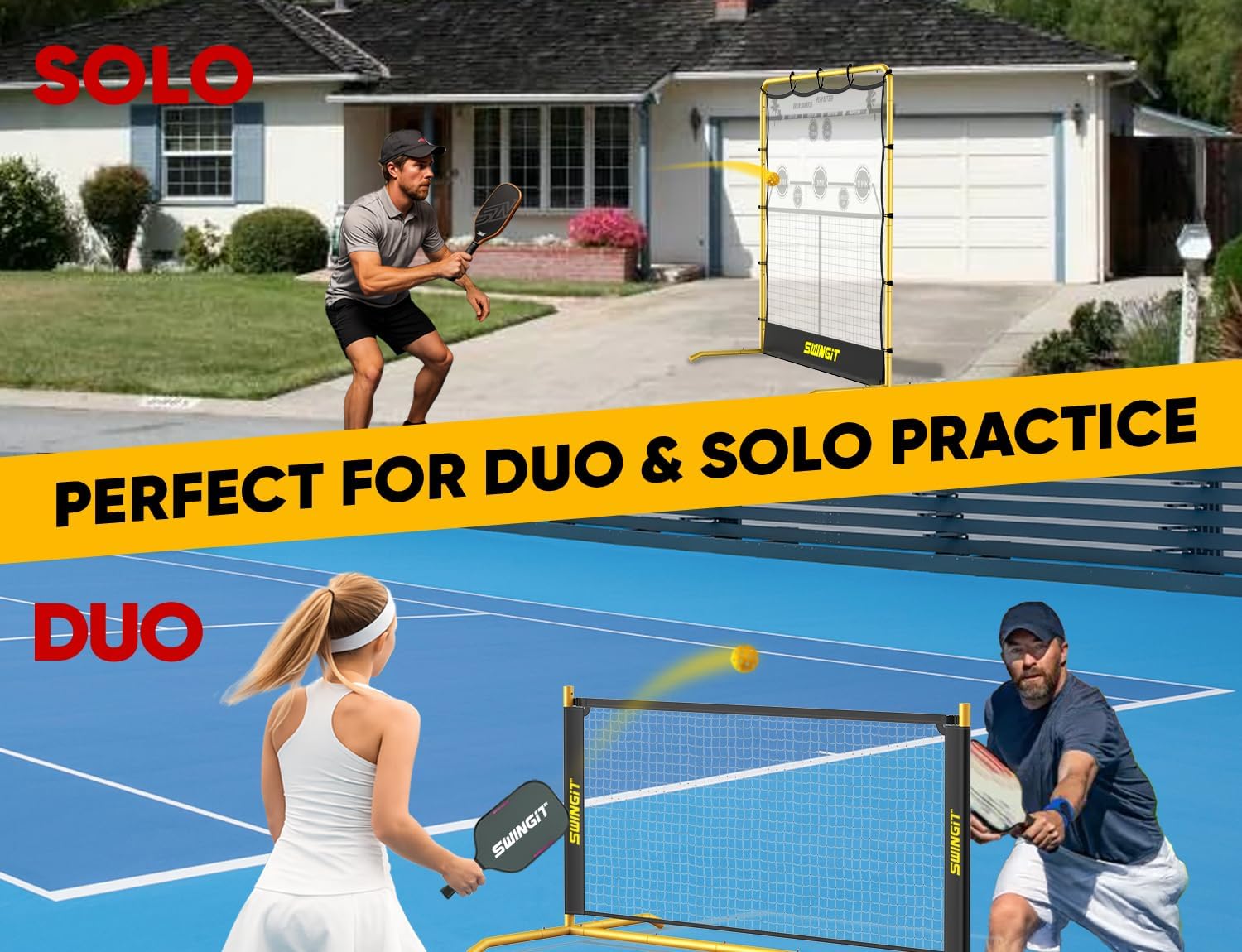
- 2-in-1 setup with both a 6x6 ft rebounder and 6 ft mini net in one package
- Realistic rebound and useful target zones for practicing dinks, volleys, and drives
- Portable and light enough to use in a garage, driveway, or backyard with the included carry bag
Cons
- Segmented frame can wobble, especially on uneven surfaces or with hard shots
- Setup is a bit fiddly, instructions and promised video are not very helpful
- Not ideal for leaving outside long-term due to potential weather wear on metal and bungees

Specifications
View full product page →| Brand | SwingIt |
Solo practice without begging friends to play
I picked up this SwingIt Portable Pickleball Rebounder Net because I was tired of chasing partners and driving to courts just to work on basic dinks and volleys. I wanted something I could throw in the garage or driveway and hit balls for 15–20 minutes between meetings. On paper, this thing checks a lot of boxes: 6x6 ft rebounder, 6 ft mini net, portable, works indoors or outdoors. In reality, it’s a mix of “pretty solid” and “this could have been thought through better.”
I’ve used it mainly in my garage and occasionally in the driveway. I’m not a total beginner, but I’m not some tournament monster either. I just wanted a simple way to drill forehands, backhands, and kitchen shots without driving across town. Compared to just hitting against a random wall, the big plus here is the defined target zones and the mini net height, which makes the practice feel more like an actual point.
First impression out of the box: a lot of metal tubes, a big sheet of netting with targets, a smaller mini net, and a pile of bungee cords. It’s not complicated like furniture assembly, but it’s also not “plug and play” the first time. Expect to spend a bit of time figuring out the best way to tension the net so it rebounds cleanly without twisting the frame. The included instructions are basic at best.
Overall, after using it for a bit, I’d say it does what it promises: it lets you practice dinks, volleys, and drives on your own. It’s not perfect—the setup is a little annoying, and the frame could be more stable—but once it’s in place, it’s a decent training tool. If you’re expecting club-level build quality, you’ll be let down. If you just want something to hit into regularly at home, it’s a reasonable option.
Is it worth the money?
In terms of value for money, this SwingIt rebounder sits in the “good but not mind-blowing” category. You’re getting two pieces of gear in one purchase: a 6x6 ft rebounder and a 6 ft mini net. If you compare that to buying a rebounder and a separate mini net from bigger brands, you’d probably pay more overall. So on paper, the bundle is fairly attractive, especially if you’re trying to build a small home practice setup without spending a fortune.
The catch is that you’re also dealing with some of the trade-offs that come with a budget-friendly, portable design: multiple frame segments, some wobble, and instructions that aren’t very helpful. The fact that Amazon flags it as a “frequent return” item tells you there are people who get frustrated during setup or don’t like the stability. If you’re not patient with assembly or you want something rock solid out of the box, the value drops for you pretty quickly.
For me, once I got through the first setup and learned how to tension the net without twisting the frame, the value started to feel better. I could practice whenever I wanted, in my garage, without booking a court. That alone saves gas, time, and court fees. If you use it regularly—say a few times a week—it easily pays for itself in terms of extra practice you wouldn’t otherwise get.
So, is it worth it? If you’re a casual to intermediate player who wants convenient solo practice and you’re okay with a bit of assembly hassle and moderate stability, I’d say yes, it’s good value. If you’re very picky about build quality, or you hate fiddling with setups, you might be better off either going to a real practice wall or saving up for a more premium, heavier-duty rebounder.
Smart concept, slightly clumsy execution
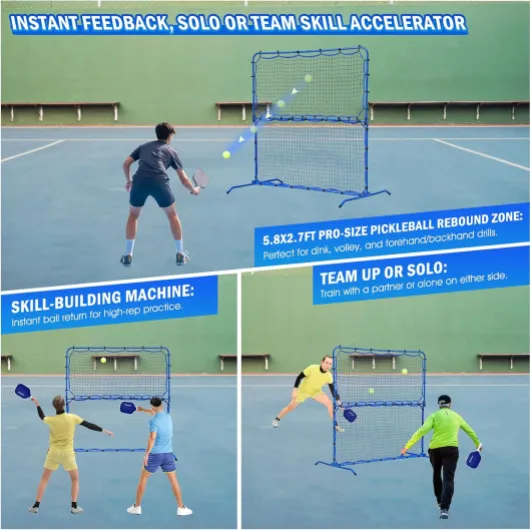
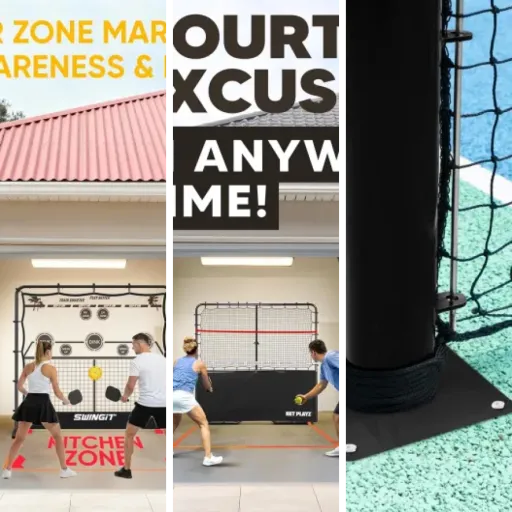
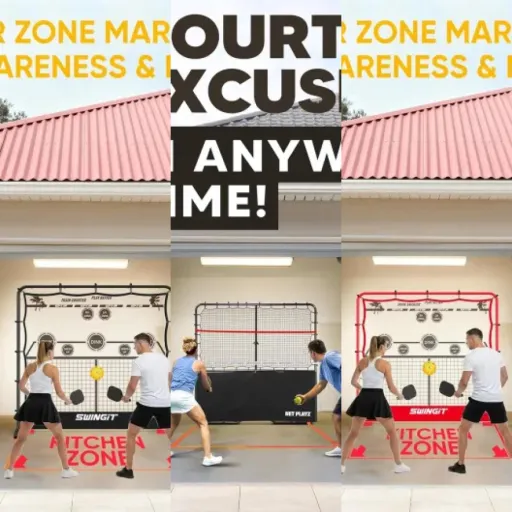
The overall design concept is actually pretty good: a square 6x6 ft rebound surface with printed targets, plus a separate mini net that mimics regulation height. The size is well chosen. Six feet wide and high is big enough that you’re not constantly missing the net, but still small enough to fit in a typical garage. Mine fits against the back wall with enough room to stand a few feet away and hit comfortably.
Where the design stumbles a bit is in the way the frame goes together. It’s built from multiple short metal segments that slide into each other, rather than long, solid pieces. This makes it more portable, but it also means there are a lot of joints. When you start tightening the bungee cords around the net, those tiny gaps and flex points can make the frame twist slightly. That’s probably why some users mention wobbling. If you’re on a perfectly flat surface, it’s manageable, but on a slightly uneven driveway, you’ll notice it.
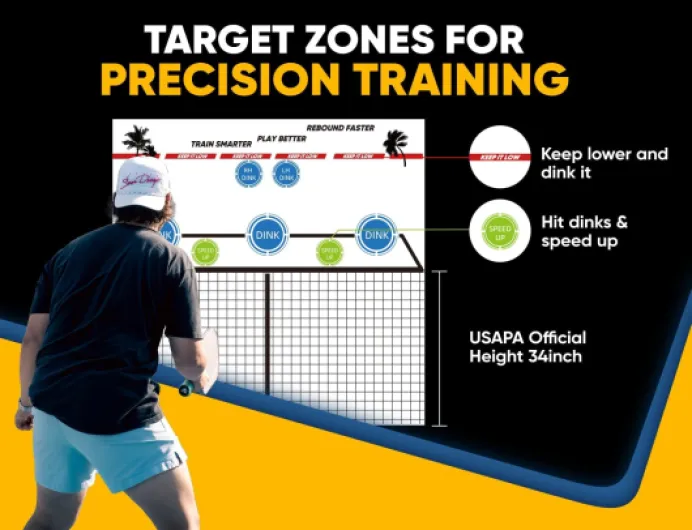
The target layout on the rebounder is one of the better parts of the design. The zones are placed where you’d realistically want to hit: low, controlled dinks and slightly higher, deeper shots. Visually it’s clear and helps you focus. It’s not just a plain net. The yellow color is easy to see, even in a dim garage. For drilling accuracy, it’s helpful.
Portability-wise, the design is fine. The frame breaks down into smaller pieces, the bag is big enough without being ridiculous, and the total weight (around 5.4 kg) is light enough that most people can carry it easily. But because of the segmented frame, you pay for that portability with a bit of stability loss. If they had gone with fewer, longer pieces, it would be more solid but harder to store. So the design is a trade‑off: good footprint and flexibility, average stability.
Metal frame and poly netting: solid enough, not tank-level
The frame is advertised as iron metal, and that’s what it feels like: basic metal tubing, not super thick but not flimsy toy-grade either. When you hold the pieces, they have some weight, and the coating seems decent. It’s not luxury gear, but it doesn’t feel like it will bend just from normal use. The joints are the weak spot, not the tubes themselves. If you over-tighten the bungees, the slight play in the connectors is what causes misalignment and wobble.
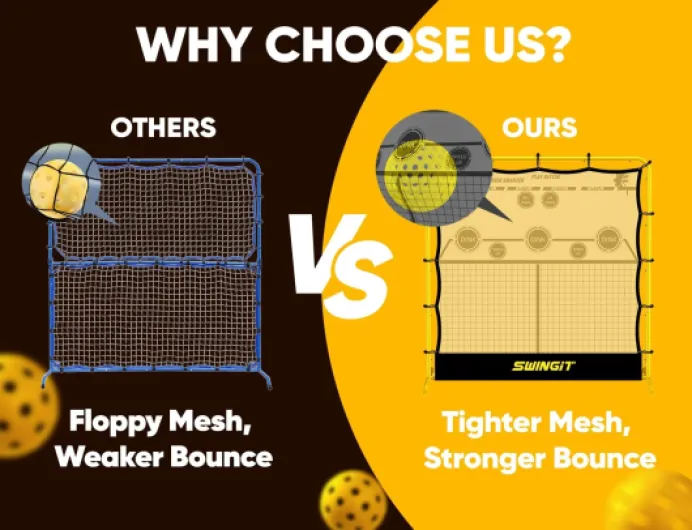
The netting material is polyester, which is standard for sports nets. On the rebounder, it’s backed by the tension of the bungee cords. The bounce is actually pretty consistent once you get the tension right. The ball comes off with a realistic speed, not dead like hitting into a soft practice net. I’ve used it with regular outdoor pickleballs, and after several sessions, there were no tears or fraying. The printed target areas held up fine too—no peeling or fading yet, though I mostly used it indoors.
The bungee cords are the one part I’d keep an eye on over time. They’re fine out of the box, but this kind of elastic tends to wear faster than metal or netting, especially if you leave it set up outdoors in sun and rain. If you plan to keep it outside, I’d expect to replace the bungees at some point. They’re generic enough that you could grab replacements from a hardware store if needed.
The carry bag is waterproof fabric and feels okay, not premium, not junk. The zippers worked smoothly, and the stitching looked acceptable. I wouldn’t drag it across concrete regularly, but for normal carrying and storage, it’s adequate. Overall, the materials match the price: pretty solid for casual home use, but not built like permanent club equipment. If you treat it decently and don’t leave it exposed 24/7, it should last a while.
Built for regular home use, not to live outside all year
Durability so far has been pretty decent for a home training tool. The metal frame hasn’t bent or deformed with normal use, and the net hasn’t torn. I’ve set it up and taken it down several times, and the connectors still fit snugly. There’s a tiny bit of play at the joints, but that was there from day one and hasn’t really gotten worse. It’s more a design thing than wear and tear.
I did leave it outside a couple of times for a few days, and while nothing rusted instantly, I wouldn’t treat it as an all-weather permanent fixture. Iron plus moisture plus time is not a good combo. One reviewer mentioned leaving it outside but under a covered porch, which seems like the right approach. If you have a garage or shed, I’d store it there when you’re not using it, or at least throw a cover over it.
The polyester net and printed targets seem to handle repeated impacts fine. I’ve hit hundreds of balls into it and don’t see any obvious damage. If anything is going to fail first over the long term, I’d bet on the bungees losing elasticity or the metal finish starting to chip if you drag it around. But those are fairly normal wear points on this type of product.
Given the price range and the materials, I’d say it’s durable enough for regular backyard, driveway, or garage use, as long as you’re not abusing it or leaving it in harsh weather non-stop. It’s not built like commercial club equipment, but for a home setup that you use a few times a week, it should hold up for a good while if you take basic care of it.
Rebound quality, stability, and real-world use
Performance-wise, I’d split it into two parts: rebound quality and stability. The rebound quality is actually good once you get the net tension right. The ball comes back with a speed that feels close to normal play. If you hit hard drives, it doesn’t just swallow the shot; it kicks it back with enough pace that you have to react. For soft dinks, it returns gently instead of rocketing the ball back at you like a concrete wall would.
The stability is where things can get annoying. If you assemble it carefully and your floor is level, it holds up fine for basic practice. But once you start really ripping drives, you’ll notice some movement. The base isn’t super wide, and the many connection points mean there’s some flex. I didn’t have it completely tipping over, but I did see it shuffle a bit, especially on slick concrete. I can see why one reviewer talked about using sandbags. If you’re planning to hit monster drives all day, you might want some kind of weight at the base.
In indoor use (garage), performance was better for me because the ground was flat and I could leave it set up without moving it. Outdoors in the driveway, small slopes or uneven areas made the wobble more obvious. It still worked, but I had to adjust my expectations and position. This isn’t a permanent, bolted-down training wall; it’s a portable frame. So you trade some stability for convenience.
For quick solo sessions, the performance is good enough that I kept using it. I could warm up before going to real courts and feel more dialed in on my first actual game. If you’re super picky about rock-solid stability, you’ll be frustrated. If you just want a realistic rebound to get more reps at home, it does the job.
What you actually get in the bag
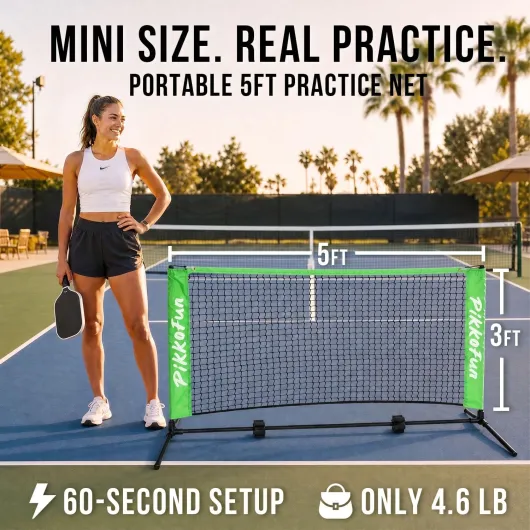
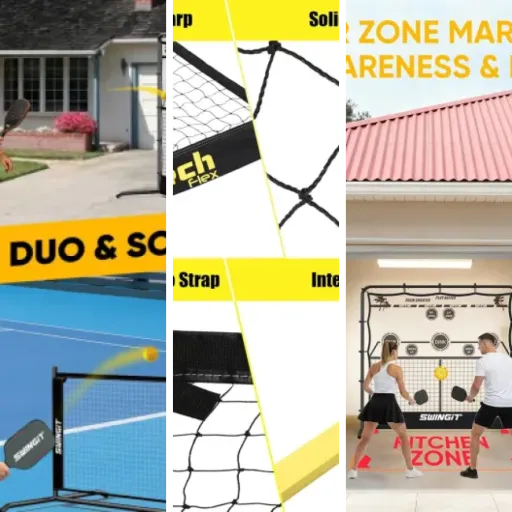
The product is basically a 2-in-1 training kit: you get a 6 ft wide mini pickleball net at 34 inches high, plus a 6x6 ft rebounder net with target zones. The frame is all metal, and everything packs into a waterproof carry bag. On paper, that’s a nice bundle: you can either set up a mini court for dinks or put up the rebounder and work on drives, volleys, and drops. For the price point, having both in one package is the main selling point.
When you unpack it, you’ll find:
- Metal frame tubes for the rebounder and mini net
- The big 6x6 ft rebounder net with printed target zones
- The smaller 6 ft mini net
- A bunch of bungee cords to tension the rebounder net
- The carry bag
The rebounder has specific target areas designed to mimic shots you’d aim for during a game, especially around the kitchen. That’s actually the part I liked most: you’re not just hitting randomly into a net, you’re aiming for spots. It makes solo drilling a bit less boring and more like real practice. The mini net is basic but does the job if you want to work on short dinks with a partner in a driveway or small backyard.
In practice, the "2-in-1" idea is nice, but you do have to decide what you’re using that day. Swapping between the rebounder and the mini net isn’t instant; you’re basically committing to one setup per session. Still, for one purchase, you get enough options to cover most solo practice needs and some partner drills. For an unknown brand, the package is fairly complete, just not polished like big-name gear.
Actually useful for dinks, volleys, and drives if you stick with it
From a pure training standpoint, this rebounder is effective enough to justify its existence. After a couple of weeks of short sessions (10–20 minutes a day), I noticed I was more confident at the kitchen line. Being able to fire 50–100 dinks and volleys in a row without waiting for someone to feed balls or pick them up off the court is a big plus. The rebound is predictable once you dial in your distance. Stand too close and it shoots back faster than you expect; stand a bit farther and it feels more like a rally.
Where it really helps is muscle memory. You can work on:
- Soft hands for dinks into the lower target zones
- Shoulder-height volleys for quick reactions
- Topspin drives into the higher zones
- Backhand consistency without pressure
Compared to just hitting against a random brick wall, this setup is nicer because the ball rebound is more controlled and less chaotic. With a wall, the bounce can be weird depending on surface and angle, and you don’t have net height or clear targets. Here you get a more game-like trajectory. It’s still not the same as a real opponent, obviously, but for grooving strokes and footwork, it’s useful.
The downside is that if your frame is not level or the net is slightly off-center, you’ll get some odd bounces and the whole thing can wobble, which breaks your rhythm. So its effectiveness depends heavily on how patient you were during setup and how flat your surface is. Once it’s dialed in, it’s a decent home trainer. Not magic, but it helps you get more reps, and that’s what matters.
Pros
- 2-in-1 setup with both a 6x6 ft rebounder and 6 ft mini net in one package
- Realistic rebound and useful target zones for practicing dinks, volleys, and drives
- Portable and light enough to use in a garage, driveway, or backyard with the included carry bag
Cons
- Segmented frame can wobble, especially on uneven surfaces or with hard shots
- Setup is a bit fiddly, instructions and promised video are not very helpful
- Not ideal for leaving outside long-term due to potential weather wear on metal and bungees
Conclusion
Editor's rating
This SwingIt Portable Pickleball Rebounder Net is a practical tool for people who actually plan to use it regularly, not just let it sit in the bag. It gives you a 6x6 ft rebound surface with targets plus a 6 ft mini net in one package, which is handy if you want to work on dinks, volleys, and drives at home. The rebound is realistic enough to help with timing and consistency, and the target zones make solo practice more focused than just hitting into a random wall.
It’s not perfect. The frame is made of several shorter metal pieces, which helps with portability but hurts stability a bit. If you rush the assembly or put it on uneven ground, you’ll feel some wobble, especially when you hit harder drives. The instructions and missing video don’t help, so expect a bit of trial and error the first time you set it up. Once it’s dialed in on a flat surface, though, it stays usable and doesn’t feel like it’s going to collapse.
I’d recommend this to casual and intermediate players who want a simple, at-home way to get more reps without depending on partners or court availability. It’s especially useful if you have a garage or flat driveway where you can leave it set up or at least reassemble it quickly. If you’re super demanding about build quality or you hate any wobble at all, you might find it annoying and prefer a fixed wall or a heavier, more expensive rebounder. For most home users willing to accept a few quirks, it’s a good, no-nonsense training aid that gets the job done.