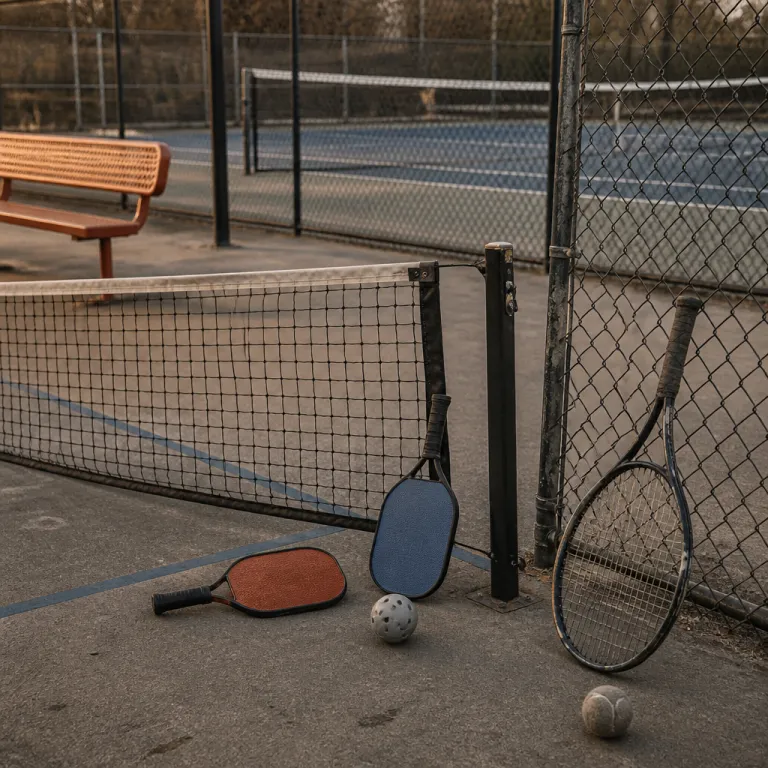
From baseline comfort to kitchen pressure: rethinking the entire court
Long time tennis players arrive on a pickleball court thinking the game will feel like a softer, smaller version of their old sport. The reality is that this tennis to pickleball transition guide starts with unlearning your love of the baseline, because the geometry of this new court and the presence of the kitchen punish anyone who stays back. A pickleball court is a court smaller than a tennis court, and that tighter space turns every neutral rally into a fast fight at the net.
On a tennis court you can grind from deep behind the baseline, roll a heavy ball, and wait for a short shot to attack. In pickleball the sport flips that script, because the non volley zone — usually called the kitchen — stretches 2.13 m from the net on each side and creates a volley zone boundary that you cannot step into while you hit a volley. This single strip of painted space is why players transitioning from tennis must sprint forward after every serve and every return, since the player who controls the kitchen line will control the tempo of the game.
Think of it this way ; in tennis you often retreat to buy time, while in pickleball tennis converts must advance to steal time from an opponent. When you play your first real pickleball game at a public park in August, the best coaching you can hear is someone yelling “get to the kitchen” after your return of serve, because that is the core of every serious pickleball transition. If you keep hanging back and trying to hit ball after ball from the baseline, stronger pickleball players will pin you deep with a third shot drop and then win easy points with a soft dink into open space.
Why the baseline habit hurts players transitioning from tennis
The most expensive habit for any tennis player is the instinct to camp behind the baseline and trade heavy topspin groundstrokes. On a pickleball court that habit leaves a huge gap between you and the kitchen line, and good pickleball players will drop the ball short into that space until you either miss or finally move forward. This tennis to pickleball transition guide exists because the sport rewards the first team to reach the non volley zone and build a wall of paddles at the net.
When you stand back, every dink from your opponent becomes a forcing shot that drags you forward off balance. Once you are moving in late, a hard hit ball at your feet is almost impossible to handle cleanly with a compact paddle, especially when the ball hard plastic design of a pickleball does not give you the same pocketing feel as a felt tennis ball. Players transitioning from tennis must learn that the safest place in this sport is actually right on top of the kitchen line, where you can volley, block, and counter with short, efficient swings.
There is a mental transition here too, because tennis players are used to winning from the back of the court and treating the net as a finishing area. In pickleball tennis converts must treat the kitchen line as home base, and every serve, return, and third shot is judged by how quickly it helps you arrive there. If you remember only one rule from this tennis to pickleball transition guide, make it this ; move your feet until your toes are almost touching the kitchen line, then build your entire game around that position.
Grip, swing, and spin: rebuilding your stroke for a plastic ball
The next big unlearning for a veteran tennis player is the grip and swing pattern that once produced beautiful topspin forehands. Most tennis players walk onto a pickleball court with a semi western or western grip, ready to loop the ball high over the net with a long, whippy follow through. That grip works on a big tennis court with a heavy felt ball, but in this sport the court smaller dimensions and the ball hard plastic shell punish any stroke that takes too long to set up.
For a reliable pickleball serve, a stable volley, and a consistent dink, you want a continental grip that feels like your old tennis volley grip. This neutral hand position lets you hit a forehand, backhand, and quick reaction volley without changing your paddle angle, which matters when the game speeds up at the kitchen line. A good tennis to pickleball transition guide will tell you that the sport is played mostly in front of your body with compact swings, and that the paddle face stays relatively square to the ball instead of brushing steeply up the back of it.
Shorten everything ; your backswing, your follow through, and your wrist action. When you hit ball after ball with a pickleball paddle, think of pushing through the shot with your shoulder and core rather than snapping with your wrist, because the lighter paddle and the ball hard surface can send mishits flying. Players transitioning from tennis should practice hitting 50 controlled dinks cross court from the kitchen line, then 50 third shot drops from the baseline, focusing on a smooth, low to high motion that just clears the net.
Serve, third shot, and the new meaning of “attackable”
In tennis the serve is a weapon that can win free points, but in pickleball the serve is more of a point starter that must be hit underhand with the paddle contacting the ball below the waist. You can use a traditional underhand motion or a drop serve where you let the ball bounce before you hit, and many transitioning tennis players find that drop serve easier to time. The key is to place your pickleball serve deep into the court of your opponent, buying yourself time to reach the kitchen line before they can attack.
After the return, the third shot defines the rally, and this is where a tennis to pickleball transition guide earns its keep. Instead of ripping a drive like you would in tennis pickleball hybrids, you often want a soft third shot drop that arcs over the net and lands in the kitchen, forcing your opponent to hit up on the ball. When that third shot drop is low and unattackable, you and your partner can walk into the non volley zone together and turn the point into a patient dink exchange.
There is still room for aggression, but it looks different from tennis aggression. In pickleball tennis converts should attack only balls that sit high above the net, because any shot you hit hard from below net height will likely pop up and give your opponent an easy counter. If you want a deeper breakdown of how this sport diverges from your old one, a detailed comparison of the real difference between tennis and pickleball for modern players offers a useful companion to this tennis to pickleball transition guide.
The kitchen, volleys, and dinks: learning to win the soft game
The most alien concept for a lifelong tennis player is that the softest shot often wins the point in pickleball. At the kitchen line you are not trying to blast the ball past your opponent, because the court smaller size and the quick reaction time make pure power a low percentage play. Instead you use the dink, a soft shot that barely clears the net and lands in the kitchen, to move your opponent out of position and create a mistake.
Think of a dink rally as chess played at the volley zone, where each gentle hit sets up the next pattern. When you dink cross court, you pull your opponent wide and open the middle of the court for your partner to attack with a volley or a quick roll shot. Players transitioning from tennis must unlearn the urge to finish every ball and instead learn to value patience, because a long dink exchange is not a sign of weakness in this sport, it is the core of high level play.
Volleys change too, even though the word sounds familiar to any tennis player. On a pickleball court you cannot step into the kitchen and volley, so you must hold your ground at the line and use compact blocks, punches, and resets to keep the ball low. When an opponent drives a ball hard at your body, the best response is often a soft block that lands in their kitchen, resetting the rally and giving you time to regain balance.
Footwork, positioning, and how the court really works
Footwork from tennis does transfer, but you must apply it differently on a court pickleball layout. Instead of covering long distances side to side, you work in a tighter box from the baseline to the kitchen, using a constant split step and small adjustment hops to stay ready for a fast volley or a sudden lob. A smart tennis player will quickly see that the most efficient movement pattern is a straight line from the baseline to the kitchen line, then micro steps along that line as the ball moves.
When you and your partner reach the kitchen, think of yourselves as a moving wall connected by an invisible rope. If one player slides wide to chase a dink, the other player should slide with them to close the middle and avoid leaving a big gap that an opponent can hit through. This kind of coordinated movement is why many tennis players who were strong doubles specialists adapt faster to pickleball than pure singles grinders.
Understanding the physical space also means understanding where to play. Many city parks now paint pickleball court lines over an existing tennis court, and that shared layout can confuse new players transitioning from tennis who are used to the larger dimensions. If you want a clear visual breakdown of how each court works, a detailed guide that explains a pickleball court versus a tennis court for players who want to choose the right game space will complement this tennis to pickleball transition guide and help you read the lines correctly.
Gear, feel, and seasonal habits: choosing paddles and drills that speed your transition
Once the US Open buzz hits every August, tennis players flood local parks and start asking which pickleball paddles they should buy. The first unlearning here is that weight and feel matter more than brand, because a paddle that is too heavy will strain a tennis player’s arm that is used to a longer, more flexible racquet. For most players transitioning from tennis, a mid weight paddle around 215 to 230 g with a polymer honeycomb core offers enough power to hit ball drives while still giving touch for a soft shot drop or a controlled dink.
Grip size also changes, since pickleball paddles have shorter handles than tennis racquets and encourage a more compact swing. A tennis player with a 4 3/8 grip in tennis might drop to a slightly smaller grip in pickleball to allow quicker grip changes between forehand, backhand, and volley positions at the kitchen line. When you test paddles, pay attention to how stable the paddle feels on off center contact, because a ball hard plastic design will twist a light, head heavy paddle more than a balanced one.
Drills should match the season and your goals. In late summer when outdoor courts are full, use open play sessions to focus on one skill per game ; maybe you work only on your third shot drop one day, then only on your pickleball serve placement the next. If you want a deeper gear checklist that goes beyond paddles into shoes, bags, and accessories, a guide on how to choose the best pickleball accessories for a smarter game will pair well with this tennis to pickleball transition guide and keep your setup simple.
Mindset shifts and what really carries over from tennis
The final unlearning is mental, because many tennis players arrive with expectations shaped by years of ladder matches and club culture. Pickleball is a social sport where open play, mixed skill games, and quick rotations mean you will face a wide range of opponents in a single session. Players transitioning from tennis must accept that losing a few early games while they adjust to the kitchen, the third shot, and the dink game is not failure, it is the fastest way to build real experience.
Plenty of skills do carry over cleanly. Your split step timing, your ability to read an opponent’s body language, and your comfort at the net all help you adapt to pickleball tennis hybrids and pure pickleball play. The best tennis to pickleball transition guide will remind you that your years of tracking a fast ball, judging spin, and managing nerves in a tight tiebreak are still valuable, even if the paddle, the court, and the scoring system feel new.
What you must leave behind are the habits that no longer fit this sport. Stop backing up when the pressure rises, stop swinging for winners from below net height, and stop treating every hard hit ball as an invitation to hit harder. In pickleball the player who controls the kitchen, respects the soft game, and chooses the right moment to attack will usually win, and that is the habit worth keeping after twenty years of tennis.
FAQ: tennis players moving into pickleball
What is the single biggest mistake tennis players make in their first pickleball game ?
The biggest mistake is staying near the baseline instead of rushing to the kitchen line after the return of serve. When tennis players linger deep, opponents can hit repeated third shot drops into the kitchen and force awkward half volleys. Getting to the non volley zone quickly turns the rally into a controlled dink and volley exchange where your net instincts from tennis finally help.
How should a tennis player change their grip for pickleball ?
A tennis player should move from a semi western or western forehand grip to a continental grip that feels like a classic tennis volley grip. This neutral position lets you hit forehands, backhands, dinks, and volleys without constant grip changes. It also keeps the paddle face more stable on a ball hard plastic impact, which reduces mishits when the game speeds up at the kitchen.
Do I need a special pickleball paddle, or can I use a tennis racquet ?
You cannot use a tennis racquet in sanctioned pickleball play, and it would not work well even in casual games. A pickleball paddle is shorter, lighter, and designed for the smaller court and the unique bounce of a perforated plastic ball. Choosing a mid weight paddle with a comfortable grip will make your tennis to pickleball transition guide lessons much easier to apply.
Which tennis skills transfer best to pickleball ?
The skills that transfer best are footwork, split step timing, and net play awareness. Doubles specialists often adapt quickly because they already understand angles, poaching, and how to pressure an opponent at the net. Heavy topspin groundstrokes transfer less directly, so those players must focus more on learning the dink, the third shot drop, and compact volleys at the kitchen line.
How long does it usually take for a tennis player to feel comfortable in pickleball ?
Most tennis players who play two or three times per week feel basically comfortable with rules, scoring, and kitchen movement after about a month of regular play. Reaching a level where your third shot drop, dink patterns, and pickleball serve placement feel natural can take a few more months. Focused drilling on a pickleball court, rather than only casual games, speeds that transition significantly.