Summary
Editor's rating
Is it worth the money?
Design focused more on stability than on being ultra-light
Steel frame and nylon net: built more for clubs than for a one-off backyard game
Built to survive regular setup and teardown
On-court behavior: feels close to a fixed net
What you actually get in the bag
Pros
- Stable steel frame with oval tubing that resists twisting and sagging
- Center post and tension straps keep the net at proper height and tension
- Feels close to a fixed-court net during actual play, good for regular practice
Cons
- Relatively heavy to carry, not ideal for long walks to the court
- Can still tip over in strong wind despite the solid frame

Specifications
View full product page →| Brand | HEAD |
A proper court in the trunk of your car
I’ve been dragging portable nets in and out of my car for a while now, and most of them feel like camping gear: they sort of work, but you’re always fighting with bent poles, saggy nets, or weird heights. I picked up the HEAD Portable Pickleball Net System because I was tired of flimsy sets and wanted something closer to what you get on a real court, just without drilling posts into concrete.
Over a couple of weeks, I used this net for mixed-level games: casual after-work doubles, a small club practice, and a weekend session with some beginners. We set it up on a gym floor, on a rough parking lot, and on a slightly uneven playground. So I got a decent feel for how it behaves in different conditions, especially with light wind and people constantly bumping into it between points.
The big thing that stands out is that it feels stable and serious, not like a toy. The frame is steel and has some weight to it, and the center post and straps keep the height and tension pretty consistent. It’s not magic — strong wind can still knock it over if it catches the net just right — but compared to the usual cheap sets, it holds up much better.
It’s not perfect: it’s a bit heavy to haul around, and if you’re hoping for a super compact, ultralight travel net, this isn’t that. But if you want a portable option that behaves almost like a fixed court net and you don’t mind a few extra kilos, this one gets the job done and feels reliable during actual play.
Is it worth the money?
Compared to basic portable pickleball nets you see online, the HEAD system is usually priced a bit higher, and you feel that mostly in the frame stability and the overall "club" feel. If you only play once in a while in the backyard, you can probably get away with a cheaper set and accept the wobble and sag. But if you’re playing weekly or running small group sessions, the extra cost starts to make sense because you’re not constantly fiddling with a flimsy net.
For the price, you’re getting: a steel frame that doesn’t twist easily, a proper center post, decent nylon netting, and a usable bag. There are more expensive portable systems out there that add wheels or more complex tensioning systems. This one stays pretty basic but solid. So value-wise, I’d put it in the "good but not crazy bargain" category: you pay a reasonable premium, and you actually get something for it in terms of playability and durability.
If you’re a coach, a small club, or the person in your group who always brings the gear, this is a sensible buy. It saves you from the constant annoyance of re-tightening and re-centering a cheap net. If you’re just starting pickleball and not sure how often you’ll play, it might feel like overkill; you could start with something cheaper and upgrade later if you get hooked.
Overall, the value for money is solid for regular and semi-serious use. It’s not the cheapest option, and it’s not pretending to be. It’s a practical, sturdy net that should last more than one season of normal use, which, in my opinion, justifies paying a bit more than the bargain-bin alternatives.
Design focused more on stability than on being ultra-light
The main design choice you notice right away is the oval steel tubing. Compared to round, thin tubes you see on cheaper nets, the oval shape gives it better resistance to twisting. One of the Amazon reviews mentions that it doesn’t "vrille pas" (doesn’t twist), and I’d agree. When someone bumps into the side post by accident, the frame stays aligned instead of rotating and throwing off the net tension.
The net has a center post, which is key. Without that, the middle section always sags and you end up guessing if you’re at regulation height. With this system, you have the side posts, the center support, and adjustment straps at the top corners. In practice, this means you can fine-tune the tension so the ball reacts like it would on a real court: clean net cords, no weird dead spots in the middle where the net droops.
One thing to note: the design prioritizes stability over portability. The base is long and the steel is fairly thick, which keeps the net planted but adds weight. In mild wind, it does well. In stronger gusts, yeah, it can still tip if the wind hits it straight on, which lines up with what one of the reviewers said. It’s still better than the super light aluminum sets that blow over if you look at them wrong, but don’t expect miracle wind resistance.
Visually, it’s all black and pretty low-key. No flashy colors, which I like; it doesn’t distract when you’re playing. The only small downside on design is that the pieces aren’t numbered or color-coded, so the first build requires a bit of attention. After you’ve done it once or twice, your hands know the order, but for someone totally new, a couple of subtle markings would have made it even easier.
Steel frame and nylon net: built more for clubs than for a one-off backyard game
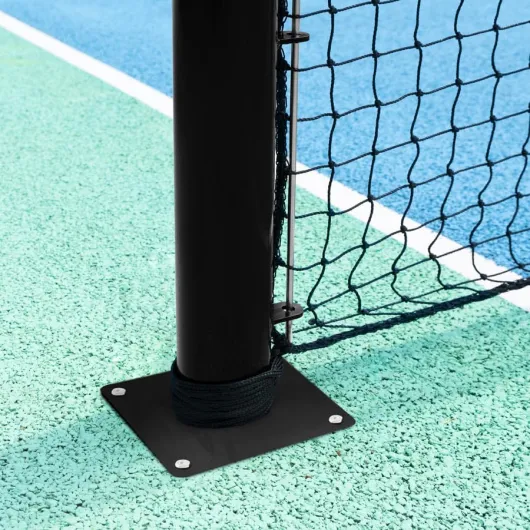
The frame is made from powder-coated alloy steel, which gives it a solid, slightly heavy feel. This is not the kind of net you toss over your shoulder and forget it’s there. On the upside, that extra mass means it doesn’t flex or wobble much when players run close to it or when a ball smacks the top tape. I’ve used lighter aluminum frames where just leaning a paddle on the net would make the whole thing shudder; this HEAD frame feels more planted.
The powder coating seems well done. After several setups on rough asphalt and a bit of dragging the feet across a gym floor, I didn’t see any immediate chipping or rust spots. Obviously, long-term rust resistance will depend on how you store it. If you leave it out in the rain all season, it’ll eventually pay the price, but for normal use—set up, play, pack away—it looks like it should hold up for quite a while.
The net itself is nylon, with a mesh tight enough that balls don’t poke through or get stuck. The stitching on the top band and side seams feels decent. I pulled on it a bit when tensioning and nothing creaked or felt like it was about to tear. I’ve seen cheaper nets where the top band starts to separate after a few strong tugs; here it feels more trustworthy. Still, I’d avoid yanking the straps like a maniac. You don’t need to crank it to max to get a good tension.
Overall, the materials make it feel like a club-level portable net, not a toy. The trade-off is weight. For a coach, a club, or someone who regularly sets up a temporary court at the same spot, that’s fine. For someone who wants to bike to the park with a net on their back, this is probably too much. It’s more in the "throw it in the car" category than "carry it for 20 minutes" territory.
Built to survive regular setup and teardown
Durability is where this net justifies its more serious build. After multiple setups and breakdowns, the connection points between the steel tubes still fit snugly. No noticeable play or wobble developing at the joints yet. On cheaper nets, you often start to see looseness after a few uses, and then the frame starts leaning or twisting. Here, the oval steel and decent tolerances keep everything aligned so far.
The powder coating has held up to being dragged a bit on rough surfaces. Obviously, if you treat it like a rental scooter and slam it around, you’ll scratch it, but for normal use—placing it down, sliding it a bit, packing it back into the bag—it’s fine. The net’s nylon material and stitching haven’t shown fraying yet, even after tensioning it pretty firmly each time. The top band feels thicker than bargain nets, which is good, because that’s usually the first thing to go.
The only durability concern I can see long-term is the carry bag. It’s nylon and does the job, but like most bags in this category, it’s not bulletproof. If you overload it or throw it around by the strap, I can imagine seams starting to give after a year or two of heavy use. For now, mine is intact, but I wouldn’t drag it across gravel or overload it with extra gear inside.
If you’re a club or a group of players setting this up a few times a week, I’d say it’s clearly better built than the really cheap Amazon kits. It feels like it can handle regular use without becoming a wobbly mess after a season. Just don’t leave it permanently outdoors in rain and sun if you want it to last; it’s still a portable net, not a fixed steel post system.
On-court behavior: feels close to a fixed net
In actual play, the HEAD net does what you want: it stays at the right height and keeps a consistent tension across the length. The center post is the hero here. Dinks and soft shots that clip the tape behave like they do on permanent courts, which matters if you’re practicing seriously and not just messing around. We played several doubles sets back-to-back, and we didn’t have to re-tighten straps or recheck height every other game.
Stability-wise, it’s pretty solid for a portable system. On an indoor gym floor, it barely moved. On an outdoor asphalt parking lot with a bit of wind, it held up fine most of the time. When the wind really picked up and hit the net straight on, it did topple once, which matches one of the Amazon comments. But compared to the cheaper sets I’ve used, it takes more wind and more accidental bumps before it budges. So it’s not bulletproof, but it’s clearly a step up from entry-level kits.
One thing I noticed is that the ball rebound off the tape feels predictable. On flimsier nets, when the ball hits the top, sometimes the whole frame flexes and the ball drops weirdly short. Here, the tape and frame are stable enough that you can actually practice aggressive net shots and know the result isn’t coming from a wobbly setup. For players trying to train more seriously, that’s a real plus.
In short, in terms of performance, it behaves like a proper court: good height, good tension, decent stability. It’s not perfect in strong wind and it’s not the fastest setup on earth, but for regular practice, club play, or setting up a semi-permanent court for a day, it does the job well and doesn’t feel cheap while you’re using it.
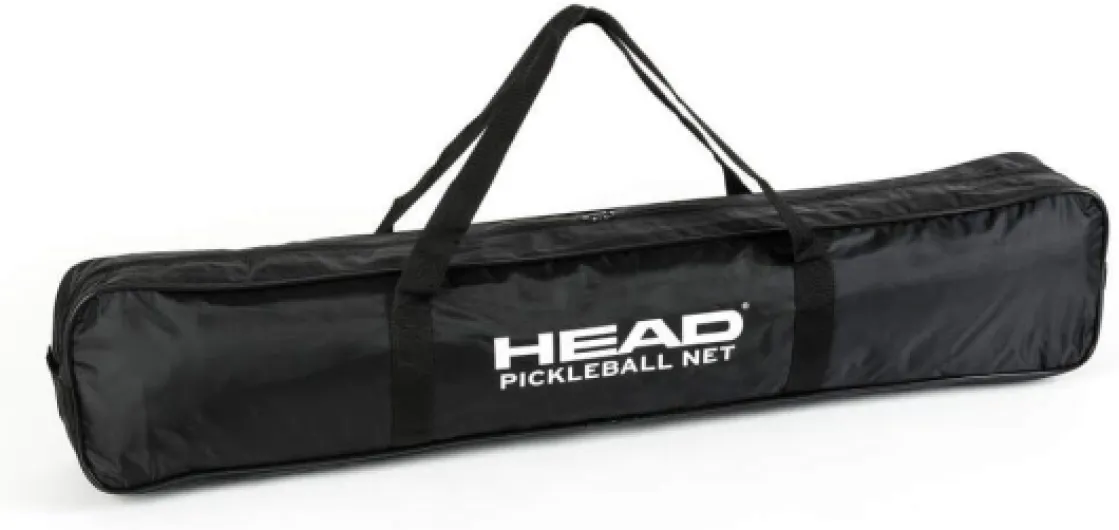
What you actually get in the bag
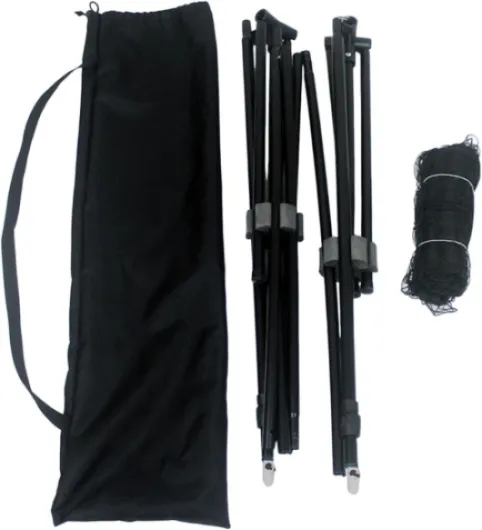
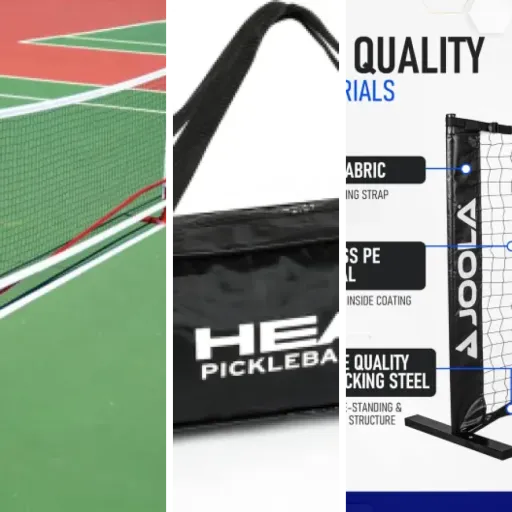
Out of the box, the HEAD Portable Pickleball Net System is pretty straightforward: you get the steel frame pieces, the net itself with attached straps, a center post, and a nylon carry bag. No fancy accessories, no extra paddles or balls, just the core kit to build a regulation-size net. The listed net length is about 6.63 m, and the height is 76 cm, which lines up with standard pickleball dimensions, so you’re not playing on a weird mini court.
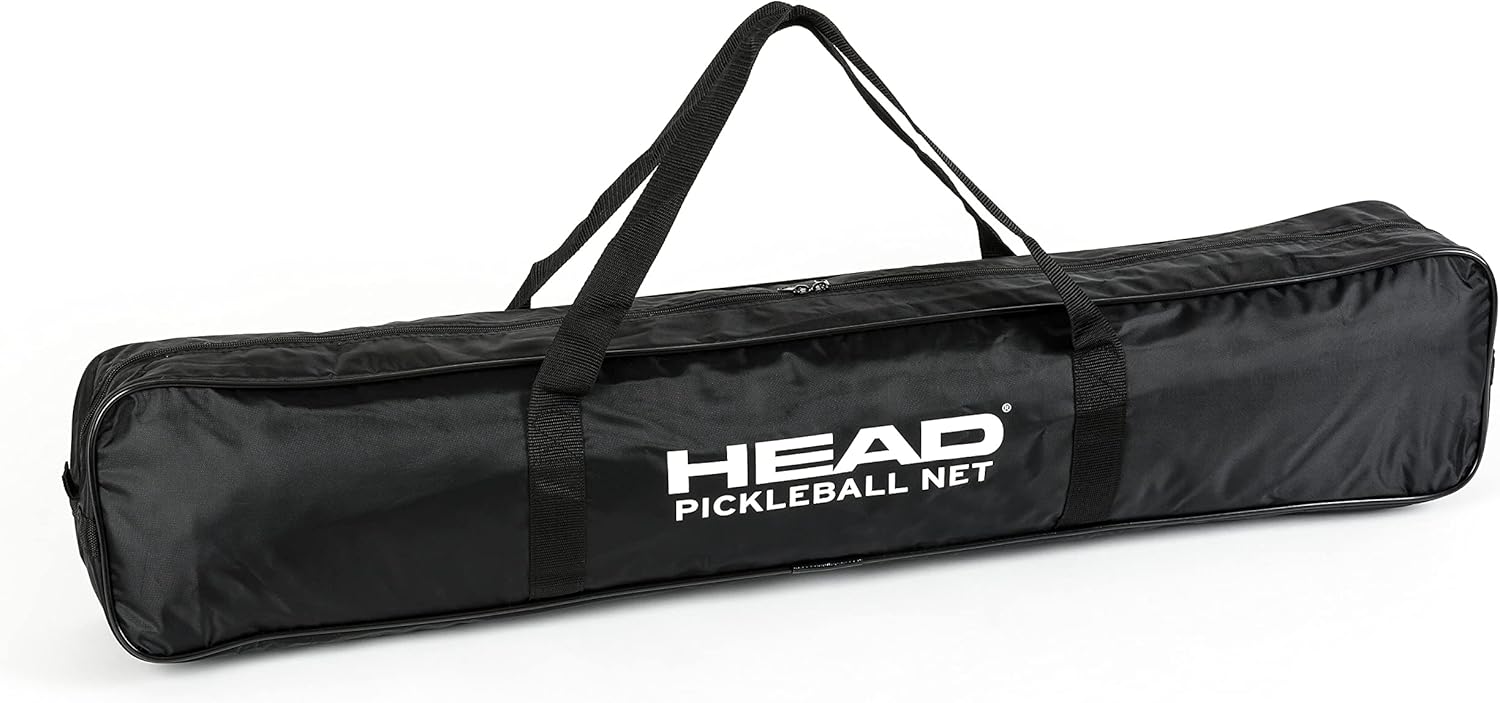
The carry bag is basic but functional. It’s long enough that you don’t have to fight to zip it up, which I appreciate. I’ve had cheaper nets where you have to stuff the poles in just right or the zipper won’t close. Here, everything slides in without a puzzle. There’s a shoulder strap so you can carry it from the car to the court in one go, but keep in mind it’s not featherlight. After a few trips, you feel the weight on your shoulder, especially if you’re also lugging a bag of paddles and balls.
Setup is pretty simple: the frame pieces are shaped and sized so it’s fairly obvious what goes where. There’s an oval tube frame that runs the length, then you drop in the center post, and then you hook the net over and adjust the straps. First time took me maybe 10–12 minutes while I was still checking everything. After two or three setups, I was down to around 5–7 minutes without rushing.
Overall, the presentation is practical and no-nonsense. It looks like something meant for clubs and frequent players rather than a one-off backyard party set. No gimmicks, just a proper-sized, portable net with a frame that feels like it’s built to be used regularly, not once a year.
Pros
- Stable steel frame with oval tubing that resists twisting and sagging
- Center post and tension straps keep the net at proper height and tension
- Feels close to a fixed-court net during actual play, good for regular practice
Cons
- Relatively heavy to carry, not ideal for long walks to the court
- Can still tip over in strong wind despite the solid frame
Conclusion
Editor's rating
The HEAD Portable Pickleball Net System is a sturdy, regulation-size net that feels a lot closer to a real court setup than most of the lightweight portable kits I’ve tried. The steel frame, center post, and tension straps keep the net height and tension consistent, which makes a difference if you’re actually trying to improve your game and not just casually hitting in the yard. It’s easy enough to set up after you’ve done it once or twice, and during play it stays stable unless the wind really picks up.
It’s not perfect. It’s on the heavier side, so carrying it long distances isn’t much fun, and the bag, while functional, isn’t some heavy-duty travel case. It’s also not the cheapest option on the market. But the trade-off is a net that feels reliable, doesn’t twist or sag easily, and can handle regular setup and teardown without falling apart. For clubs, coaches, or players who set up courts weekly, it makes sense.
If you just want something light and cheap for occasional backyard fun, this might be more than you need. But if you want a portable net that behaves like proper court equipment and you don’t mind a bit of extra weight, this HEAD system is a pretty solid choice that should serve you well over time.