Summary
Editor's rating
Value: good for casual and club practice, less ideal for heavy daily use
Design: curved legs that actually make sense
Materials: strong frame, average net
Durability: frame vs net, two different stories
On-court performance: plays like a real net, with a few quirks
What you actually get in the bag
Pros
- Sturdy steel frame with curved legs that helps stability and reduces tripping risk
- Regulation-size, USAPA-approved net that plays like a real court
- Quick and fairly intuitive setup and teardown with a practical carrying bag
Cons
- Net side sleeves and top band are prone to wear if assembled and disassembled frequently
- Lightweight frame can move in strong wind without extra weights

Specifications
View full product page →| Brand | Wilson |
A proper court in the trunk of your car
I’ve been using this Wilson portable pickleball net system for a while now, mainly for casual games at a local parking lot and a school playground. I wanted something that I could toss in the car, set up in under 10 minutes, and not have to baby too much. On paper, this one ticks all the boxes: 6.7 m long, regulation height, steel frame, and it comes in a carrying bag. Plus it’s from Wilson, so you expect at least a decent baseline of quality.
In practice, it’s pretty much what you’d expect from a mid-range portable net: it gets the job done, but it’s not indestructible. You can feel that it’s designed for people who will set it up for a session, play a few hours, and pack it away. It’s not meant to live permanently in the yard or be thrown around every single day like club equipment. If you treat it as a portable piece of gear and not a fixed court, it makes more sense.
What surprised me most was how quickly you can go from “bag in the trunk” to “ready to play”. The frame is fairly intuitive, and the curved legs actually help a bit with stability and avoiding tripping, especially when people forget where the posts are and charge the net. On the flip side, the net material itself feels like the weak link; you can tell just from handling it that the frame will outlast the fabric if you’re rough or constantly assembling and disassembling.
Overall, my first impression was: solid, practical, and pretty easy to live with, but you do have to manage your expectations about durability, especially if you’re going to take it down and put it up several times a week. If you’re thinking of occasional family games or a weekly meetup, it makes sense. If you’re picturing club-level daily use, you’ll probably chew through it faster than you’d like.
Value: good for casual and club practice, less ideal for heavy daily use
In terms of value, I’d put this Wilson net in the “pretty solid for what it is” category. You’re paying for a known brand, a steel frame, and a regulation-size, USAPA-approved net that’s genuinely portable. For families, small groups, or a club that wants an extra temporary court for busy nights, it makes sense. You get a system that sets up quickly, plays like a real court, and packs into a bag that fits easily in a car trunk or storage closet.
Where the value starts to feel a bit less convincing is if you’re a heavy user. If you’re going to set it up and take it down several times a week, every week, you’re going to push the net material harder than it seems designed for. There are cheaper nets out there with flimsier frames, and there are more expensive, more rugged systems that can take more abuse. This Wilson sits in the middle: better built than budget sets, but not quite at the level of the really heavy-duty portable systems used by big clubs.
Compared to some no-name Amazon nets I’ve tried, the Wilson’s frame is definitely more reassuring, and the assembly process is smoother. Those cheaper nets often have confusing parts, weak joints, or terrible bags that rip quickly. Here, at least the core structure feels dependable. On the other hand, if you’re willing to spend more, you can find systems with thicker netting and more reinforced sleeves that handle constant assembly a bit better. So it depends a lot on how you’ll use it: occasional games = good value, daily punishment = less so.
Overall, with an Amazon rating around 4.5/5 and my own experience, I’d say the price is fair for what you get, as long as you’re honest with yourself about your usage. If you want something simple and reliable for weekend play or a weekly meetup, this is a solid pick. If you’re running a high-traffic facility or plan to drag it out every day, I’d either budget for a replacement net down the line or look for a more industrial option from the start.
Design: curved legs that actually make sense
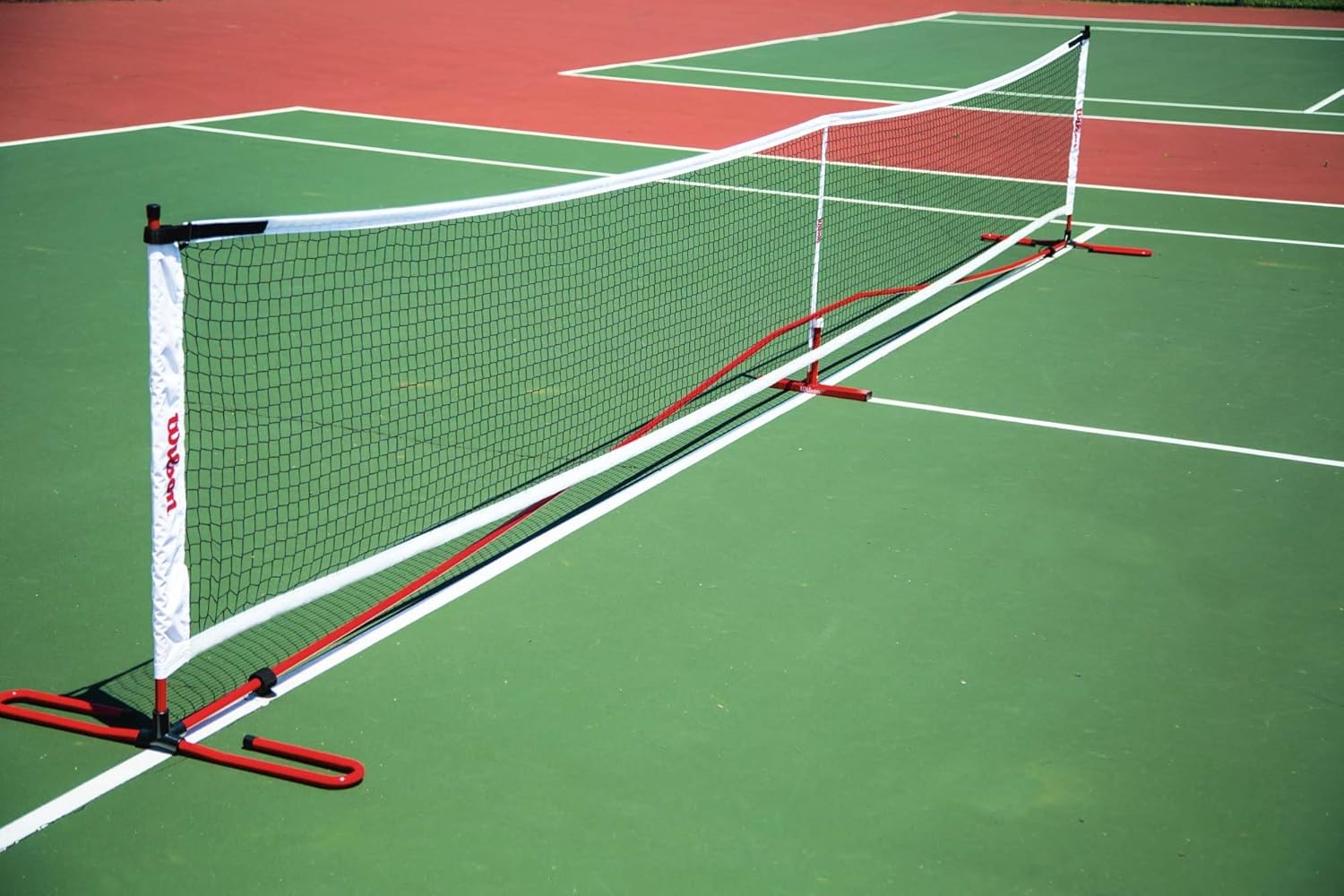
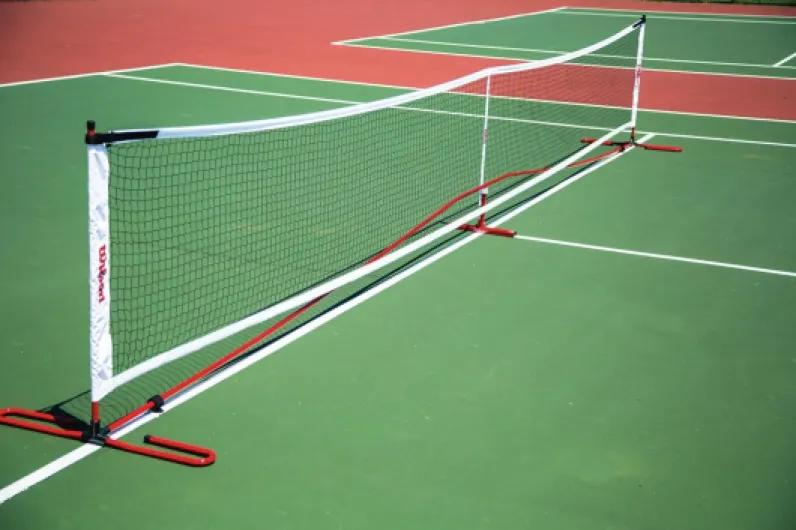
The design is pretty simple but thought through in a few key spots. The most noticeable thing is the curved side legs. At first, I thought it was just a styling choice, but on court it makes a difference. Instead of having straight legs that stick out where people run, these curve a bit and sit in a way that’s slightly less in your path. You can still trip on them if you’re careless, but compared to straight-leg frames I’ve used, I’ve seen fewer people clip them when rushing the net.
The frame layout is your usual portable net setup: a base bar that runs under the net, side posts, and a center support piece to keep the middle from sagging. The tension is handled by elastic straps on the sides, which is nice because you don’t have to mess with knots or ratchets. Once tightened, the net is reasonably straight and doesn’t droop too much. It’s not as tight as a permanent court net, but for recreation and practice, it’s fine.
Assembly-wise, the design is quite intuitive. The parts only really fit together one way, and after the first setup, you’ll probably stop looking at instructions. I can put it up alone in around 7–8 minutes at a relaxed pace; with two people, you’re done even faster. Taking it down is about the same. That matters if you’re using public spaces where you can’t leave anything set up, like parking lots or schoolyards. The only annoying bit in the design is the side sleeves on the net. You have to slide them on and off the poles, and that motion, repeated often, is what tends to wear and tear the fabric according to one of the user reviews, and I can see why.
One more thing on design: wind. Because the frame is relatively light and there’s no way to anchor it by default, a strong gust will move it or tilt it, especially if you’re playing on smooth surfaces like a gym floor. I’ve had to put a couple of small sandbags or even a backpack on the legs on windy days. It’s not a deal-breaker, but it shows that the design prioritizes portability over brute stability. If you mostly play indoors or on calm days, it’s fine; if your courts are in a windy open area, you’ll want some extra weight on the base.
Materials: strong frame, average net
On the materials side, this net is a mix of steel components and composite netting. The base and posts are made from steel tubes, and they feel solid enough in the hand. They’re not crazy heavy, but there’s enough weight that the frame doesn’t feel flimsy. The paint or coating on the tubes seems decent; after being set up on rough asphalt a few times, I only saw minor scuffs, nothing that looked like it would rust immediately. For a portable net, I’d say the frame is on the stronger side of average.
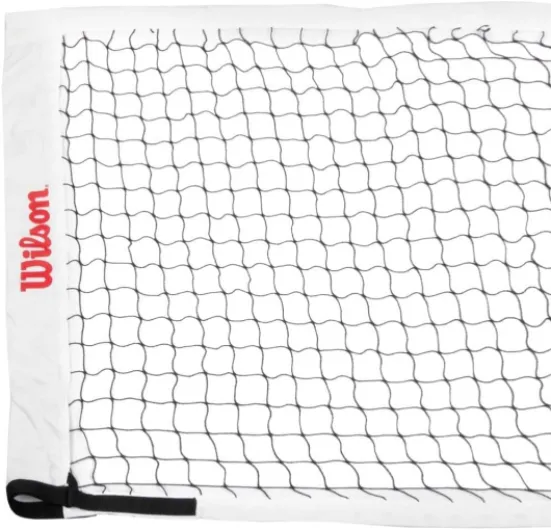
The netting itself is where things are more “okay but not great”. It’s described as thick and durable, and to be fair, for casual use it holds up. The mesh is tighter than some cheap nets I’ve used, and balls don’t easily push through it. But when you handle the side sleeves, you can feel that this part of the fabric is the weak point. Sliding those sleeves on and off the posts every session puts stress on the stitching and the material. One reviewer mentioned theirs ripping after about three months of regular assembly and disassembly, and I’m not shocked by that. If you’re gentle and don’t rush, it should last longer, but it’s definitely not indestructible.
The elastic tensioners at the sides are a nice touch. They’re simple bungee-type pieces that hook onto the frame and help keep the net tight. These feel more durable than the net sleeves themselves. As long as you don’t store the whole thing in direct sunlight in a hot car all year, they should hold up. I also like that Wilson didn’t cheap out on the carrying bag material; the bag fabric and zipper feel sturdy enough for regular use, and I haven’t had issues with seams tearing even when I’ve been a bit lazy stuffing everything back in.
Overall, the material mix makes sense for a portable product: steel where you need rigidity, fabric where you need flexibility. Just be realistic: the frame will probably outlive the net if you’re using it hard. If you’re okay with that and treat the net with a bit of care—no yanking, no dragging on rough ground—it should give you a fair amount of playtime. If you expect it to behave like a permanently installed club net, you’ll probably be disappointed.
Durability: frame vs net, two different stories
Durability is where this net is a bit of a mixed bag. The steel frame has held up well over repeated use. I’ve set it up on asphalt, concrete, and a gym floor, and apart from some cosmetic scratches, there’s nothing worrying. No bending, no parts that feel loose or wobbly after repeated assemblies. For a portable system that you’re constantly putting together and taking apart, that’s a good sign. I’d be fairly confident the frame will last several seasons if you don’t straight-up abuse it.
The net itself is another story. It’s not terrible, but it’s clearly the part that will wear out first. The main issue is the side sleeves that slide over the posts. Every time you assemble and disassemble the net, those sleeves rub against the metal, and if you rush or pull too hard, you stress the stitching and fabric. One reviewer mentioned their side sleeves ripping after about three months of regular use, and I can see how that happens if you’re playing several times a week and packing it away each time. Mine hasn’t ripped yet, but you can see small signs of wear where the fabric folds and rubs.
Weather exposure is another factor. This net is clearly not meant to be left outside permanently. If you leave it out in the sun and rain day after day, the fabric and elastic will weaken, and you’ll probably see the top band and sleeves start to thin and tear. I’ve always packed it away after sessions, and that alone makes a big difference. The user who had theirs rip after three months specifically said it wasn’t left out overnight or in the rain, which suggests the net material itself just isn’t built for heavy, frequent assembly cycles. In that sense, it’s more suited to occasional use than daily club-level abuse.
Considering the 2-year manufacturer warranty, you at least have some backup if something fails prematurely, but I wouldn’t rely on that as an excuse to be rough with it. In short, durability is decent if you’re using it once or twice a week and handling it with some care. If you’re planning to run multiple sessions a day, five days a week, I’d expect the net to show its limits within a season, even though the frame will likely keep going.
On-court performance: plays like a real net, with a few quirks
On the court, the most important thing is: does it feel like a proper pickleball net? For the most part, yes. The height and length are regulation, so your dinks, drives, and lobs translate well when you switch to a fixed court. The ball reacts off the tape at the top about how you’d expect. I’ve used some cheap portable nets where the top sags so much that you start unconsciously aiming higher; that hasn’t been an issue here as long as you tension it properly.
Stability-wise, it’s pretty decent for a portable system. The curved legs and the steel base give it enough weight that it doesn’t wobble every time someone bumps into it lightly. If a player runs straight into the net at full speed, sure, you’re going to move the whole thing, but that’s true for most portable setups. For normal play—volleying at the kitchen line, quick exchanges, the odd accidental brush—it stays put. Indoors or on non-slippery surfaces, I’ve had no real complaints.
Where it struggles a bit is on windy days. The net itself catches the wind like a sail, and because the frame is designed to be light enough to carry easily, strong gusts can push it around. I’ve had sessions where we had to stop and straighten the net a couple of times when the wind picked up. The fix is simple: throw a couple of weights or bags on the legs, and it’s mostly fine, but it’s something to know if you play outdoors a lot.
Another performance detail is setup and teardown time, because that’s part of the “real life performance” for a portable product. Once you know what you’re doing, you can realistically be playing within 10 minutes of opening the bag. Taking it down is similar, and the parts fit back into the bag without a fight. For group sessions where you only have limited time on a court, that matters a lot. Overall, from a pure playing perspective, I’d say it feels like a proper court, just with the normal compromises of a portable system: a bit more sensitivity to wind and a bit less tension than a permanent installation.
What you actually get in the bag
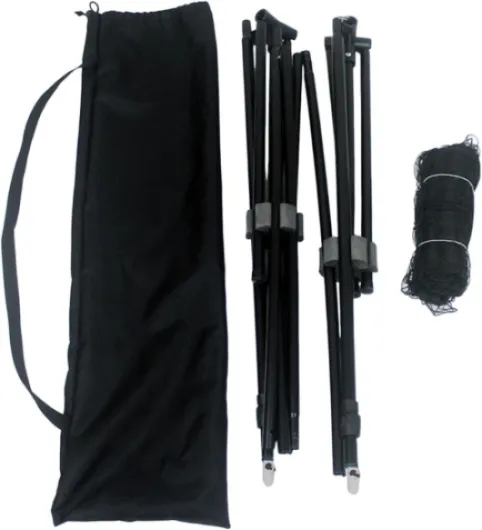
Out of the box (or rather, out of the bag), the Wilson portable pickleball net system is pretty straightforward. You get a long zippered carrying bag, the steel frame pieces, and the net itself. No fancy extras, no tools needed. The bag has enough room so you don’t have to play Tetris every time you put it away, which I appreciate a lot. Some cheaper sets force you to pack everything perfectly or the zipper won’t close; this one is a bit more forgiving.
The net is regulation size: around 6.7 m (22 feet) long and about 90 cm (3 feet) high in the middle, so you’re playing at a proper height. It’s USAPA approved, which, in simple terms, means the dimensions and setup are in line with standard pickleball rules. If you’re just playing with friends, that might not matter, but if you’re trying to practice seriously, it’s good to know it’s not some random “almost right” size.
The steel components come as separate tubes that click or slide into each other to form the base and side posts. The center support bar and the curved legs are easy to identify once you’ve assembled it once or twice. The net has sleeves on the sides that you slide over the posts and some elastic tensioners to get the net tight enough. There’s nothing high-tech here; it’s just a simple, manual setup that relies on the user not to yank or twist things too aggressively.
In terms of overall presentation, it’s pretty no-nonsense. The color scheme is black/red/white, which looks fine but nothing special. It feels like a piece of sports equipment, not some fancy designer gadget. Personally, I prefer that: fewer cosmetic gimmicks, more focus on function. Just be aware that what you’re paying for is basically a regulation-size net and a steel frame in a decent bag, not a luxury product with bells and whistles.
Pros
- Sturdy steel frame with curved legs that helps stability and reduces tripping risk
- Regulation-size, USAPA-approved net that plays like a real court
- Quick and fairly intuitive setup and teardown with a practical carrying bag
Cons
- Net side sleeves and top band are prone to wear if assembled and disassembled frequently
- Lightweight frame can move in strong wind without extra weights
Conclusion
Editor's rating
If I had to sum up the Wilson portable pickleball net system in one line, I’d say: solid portable frame, average net, good for casual to moderate use. It does exactly what most people need from a portable net: it sets up quickly, fits in a car, and gives you a regulation-size court pretty much anywhere you can find a flat surface. The curved legs and steel base make it feel more stable and a bit safer around the posts than some straight-leg budget setups I’ve used.
The main trade-off is durability of the net fabric, especially the side sleeves. If you’re going to assemble and disassemble it constantly, you’re putting the weak spot under regular stress, and you’ll probably see wear sooner than you’d like. For weekend players, families, and clubs that only need an extra temporary court occasionally, that’s less of an issue. For heavy, near-daily use, I’d either plan on babying it or consider a tougher (and usually more expensive) alternative.
So, who is this for? It’s a good fit if you want a reliable, brand-name net for backyard games, community events, or a weekly meetup, and you care about having proper dimensions and a frame that doesn’t feel flimsy. Who should skip it? People running intensive programs, schools or clubs that will be setting it up and tearing it down all the time, or anyone expecting it to live outside permanently. In those cases, you’ll probably outgrow this system faster than you’d like and be better off with something more heavy-duty from day one.