Summary
Editor's rating
Is the Vatic Pro V-Sol Pro 16mm worth the money?
Shape, feel in hand, and that hollow sound everyone mentions
Grip, balance, and arm fatigue after a bunch of sessions
Foam core, EVA perimeter, and Toray T700: what that actually means on court
Build quality and wear after a few weeks
Power, spin, control: how it actually plays after 10+ sessions
What you actually get for your money
Pros
- Strong power and good spin thanks to foam core and T700 carbon face
- Good value compared to big-name paddles with similar tech
- Comfortable weight and grip with decent vibration dampening
Cons
- Hollow, muted sound and feel may bother some players
- A bit poppy on dinks and resets until you adjust or add lead tape

Specifications
View full product page →| Brand | Vatic Pro |
A budget Gen 4 paddle that actually feels different
I’ve been playing pickleball a few times a week for a while now, and I’ve gone through the usual paddle progression: cheap Amazon starter, random fiberglass mid-range, then a carbon paddle around $100. I picked up the Vatic Pro V-Sol Pro 16mm (Flash shape) because I was curious about the full foam core hype and didn’t want to drop $250+ on a big-name brand. I’ve used it for about three weeks now, roughly 10–12 sessions, mostly rec play and a couple of small local round-robins.
The short version: it’s a powerful, fairly controlled paddle with a different feel than the usual honeycomb stuff. It took me a few sessions to adjust, but once I got used to it, my drives and spin improved, and my soft game eventually caught up. It’s not magic, it doesn’t suddenly turn you into a 5.0, but it’s a legit step up from basic paddles without the crazy price.
Where it stands out is the combo of power and spin for the money It’s not perfect. Out of the box, it feels a bit poppy and a touch unstable on off-center hits until you either adjust or add a bit of lead tape. Also, if you’re super picky about sound or want a super plush, soft feel, this probably isn’t your favorite. But if you’re in that sub-$150 range and want something that feels modern and can hang with pricier paddles, this one is pretty solid.
Is the Vatic Pro V-Sol Pro 16mm worth the money?
In terms of value for money, this is where the Vatic Pro V-Sol Pro 16mm makes the most sense. You’re getting a modern Gen 4-style build (foam core, EVA perimeter, T700 carbon face) for around or under the $100–$150 mark depending on sales. When you compare that to big brands charging $230–$300 for similar tech, it’s hard not to see the appeal, especially if you’re not playing at a super high tournament level yet.
Performance-wise, it hangs with more expensive paddles in the key areas most players care about: power, spin, and a decent sweet spot. If you’re coming from a $40–$60 starter paddle, the upgrade is very noticeable. Serves, drives, and spin control all feel like they jump a level. Does it match the absolute top-tier models in every tiny detail? Probably not, but for most rec players and even a lot of competitive ones, the difference doesn’t justify paying double or triple.
There are a couple of trade-offs. Out of the box, it can feel a bit poppy and slightly unstable on hard off-center hits. Some people, like one reviewer, fixed this by adding a few grams of lead tape at 3 and 9 o’clock, which I think is a good tweak if you want more stability. If you factor in a roll of lead tape and maybe an overgrip, you’re still well under premium-brand pricing with a setup that plays very well.
So in plain terms: if you’re budget-conscious but still want a paddle that feels current and lets you grow your game, the V-Sol Pro 16mm is good value. If money is no object and you’re obsessed with tiny feel differences and brand prestige, you might still lean to the big names. For most people playing a few times a week and wanting something serious without going overboard on price, this paddle makes a lot of sense.
Shape, feel in hand, and that hollow sound everyone mentions
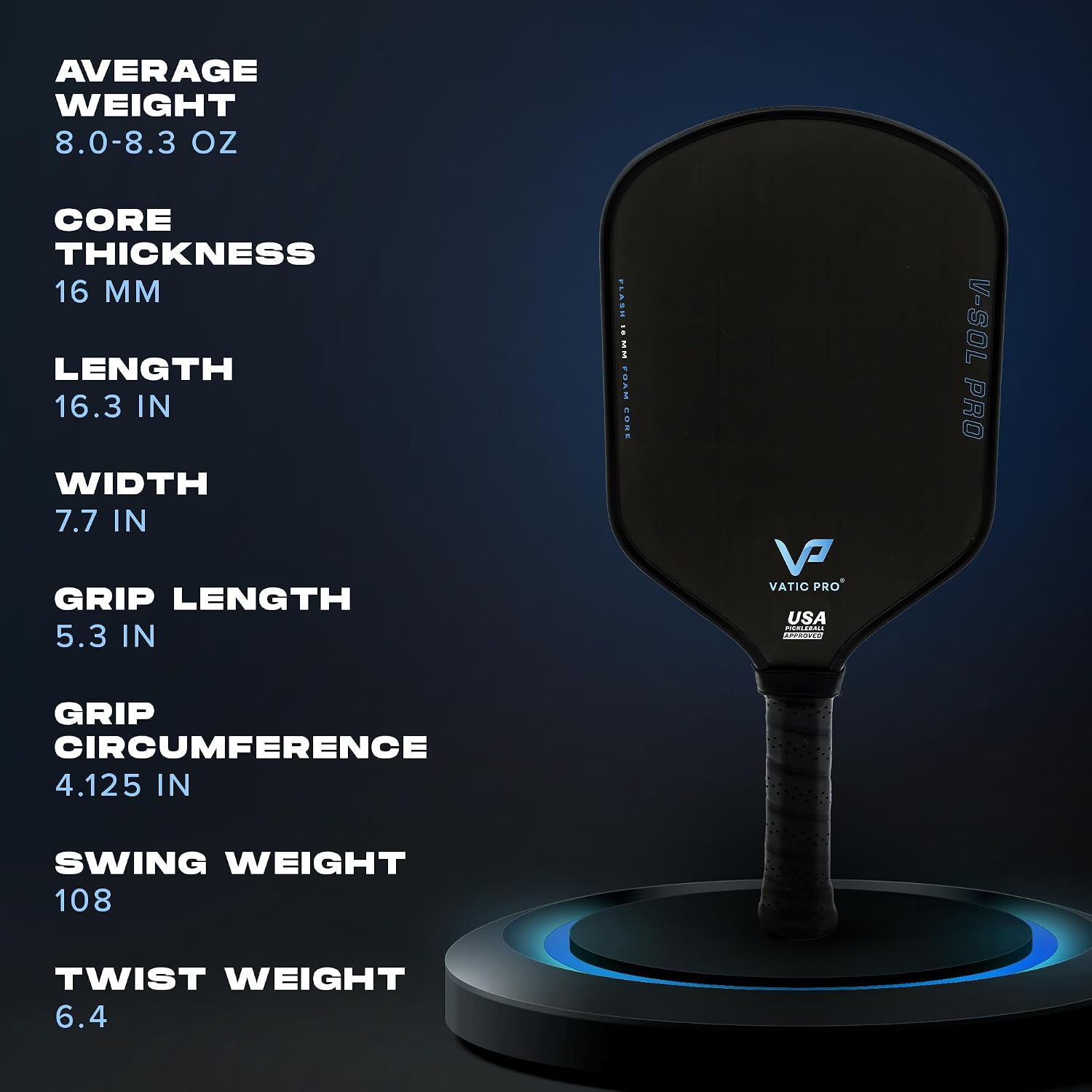
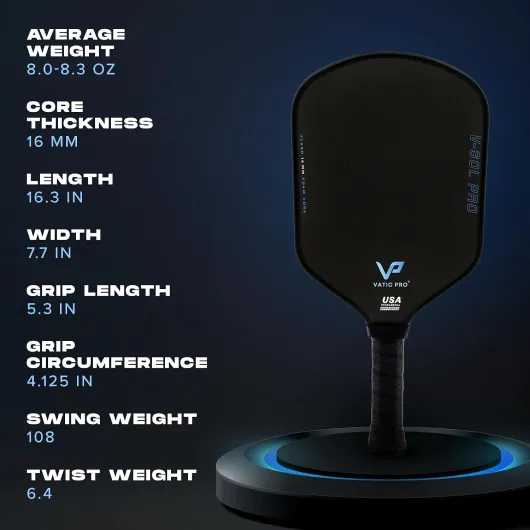
Design-wise, the V-Sol Pro Flash sits in that in-between zone: not a super-long blade, not a wide-body. The 16.2" x 7.7" size feels familiar if you’ve used any of the popular hybrid paddles. The sweet spot feels slightly higher than dead center, which helped on drives and counterattacks but took me a couple of games to dial in for dinks and drops. The grip length is enough for a comfortable one-handed backhand; if you’re constantly using a two-handed backhand, you might prefer the long-handle version, but I could squeeze a second hand on there in a pinch.
The main thing you notice right away is the sound and feel. This paddle has that foam-core, slightly hollow sound compared to the classic honeycomb “thwack.” First session, I honestly thought it sounded a bit cheap, but once I realized the performance was there, I stopped caring about the sound. The feel is more muted and cushioned than some raw carbon paddles I’ve tried. You don’t get that sharp crack, but the ball still jumps off the face when you swing through.
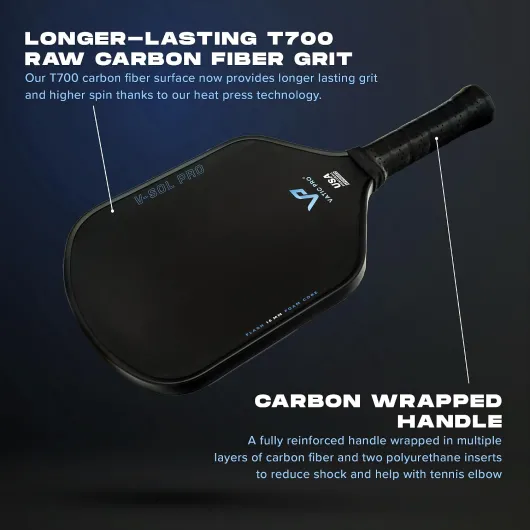
Visually, it’s pretty clean. Matte carbon face, simple branding, no crazy graphics. Grip wrap is standard – not super tacky, not slippery. After a few sweaty sessions, I’d probably regrip or at least overgrip it, but that’s true for most paddles. The edge guard sits flush, no weird ridges or gaps that catch the ball. I didn’t see any flaws in the carbon weave or surface texture.
From a design perspective, I’d say it’s practical and focused on performance more than looks. It doesn’t scream premium, but it doesn’t look cheap either. The only real design downside is that hollow-ish sound that some people might not like. Personally, after a week, I stopped noticing, but if you’re sensitive to paddle noise and feel, just know this one is a bit different from the typical honeycomb crack you might be used to.
Grip, balance, and arm fatigue after a bunch of sessions
Comfort-wise, the V-Sol Pro 16mm landed in a good spot for me, but with a couple of caveats. At about 8.1 oz, it’s not a featherweight, but it doesn’t feel like a brick either. The balance is slightly toward the head, which you really feel on drives and overheads – there’s some free power there. On the flip side, if you’re used to very light paddles, you’ll feel the extra weight in quick hand battles until your wrist gets used to it.
The 4.125" grip circumference felt standard and comfortable. I’ve got average-sized hands, and I could play a full session without any hotspots or cramping. The stock grip is fine – a bit on the generic side, but cushioned enough. After several sweaty outdoor sessions, it started to feel slick, so I’d personally throw an overgrip on it for better tack and slightly more cushioning. That’s pretty normal though; I do that on almost every paddle anyway.
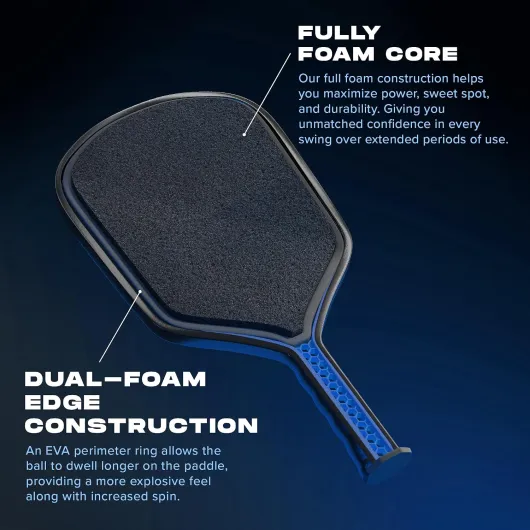
One thing I did like is how the foam core and EVA ring help with vibration. On some cheap paddles, mishits send a sharp buzz up your arm. With this one, even when I clipped the ball near the edge or tip, the feedback was more muted. You still feel where you hit it, but it isn’t harsh. After a couple of two-hour sessions, my arm and elbow felt fine, which hasn’t always been the case with stiffer paddles I’ve used in the past.
If you’re very sensitive to weight or have elbow issues, you might want to check the actual weight of the specific paddle you get (they can vary slightly) and maybe avoid adding too much lead tape. But overall, for me, comfort was a strong point: easy on the joints, decent grip, and no weird pressure points. Once I added an overgrip, I didn’t think about comfort at all during games, which is pretty much what you want.
Foam core, EVA perimeter, and Toray T700: what that actually means on court
On paper, the materials are what make this paddle interesting. It uses a full EPP foam core with an EVA foam outer ring, plus a Toray T700 carbon fiber surface. That sounds like marketing talk, but in practice it does feel different from the usual polymer honeycomb paddles. The foam core gives it a more solid, filled-in feel, and the EVA ring seems to help expand the sweet spot a bit. Off-center hits don’t die as much as on some older paddles I’ve used.
The T700 carbon face has a gritty texture that’s similar to other raw carbon paddles on the market. It’s not the most aggressive texture I’ve ever felt, but it’s definitely not smooth. After a few weeks of use, the grit still feels present, and I haven’t noticed any obvious smoothing or shiny patches yet. That’s important if you care about spin – some cheaper paddles lose their texture fast, and this one so far is holding up fine.
The foam core also affects how the paddle handles vibration. Compared to a stiffer, hollow-feeling carbon paddle I used before, this one feels more dampened. Mishits near the tip or off the side don’t sting as much, and my arm felt less tired after longer sessions. If you’ve had some elbow or wrist annoyance, this kind of construction might be easier on the joints. It’s not super pillowy, but it’s definitely less harsh than some thin, stiff paddles.
Are these materials on the same level as the most expensive brands? Hard to say long-term, but for this price bracket, getting a proper T700 carbon face and foam/EVA setup is pretty good. It doesn’t feel like a gimmick. The main thing is that the construction gives you a noticeable mix of power, spin, and comfort that stands out from the basic composite stuff. For anyone coming from a big-box starter paddle, the material difference alone will be obvious within a couple of games.
Build quality and wear after a few weeks
Durability is always tricky to judge long-term, but after a few weeks of steady use, I can at least say how the V-Sol Pro 16mm is holding up so far. I’ve used it on outdoor courts, banged it around in a bag with other paddles, and had the usual occasional scrape on the ground going for low balls. The edge guard is still firmly attached, no peeling or gaps, which is usually one of the first signs of a cheap build.
The carbon face still looks good. There are normal scuff marks from the ball and a couple of minor edge dings from clashes at the net, but nothing concerning. The gritty texture is still there – maybe slightly smoothed in the most-used contact area, but not enough to affect spin in any noticeable way yet. I don’t baby my paddles, and this one hasn’t shown any cracks, dead spots, or rattles.
The foam core and EVA ring don’t show anything obvious from the outside, but performance feels the same as day one. Power and feel haven’t changed. Sometimes with cheaper paddles you start to feel a deadening or weird vibration after a few hard sessions, and that hasn’t happened here. The handle and throat feel solid, no flexing or creaking even on big overheads or when I accidentally hit near the neck.
Grip wrap is the only part that aged quickly, but that’s normal. After several sweaty sessions, it darkened and lost some tack. I’d swap it or add an overgrip, which I do on basically every paddle anyway. Overall, for the price, durability seems good so far. Obviously, I can’t speak for six months or a year down the line, but there’s nothing in the build that screams “short lifespan” at this point.
Power, spin, control: how it actually plays after 10+ sessions
This is where the V-Sol Pro 16mm earns its place. In terms of power, it’s definitely on the higher side compared to most mid-range paddles I’ve used. Serves and drives come off hot with very little effort. From the baseline, I could push people back and win some cheap points just off depth and pace. If you’re stepping up from a softer or thicker control paddle, you’ll immediately notice the extra pop. I had to dial back my swing a bit at first to keep balls in, especially on high forehands.
For spin, the T700 face does its job. I could hit topspin drives that dipped nicely and slices that stayed low. On third-shot drops, once I got used to the feel, I could roll the ball with enough spin to make it sit down instead of sailing long. Is it the spinniest paddle on earth? No, but it’s definitely in the “good spin” category. Compared to a cheaper composite paddle I used before, the difference in how much I could shape the ball was very clear.
Control and soft game took the most adjustment. Out of the gate, the paddle felt a bit poppy on dinks and blocks. My first two sessions, I was popping up more balls at the kitchen than usual. After a while, I learned to soften my hands and shorten my swing, and things settled down. Once I adjusted, I actually started to like it at the net: the larger sweet spot and foam feel helped with stability on fast exchanges, and resets from mid-court felt predictable as long as I didn’t over-swing.
Overall, I’d describe performance like this: power and spin are its strengths, control is solid once you adapt. If you’re a pure soft-touch player who hates pop, this might not be your favorite. But if you want to add some heat to your game without completely losing control, it hits a nice balance, especially given the price point. It rewards clean mechanics and punishes lazy swings a bit, which isn’t a bad thing if you’re trying to improve.
What you actually get for your money
Out of the box, the V-Sol Pro 16mm Flash comes pretty straightforward: paddle, neoprene cover, and that’s it. No fancy extras, but honestly, that’s fine. The cover is decent quality, not super thick but good enough to keep it from getting scratched up in a bag. For the price range, including a cover is already a plus, because some bigger brands don’t even bother.
The paddle I tried weighed right around the listed 8.1 ounces, which puts it in that balanced to slightly head-heavy range once you start swinging it. The handle circumference is about 4.125 inches, which felt normal to me – not chunky, not pencil-thin. The length is listed as 16.2 inches with a 7.7-inch width for the Flash version, and in hand it feels like a standard hybrid shape, not super elongated but still with enough reach for overheads and counters.
What matters in practice is that it doesn’t feel like a toy. A lot of cheaper paddles look decent online and then feel cheap and rattly once you actually swing them. Here, the build feels reasonably tight: no buzzing, no weird vibration, and the edges look well-finished. The branding is obvious but not in-your-face, and it doesn’t scream “knockoff.” The paddle I got had no defects, loose edge guard, or uneven surface.
If you’re used to holding $250+ paddles, you’ll probably still notice this is a bit more basic in overall finish and detailing, but in terms of what you get out of the box for the price, it’s hard to complain. You’re basically getting a modern carbon + foam-core setup, a usable cover, and specs that fit most adult players without needing to mod anything immediately. For a first “serious” paddle or a backup to a flagship model, the package makes sense.
Pros
- Strong power and good spin thanks to foam core and T700 carbon face
- Good value compared to big-name paddles with similar tech
- Comfortable weight and grip with decent vibration dampening
Cons
- Hollow, muted sound and feel may bother some players
- A bit poppy on dinks and resets until you adjust or add lead tape
Conclusion
Editor's rating
The Vatic Pro V-Sol Pro 16mm Flash is a solid power-and-spin paddle at a fair price. The full foam core with EVA perimeter and T700 carbon face actually translates into something you feel on court: good pop on drives and serves, reliable spin, and a sweet spot that’s forgiving enough for everyday play. The feel is more muted and a bit hollow-sounding compared to classic honeycomb paddles, which might be off-putting at first, but performance-wise it holds up well.
This paddle is best for players who are past the total beginner stage and want to upgrade from cheap starter paddles without jumping into the $250+ range. If you like to hit hard, use topspin, and still have a workable soft game after some adjustment, it fits nicely. It also suits budget-conscious players who still care about modern materials and don’t mind a short learning curve on touch shots.
Who should probably skip it? If you’re a pure control player who hates pop and wants a super plush, dead feel at the net, this won’t be your favorite. If you’re extremely picky about sound and want that classic crack instead of a hollow tone, you might not like the audio feedback. But if you’re okay with a slightly different feel and just want strong performance for the price, the V-Sol Pro 16mm is a very reasonable choice that gets the job done and leaves money in your pocket.