Summary
Editor's rating
Is it worth the money given the competition?
Shape, balance, and how it feels in the hand
Handle, grip size mess, and overall feel
Raw carbon, thick core, and what it means on court
Build quality and how it holds up
Control beast, modest power, and solid spin
What this paddle actually is on paper
Pros
- Very good control and touch thanks to 17 mm core and muted feel
- Raw carbon surface offers solid spin and predictable ball grip
- Elongated shape and long handle help with reach and two‑handed backhands
Cons
- Limited free power; you have to generate most of it yourself
- Potential grip size inconsistency and relatively heavy, slightly head‑heavy feel

Specifications
View full product page →| Brand | HEAD |
A control paddle that doesn’t try to do everything
I’ve been hitting with the HEAD Gravity Tour EX 2025 for a couple of weeks, rotating it with my usual control paddle (a 16 mm raw carbon from another brand). I went in expecting a very control‑oriented paddle with a bit of extra reach because of the elongated shape, and that’s pretty much what I got. It’s not some magic wand, but it does give you a clear feeling of where the ball is on the face and lets you slow the game down when you need to.
HEAD sells this one as a 12k raw carbon, 17 mm thick, and elongated. On court, that translates into a paddle that feels quite stable on contact, with a sweet spot that’s a bit higher and longer than a standard shape. If you like to reset balls at the kitchen and block hard drives, that’s where it starts to make sense. If you’re looking for free power from the baseline, you’ll probably call it a bit dead at first.
I mainly played doubles with it, a mix of rec games and a small local round‑robin. I’m around solid intermediate level, which is exactly the target for this paddle according to the specs, so I’m basically the guy HEAD is aiming at. I focused on three things: control on dinks and drops, stability on volleys, and how easy it is to generate spin on drives and rolls.
Overall, it feels like a control paddle for players who already know what they’re doing, not a beginner crutch and not a power monster. There are some nice touches like the softer butt cap and the raw carbon face, but also some details that annoyed me, especially around specs and grip size. It’s a decent option, but it’s not head and shoulders above the competition, especially considering the price bracket it’s playing in.
Is it worth the money given the competition?
Value is where things get a bit more debatable. The Gravity Tour EX sits in the mid to high price range for pickleball paddles, competing with a bunch of other 16–17 mm raw carbon options that are already well established. In terms of pure performance, it hangs with them on control and feel, but it doesn’t clearly blow them out of the water in any specific area. You get good control, decent spin, and solid build, but nothing that really sets it apart in a big way.
What you are paying for is the HEAD name, the elongated sweet spot shape, and the slightly thicker 17 mm profile. If those three things are exactly what you want, then the price is easier to swallow. If you just want a generic control‑oriented raw carbon paddle, there are cheaper options that will get pretty close in performance. Also, the Amazon rating sitting at 3/5 stars with only two reviews is not super reassuring. One user loves it and calls it the best paddle, the other is frustrated about the grip size error. That’s not a huge sample, but it does show that the buying experience can be hit‑or‑miss.
For me personally, if I were spending my own money, I’d say the value is okay but not outstanding. It does its job, plays nicely for control, and feels like a serious product, but I don’t see a huge reason to pick it over some of the very strong competitors in the same segment unless you specifically like HEAD gear or really want that elongated Gravity shape. If you catch it on sale or with a discount, then it becomes a lot more attractive.
So, in blunt terms: it’s good, not cheap, and not clearly better than everything else. If you’re picky about feel and like HEAD’s approach, you’ll probably be happy enough. If you’re chasing raw performance per dollar, you might want to shop around and compare a few paddles before locking this one in.
Shape, balance, and how it feels in the hand
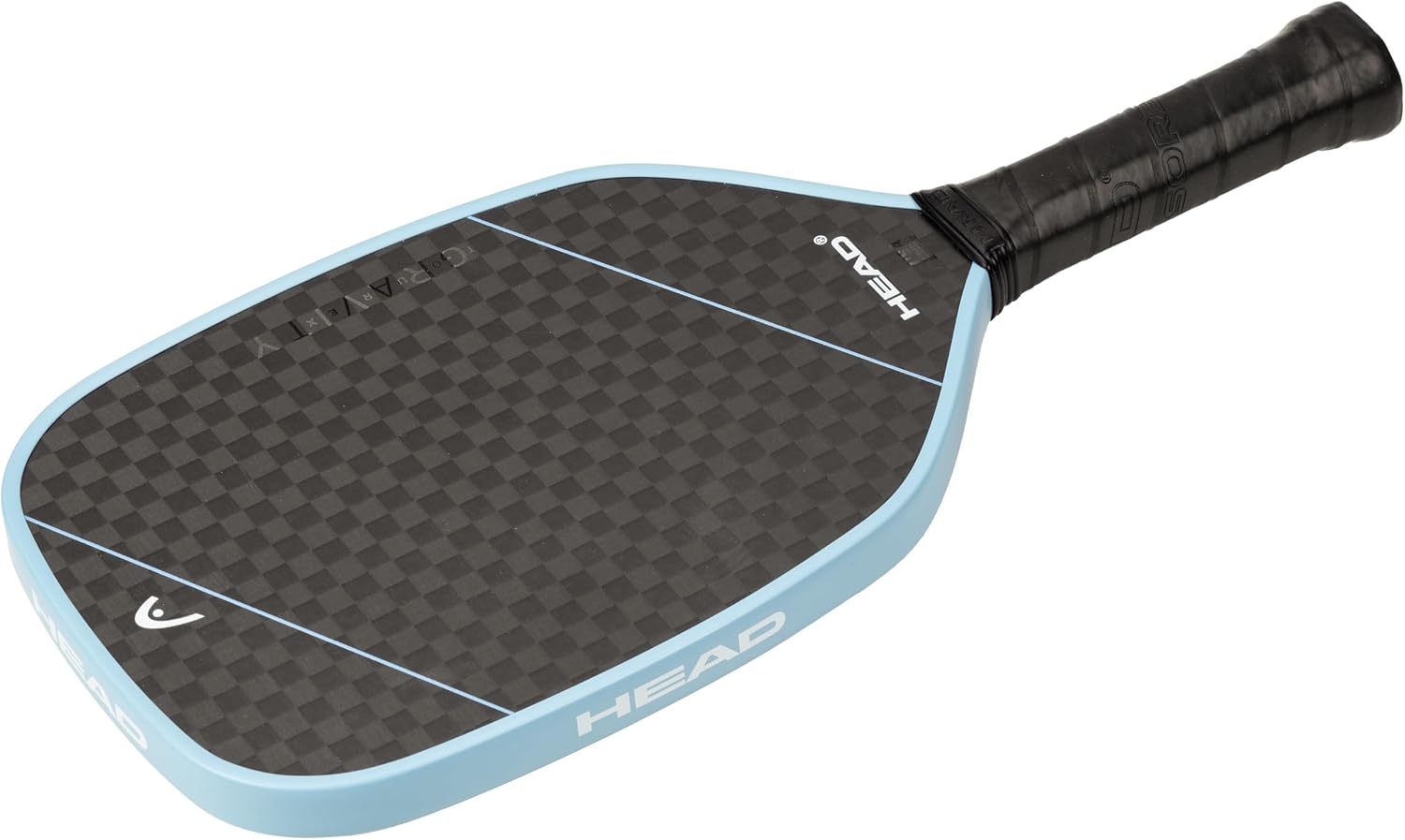
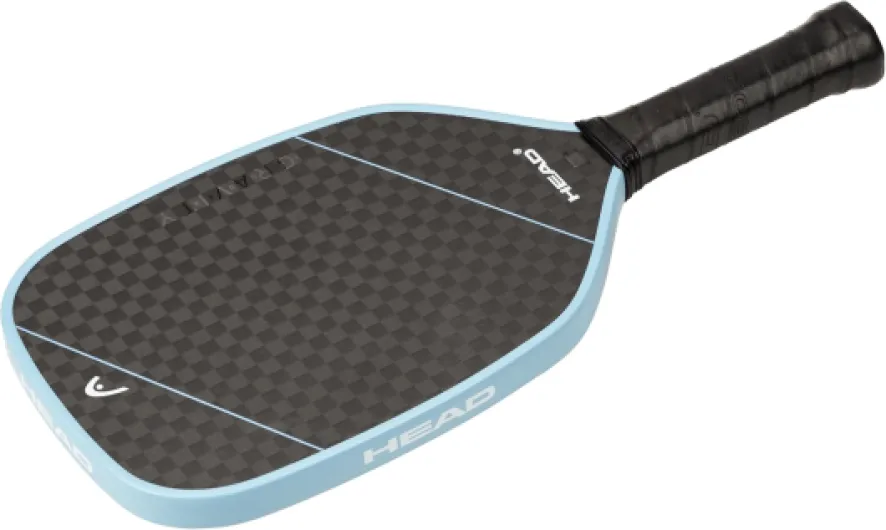
The elongated sweet spot shape is the first thing you notice. It’s not a crazy long blade like some extreme elongated paddles, but it’s definitely taller and a bit narrower than a standard widebody. Width is about 7 1/2 inches, so you lose a bit of horizontal forgiveness but gain reach vertically. At the kitchen, that extra reach actually helped me on a lot of high backhand volleys where I normally feel late. On the flip side, I felt a few more mishits on wide dinks because there’s simply less paddle out to the sides.
Balance is listed at 228 mm, and in hand it does feel slightly head-biased. Not a sledgehammer, but you feel the weight up top, especially when you’re late on a fast hands exchange. Once I warmed up, I liked the stability on blocks and counters. When someone ripped a drive at me, the paddle didn’t twist as much as some lighter, more even‑balanced models I’ve used. But if you’re coming from a lighter, head‑light paddle, you’ll need a couple of sessions to adjust to the swing weight.
Visually, it’s typical HEAD: clean, kind of sporty, nothing flashy. I’m not going to pretend the design will change your life. It looks fine, it doesn’t look cheap, and it doesn’t scream for attention. The face texture is visible and you can feel it when you run your fingers over it, which is what you want from a raw carbon surface. The handle length is in the “long” category, which is nice if you use two hands on the backhand. I could comfortably hit a two‑handed backhand without feeling cramped.
Overall, the design is practical more than pretty. The shape helps with reach and stability, but you do pay for it with a slightly smaller margin for error on the sides and a bit more fatigue if you’re not used to the swing weight. If you like compact, fast paddles at the net, this is not it. If you want reach and a solid wall in front of you, the design choices make sense.
Handle, grip size mess, and overall feel
Comfort is a mixed bag here. On one hand, the paddle has a soft butt cap and a fairly cushioned grip, which makes it pleasant to hold during long sessions. The handle length is good for both one‑handed and two‑handed backhands, and there’s no weird ridge or sharp edge digging into your palm. I played two 2‑hour sessions back‑to‑back and never felt any hot spots or blisters starting, which is already better than some stock grips I’ve had to re‑wrap right away.
Now, the problem: grip size consistency. The official spec says 3 7/8", which is a nice in‑between size that you can always build up with an overgrip if needed. But one of the verified Amazon reviews mentions getting a 4 1/8" grip twice, which is a big jump. If you have smaller hands or like a thinner handle, that’s annoying. My unit felt closer to the listed 3 7/8", but it’s clear that quality control on grip size isn’t perfect. If you’re picky about grip circumference, you might want to be ready to swap the grip or add/remove overgrips.
Weight‑wise, at around 8.6 oz with a slightly head‑heavy balance, you feel it in the arm after a while. During fast hands exchanges, the paddle isn’t as quick as lighter, more even‑balanced models. I adapted after a session or so, but if you have elbow or wrist issues, this might not be the most forgiving option. The upside is that the weight helps with stability and reduces vibration on off‑center hits. I didn’t feel any sharp shock or buzzing in the handle, which is good for joint comfort.
Overall, I’d say comfort is decent but not perfect. The handle shape and soft butt cap are positives, and the general feel is stable and not harsh. But the weight and potential grip size inconsistency can be real downsides for some players. If you’re sensitive to those things, factor in the cost of possibly changing the grip and maybe adding a dampener or overgrip to dial in the feel.
Raw carbon, thick core, and what it means on court
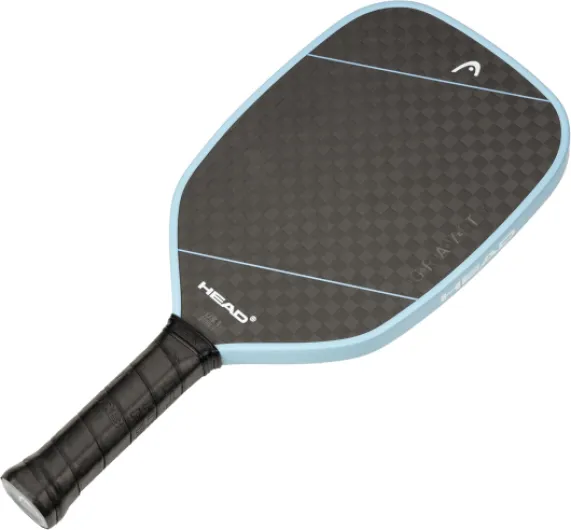
The big talking point here is the 12k raw carbon surface. Compared to the more common 3k or 6k faces, 12k usually feels a bit stiffer and more solid, and that matches what I felt. The surface has that dry, grippy feel you expect from raw carbon, and it bites the ball pretty well on topspin rolls and cut dinks. It’s not the most aggressive spin paddle I’ve ever used, but it’s definitely above average. If your technique is decent, you’ll have no issue getting the ball to dip and kick.
The 17 mm PP honeycomb core does what it’s supposed to do: soften impact and give you control on softer shots. On drops from the baseline, the ball doesn’t fly on you unless you swing like crazy. I could aim for the opponent’s feet and feel confident the ball would land where I wanted. The trade‑off is obvious: when you try to hit a hard drive or a speed‑up from a low ball, you don’t get a ton of help from the paddle. You have to supply the power yourself. Compared to some thermoformed 16 mm paddles I’ve used, this HEAD feels a bit more muted and a bit less “poppy.”
The frame and shaft are carbon fibre as well, which helps with stiffness and durability. I banged it a few times on the court and on my partner’s paddle (yeah, bad switch) and it didn’t chip right away, which is reassuring. Still, it’s not bulletproof. Like most carbon paddles, if you baby it, it’ll look good for a while; if you’re rough, you’ll see scuffs and marks, especially on the edges.
In short, the materials are solid and aligned with a control‑first concept: thick core, raw carbon, and a stiff frame. You get good spin, good touch, and a more muted, controlled feel. If you’re hunting for a paddle that feels springy and explosive, this is not it. If you like the sensation of really grabbing the ball on the face and placing it, the material combo makes sense and feels consistent with what HEAD is trying to do here.
Build quality and how it holds up
In terms of build quality, the Gravity Tour EX feels solid in the hand. The carbon frame doesn’t flex weirdly, and there were no rattles, loose sounds, or obvious glue issues on the unit I used. After a couple of weeks of play, including some unintentional paddle clashes and a few scrapes against the court, the structure still felt tight. No soft spots, no sudden dead zones, and the edge guard stayed firmly in place.
The raw carbon face will, like most raw carbon paddles, start to show cosmetic wear pretty fast. You’ll see ball marks, light scuffs, and a bit of shine developing in the main contact area. That’s normal and doesn’t mean the paddle is dying. The texture was still doing its job for spin after my test period. Long‑term, raw carbon faces can slowly lose some bite, but that’s true across brands, not just HEAD.
One concern is quality control around specs, especially grip size, as shown in that 1‑star Amazon review where the buyer got the wrong grip twice. That’s not a structural durability issue, but it does say something about production consistency. If they can mess up grip size, I can’t say with full confidence that every single unit will be perfectly identical in weight and balance either, even if mine was fine. The good news is there’s a 1‑year manufacturer warranty, which at least gives you some backup if something obvious fails.
Overall, I’d rate durability as pretty solid for the category. It feels like a proper brand paddle, not a cheap knockoff. You’ll get the usual cosmetic wear, and you should still treat it with some care (don’t slam it on the ground, don’t leave it cooking in a hot car), but there’s nothing that screams “fragile.” Just keep in mind that any performance paddle, especially raw carbon ones, is a consumable item if you play a lot. This one seems in the normal range for that.
Control beast, modest power, and solid spin
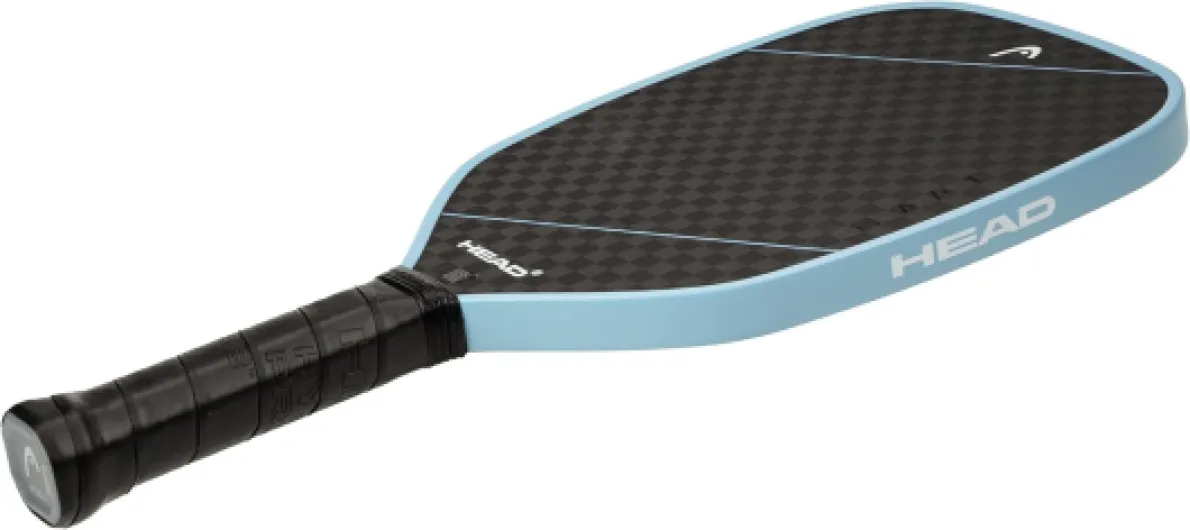
On court, the Gravity Tour EX behaves like a control‑first paddle with decent spin and just enough power to stay dangerous if your technique is there. At the kitchen, it shines. Dinks feel predictable, the ball doesn’t jump off the face unexpectedly, and you can really focus on height and depth without constantly correcting. Resetting hard drives into the kitchen was where I liked it the most: the 17 mm core and the extra stability from the weight made it easier to just absorb pace and drop the ball back short.
On serves and third‑shot drops, it’s the same story. If you like to hit spinny serves, the raw carbon gives you good grip on the ball. I got a nice mix of topspin and sidespin without feeling like I had to swing out of my shoes. Third‑shot drops from deep in the court were reliable once I adjusted to the slightly muted feel. There’s not a huge trampoline effect, so you really control the trajectory with your swing, which I liked. But if you come from a bouncier 13–14 mm paddle, you might initially leave a few drops short.
Where it feels a bit lacking is pure power and speed at the net. Drives from the baseline are fine if you commit to the swing, but you don’t get much free pop. Speed‑ups and counters at the kitchen are accurate, but you need good timing and a firm wrist to really put the ball away. Compared to some thermoformed power paddles I’ve tried, finishing points felt a bit harder with this HEAD. You place the ball well, but you don’t always get that heavy, penetrating shot unless your mechanics are clean.
Spin is solid but not insane. The raw carbon texture helps, and I could get enough rotation on rolls and slices to bother people at my level. It’s not the grippiest paddle on the market, but it’s clearly better than smooth composite faces or older graphite paddles. Overall, performance is very coherent: if you value control, placement, and stability more than raw power, you’ll like how it plays. If you’re hunting for easy winners and explosive drives, you’ll probably call it a bit too tame.
What this paddle actually is on paper
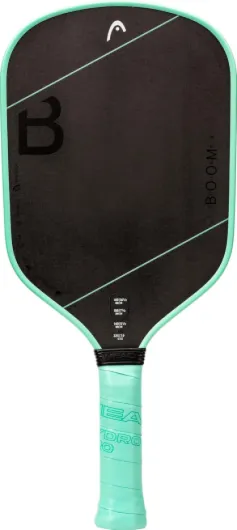
On paper, the HEAD Gravity Tour EX 2025 is pretty straightforward: 17 mm thickness, elongated head, 12k raw carbon surface, around 8.6 oz, and a listed grip size of 3 7/8". That thickness already tells you the story: it’s meant for control and feel, not for people trying to blast winners from the baseline. The elongated sweet spot is supposed to give you more reach and a taller hitting zone, which is handy for blocking drives and reaching a few extra balls at the kitchen line.
The face being 12k raw carbon is interesting. Most paddles I see around me are 3k or 6k raw carbon, so 12k usually means a slightly stiffer, more stable feel and a bit less trampoline effect. In practice, the paddle feels firm but not harsh. You don’t get that pingy, hollow sound some cheaper paddles have. It’s closer to the muted, solid feel of the big-name control paddles on the market. The core is classic PP honeycomb, nothing fancy there, but combined with the 17 mm thickness it does its job for soft shots and resets.
The listed weight is a bit confusing, though. The tech sheet says 8.6 oz, but the generic Amazon data also lists 8 oz. The one I used was closer to the 8.6 mark on a scale, which makes sense because it feels slightly head-heavy but still manageable. If you’re sensitive to weight, this matters: it’s not a featherweight paddle, and after a couple of long sessions my wrist definitely felt it more than with a 7.8–8.0 oz stick.
Target audience according to the brand is intermediate players, and that tracks. Beginners might find it too muted and unforgiving on mishits, and advanced players who like to hit hard might call it underpowered compared to thermoformed power paddles. But if you’re in that middle zone and you want to build a more control‑oriented game, the spec sheet lines up with that goal. Just be aware that what’s written (especially grip size) doesn’t always match what people are actually receiving, judging by user reviews.
Pros
- Very good control and touch thanks to 17 mm core and muted feel
- Raw carbon surface offers solid spin and predictable ball grip
- Elongated shape and long handle help with reach and two‑handed backhands
Cons
- Limited free power; you have to generate most of it yourself
- Potential grip size inconsistency and relatively heavy, slightly head‑heavy feel
Conclusion
Editor's rating
The HEAD Gravity Tour EX 2025 is a control‑oriented, elongated raw carbon paddle that does what it says: it gives you a stable, predictable feel with good touch at the kitchen and enough spin to shape your shots. The 17 mm core and 12k raw carbon face work well together if your priority is resets, dinks, and precise drops rather than raw power. It feels solid in the hand, the long handle suits two‑handed backhands, and the overall build quality on my unit was reassuring.
On the downside, it’s not a power paddle, and you won’t get much free pop. You have to swing if you want to hit through people. The weight and slightly head‑heavy balance can also be tiring if you’re used to lighter paddles. And the grip size inconsistency reported by a buyer is something to keep in mind, especially if you’re very sensitive to handle thickness. Combined with a mid‑to‑high price and a modest 3/5 Amazon rating, it’s clearly not a perfect deal.
Who is it for? Intermediate players who want to build a solid, control‑based game, like to play a lot at the kitchen, and appreciate a longer shape and raw carbon feel. Who should probably skip it? Beginners looking for easy power, advanced hitters who want a rocket, and anyone who needs a super quick, ultra‑light paddle for fast hands battles. If you fall into the control‑focused intermediate group and you don’t mind paying a bit extra for the HEAD name and design, it’s a pretty solid but not mind‑blowing choice.