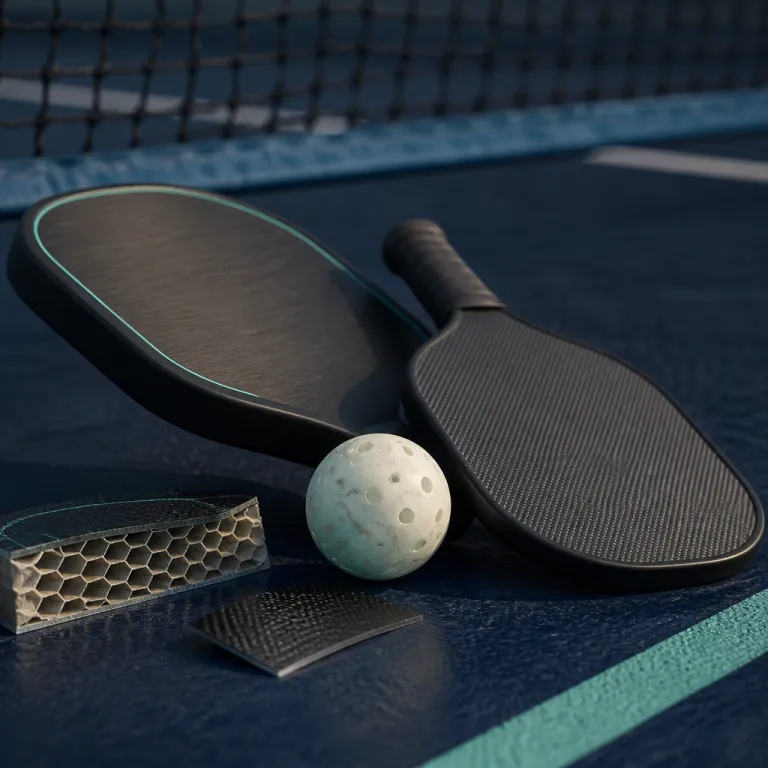
Why pickleball paddle design matters for every level of player
A modern pickleball paddle is no longer just a flat tool. Thoughtful pickleball paddle design now balances power, control and spin so that players can shape every ball with intention. The best paddles translate your technique into reliable performance on any court.
Engineers work on the paddle face, core and grip to tune how paddles behave under pressure. A carbon fiber hitting surface, a foam core or a hybrid layup can change how a power paddle launches the ball and how wide the sweet spot feels for different players. When you compare one pickleball paddle with another, you are really comparing dozens of small design decisions that affect play in subtle but important ways.
For a person seeking information, the first step is to understand how paddle design connects to your own style of play. If you like to attack, you will want more power and spin from your pickleball paddles without losing enough control to keep the ball in. If you prefer patient rallies, you may value a softer feel, a forgiving sweet spot and a grip that lets you reset balls calmly at the kitchen line.
Price also reflects these design choices, because advanced carbon fiber and precision foam cost more to manufacture. A budget paddle can work for casual play, but the best pickleball paddles usually justify a higher price through better power control and more durable construction. Reading a detailed paddle review before you buy helps you see whether the design really matches the marketing claims.
Brands such as Selkirk pickleball, CRBN and Vatic Pro have pushed paddle design forward with new cores and surface textures. Their paddles show how a pro level focus on spin and control can benefit everyday players who simply want a more predictable ball response. As one 4.0 player put it after switching to a raw carbon model, “I don’t hit harder, but my misses are smaller.”
Even playful models, such as a jelly bean themed court paddle, still rely on serious engineering under the graphics. The design of the handle, the balance of the paddle and the stiffness of the face all influence how confidently you swing on court. Once you start noticing these details, you will never look at a pickleball paddle the same way again.
Core materials, foam technology and the search for power control
At the heart of every pickleball paddle lies its core material. Traditional polymer honeycomb remains common, but newer foam core constructions and hybrid builds now give designers more ways to tune power and control. The right core can turn an ordinary paddle into a precise instrument that rewards clean contact with a larger sweet spot.
Foam filled designs, sometimes called foam perimeter or full foam core paddles, add stability around the edges. This extra foam reduces vibration, enlarges the effective sweet spot and can soften the feel when the ball hits off center. Players who struggle with mishits often find that these paddles make the court feel wider and more forgiving.
Brands such as CRBN have experimented with crbn trufoam concepts, where a specialized foam works with a carbon fiber face. Instead of a vague trufoam barrage of features, the idea is straightforward: a denser foam ring around the edge and a tuned core density in the middle help keep energy transfer more consistent across the face. When you read a paddle review of a crbn trufoam model, pay attention to how testers describe the feel on soft shots versus drives.
Vatic Pro has also entered the foam conversation with paddles that emphasize stability and spin. Their power paddle options use dense cores to keep the ball on the face slightly longer, which can increase spin without sacrificing too much power. Many advanced players compare Vatic Pro paddles directly with Selkirk pickleball and CRBN models when deciding which design best suits their game.
Selkirk continues to refine its own foam and polymer blends, especially in higher end Selkirk pickleball lines aimed at pro level play. These paddles often command a premium price, but they offer a consistent feel across the face that serious players value. In independent play tests reported by major review sites, Selkirk’s tour level paddles are frequently described as notably stable and forgiving.
If you already own a solid paddle but want to train more efficiently, consider pairing it with a portable practice system. A dedicated rebounder or portable net, such as those featured in this guide to top portable practice systems for pickleball, lets you feel how your paddle design behaves under many repetitions. Over time, you will sense whether your current core and foam configuration truly match your style of play.
Surface technology, carbon fiber faces and the science of spin
The surface of a pickleball paddle is where design meets the ball most directly. Textured carbon fiber, fiberglass and composite blends all change how much spin you can generate on serves, dinks and drives. For many players, the best pickleball paddle is the one that offers reliable spin without feeling too harsh.
Carbon fiber faces have become a benchmark because they combine stiffness, durability and a crisp feel. When paired with a responsive core, a carbon fiber surface can give you both power and control, especially on aggressive topspin drives. Many power paddles now use raw carbon fiber to maximize friction with the ball while staying within official surface rules.
Some manufacturers highlight specific technologies, such as crbn trufoam under a carbon fiber layer, to show how the face and core interact. Instead of relying on marketing slogans, look for clear explanations of how surface texture, layup thickness and core density influence dwell time, which is the brief moment when the ball stays on the paddle. Longer dwell often means more spin and control, while shorter dwell usually favors raw power.
When you read a detailed paddle review, look for comments about spin on third shot drops and roll volleys. If testers say the paddle grabs the ball well, that usually reflects a successful paddle design on the surface level. Conversely, if they mention the ball sliding or launching unpredictably, the design may not suit players who rely on heavy spin.
Independent tests of raw T700 carbon fiber paddles, such as those featured in this analysis of a raw T700 carbon fiber pickleball paddle set, illustrate how surface roughness and core thickness interact. A 16 millimetre core can soften the feel while still allowing the face to bite the ball for spin. In comparative testing, textured T700 faces have been shown to produce noticeably higher spin rates than smoother composite surfaces under identical swing speeds.
Graphics, including fun themes such as jelly bean patterns, sit on top of these performance layers but do not drive performance by themselves. What matters more is how the paddle feels when you swing on court and whether the ball goes where you intend. Over time, you will learn to judge pickleball paddles less by appearance and more by how their surface technology supports your style of play.
Shape, weight, grip and how a paddle feels in your hand
Beyond core and surface, the overall shape and weight of a pickleball paddle strongly influence how it plays. Elongated paddles offer more reach and power, while wider shapes provide a larger sweet spot and extra forgiveness. The best choice depends on whether you prioritize court coverage, quick hand battles or precise dinking.
Weight distribution matters as much as total weight, because head heavy paddles swing differently from evenly balanced paddles. A head heavy power paddle can help you drive the ball deep, but it may feel sluggish during rapid exchanges at the net. Lighter, more balanced paddles usually favor control and quick reactions, especially for players who spend much time at the kitchen line.
The grip is another critical part of paddle design that many players underestimate. A grip that is too large can reduce wrist mobility and limit spin, while a grip that is too small can cause tension and inconsistency. When you test pickleball paddles, pay attention to whether the grip lets you relax your hand while still feeling secure.
Some brands include a free gift such as an overgrip or paddle cover, which can slightly change the feel in your hand. An overgrip adds a small amount of thickness and tackiness, which may improve control for some players. If you adjust the grip, remember that even small changes can alter how the paddle swings and how the ball leaves the face.
Professional players such as Ben Johns work closely with designers to fine tune shape, weight and grip dimensions. Their pro level paddles often become templates for recreational players who want similar power and control characteristics. One tester described a Ben Johns style elongated model as “a laser on drives but surprisingly soft on resets,” which captures how shape and balance interact.
To make these tradeoffs easier to compare, use a simple on court checklist:
- Weight and balance: Does the paddle feel whippy, neutral or head heavy during fast exchanges?
- Core and thickness: Do blocks and drops feel cushioned or springy when you defend hard drives?
- Face material: Can you reliably shape topspin and slice on serves, thirds and roll volleys?
- Grip size and comfort: After a full session, do your hand, wrist or forearm feel relaxed or fatigued?
For advanced players comparing high end options, curated guides to top advanced player paddles can save time. These overviews often explain how each paddle feels in real match play, not just in practice. Use that information to narrow your choices before you invest in a detailed personal paddle review session on court.
Brand ecosystems, signature lines and how to read a paddle review
Major brands now build entire ecosystems around pickleball paddle design. Selkirk pickleball, CRBN, Vatic Pro and Holbrook all offer families of paddles that share core technologies but target different players. Understanding these lineups helps you choose the best model for your budget and style of play.
Selkirk focuses heavily on consistent feel and clear segmentation between power paddles and control paddles. Their higher end paddles often feature advanced cores and carbon fiber faces, which justify a higher price for players who demand pro level performance. When you compare Selkirk models, look closely at how each one balances power, spin and control across the court.
CRBN has built its reputation on raw carbon fiber faces and crbn trufoam inspired cores. These paddles aim to give players a connected feel to the ball, especially on touch shots and spin heavy drives. Many paddle review articles highlight how CRBN paddles reward clean technique with both power and precision.
Vatic Pro entered the market with a strong emphasis on performance at a competitive price point. Their paddles often appeal to players who want a power paddle feel without paying the very highest prices. A careful review of Vatic Pro models usually reveals solid power control and impressive spin for the cost.
Holbrook has experimented with creative graphics and accessible performance, including models such as the Holbrook Fuze. The Holbrook Fuze line aims to give recreational players a blend of power and control in a visually appealing paddle design. When you read a paddle review of a Holbrook Fuze paddle, focus on whether the feel and sweet spot match your expectations for your level of play.
Across all these brands, the most useful paddle reviews describe specific on court situations rather than vague impressions. Look for comments about how the paddle handles fast exchanges, high balls, low dinks and defensive blocks. Those details reveal whether the design will truly support your own style of pickleball play.
Matching pickleball paddle design to your game and long term development
Choosing a pickleball paddle is not only about immediate comfort. The design you select can shape how your technique evolves over months of regular play on court. A paddle that hides flaws with excess power may feel fun at first but limit your long term growth.
For newer players, a balanced paddle with a generous sweet spot and moderate power control usually works best. Such paddles forgive small timing errors while still rewarding clean contact with better depth and spin. This approach lets you focus on footwork, ball tracking and strategy instead of constantly fighting your equipment.
Intermediate players often benefit from paddles that offer slightly more power and spin without losing touch. A carbon fiber face with a stable foam core can provide that blend, especially when paired with a comfortable grip size. As your skills improve, you will notice how small design differences affect your confidence in tight matches.
Advanced players and aspiring pro competitors may choose more specialized power paddles or control paddles. A stiff, elongated power paddle can help you punish high balls, while a softer, wider paddle might excel in hand battles and resets. The key is to select a pickleball paddle whose design amplifies your strengths without exposing your weaknesses too severely.
Whatever your level, revisit your paddle choice periodically as your game changes. A paddle that once felt like the best pickleball option for you may start to feel limiting as your spin, control and tactical awareness improve. Regularly reading updated paddle reviews and testing new designs keeps your equipment aligned with your evolving style of play.
Finally, remember that no free gift, flashy jelly bean graphic or marketing slogan can replace honest on court testing. Take your time to feel how the ball leaves the face, how the grip sits in your hand and how the paddle responds under pressure. When paddle design, your technique and your goals all align, the entire court opens up in front of you.
Key statistics on pickleball paddle design and equipment trends
- Industry associations tracking racket sports participation report that pickleball has grown rapidly in the United States over a recent multi year span, which has driven accelerated innovation in pickleball paddle design as brands compete for new players.
- Retailer sales data indicates that carbon fiber faced paddles now account for a substantial share of performance paddle purchases, reflecting strong demand for paddles that combine power, spin and control in a single design.
- Market analyses show that premium pickleball paddles in higher price brackets represent a growing share of revenue, even though they remain a minority of total units sold, suggesting that serious players are willing to pay more for advanced cores and foam technologies.
- Player surveys conducted by equipment review platforms consistently rank feel, sweet spot size and grip comfort as the top factors influencing satisfaction with a paddle, ahead of brand name or cosmetic design.
- Testing data from independent labs has found that textured carbon fiber surfaces can increase measured spin rates compared with smoother composite faces, when all other paddle variables remain constant.
FAQ about pickleball paddle design
How do I choose the right weight for my pickleball paddle ?
Lighter paddles, typically under 220 grams, favor quick reactions and control, while heavier paddles above that range provide more power on drives and serves. Most players settle in the middle, choosing a weight that feels stable without causing arm fatigue. If you are unsure, start with a mid weight paddle and adjust later based on how your arm and shoulder feel after long sessions.
Is a carbon fiber paddle always better than a composite paddle ?
Carbon fiber paddles usually offer a crisper feel, strong spin potential and good durability, but they are not automatically better for every player. Some composite paddles provide a softer touch and lower price, which can suit beginners or players with arm sensitivity. The best choice depends on your budget, preferred feel and whether you prioritize power, control or comfort.
What does the core thickness of a paddle change in real play ?
Thicker cores, around 16 millimetres, generally soften the feel, enlarge the sweet spot and improve control on soft shots. Thinner cores, closer to 13 millimetres, often feel more powerful and direct but can be less forgiving on mishits. Your ideal thickness depends on whether you value touch at the net or maximum depth on drives.
How important is grip size in pickleball paddle design ?
Grip size is crucial because it affects comfort, control and injury risk. A grip that is too large can limit wrist motion and reduce spin, while a grip that is too small can cause you to squeeze too hard and strain your forearm. Measure your hand or test several paddles, then choose the smallest grip that still feels secure during aggressive swings.
When should I replace my pickleball paddle ?
You should consider replacing your paddle when the surface loses texture, the core feels dead or the frame shows cracks that affect performance. Frequent players who compete regularly often replace paddles every one to two seasons, while casual players can use the same paddle longer if it still feels lively. If your usual shots start falling short or losing spin despite good technique, your paddle design may no longer be performing at its original level.