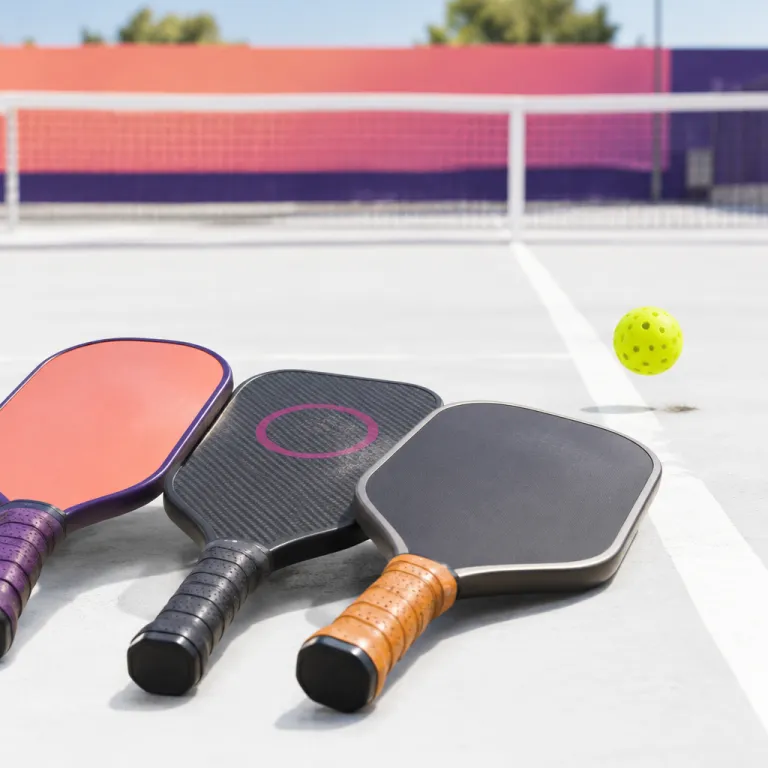
What defines pickleball paddles for advanced players
Serious players quickly realise that not every paddle suits high level play. A modern pickleball paddle for advanced players must translate small technical adjustments into predictable power and precise control on every court. When you move from recreational pickleball to tournament brackets, the margin for error shrinks and the need for a reliable court paddle with a consistent sweet spot becomes non negotiable.
At this stage, the best pickleball paddles feel like extensions of your hand. You expect a paddle to offer effortless power pop on drives, yet still allow delicate control spin on dinks and resets near the kitchen line. Advanced players judge paddles by how well they maintain power control under pressure, not just by how impressive the power feels in a casual warm up rally.
Performance also depends on how the paddle interacts with your playing style. A control focused player wants a predictable sweet spot and high forgiveness, while an aggressive baseliner may prefer power paddles that emphasise power spin from the back of the court. The most effective pickleball paddles for advanced players balance power, spin, and control so you can finish points efficiently instead of simply keeping the ball in play.
Core materials, raw carbon faces, and why they matter for control
Under the surface of every pickleball paddle lies a core that shapes feel and power. Polymer honeycomb cores dominate the current paddles list for advanced players because they blend forgiveness with enough pop to finish points at the net. Denser cores usually give more power control on drives, while softer constructions offer better touch for resets and drop shots.
The face material has become just as important as the core for high level players. Raw carbon fiber faces, now common on many of the best pickleball paddles, create a textured surface that enhances spin and improves control spin on aggressive topspin rolls. When raw carbon is paired with a stable core, the paddle can generate heavy power spin without sacrificing the ability to block hard drives back into the court with accuracy.
Shape and thickness also influence how a paddle behaves in real matches. Thicker paddles often provide extra forgiveness and a larger sweet spot, while thinner models feel faster in the hand and can add a touch more power pop on counterattacks. If you combine a raw carbon face with a balanced core and a shape that matches your playing style, you get a court paddle that helps you react quickly and move confidently, especially when paired with supportive footwear such as the Diadem Court Burst described in this analysis of pickleball footwear performance.
Shape, elongated designs, and the real size of the sweet spot
Shape is the next major variable when comparing pickleball paddles for advanced players. Traditional shapes give a wider sweet spot and more forgiveness, which helps when you defend fast drives or stretch wide on the court. Elongated paddles trade some width for extra reach and leverage, which can increase power and power spin on serves and overheads.
For many high level players, an elongated pickleball paddle feels like a lever that multiplies power pop. The extra length can help you finish points earlier, especially when you step into the court and attack high balls above shoulder height. However, the narrower spot means mishits near the edge lose both control and power, so you must decide whether reach or margin for error matters more to your playing style.
Manufacturers now publish more detailed paddles list specifications, including measured sweet spot locations and twist weight. These data points help advanced players understand how stable a paddle feels when contact is off center, which directly affects control spin on defensive blocks. If you care about spin potential, it is also worth reading independent testing such as this breakdown of the USA Pickleball spin rate test ceiling, because it explains how surface texture and design choices influence the maximum spin you can legally generate.
Balancing power, control, and spin for different playing styles
Every advanced player eventually faces the same question when choosing paddle models. Should you prioritise raw power paddles that crush the ball, or control oriented paddles that place the ball on a coin at the kitchen line. The honest answer is that the best pickleball paddles for advanced players sit somewhere between these extremes and align with your natural tendencies.
If you are an aggressive attacker who loves to drive from the baseline, a paddle with strong power pop and high power spin potential will feel natural. These paddles help you turn short returns into winners and finish points quickly, especially when you step inside the court and attack with confidence. Just ensure that the paddle still offers enough control spin and forgiveness to handle fast exchanges at the net, because pure power without stability often leads to unforced errors.
Control focused players, by contrast, usually prefer a court paddle with a softer feel and a generous sweet spot. They rely on precise dinks, patient resets, and smart angles to outmaneuver opponents rather than simply overpower them with best power. For this group, the best pickleball choice is often a raw carbon control paddle that offers reliable spin and touch, yet still has enough hidden power to finish points when a high ball finally appears.
Signature models, the selkirk boomstik, and what pros really use
Signature paddles endorsed by pro players can be helpful reference points when you build your own paddles list. The Selkirk Boomstik, for example, targets advanced players who want explosive power without losing too much control at the kitchen. Its elongated profile and tuned core aim to create a high level blend of power, pop, and forgiveness that suits aggressive doubles specialists.
Watching how professional players use these paddles on court reveals subtle differences in playing style. Some pros rely on the Boomstik style of power paddles to attack relentlessly, while others choose more control oriented pickleball paddles that emphasise touch and placement over sheer power. When you analyse these patterns, you see that the best pickleball setup is rarely about one single pro model, but about how the paddle complements footwork, anticipation, and tactical decision making.
Recreational players sometimes assume that paddles Don a famous name automatically make them better, yet that is only partly true. A Selkirk Boomstik or similar pro inspired pickleball paddle can raise your ceiling, but only if its balance of power control and spin matches your strengths. Before you commit, test several options from a curated paddles list, paying attention to how consistently you can finish points under pressure rather than how impressive one or two highlight shots feel.
Practical checklist for choosing paddle models at a high level
When you stand in a pro shop or browse an online list of pickleball paddles for advanced players, the options can feel overwhelming. A simple framework helps you compare each paddle objectively and match it to your current level and goals. Start by ranking how much you value power, spin, and control on a scale from one to ten, then look for models whose specifications support that profile.
Weight is the first number to check when choosing paddle candidates. Heavier paddles usually deliver more power pop and stability, which helps on blocks and counterattacks, while lighter paddles favour quick hand battles at the net and fast reaction volleys. Grip size also matters, because a grip that is too large reduces wrist mobility and can limit your ability to generate power spin and delicate control spin on flicks and rolls.
Finally, test how the paddle feels in real match situations rather than only in casual drills. Pay attention to whether the sweet spot feels generous enough when you are tired, whether the forgiveness level keeps mishits in play, and whether you can reliably finish points when you get a high ball. If a particular court paddle helps you play your natural game with fewer forced adjustments, it is usually the best power and control choice for your long term development, especially when combined with supportive shoes such as those analysed in this feature on court performance footwear.
Key statistics about pickleball paddles for advanced players
- Market research from the Sports & Fitness Industry Association reported that pickleball participation in the United States grew by more than 150 percent over a recent three year period, which has driven rapid expansion in the range of pickleball paddles aimed at advanced players.
- Independent lab testing by several paddle review organisations shows that raw carbon faced paddles can increase measured spin rates by roughly 10 to 20 percent compared with smooth fiberglass faces, which explains their popularity among high level players who rely on heavy topspin and control spin.
- Analysis of professional tournament equipment lists indicates that elongated paddles account for a significant minority of pro level choices, often between 30 and 40 percent of the field, reflecting the growing demand for extra reach and leverage on attacking shots.
- Consumer surveys from major retailers suggest that players moving from intermediate to advanced levels are willing to spend approximately 30 to 50 percent more on a primary pickleball paddle, prioritising durability, consistent sweet spot performance, and specialised power control characteristics.
- Testing of paddle weight preferences shows that many advanced doubles players cluster around 215 to 235 grams, balancing enough mass for stability and power pop with sufficient maneuverability for fast exchanges at the non volley zone.
FAQ about pickleball paddles for advanced players
How do I know when I am ready for an advanced level paddle
You are usually ready for an advanced level pickleball paddle when you can rally consistently, control basic shot placement, and feel limited by your current equipment rather than by technique alone. If you notice that your paddle twists on off center hits, lacks power when you swing fully, or cannot generate the spin you intend, upgrading can unlock more precise power control. Tournament participation or regular play against strong opponents is another clear sign that a higher performance court paddle will help your development.
Is an elongated paddle always better for power and reach
An elongated paddle often provides more reach and can increase leverage, which translates into extra power on serves, overheads, and drives. However, the narrower shape slightly reduces the width of the sweet spot, so mishits near the edges lose more control and forgiveness than on a standard shape. Elongated designs are best for advanced players who value reach and attacking potential and are comfortable with precise timing and clean contact.
Should I prioritise raw carbon faces for maximum spin
Raw carbon faces are popular among advanced players because their textured surfaces grip the ball and enhance spin, especially on topspin rolls and heavy slice serves. If your playing style relies heavily on spin to control depth and angles, a raw carbon pickleball paddle can provide a noticeable advantage. Players who focus more on flat drives and simple blocks may still benefit from carbon, but they can also perform well with high quality fiberglass or composite faces.
What weight range works best for high level doubles play
Most high level doubles players settle on paddles in the 215 to 235 gram range, which balances stability and maneuverability. Heavier paddles near the top of this range offer more plow through and power pop on counters, while lighter options feel quicker in hand battles at the net. Your ideal weight depends on arm strength, injury history, and whether you prefer to dominate with power or with quick reactions and control spin.
How often should advanced players replace their primary paddle
Advanced players who compete regularly and train several times per week often replace their primary pickleball paddle every 9 to 18 months, depending on intensity and playing surface. Over time, cores soften, edges chip, and faces lose some texture, which reduces both power and spin potential. If you notice a dull feel, shrinking sweet spot, or reduced ability to finish points, it is usually time to test new paddles and update your setup.