Why USA Pickleball moved from surface roughness to spin rate
The USA Pickleball spin rate test 2100 RPM rule finally matches what players actually feel on court. Old checks for surface roughness and a simple coefficient of friction number tried to police spin, yet they never fully captured how a pickleball paddle behaved on a live ball. A lab could measure a roughness coefficient on a flat surface, but it could not see how a raw carbon face, a thermoformed edge, and a lively core combined to send a third shot diving into the kitchen.
Under the new USA Pickleball spin rate framework, usap uses a direct performance metric instead of a proxy, so the test measures the spin rate on the ball itself rather than just the paddle surface. The official rate test caps measured pickleball spin at a spin limit of 2 100 RPM, which means any certified paddle must keep its average rpm under that ceiling across standardized impacts. That is a huge shift for both amateur and pro players, because the standard now cares less about how a paddle looks under a microscope and more about how it actually plays in a rally.
Previously, equipment standards leaned heavily on surface roughness thresholds and a maximum coefficient friction value, which encouraged manufacturers to game the system with clever textures. Some paddles certified under the old standards used micro ridges or sprayed grit that technically passed the surface test, yet they produced spin rates that felt closer to a table tennis rubber than a traditional pickleball face. The USA Pickleball spin rate test 2100 RPM policy closes that loophole by tying approval directly to a measurable spin rate, not just to a static surface reading.
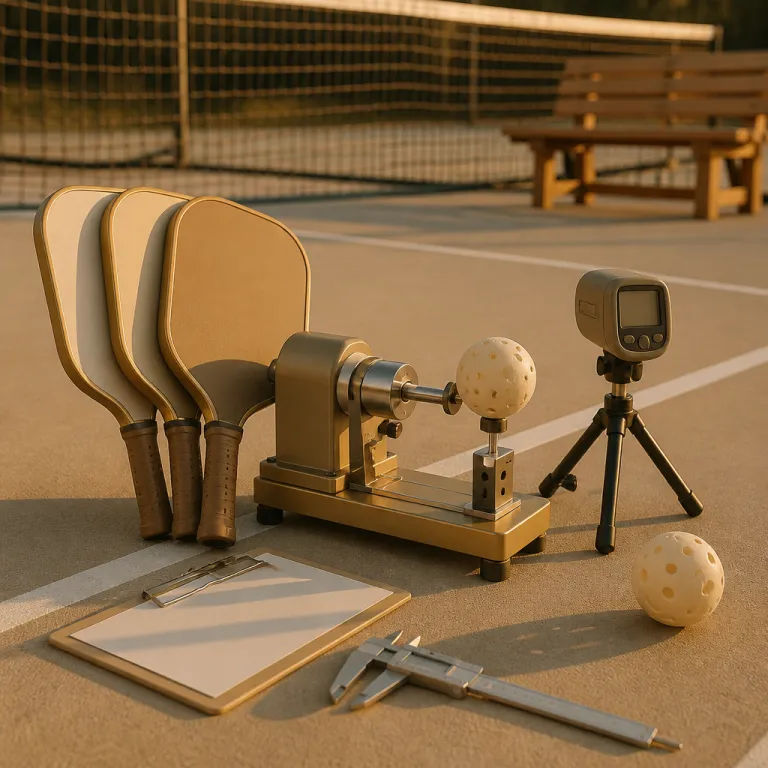
The technology behind this change matters as much as the number itself, because usap partnered with Image Systems in Sweden to deploy a dual camera PaddleVision setup that tracks the ball before and after impact. That dual camera system calculates rpm and spin rate with high precision, giving usa officials repeatable data instead of subjective judgments about texture or feel. When a paddle fails the new test, it will be because the measured pickleball spin exceeds the spin limit, not because an inspector thought the surface felt too gritty.
For years, players complained that some approved paddles seemed to generate more spin than the standards intended, especially as raw carbon faces became dominant. Those complaints were not just about pros in PPA MLP events ; they came from league captains in Phoenix, club organizers in Raleigh, and amateur tournament directors who saw rallies turning into pure spin battles. The USA Pickleball spin rate test 2100 RPM rule is a direct response to that feedback, and it signals that usa pickleball wants a clearer balance between power, control, and spin for the entire paddle list.
There is also a governance angle here, because usap upa style coordination across tours and local organizers depends on predictable rules. When the governing body sets a transparent spin rate limit and publishes an approval list of paddles certified under that limit, it reduces friction between rec centers, tournament directors, and manufacturers. A clear standard lets players trust that an approved paddle on the official approval list will behave within the same spin envelope, whether they are playing a ladder league in Denver or a sanctioned bracket in Naples.
Some manufacturers quietly preferred the old surface roughness regime, because it allowed more wiggle room for aggressive grit that still passed a lab scan. Under the new rate test, a company cannot hide behind a compliant roughness coefficient if its pickleball paddle is producing 2 400 rpm on a topspin drive. That is why the USA Pickleball spin rate test 2100 RPM ceiling is the most consequential rule change since the crackdown on extreme thermoformed designs, and it will reshape how paddles are engineered from core to surface.
For players, the key takeaway is simple yet profound ; the standard now measures what wins points, not what looks legal on paper. If your current paddles certified under the old rules rely heavily on ultra aggressive texture for spin, they may sit right on the edge of the new spin limit. The next sections break down which categories of approved paddle models are safest, which are at risk, and how to read the evolving paddle certification landscape without getting lost in marketing claims.
Which paddles are safe, which are at risk under 2 100 RPM
Start with the obvious winners under the USA Pickleball spin rate test 2100 RPM rule ; control oriented composite paddles with smoother faces and thicker cores. These designs already lived comfortably below the spin limit, trading raw pickleball spin for stability, forgiveness, and a larger sweet spot. If you bought a classic 16 millimeter polymer core paddle with a fiberglass surface from a mainstream brand, chances are high that your certified paddle will stay on the approval list without drama.
The more interesting story sits at the other end of the spectrum, where raw carbon paddles pushed spin rate and rpm to the edge of what rec players could realistically handle. Many of the hottest pickleball paddle launches in usa shops leaned on ultra textured raw carbon surfaces, sometimes combined with thermoformed edges that stiffened the frame and amplified spin. Under the new rate test, those paddles must prove that their measured spin rate stays under 2 100 rpm, not just that their surface roughness and coefficient friction numbers look acceptable in a lab.
Manufacturers that invested heavily in durable grit now face a real dilemma, because the very textures that kept spin high over months of play may push them over the new spin limit. A face that maintains its roughness coefficient after hundreds of hours is great for players, yet it also means the paddle might still be generating near ceiling rpm long after the first tournament. Expect some brands to soften their surfaces slightly, relying more on core design and twist weight to maintain control while keeping pickleball spin within usa pickleball standards.
On the flip side, some early raw carbon designs that lost texture quickly might actually benefit from the new USA Pickleball spin rate test 2100 RPM environment. If a paddle starts near the limit but drops below 2 000 rpm after a few weeks, it will likely pass certification while still giving players a strong initial spin window. That creates a strange incentive structure, where a less durable surface roughness profile can be easier to certify than a long lasting grit that hovers near the spin limit for its entire lifespan.
For a concrete example of how nuanced this gets, look at detailed paddle breakdowns that focus on both surface and core behavior, such as a deep equipment analysis of a modern control oriented carbon model. A review like the Honolulu J6CR pickleball paddle in white by Pickleball Nation shows how a raw carbon face, a specific core thickness, and a measured swing weight interact to produce real world spin rate numbers. Under the new usa pickleball framework, that kind of granular testing will matter more than ever, because the paddle certification outcome will hinge on how those elements combine in the dual camera lab.
Players who favor hybrid paddles with a mix of carbon and fiberglass should pay attention to how their favorite models are marketed over the next cycle. If a brand suddenly stops bragging about “insane spin” and starts emphasizing control, dwell time, and feel, that can be a sign they are tuning the design to live safely under the USA Pickleball spin rate test 2100 RPM ceiling. Watch for updated usap approval list entries and new paddles certified under the revised equipment standards, because those documents will quietly reveal which designs had to be toned down.
There is also a tour level angle, since PPA MLP events rely on the same usa pickleball paddle certification framework that governs your local sanctioned bracket. When a pro player switches away from a famously gritty raw carbon frame to a slightly tamer model, it is rarely just about sponsorship money. Often, it signals that the previous paddle was flirting with the spin rate limit and that both the player and the brand want a certified paddle that will survive future lab retesting without risking removal from the paddle list.
If you are an amateur who bought a high spin raw carbon paddle this season, do not panic, but do stay informed. Check whether your model appears as an approved paddle on the latest usa pickleball approval list, and pay attention to any manufacturer notes about updated molds or surfaces. The real risk is not that your paddle suddenly becomes illegal overnight, but that a future retest could push it off the list, leaving you scrambling before a big october tournament when usap upa aligned organizers tighten enforcement.
What this means for your current paddle and your next purchase
For the typical competitive amateur, the USA Pickleball spin rate test 2100 RPM rule raises one immediate question ; will my current paddle still be legal when the new standard fully kicks in. The honest answer is that most mainstream paddles certified under existing usa pickleball equipment standards will remain approved, especially those marketed more for control than for extreme spin. The real scrutiny will fall on the spiniest raw carbon models and on paddles whose marketing leans heavily on phrases like “maximum rpm” or “insane pickleball spin out of the box”.
Start by checking the official paddle list, which usa publishes as an approval list of paddles certified for sanctioned play. If your pickleball paddle appears there as an approved paddle, it has already passed at least one round of usap testing, though not necessarily the new dual camera spin rate protocol yet. Over the coming months, expect that list to gain new annotations as paddles certified under the updated rate test are flagged, giving players clearer guidance about long term legality.
When you shop for your next paddle, treat the USA Pickleball spin rate test 2100 RPM ceiling as a design constraint, not a buzzword. A paddle that advertises a balanced spin rate, stable twist weight, and a forgiving sweet spot will likely serve you better than a model that chases every last rpm at the edge of the spin limit. Think about how you actually play at your local courts in places like Austin’s South Austin Recreation Center or Seattle’s Green Lake courts, where consistent third shot drops and clean blocks win more points than one extra kick on a sideline roll.
Weight and fatigue still matter more than any lab number once you pass the 90 minute mark in league play. If you want a practical feel for how different paddle weights affect your timing and spin, a detailed paddle weight field guide that compares what 7.8 ounces versus 8.4 ounces feels like after a long session can be more useful than a spec sheet. A resource such as what 7.8 oz vs 8.4 oz feels like after 90 minutes on court helps you connect swing weight, rpm potential, and control in a way that the USA Pickleball spin rate test 2100 RPM document never will.
Footwork and positioning also shape how much spin you can actually use, which is why serious players now pair paddle choices with dedicated movement gear. If you are already optimizing your paddle certification choices, it makes sense to look at court shoes that support aggressive lateral cuts and quick recovery steps. A technical breakdown like how limited edition pickleball shoes redefine court performance shows how footwear can keep your legs fresh enough to exploit every bit of legal pickleball spin your paddle can generate late in a match.
From a budget standpoint, do not rush to replace a paddle that still feels great and appears on the current usa pickleball approval list. Wait for clear communication from usap about which paddles certified under the old rules will be grandfathered and which might face retesting under the dual camera system. The worst move is panic buying a new raw carbon model that sits even closer to the spin rate limit, only to see it flagged in a future rate test cycle.
If you coach or captain a team, start building a simple paddle audit into your preseason checklist. Ask players to confirm that their paddles certified for sanctioned play remain on the official paddle list, and flag any ultra gritty models for closer monitoring as the USA Pickleball spin rate test 2100 RPM framework rolls through the market. A little proactive gear management now will save you from awkward disqualifications when october tournaments tighten enforcement and local organizers align more closely with national standards.
Ultimately, the smartest move for most amateurs is to prioritize a stable, comfortable, and certified paddle that lives safely under the spin limit rather than chasing the hottest new raw carbon release. The difference between 2 000 and 2 100 rpm on a lab test matters far less than your ability to repeat the same swing path under pressure. On court, the real edge still comes from clean mechanics and smart shot selection, not from living on the ragged edge of a usap spin rate ceiling.
The unresolved problem of paddles that gain spin with wear
The most uncomfortable question around the USA Pickleball spin rate test 2100 RPM rule is simple ; what happens when a paddle passes the lab test new but gains spin as it wears. Some raw carbon and textured composite designs have shown exactly that behavior, starting at a moderate spin rate and then developing more aggressive pickleball spin as the surface fibers fray. For players, that means a paddle could be fully legal on day one yet drift closer to the spin limit after a few months of hard play at the local park.
From a testing standpoint, usa pickleball and usap engineers face a tough trade off between practicality and precision. Running a full dual camera rate test on paddles at multiple wear stages would be ideal, but it would also multiply the cost and duration of every certification cycle. Instead, the current approach focuses on new or lightly used samples, trusting that the combination of surface roughness controls, coefficient friction checks, and the 2 100 rpm ceiling will keep most paddles within a reasonable spin envelope over time.
Manufacturers know this gray zone exists, and some have already started to design surfaces that stabilize rather than sharpen with wear. That can mean slightly less aggressive grit out of the box, combined with a core and layup that maintain a consistent spin rate profile over the paddle’s lifespan. For competitive amateurs who play four or five times a week, that stability matters more than a brief honeymoon period of extreme rpm that fades or, worse, creeps past the intended spin limit.
Enforcement on the ground will always lag behind lab science, especially at the amateur level where tournament directors juggle brackets, referees, and court assignments. Most organizers will rely on the usa pickleball approval list and visible usap markings on a certified paddle rather than running ad hoc surface roughness checks. That reality means some edge case paddles, whose roughness coefficient evolves in unpredictable ways, may slip through until a formal retest triggers a change in their status on the paddle list.
For players, the practical response is to treat your paddle like any other piece of performance equipment with a finite competitive lifespan. If you notice your topspin drives jumping more than they used to or your cut serves biting unnaturally hard, that is a sign your pickleball paddle surface may have changed, even if the face still looks fine. At that point, retiring the paddle from sanctioned play and keeping it for casual games is the safest move under the USA Pickleball spin rate test 2100 RPM regime.
Looking ahead, expect more nuanced conversations about equipment standards at every level of the sport, from PPA MLP broadcasts to local club meetings. As usap upa aligned bodies refine their rules, they may introduce periodic spot checks or random lab retesting for paddles certified under the new dual camera protocol. Those steps would not eliminate every edge case, but they would signal that usa pickleball takes the long term integrity of the spin rate standard as seriously as the initial certification.
There is a broader cultural shift here too, because players are starting to see that the line between innovation and gamesmanship often runs straight through the equipment bag. Raw carbon faces, thermoformed edges, and evolving grit technologies are not going away, but they will now live under the shadow of a clear 2 100 rpm ceiling. In the end, the paddles that define the next era of the sport will be the ones that stay dangerous in the tenth tournament game, not just the ones that light up a lab test on day one.
For the competitive amateur, that is actually good news, because it pushes the arms race away from fragile, hyper specialized gear and back toward durable, predictable tools that reward skill. The USA Pickleball spin rate test 2100 RPM standard will not solve every controversy around spin, but it gives the sport a shared language for debating where the limit should sit. On court, the real test will always be the same ; not the usap stamp on the handle, but how your paddle behaves when the score is 9 9 and the ball is dipping toward the kitchen line.
Key figures behind the 2 100 RPM spin standard
- USA Pickleball set the maximum allowed spin rate for certified paddles at 2 100 RPM, creating a clear numerical ceiling for pickleball spin in sanctioned play according to official usap communications.
- The PaddleVision system used for the USA Pickleball spin rate test 2100 RPM relies on a dual camera setup from Image Systems in Sweden, which tracks the ball before and after impact to calculate rpm with high precision.
- USA Pickleball announced that standard operating procedures for the new spin rate test would be distributed several months before full enforcement, giving manufacturers a defined transition window to adjust paddle designs.
- The new spin rate based approach replaces earlier reliance on surface roughness thresholds and coefficient friction limits, which had allowed some paddles to pass lab tests while still generating unexpectedly high spin in real play.
- Under the updated equipment standards, every certified paddle on the usa pickleball approval list must demonstrate compliance with the 2 100 rpm ceiling, aligning amateur and professional play under the same spin limit.