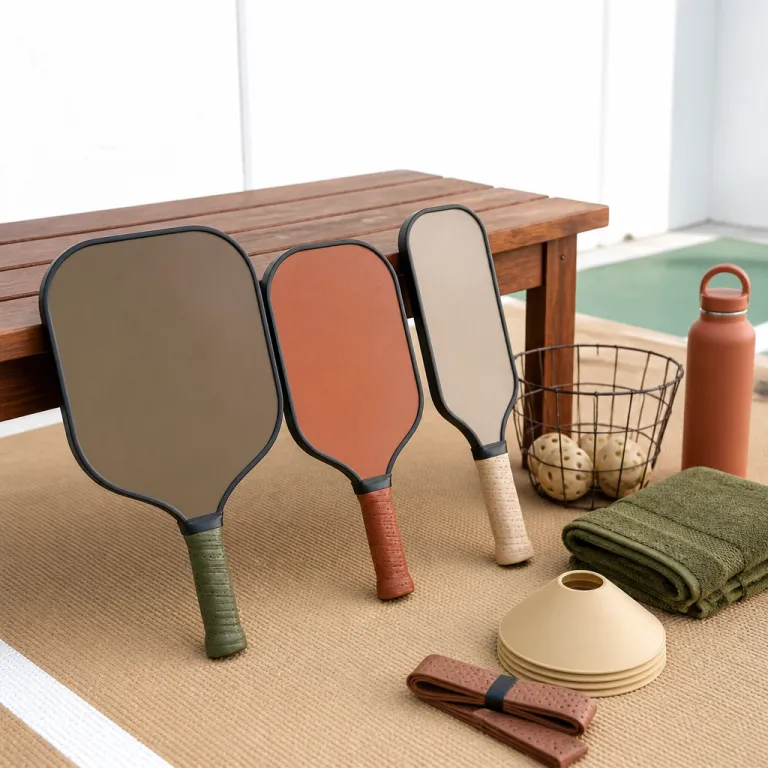
Why budget matters when choosing the best pickleball paddles under 100
Price ceilings shape how new pickleball players enter the game. When you focus on the best pickleball paddles under 100 dollars, you push brands to balance power, control, and spin instead of chasing luxury finishes. That tension often produces a paddle or even full series of paddles that feel surprisingly close to pro models for a fraction of the cost.
Recreational players usually want one pickleball paddle that can handle every game situation, from soft kitchen dinks to baseline drives with real power control. In this price range, popular examples include the Onix Z5 Graphite (nominally 7.5–8.2 oz, Nomex or polymer honeycomb core, graphite face) and the Head Radical Elite (roughly 8.1 oz, polypropylene honeycomb core, composite face), both of which show how manufacturers use polymer or foam core constructions, sometimes with partial carbon fiber faces, to stretch performance without inflating costs. You will see elongated shapes for reach, widebody shapes for a larger sweet spot, and hybrid designs that try to give both best power and best control in a single frame.
Thinking in terms of paddles under a clear price code also protects you from marketing noise. Instead of chasing the latest pro signature model, you can compare objective traits such as core thickness, foam paddles versus traditional honeycomb, and whether a carbon fiber surface really adds spin forgiveness for your level. This mindset helps you build a rational list of the best pickleball options, then match each paddle or power paddle to your style rather than to a logo.
Core, foam, and feel: how construction shapes your control
The core of a pickleball paddle acts as its engine, translating your swing into ball speed, spin, and feel. In the segment of the best pickleball paddles under 100, manufacturers rely heavily on polymer honeycomb cores, sometimes reinforced with foam core inserts or even full foam interiors to fine tune power control. These internal structures decide whether a paddle feels plush at the kitchen or crisp when you attack.
Foam paddles and any modern foam paddle design spread impact forces more evenly, which enlarges the sweet spot and softens mishits for developing players. A full foam or partial foam core also lets brands create control paddles that stay quiet while still offering enough power for deep serves and returns. For instance, the Selkirk SLK Latitude 2.0 (midweight build, polymer honeycomb core with G4 graphite face) uses a relatively thick core to keep vibration low, while some budget foam-reinforced paddles add edge foam to stabilize the perimeter. When you compare paddles under this price limit, pay attention to how the core thickness, foam placement, and overall weight combine to deliver either best control for dinking or best power for driving.
Players who value touch often prefer a slightly thicker core, because it slows the ball and increases dwell time on the face, which improves spin and directional control. Those chasing a power paddle usually lean toward a firmer core and a slightly heavier build, accepting a smaller margin for error in exchange for more penetrating shots. One tester described switching from a 7.6 oz control paddle to an 8.3 oz power model as “trading a safety net for a hammer”—a reminder that core feel and weight should match your temperament. For a deeper breakdown of how core materials interact with balls and other gear, you can study a detailed guide on how to choose the right paddle and ball set for serious pickleball play, which explains how construction choices affect every rally.
Shape, sweet spot, and forgiveness for ambitious players
Shape is the quiet variable that often separates the best pickleball paddles under 100 from forgettable models. An elongated paddle profile gives extra reach on lobs and passing shots, but it usually narrows the sweet spot and demands better timing from players. A widebody shape, by contrast, sacrifices a little reach to create a more generous hitting zone that suits newer players who are still refining their swing path.
When you compare elongated and widebody pickleball paddles, think about where you win most points in a game. If you dominate at the kitchen line and rely on quick exchanges, a widebody control paddle with a stable core and some foam around the perimeter will give you more spin forgiveness and better feel on reflex blocks. If you like to attack from mid court, an elongated power paddle with a balanced core and textured face can help you apply topspin and pressure without overswinging.
Many of the top paddles under this price cap now borrow design cues from higher end series, including subtle edge foam, tuned core densities, and refined handle shapes. The JOOLA Essentials paddle, for example, uses a widebody composite face and polymer core to create a large, forgiving sweet spot for ambitious improvers, while some sets even package multiple paddles so families or clubs can build a list of best pickleball options for different skill levels. If you want to compare such bundles, a curated overview of top pickleball paddle sets can help you see how shape, core, and grip size combine to influence both power and control in real match play.
Surface technology, carbon fiber, and spin potential
The face material on a pickleball paddle determines how efficiently you can generate spin and manage power. In the category of the best pickleball paddles under 100, you will mostly encounter fiberglass, composite blends, graphite, and entry level carbon fiber faces that still offer impressive grip on the ball. These surfaces interact with the core and any foam elements to define how the paddle feels on both soft and aggressive shots.
Carbon fiber faces tend to feel crisper and more connected, which many pro level players appreciate when they want precise control over spin and trajectory. Even in budget friendly series, a thin carbon fiber layer can raise the ceiling on both best power and best control, especially when paired with a responsive polymer or foam core. Composite faces, on the other hand, often provide a slightly softer feel and more spin forgiveness, which helps developing players keep the ball in play during fast kitchen exchanges.
Texture rules also matter, because they limit how rough a paddle surface can be while still remaining legal for sanctioned pickleball events. Manufacturers therefore experiment with subtle patterns and coatings that enhance spin without crossing regulatory lines, especially on paddles under premium price points. When you evaluate the best pickleball paddles under 100, run your fingers across the face, bounce a ball on different parts of the sweet spot, and judge whether the blend of power, spin, and control truly matches your game. A simple buying checklist—weight range, grip size, core type, face material, and shape—will keep these surface details in context instead of letting one feature dominate your decision.
Notable budget friendly series and what they offer
Several modern series have pushed the ceiling of what budget pickleball paddles can achieve. Well-known families from major brands, for example, often use carbon fiber faces and tuned cores to deliver a pro style feel at a more accessible price, even when they sit below flagship models. These designs usually emphasize power control, giving players enough pop for drives while still maintaining stability at the kitchen.
Other lines focus on control paddles with predictable response across the entire sweet spot, prioritizing consistency over raw power. In this space, you may also encounter playful graphics or themed cosmetics, which still hide serious engineering in their foam core or hybrid constructions. Whether the branding leans toward bold, minimalist, or novelty imagery, the underlying goal remains the same: to offer the best pickleball experience possible for players shopping paddles under a strict budget.
Some brands experiment with full foam builds or perimeter foam paddles to reduce vibration and enlarge the effective hitting area. Others prioritize a classic polymer core with a carbon fiber or composite face, chasing the best power to weight ratio for all court play. When you assemble your own list of the best pickleball paddles under 100, compare how each series balances power, control, spin, and feel, then match those traits to your strengths rather than to marketing claims.
Matching your paddle to footwear, movement, and overall game
A paddle never works in isolation; it is part of a complete pickleball system that includes footwear, movement patterns, and tactical choices. Players who move aggressively and attack often will benefit from a power paddle that still offers enough spin forgiveness to keep drives dipping inside the baseline. Those who rely on patience at the kitchen should lean toward control paddles with a softer core or foam reinforcement, because these designs reward touch and precise placement.
Footwork quality also influences how the best pickleball paddles under 100 will feel in your hand. Stable shoes with non marking soles let you plant confidently, which means you can swing a slightly heavier paddle or foam paddle without losing balance on quick direction changes. If you want to refine this part of your setup, a guide to top non marking sole pickleball shoes can help you align your footwear with the demands of your paddle and playing style.
As your game evolves, you may shift from a generalist pickleball paddle toward more specialized foam paddles, power paddles, or hybrid designs that blend best power with best control. One intermediate player summed up the process after testing three sub-$100 paddles: “The right paddle didn’t make me a different player, it just made my good habits pay off more often.” Keep notes on how different paddles under your budget respond in match situations, especially on off center hits and pressured volleys. Over time, this evidence based approach will lead you to the best pickleball combination of paddle, shoes, and tactics for your unique strengths as a player.
Key statistics about pickleball paddles and participation
- According to the Sports & Fitness Industry Association (SFIA) 2023 report on U.S. participation, pickleball grew by more than 150 percent over a recent three year span, which has driven rapid expansion in the range of pickleball paddles available under 100 dollars.
- Industry summaries from major retailers such as Dick’s Sporting Goods and large online marketplaces indicate that paddles under 100 dollars account for a clear majority of unit sales, showing that most players still prioritize value when choosing what they consider the best pickleball equipment.
- Market analyses from equipment tracking firms suggest that carbon fiber faced paddles now represent a growing share of budget models, with year over year increases in this material category as brands push more pro inspired technology into affordable series.
- Consumer surveys conducted by large sporting goods chains consistently rank control and feel at the kitchen as top purchase drivers, even for players who initially say they want maximum power from their next pickleball paddle.
FAQ: best pickleball paddles under 100 for informed players
What should I prioritize first in a paddle under 100 dollars?
Start with weight, grip size, and core type, because these three factors shape how the paddle feels in your hand and how it behaves at the kitchen. Once those basics fit, evaluate whether you prefer a control oriented build with a softer core or a power paddle with a firmer response. Only then should you compare surface materials such as composite, graphite, or carbon fiber to fine tune spin and overall performance.
Are carbon fiber faces worth it in this price range?
Entry level carbon fiber faces can provide a crisper feel, better feedback, and improved spin potential compared with many basic composite surfaces. In the segment of the best pickleball paddles under 100, carbon fiber often appears in thinner layers, but it still helps stabilize the sweet spot and sharpen control. If you value precise placement and clear contact sensations, a carbon fiber faced paddle is usually a strong choice.
Should beginners choose elongated or widebody shapes?
Most beginners benefit from a widebody paddle, because the larger face and broader sweet spot offer more forgiveness on mishits. An elongated shape can be tempting for extra reach, but it usually demands better timing and footwork to control power and spin. Once your consistency improves, you can experiment with elongated designs if you want more reach for lobs and passing shots.
How important is foam in modern budget paddles?
Foam elements, whether in a full foam core or as perimeter inserts, play a growing role in softening impact and enlarging the effective hitting area. For players sensitive to vibration or seeking extra control at the kitchen, foam paddles can feel more comfortable and predictable than traditional constructions. However, a well designed polymer core without foam can still deliver excellent power control and durability at this price point.
Can a paddle under 100 dollars support competitive play?
Many competitive players use paddles under 100 dollars, especially in local leagues and regional tournaments, because modern budget series borrow technology from higher priced models. As long as the paddle offers a suitable blend of power, control, and spin forgiveness for your style, price alone will not limit your performance. The key is to test several options, track how they perform in real matches, and choose the one that consistently supports your tactical decisions.