Summary
Editor's rating
Is it worth the money compared to the $250 paddles?
Shape, balance, and how it feels in the hand
Grip, vibration, and how it feels over a long session
Carbon fiber, 14mm core, and what that actually means on court
How it holds up after real use
Control, power, and spin once you actually start playing
What you actually get in the box
Pros
- Good balance of control, spin, and power with the 14mm core and raw carbon surface
- Solid build quality with thermoformed unibody and foam edge, feels sturdy and low-vibration
- Decent value for money compared to many $250+ paddles, plus useful cover and paddle eraser included
Cons
- Stock grip gets slick with sweat and benefits from an overgrip
- Slightly head-heavy feel may tire some players in fast net exchanges
- Elongated shape less forgiving for total beginners than widebody paddles

Specifications
View full product page →| Brand | Franklin Sports |
A carbon paddle that doesn’t feel like a toy
I’ve been playing pickleball 3–4 times a week for a while now, and I picked up this Franklin Sports Pro FS Tour Dynasty 14mm mainly because I wanted a raw carbon surface without paying $250+ for the trendy brands. I used it for about three weeks in rec play and a small local round-robin, swapping back and forth with my usual fiberglass paddle. So this isn’t just a “hit a few balls in the driveway” kind of opinion.
First impression: it feels like a real performance paddle, not one of those cheap Amazon specials with a loud pop and dead control. The 14mm core and the elongated shape are pretty noticeable right away. You get extra reach and decent power, but it’s not some uncontrollable rocket. If you’ve only used basic composite paddles before, you’ll definitely feel the difference at the net and on drives.
That said, it’s not perfect. The balance is slightly head-heavy compared to my old 16mm paddle, and the swing weight takes a few games to get used to. If you’re coming from a super light beginner paddle, your wrist and forearm might complain the first couple of sessions. Also, the stock grip is fine, but nothing great. I ended up adding an overgrip after a few sweaty games because it started to feel a bit slick.
Overall, my first takeaway is this: it’s a pretty solid paddle for people who already play regularly and want something with more spin and control without paying top-tier prices. Beginners can use it, but you’ll probably appreciate it more once you’ve got your basic shots down and you actually care about feel, spin, and consistency instead of just getting the ball over the net.
Is it worth the money compared to the $250 paddles?
Price-wise, this Franklin FS Tour Dynasty 14mm sits in that mid-range zone: not a budget paddle, but cheaper than a lot of the hyped $230–$280 models. For what you get—raw carbon face, thermoformed unibody, foam edge, cover, and a paddle eraser—I’d say the value is pretty strong. You’re getting a modern construction and a legit playing experience without paying top-tier brand tax. For many players, that’s the sweet spot: better than entry-level, but not painful on the wallet.
Compared to the expensive paddles I’ve tried from the big trendy brands, the performance gap is not huge. Those might give you a bit more spin or a slightly more dialed-in feel, but we’re talking small differences that only really matter if you’re picky or playing at a higher level. For a regular rec or league player, this Franklin gives you 80–90% of that feel and performance for noticeably less money. That’s why some people in the reviews say it became their favorite despite owning pricier paddles—I kind of get that.
Where the value could be questioned is if you’re a total beginner who’s not sure they’ll stick with the sport. In that case, this might be more paddle than you need, and a cheaper starter paddle could be enough. But if you already play weekly and plan to keep going, it makes more sense. You’ll actually notice and appreciate the better materials, the more stable feel, and the improved spin and control.
So in plain terms: if you’re an active player who doesn’t want to blow top dollar but still wants a serious paddle, this is good value for money. If you’re super casual or on a tight budget, it might feel like overkill. And if you’re a gear nerd chasing tiny performance gains and don’t care about price, you’ll probably still end up buying the high-end stuff—but this Franklin will get you close enough that you might question whether the extra cash is really worth it.
Shape, balance, and how it feels in the hand
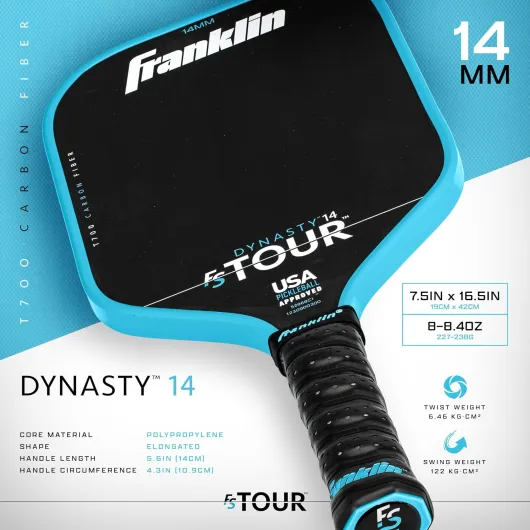
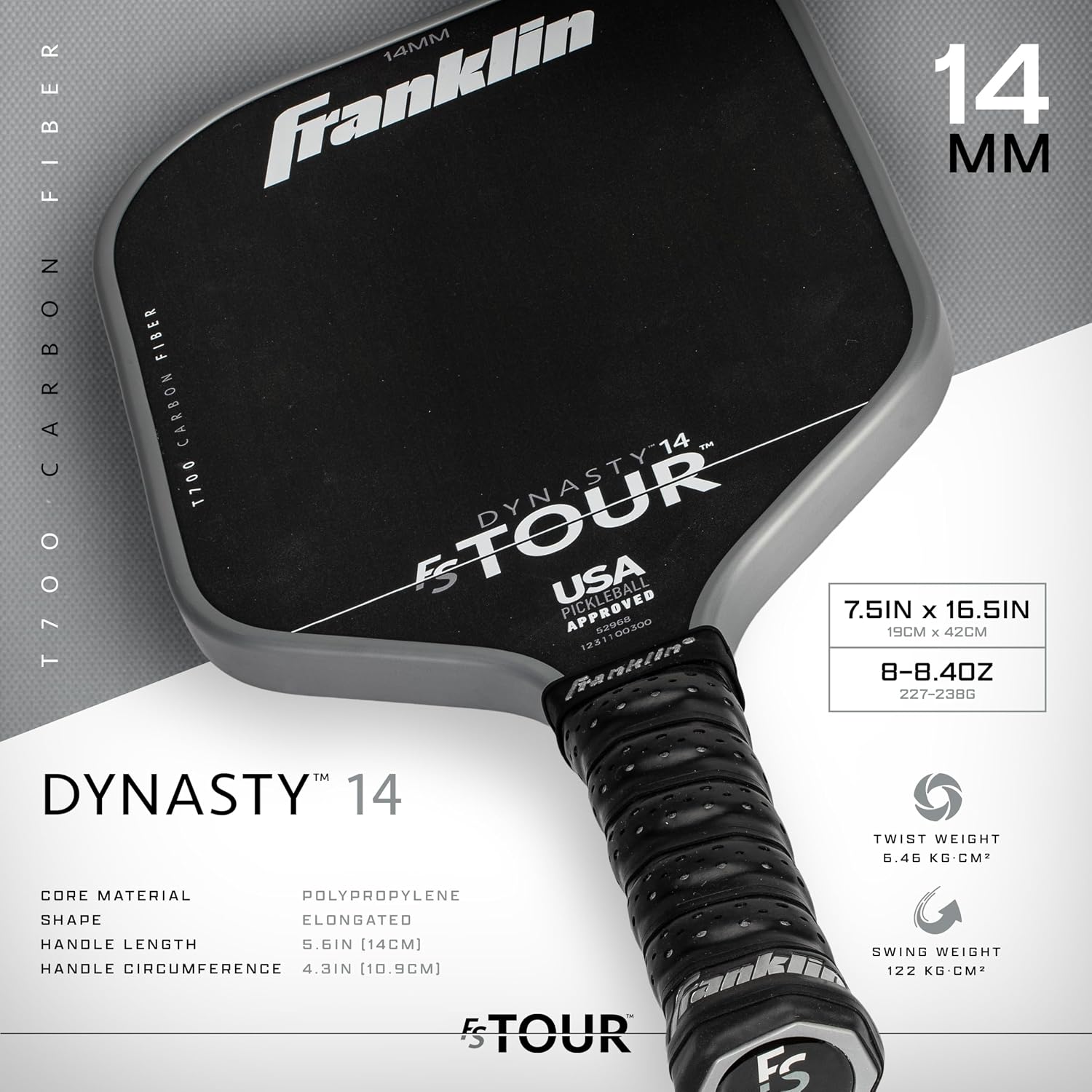
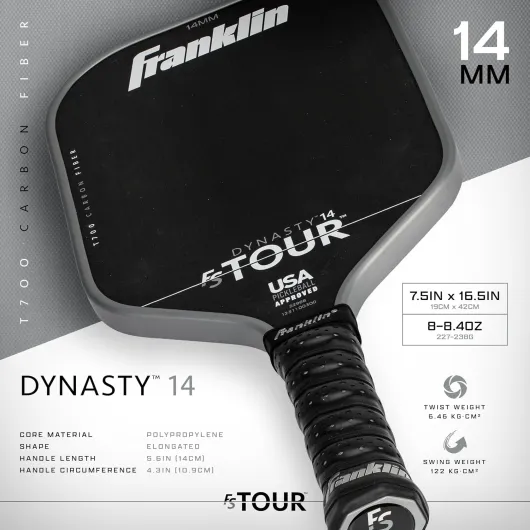
The design is clearly aimed at people who want a more “pro-style” paddle. It’s elongated, with a longer handle and a slightly narrower face than the typical wide beginner paddles. The handle is about 5.6 inches, which is nice if you like a bit of two-handed backhand or just want extra reach. I’m used to standard handles and I still liked the extra length; it helped on high backhand volleys and when reaching for lobs.
The paddle weight on mine felt right in the advertised midweight range (around 8–8.4 oz). In practice, it feels slightly head-heavy, which I actually like for drives and serves. You get more plow-through on the ball. On quick hand battles at the net, that extra swing weight is noticeable. If you’re used to a super light, widebody paddle, this will feel a bit slower in the hands initially, but the trade-off is more solid contact and more consistent depth on blocks and counters.
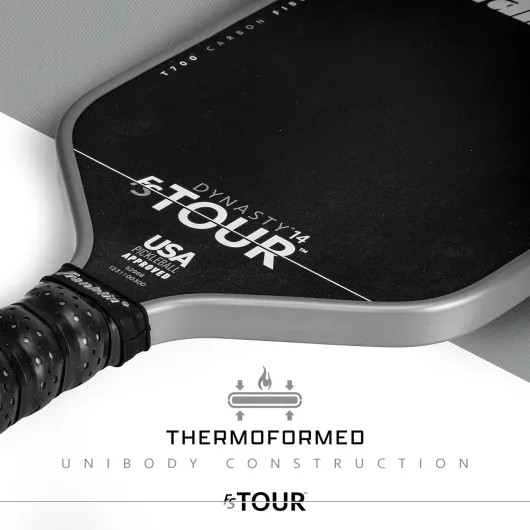
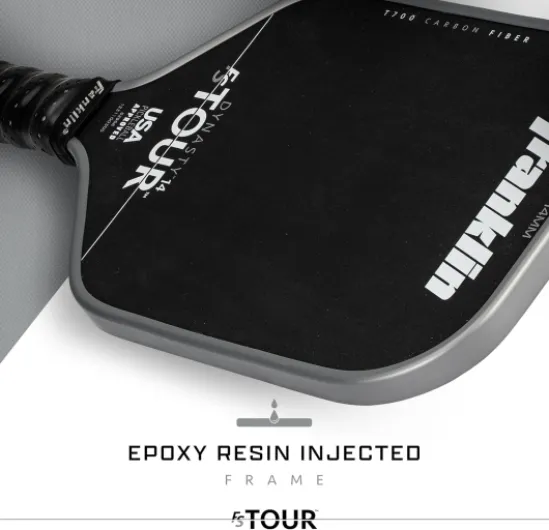
Visually, it’s pretty calm: mostly grey with a clean Franklin logo and carbon texture. Nothing flashy or loud. If you don’t care about looks, that’s fine; if you want something that screams across the court, this isn’t it. The edges are well-finished, and the thermoformed unibody design gives it a sturdy feel. There’s no obvious flex at the throat when you press on it, which is a good sign for durability and consistency.
In terms of usability, the design leans toward control and spin with enough power, not a pure power paddle. The sweet spot is reasonably big for an elongated shape, but it’s still easier to mishit than on a big widebody beginner paddle. If your contact point is all over the place, you’ll notice some weaker shots off the tip or very low on the face. Once your timing is decent, though, the shape feels good for both dinking and aggressive drives. Overall, the design feels thought-out for intermediate players, not just random shapes thrown together.
Grip, vibration, and how it feels over a long session
Comfort-wise, this paddle is generally good, but with a couple of small quirks. The handle length at 5.6 inches feels great, especially if you ever use two hands. The grip circumference is around 4.3 inches, which for me (average-sized hand) is right in the middle. It comes with a cushioned grip that has a slight raised pattern. Out of the box, it feels soft enough and absorbs a decent amount of shock. I didn’t feel any harsh sting on mishits or when blocking hard drives, which is a plus if you have sensitive wrists or elbows.
Where I started to notice some issues was during sweaty, long sessions. After about an hour of play in warm weather, the stock grip got a bit slick. Not unusable, but I started having to adjust my hand more often, especially on serves and overheads. Adding a tacky overgrip fixed that instantly, so my honest advice is: budget an overgrip into your purchase if you tend to sweat a lot. It’s not a deal-breaker, but it’s one of those small things that you notice only after you really play with it.
As for vibration, the one-piece construction and foam around the edge do their job. Compared to cheaper paddles I’ve owned, this one has a more muted feel. Off-center hits don’t send a sharp buzz into your hand. It’s more of a solid thud. If you’re coming from a loud, tinny paddle, this feels calmer and more controlled. I had no arm pain or joint issues even after several back-to-back days of play, which is not always the case with some stiffer paddles.
Over a full two-hour session, the paddle’s weight and balance didn’t wear me out. The slight head-heavy feel is there, but it’s not brutal. If you have wrist problems or prefer ultra-light paddles, you might feel a bit of fatigue in quick hand battles, but for most adult players, it’s manageable. Overall, I’d put comfort at good but not perfect: great feel and low vibration, average stock grip, and a swing weight that may take a couple of outings to fully get used to.
Carbon fiber, 14mm core, and what that actually means on court
On paper, the materials are what you’d expect from a modern mid-to-high tier paddle: T700 raw carbon fiber on the surface, a 14mm polymer core, and a foam-injected perimeter. The frame is a one-piece, thermoformed unibody, which is supposed to help with durability and a tighter connection between the face and the handle. In the hand, it does feel solid, with no rattles, no hollow sound, and no weird vibration when you hit off-center.
The carbon fiber surface has a natural texture, not a painted grit. When you run your fingers over it, you can feel a light roughness, but it’s not super aggressive. On court, that translates to reliable but not extreme spin. You can shape serves and topspin drives, and you can carve some slice on dinks and resets, but it’s not going to rip the ball like the most spin-heavy paddles on the market. For most players, it’s plenty. If you’re obsessed with max spin numbers, you might want something grippier, but for regular rec and league play it’s more than enough.
The 14mm polymer core is a nice middle ground. Compared to 16mm paddles I’ve used, this one has a bit more pop and a slightly firmer feel, especially on drives and putaways. On the flip side, you lose a tiny bit of built-in softness on touch shots. I had to dial in my dinks for a couple of sessions because balls were sailing just a bit deeper than with my thicker paddle. Once I adjusted, it was fine, but if you’re very soft-handed and used to a 16mm, you’ll notice the difference the first few games.
Overall, the materials feel legit and not cheaped out. The edge guard is clean, the handle connection feels tight, and the face doesn’t feel dead. After a few weeks, I didn’t notice any chipping or delamination, and the surface texture held up decently with the help of the eraser. So in terms of build, I’d say it’s pretty solid for the price, even if it’s not the highest-end thing out there.
How it holds up after real use
Durability is always a big question with paddles that use raw carbon and thermoformed construction. Some brands have issues with delamination or weird soft spots after a while. With this Franklin, after a few solid weeks of play (probably 15–20 sessions), I didn’t see any major problems. The edge guard is still tight, there’s no buzzing or rattling inside, and the face hasn’t started peeling or bubbling. That’s a good sign, especially considering some paddles in this category start acting up pretty fast.
The surface texture does wear slightly, like all paddles. I noticed the high-contact zone in the middle getting smoother over time, but using the included paddle eraser helped clean off the ball residue and bring back some of the grip. It’s not going to restore it to day-one condition, but it definitely keeps it from turning into a slick board too quickly. If you’re the type who throws your paddle on concrete or scrapes it a lot on low balls, obviously you’ll see more wear, but with normal use it seems to handle things fine.
The handle and grip area feel sturdy. No creaking when I twist it, no looseness at the throat. The thermoformed one-piece design probably helps here; it doesn’t feel like the face and handle are two separate pieces glued together. I’ve had cheaper paddles where the handle started to feel wobbly after a month, and this one is nowhere near that. The only minor wear I noticed was the stock grip flattening a bit and getting smoother, which is normal. Again, an overgrip solves that easily.
Based on my time with it, I’d say the durability is reassuring for the price. Of course, I can’t speak to a full year of heavy use yet, but nothing so far suggests early failure. If you’re playing a few times a week and take basic care of your gear (use the cover, don’t leave it in a hot car all day), I don’t see any obvious red flags. It feels like it will last long enough to justify the cost, especially compared to some higher-priced paddles that start having issues surprisingly fast.
Control, power, and spin once you actually start playing
This is where the paddle matters most. On court, the Franklin FS Tour Dynasty 14mm feels like a control-first paddle with respectable power. The sweet spot is fairly generous for an elongated shape, especially thanks to the foam-injected perimeter, but it’s still more demanding than a wide beginner paddle. When you hit in the middle, the ball comes off clean and predictable. On dinks and resets, I felt confident placing the ball cross-court and into the kitchen. I did have to rein in my swing a bit at first, because the 14mm core has a bit more pop than a 16mm, but after a couple of sessions the depth control felt natural.
Power-wise, it’s solid but not wild. Drives, serves, and overheads have enough punch to finish points, but it doesn’t feel like a dedicated power paddle. If your swing is lazy and you rely on the paddle to do all the work, you might want something even more explosive. If you have a decent swing, this gives you enough power with better control than most pure bangers’ paddles. I noticed my third-shot drops were much more consistent compared to a cheap fiberglass paddle I keep as a backup, while my drives had similar or slightly better speed.
Spin is where the carbon surface comes into play. It’s not crazy, but it’s above average. I could get good topspin on serves and roll volleys, and slice returns stayed low. Compared to a smooth composite face, this clearly bites the ball more. Compared to the very grippy high-end raw carbon paddles, it’s a step down, but honestly, most rec players won’t max out those anyway. I was able to shape shots enough to bother people at my level, which is what matters.
At the net, hand speed is decent for a midweight elongated paddle. Quick exchanges are fine once you adapt to the balance, and the paddle feels stable on blocks. No twisting in the hand on hard drives, which I appreciate. Overall, in actual play, the performance matches what Franklin is selling: a paddle that balances power, control, and spin rather than pushing one extreme. If you’re an intermediate or improving beginner who wants one paddle to do everything reasonably well, this fits that role nicely.
What you actually get in the box
Out of the box, the set is pretty straightforward: you get the FS Tour Dynasty 14mm paddle, a simple paddle cover, and a small “paddle eraser” to clean the surface. No balls, no fancy extras, just the basics. Honestly, that’s fine. I’d rather they put money into the paddle itself than throw in low-quality balls that end up in the trash. The paddle comes unwrapped but protected well enough, nothing arrived damaged or scratched in my case.
The paddle cover is nothing special, but it’s useful. It’s a soft cover with a zipper that fits the elongated head snugly. It’s enough to keep the paddle from getting banged up in a backpack or gear bag, but don’t expect thick padding or a premium case. Think of it as a dust and scratch protector, not shock protection. For most players, that’s all you really need unless you’re tossing your gear around.
The “paddle eraser” is basically a little rubber block meant to clean off ball residue and dirt from the carbon surface. I tried it after a few long sessions, and it actually works decently. You rub it in circles on the face and it lifts off the yellow ball marks and grime. It’s not magic, but after a minute or two the surface looks cleaner and feels less slick. If you like keeping your paddle grippy and not covered in ball dust, it’s a nice extra that you’d normally have to buy separately.
Overall, the presentation is practical and pretty honest. No flashy packaging, no overdone branding, just a paddle with two useful accessories. For the price range this sits in, I think the bundle makes sense. You get what you actually use: a playable paddle, a cover so it doesn’t get wrecked in your bag, and a tool to maintain the surface. Nothing more, nothing less.
Pros
- Good balance of control, spin, and power with the 14mm core and raw carbon surface
- Solid build quality with thermoformed unibody and foam edge, feels sturdy and low-vibration
- Decent value for money compared to many $250+ paddles, plus useful cover and paddle eraser included
Cons
- Stock grip gets slick with sweat and benefits from an overgrip
- Slightly head-heavy feel may tire some players in fast net exchanges
- Elongated shape less forgiving for total beginners than widebody paddles
Conclusion
Editor's rating
After a few solid weeks with the Franklin Sports Pro FS Tour Dynasty 14mm, my take is pretty simple: it’s a solid, no-nonsense paddle for people who actually play regularly and want something better than entry-level without paying crazy money. The raw carbon surface gives you good spin, the 14mm core offers a nice balance of control and pop, and the elongated shape rewards decent technique with extra reach and solid groundstrokes. It feels sturdy, has low vibration, and the included cover and paddle eraser are genuinely useful, not just filler.
It’s not perfect, of course. The stock grip is only okay and gets slick when sweaty, so an overgrip is almost mandatory if you play hard. The balance is a bit head-heavy, which some players will like for power but others might find tiring in fast hand battles. And if you’re a brand-new player or someone who just plays once in a while, this might be more paddle than you really need; a cheaper, wider beginner paddle could be easier at first.
Overall, I’d recommend this to intermediate players and serious beginners who are already hooked on pickleball and want a reliable, modern carbon paddle without spending top-tier money. If you’re chasing absolute maximum spin or have very specific feel preferences, you might look at higher-end models, but for most regular players, this Franklin gets the job done very well and feels like money reasonably well spent.