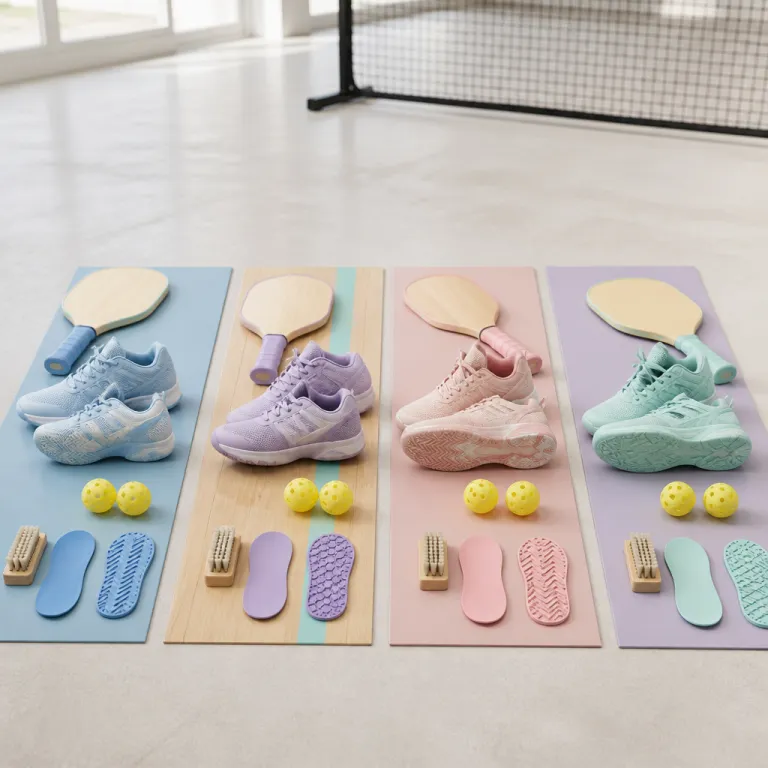
Why the best women’s pickleball shoes matter more than you think
Pickleball looks gentle from the stands, yet it punishes the wrong shoes. The constant split steps, lateral slides, and quick recovery moves demand a women-specific court shoe that grips the surface, protects joints, and stays stable under pressure. When players ask about the best women’s pickleball shoes, they are really asking how to move faster, feel safer, and extend their playing years.
Running shoes feel soft and light, but their curved soles and flexible uppers are not built for hard lateral stops on a pickleball court. Proper court shoes for women, including dedicated pickleball footwear and some tennis models, use flatter outsoles, reinforced sidewalls, and denser foam to control torque on knees and ankles. That design difference explains why a shoe that feels great on a morning jog can feel unstable and even risky during intense women’s pickleball rallies.
For women who play several times per week, the right pickleball sneaker becomes essential equipment, not a fashion accessory. A well-chosen pair of shoes women players can rely on should combine comfort, light structure, and durable grip that matches indoor or outdoor surfaces. When you evaluate any women’s shoes for pickleball, think in terms of performance, injury risk, and long-term value rather than only the sale price or color.
Key features that define the best women’s pickleball shoes
Three elements separate the best pickleball footwear from ordinary athletic shoes for women. First comes traction, because a pickleball court demands a sole pattern that grips during sudden stops yet releases smoothly during pivots. Second comes stability, where a good pickleball shoe for women uses a wide base, firm heel counter, and sidewall support to prevent the ankle from rolling on aggressive cuts.
Third comes underfoot comfort, which depends on cushioning tuned for repeated impacts on indoor and outdoor hard courts. Many of the best women’s pickleball shoes borrow midsole foams from high-end tennis shoes, then adjust the density to keep the ride light without feeling mushy. When you compare regular-price models with a tempting sale price, check whether the cushioning is full length and whether the insole is removable so you can adapt the fit for narrow or wide feet.
Brands now offer women-specific lasts that better match the heel-to-forefoot ratio found in many women’s feet. A model such as a court-pro-style shoe often comes in both regular and wide options, which matters if you experience toe pressure during long matches. Before you focus on price regular versus discount offers, prioritize a secure heel, enough forefoot room, and a stable platform that lets you trust every step on the pickleball court.
For readers comparing court footwear technologies, you can see how a modern tennis-specific model behaves under test conditions in this detailed review of the Gamecourt 2 tennis shoes, then apply similar criteria when judging women-focused pickleball shoes.
Indoor versus outdoor courts: how surface changes your shoe choice
Surface is the hidden variable that often decides which women’s pickleball shoes feel truly right. Indoor pickleball usually takes place on polished wood or synthetic gym floors, where too much grip can be as risky as too little. In that setting, a light pickleball shoe with a non-marking sole and slightly smoother tread pattern allows controlled slides without sudden stops that stress knees.
Outdoor pickleball courts, often textured concrete or asphalt, demand tougher outsoles and deeper tread. The best women’s pickleball shoes for outdoor play use harder rubber compounds and reinforced toe caps to handle abrasive surfaces, especially for players who drag the lead foot on serves or wide volleys. When you read about models such as the women’s Viper series or a Viper Court–inspired design, you are usually looking at shoes tuned for outdoor durability and directional grip.
Some women prefer one versatile pair of court shoes for both indoor and outdoor sessions, while others keep separate pairs women players rotate depending on venue. If you split time between surfaces, look for a balanced outsole pattern that is not too aggressive for indoor play yet still reliable outdoors. For a sense of how an outdoor-focused outsole behaves, examine the traction discussion in this review of a Viper Court Smash pickleball sneaker, then translate those insights to women-specific models.
Fit, width, and comfort: tailoring shoes to women’s biomechanics
Fit is where many women lose performance, because a shoe that is slightly off can quietly drain energy and confidence. The best women’s pickleball shoes respect the fact that women often have narrower heels and different arch profiles than men, so a unisex pickleball shoe may not lock the rearfoot securely. A pro women’s player will usually insist on a snug heel, midfoot support, and just enough toe room to avoid bruising on hard stops.
Width options matter as much as length, especially for women with bunions or broader forefeet. When a brand offers both regular and wide versions of a court-pro-style model, it allows more players to achieve true comfort without sizing up and losing stability. If you see a price regular listing and a lower sale price for only one width, resist the temptation to compromise fit just to save money, because discomfort will cost more in the long run.
Some lines, such as Skechers women’s court shoes, are known for plush step-in comfort and slightly roomier toe boxes. Others, including certain Selkirk Courtstrike or women’s Viper Court designs, prioritize a locked-in performance fit that feels more precise and light underfoot. Try shoes late in the day when feet are slightly swollen, wear your usual pickleball socks, and walk, cut, and jump in the store to test real match movements before committing to any women’s shoes purchase.
Brand technologies: from Skechers to Selkirk and beyond
Brand-specific technologies now shape how the best women’s pickleball shoes feel and perform on court. Skechers women’s pickleball models often use responsive foam compounds and rocker-inspired geometry to keep transitions smooth while still offering sidewall support. Many players appreciate how these shoes combine light construction with generous cushioning, which can be especially kind to knees during long tournaments.
Selkirk has entered the footwear space with the Selkirk Courtstrike line, designed from the ground up for pickleball rather than adapted from tennis shoes. A Selkirk Courtstrike shoe typically emphasizes low-to-the-ground stability, a wide base, and targeted reinforcement in high-stress zones, which suits aggressive women pickleball players who attack the kitchen line. When you compare these with more traditional court shoes, pay attention to how the heel height and forefoot flexibility influence your ability to stay balanced during dinks and quick lunges.
Some collections use names such as Express Light or Express Pickleball to signal a focus on speed and reduced weight. These light pickleball shoes can feel almost invisible on the foot, yet they still need enough structure to handle repeated lateral cuts on both indoor and outdoor courts. Whether you lean toward a Viper Court–inspired design, a cushioned Skechers shoe, or a Selkirk performance model, evaluate how each technology package serves your specific style rather than chasing whatever is currently on sale.
Balancing performance, price, and long term value
Cost always enters the conversation when choosing the best women’s pickleball shoes, but price alone rarely tells the full story. Retailers often list a higher regular price next to a temporary sale price, which can make a mid-tier pickleball shoe look irresistible. Before reacting to any discount, estimate how many hours of play you expect from the shoes and divide the final price by that number to calculate a realistic cost per session.
Some women prioritize free shipping or express delivery options, especially when preparing for a tournament or league season. Express light shipping can be helpful, yet it should not push you toward a model that does not fit or suit your court surface. If you have the patience, trying on several pairs in person, then ordering the exact size and width online at a fair price regular or sale rate, often yields the best pickleball value.
Remember that worn-out court shoes can quietly increase injury risk and reduce performance. When tread patterns flatten, midsoles compress, and uppers stretch, even a once pro-level women’s pickleball shoe loses its edge. Track your playing hours, inspect your shoes every few months, and budget for timely replacements so your footwear always matches your ambitions on the pickleball court.
If you are also upgrading other gear, you can pair your footwear research with this detailed guide on how to choose the best pickleball paddles for beginners to intermediate players, ensuring your paddle and shoes work together to support your game.
Key statistics about women’s pickleball shoes and participation
- According to USA Pickleball’s 2023 Participation Report, women now represent roughly 40% of all pickleball players in the United States, which has pushed brands to expand women-specific pickleball shoe lines in both regular and wide widths.
- Industry retail data summarized by the Sports & Fitness Industry Association (SFIA) indicate that court shoe sales for pickleball and tennis combined have grown by more than 20% over the last two seasons, with women’s shoes accounting for a steadily increasing share of that growth.
- Biomechanics studies on court sports, such as research published in the Journal of Sports Sciences on lateral cutting in racket games, report that side-to-side forces can exceed twice body weight, which underlines why the best women’s pickleball shoes require reinforced sidewalls and stable platforms rather than purely soft cushioning.
- Consumer surveys from specialty retailers and trade publications suggest that players who rotate between two pairs of pickleball shoes extend the life of each pair by approximately 30%, because midsoles have more time to decompress between sessions.
FAQ about the best women’s pickleball shoes
Are pickleball specific shoes really better than running shoes for women ?
Yes, pickleball-specific shoes are better because they are built for lateral movement, braking, and quick direction changes on a court, while running shoes are optimized for straight-line motion and forward cushioning. A proper court shoe for women uses a flatter, more stable sole and reinforced sidewalls, which reduces the risk of ankle rolls during aggressive play. Many women notice immediate improvements in balance and confidence when they switch from running shoes to dedicated pickleball shoes.
How often should women replace their pickleball shoes ?
Most active women pickleball players who compete or practice several times per week should replace their shoes roughly every three to six months, depending on body weight, intensity, and whether they play mainly on abrasive outdoor courts. Signs that a pickleball shoe needs replacement include smooth or bald tread, visible midsole creasing, and a feeling of reduced support around the heel and arch. If you start to feel new aches in knees or ankles without changing your training load, worn court shoes are often part of the problem.
Do women with wide feet need special pickleball shoes ?
Women with wide feet benefit from models that are explicitly labeled as wide or that are known for generous forefoot volume. Wearing a narrow court shoe and simply sizing up can create heel slippage and instability, which is risky during fast lateral moves. Many of the best women’s pickleball shoes now come in both regular and wide options, allowing a secure heel fit with enough toe room for comfort.
Can tennis shoes work for women who play mostly pickleball ?
High-quality tennis shoes can work well for women who play pickleball, especially on outdoor hard courts where the movement patterns are similar. The key is choosing tennis shoes with good lateral support, a relatively low profile, and an outsole pattern that grips without feeling sticky. Some players start with tennis footwear, then transition to pickleball-specific shoes once they better understand their style and surface preferences.
What is the best way to break in new women’s pickleball shoes ?
The safest approach is to wear new shoes for short practice sessions first, rather than jumping straight into long tournaments. Start with 30 to 60 minutes of light drills and casual games, allowing the upper materials and midsole to adapt to your foot shape. If any hot spots or pressure points appear, adjust lacing patterns or consider different socks before deciding whether the fit is truly wrong.