Why pickleball for seniors starts with the first 15 minutes
Pickleball for seniors looks gentle from the bleachers, yet the sport quietly demands sharp reflexes and confident lateral movement. When senior players step on a pickleball court cold, the first sudden push toward the net or wide ball can shock joints that prefer a slower ramp up. A joint friendly warm up lets older adults play pickleball with more freedom, because the body has already rehearsed the exact moves the pickleball game will require.
Think about your typical session ; many seniors chat, tap a few balls, then jump straight into singles doubles or crowded rec games. That pattern might feel social, but it skips the specific preparation that senior pickleball players need before the first hard drive or quick dink exchange at the net. A structured 15 minute routine respects how the body ages and turns pickleball for seniors into a growing sport that supports long term health rather than draining it.
Pickleball offers a rare mix ; this racket sport is easier on the knees than basketball yet more engaging than walking laps, so seniors stay active because the game is genuinely fun. The smaller pickleball court, the lighter ball, and the forgiving paddle or racket keep impact lower while still challenging balance and coordination. For many pickleball seniors, that balance between health benefits and joy is why this is often called the fastest growing sport for older adults in the United States.
The three phase warm up: mobility, activation, then dinking
A smart warm up for pickleball for seniors follows the same logic as a good point ; start small, build pressure, then finish at game speed. The three phase structure — joint mobility, muscle activation, and progressive dinking — mirrors how pickleball players actually move during rallies on real pickleball courts. When senior players respect this sequence, the body arrives at the first game already tuned to the demands of the sport instead of scrambling to catch up.
Phase one focuses on mobility for the joints that carry the load in senior pickleball ; ankles, hips, shoulders, and the spine that connects them. Phase two wakes up the muscles that drive lateral movement and quick pushes to the net, especially the quadriceps, calves, and glutes that protect aging knees. Phase three uses controlled dinking and soft play to bridge the gap between warm up and full pickleball game intensity, so seniors can play pickleball without shocking cold tissues.
Before you even check which court you are on, commit to those 15 minutes as non negotiable. If you tend to arrive late and rush straight into tournaments or competitive rec play, build in a buffer so the warm up happens every time. That discipline is what keeps pickleball for seniors joint friendly over months and years, not just during one lucky session when the body happens to feel fresh.
Phase 1: joint mobility for ankles, hips, and shoulders
Start at the ground ; your ankles are the first line of defense when a ball pulls you wide on the pickleball court. Stand near the net post or fence for light support, then draw slow circles with one ankle, 10 in each direction, before switching legs. These ankle circles prepare the joint for the constant micro adjustments that pickleball players make during every point, especially when older adults react to unexpected spins or mis hits.
Next, address the hips, which drive most lateral movement in this racket sport and quietly protect the lower back. Place your hands on your hips, feet shoulder width apart, and trace large, controlled circles with your pelvis, again 10 each way, keeping the upper body relaxed. Senior players often feel stiffness here, and this simple drill lets the body rehearse the same rotation used when pushing off to cover a dink or resetting a fast ball at the kitchen line.
Finish mobility with shoulder and upper back work, because every paddle swing in pickleball for seniors starts from those joints. Perform gentle arm circles, first small then larger, followed by slow shoulder rolls and a chest opening stretch where you clasp hands behind your back and lift slightly. This sequence respects how the body of senior players actually moves during a pickleball game, rather than borrowing a generic gym warm up that ignores the specific angles of the sport.
Phase 2: muscle activation before the first serious rally
Once the joints move freely, the next step in pickleball for seniors is to wake up the muscles that stabilize each step and protect aging knees. Begin with light body weight squats, feet just outside hip width, lowering only as far as comfort allows while keeping the chest tall. Ten to fifteen controlled repetitions are enough to remind the quadriceps and glutes that they will soon drive every push toward the net or backpedal for a lobbed ball.
From there, shift to slow lateral shuffles across the width of the pickleball court or along the baseline if space is tight. Take five to six steps each way, staying low but comfortable, and repeat for three to four passes while focusing on smooth footwork rather than speed. This pattern mirrors the exact lateral movement that pickleball players use when covering a wide dink or sliding into position for singles doubles, which makes it especially valuable for senior players.
Finish activation with mini lunges, stepping forward only as far as your balance allows while keeping the front knee aligned over the middle toes. Alternate legs for eight to ten reps each side, using your paddle or racket as a light support if needed, and stop before any sharp pain. These drills help older adults stay active in a way that respects the body, so pickleball for seniors remains a sustainable sport rather than a short lived experiment that ends with a sore knee.
Phase 3: progressive dinking instead of cold hitting
The final five minutes of this pickleball for seniors warm up should look like the early points of a thoughtful doubles match, not a home run derby. Start with dinking at roughly fifty percent intensity, standing at the non volley zone line and trading soft shots with a partner while focusing on smooth contact. The goal is to let the ball, paddle, and body reconnect at low speed before the first aggressive pickleball game of the day.
After two to three minutes, gradually increase pace and depth, adding gentle third shot drops and controlled volleys while still avoiding full power swings. Senior players should pay attention to how their shoulders, knees, and lower back feel during this ramp up, because any sharp discomfort is a signal to adjust rather than push through. This is where pickleball for seniors differs from younger play ; the warm up is not a formality but a real check in with the body before the scoreboard matters.
Only in the final minute or two should you add a few firmer drives or overheads, and even then, keep the effort at seventy to eighty percent. Think of this as the dress rehearsal for the first real points, where pickleball players test footwork, timing, and balance under slightly higher stress. When older adults treat this phase seriously, they arrive at the first serve already in rhythm, which makes the entire sport feel smoother and more joint friendly.
Common warm up mistakes that punish senior joints
Many routines for pickleball for seniors fail not because they are complicated, but because they never happen at all. The most common mistake is skipping the warm up when players are late, then trying to make up for lost time by swinging hard from the first ball. That habit turns the first game into a stress test for cold tissues, especially for senior players whose bodies need more gradual preparation.
Another frequent error is treating warm up as casual hitting, where two pickleball players stand at mid court and blast drives back and forth without moving their feet. That pattern might feel fun, yet it ignores the lateral movement, soft hands, and balance that define real points on a pickleball court. For older adults, this mismatch between warm up and actual play is a quiet risk factor for strains around the knees, hips, and shoulders.
A third trap is copying a generic gym warm up that focuses on machines or static stretching instead of the specific demands of this racket sport. Long static holds before play can even reduce power temporarily, which is the opposite of what pickleball for seniors should aim for in the first 15 minutes. A better approach is the three phase routine described earlier, which respects how the body moves during dinks, volleys, and quick pushes to the net.
Ignoring warning signs from the body
Senior pickleball players often pride themselves on toughness, especially those who grew up on tennis or basketball courts, yet that mindset can backfire. When the body sends clear signals — a sharp twinge in the knee during a lunge, or a sudden pinch in the shoulder after an overhead — the smart move is to pause and check rather than push through. Ignoring those early warnings during the warm up can turn a minor issue into a problem that keeps older adults off the court for weeks.
Pickleball for seniors works best when players treat pain as data, not as a test of character or will. If a certain drill consistently bothers a joint, swap it for a gentler variation, such as reducing lunge depth or shortening lateral shuffles while still staying active. This mindset keeps the sport sustainable and lets pickleball offers its full health benefits without demanding a painful trade off.
For those who often play on hot public pickleball courts, smart pacing matters as much as joint care. Guidance on heat management, smart play, and public court etiquette for older adults is well covered in this resource on heat smart play and public court etiquette, which pairs well with a joint friendly warm up. Combining that kind of strategic planning with the three phase routine makes pickleball for seniors safer and more enjoyable across long seasons.
Starting too fast and swinging too hard
Launching into full speed rallies from the first serve is another classic mistake in pickleball for seniors. Cold muscles and stiff joints do not appreciate sudden overhead smashes or lung busting chases for wide balls, especially when senior players have just stepped out of the car. A better pattern is to treat the first game as an extension of the warm up, keeping shots controlled and movement measured for at least a few points.
Many older adults feel pressure during tournaments or crowded open play sessions to prove they can still hit as hard as younger pickleball players. That urge is understandable, yet the scoreboard rarely rewards the player who swings at one hundred percent before the body is ready. In practice, the seniors who stay active longest are those who respect the first 15 minutes and let intensity build gradually.
Think of power as something you earn after the body has passed its own internal checks, not a switch you flip the moment the ball is in play. When pickleball for seniors follows that principle, the sport becomes a reliable source of health benefits rather than a recurring source of aches. The warm up is not wasted time ; it is the insurance policy that keeps you on the court instead of in the waiting room.
How often seniors should play pickleball for health and recovery
Frequency matters as much as warm up quality when planning pickleball for seniors. Medical consensus generally supports two to three sessions of moderate intensity racket sport per week, each lasting about 60 to 90 minutes, as a sweet spot for cardiovascular benefit with adequate recovery. For older adults who love the game, that guideline helps balance enthusiasm with joint preservation.
Within those sessions, the first 15 minutes of mobility, activation, and dinking should be non negotiable, not optional extras. Senior players who treat warm up as part of the game, rather than something separate, usually report fewer flare ups in knees, hips, and shoulders over time. That consistency lets pickleball offers its full range of health benefits, from improved aerobic capacity to better balance and coordination.
Some seniors will feel comfortable adding a fourth lighter day focused on drills, dinking, or coaching rather than full matches. On those days, the same three phase warm up still applies, but the total workload stays lower so the body can recover between heavier play. Pickleball for seniors thrives on this rhythm of stress and recovery, which keeps the sport enjoyable instead of exhausting.
Why pickleball is especially suited to older adults
Compared with many other sports, pickleball for seniors offers a rare combination of low impact movement and high engagement. The smaller pickleball court reduces the distance that players must cover, while the lighter ball and paddle or racket soften the load on joints compared with heavier racket sport options. That design lets older adults stay active without the pounding associated with running or full court basketball.
At the same time, the game still demands quick reactions, precise footwork, and constant micro adjustments in balance, especially near the net. Those challenges stimulate the cardiovascular system and nervous system in ways that simple walking cannot match, which is why many health professionals recommend pickleball for seniors as a primary sport. Regular play improves muscular strength, range of motion, and heart health, especially when paired with a thoughtful warm up and sensible weekly schedule.
For seniors enrolled in programs like SilverSneakers, pickleball offers a social and structured way to meet activity goals while enjoying real competition. Many community centers now list senior pickleball sessions alongside fitness classes, recognizing that the sport keeps older adults engaged longer than traditional exercise. When combined with the three phase warm up, these programs turn pickleball for seniors into a cornerstone of healthy aging rather than just another hobby.
Balancing enthusiasm with joint protection
It is easy to fall in love with pickleball for seniors, especially once the first few wins and friendly rivalries arrive. That enthusiasm is an asset, yet it needs guardrails so the body can keep up with the schedule that the mind wants. A simple rule is to avoid playing hard on more than two consecutive days, giving joints at least one lighter or rest day between heavy sessions.
Senior players who track how their knees, hips, and shoulders feel the morning after play can adjust frequency before problems escalate. If stiffness lingers beyond 24 hours, it may be a sign to shorten sessions, reduce tournaments, or add more recovery days while keeping the warm up intact. Pickleball for seniors is a long game ; the goal is to be on the court next season, not just next week.
For those who split time between singles doubles and pure doubles, consider reserving singles for days when you feel freshest and strongest. Singles demands more court coverage and lateral movement, which can stress joints more than compact doubles play, especially for older adults. Matching the format to your recovery status is another way to let pickleball offers joy without unnecessary wear and tear.
Choosing joint friendly gear and courts for senior pickleball
The right equipment quietly supports every warm up and rally in pickleball for seniors. A paddle with a polymer honeycomb core in the 215 to 235 gram range usually offers enough stability for control without punishing the elbow or shoulder. Senior players should look for a grip size that matches their hand, because an oversized handle forces the forearm muscles to overwork on every ball.
While some older adults still use a traditional racket from tennis or racquetball, switching fully to a modern pickleball paddle is usually kinder to the joints. The shorter handle and lighter head reduce torque on the wrist and shoulder, especially during quick volleys at the net or emergency reaches for a wide dink. That change alone can make pickleball for seniors feel more manageable across long sessions.
Footwear matters just as much as paddles, because every step on the pickleball court starts from the ground up. Court shoes with good lateral support and a stable base help maintain balance during sudden changes of direction, which are common in this growing sport. When pickleball players choose shoes designed for racket sport movement rather than generic sneakers, they reduce the risk of ankle rolls and knee strain.
Finding senior friendly pickleball courts and clubs
Not all venues treat pickleball for seniors the same way, so choosing the right environment matters. Many community centers, YMCAs, and 55 plus communities now run dedicated senior pickleball sessions with softer balls, slower games, and clear expectations around warm up. Those settings give older adults space to complete the three phase routine without feeling rushed by younger, faster players.
As new facilities open, it is worth asking how they schedule play and whether they support different skill levels. Some clubs now separate time blocks for beginner pickleball seniors, intermediate groups, and competitive tournaments, which helps everyone find appropriate games. A detailed look at how access is managed as thousands of new courts are built appears in this analysis of who actually gets on new pickleball courts, a question that matters for seniors seeking consistent court time.
Local associations often maintain schedules and ladders that help senior players find partners who value warm up and joint friendly play. When you join a pickleball association that understands the needs of older adults, you are more likely to find games where the first 15 minutes are respected. That culture makes pickleball for seniors safer and more welcoming, especially for those returning to sport after years away.
Small gear tweaks that protect aging joints
Beyond the main paddle and shoes, a few small adjustments can make pickleball for seniors more comfortable. Softer indoor balls, even when used outside on calm days, reduce impact on the arm and shoulder during warm up and casual play. Thicker overgrips can improve comfort and reduce vibration, especially for senior players with arthritis or grip weakness.
Some older adults benefit from light compression sleeves on knees or elbows, not as a cure, but as gentle support during long sessions. These should never replace proper warm up or medical advice, yet they can make the body feel more secure during lateral movement and quick pushes to the net. When combined with the three phase routine, such tweaks help pickleball offers its full enjoyment without overwhelming vulnerable joints.
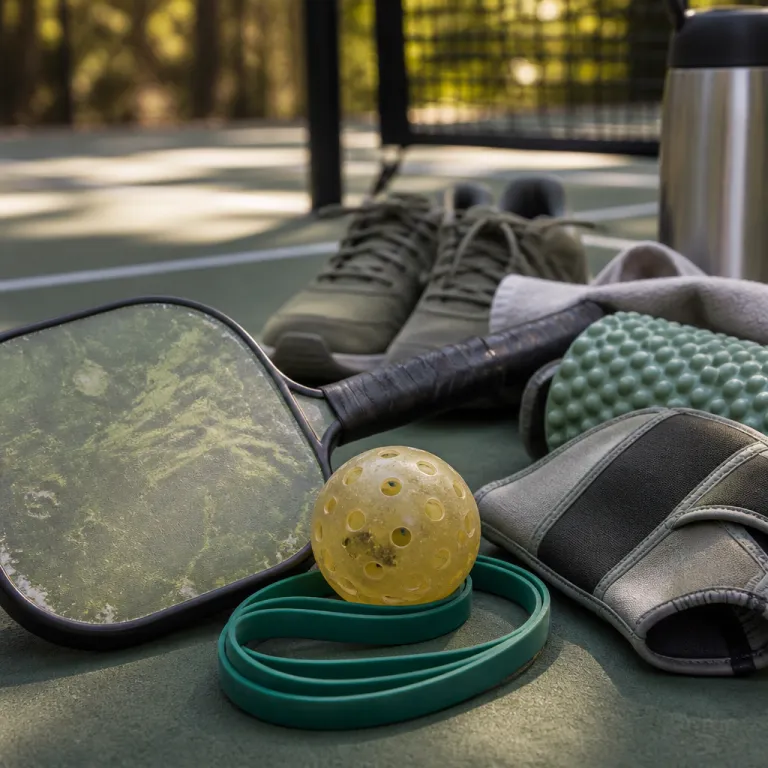
Finally, consider carrying a small kit with a resistance band, a soft ball for foot massage, and a spare overgrip in your pickleball gear bag. A few minutes of band work before mobility drills can further activate key muscles, while rolling the foot on the ball after play can ease tension. These habits turn pickleball for seniors into a complete movement practice rather than just a series of games.
Technique, balance, and staying sharp in the first 15 minutes
A warm up for pickleball for seniors is not only about muscles and joints ; it is also about sharpening technique at a manageable pace. The early dinking phase is the perfect time to focus on clean paddle paths, quiet hands, and compact swings that keep the ball low over the net. Senior players who treat these minutes as technical practice often find that their entire pickleball game feels more controlled.
Balance deserves special attention, because many injuries in pickleball for seniors happen when players reach too far or twist awkwardly for a ball. Simple drills like standing on one leg for 10 to 15 seconds, then switching, can be woven into the mobility phase to challenge stability safely. Over time, these exercises help older adults stay active with more confidence during chaotic kitchen exchanges.
Footwork is the third pillar, and it ties directly into lateral movement and joint safety. During the warm up, practice small split steps before each shot, landing softly on both feet so the body is ready to move in any direction. That habit keeps the center of mass over a stable base, which is crucial for pickleball for seniors when reacting to fast drives or tricky spins.
Adapting technique for aging bodies
Good coaching for pickleball for seniors respects that not every body can or should move like a 25 year old athlete. Shortening the backswing on groundstrokes, for example, reduces stress on the shoulder while still allowing enough pace to keep opponents honest. Many senior players also benefit from using more continental grip positions, which simplify transitions between dinks, volleys, and overheads.
During the warm up, experiment with paddle angles and contact points at half speed, then gradually increase pace as comfort grows. This is the time to test new footwork patterns or shot selections, not during the deciding point of a tight game. When older adults use the first 15 minutes as a laboratory, pickleball for seniors becomes a place of ongoing learning rather than rigid habits.
For those who come from ping pong or tennis backgrounds, the warm up is also where you translate old skills into the new sport. Table tennis players may need to open the paddle face slightly to handle the heavier ball, while former tennis players often shorten their swings and adjust to the smaller pickleball court. These adjustments are easier and safer to explore at warm up speed than under full match pressure.
Mental routines that support physical warm up
The first 15 minutes of pickleball for seniors also set the mental tone for the session. While you move through mobility drills and dinking, take a moment to set simple goals, such as protecting your knees, staying patient at the net, or focusing on deep serves. These intentions guide decisions later, especially when fatigue or frustration appear.
Breathing patterns matter too ; slow nasal inhales and relaxed mouth exhales during warm up help calm the nervous system and prepare the body for sustained effort. Senior players who start sessions in a rushed or anxious state often make poor movement choices, which can compromise balance and joint safety. A calm, deliberate warm up makes it easier to read the ball and react smoothly once the game begins.
Finally, use the warm up to check in with partners about expectations for pace, shot selection, and communication. When everyone agrees to start at a measured intensity and build up, the entire group supports the idea of joint friendly pickleball for seniors. That shared understanding turns the first 15 minutes into a team investment, not just a personal ritual.
Key statistics about pickleball for seniors
- Participation in pickleball among players aged 55 and older has grown rapidly in recent years, with surveys from major U.S. sports organizations reporting that older adults now represent a significant share of total participants.
- Health research on older racket sport participants shows that engaging in activities like pickleball two to three times per week for 60 to 90 minutes can improve cardiovascular fitness and reduce all cause mortality risk compared with sedentary peers.
- Studies on balance and fall risk in seniors indicate that regular practice of multidirectional sports, including pickleball, can enhance postural control and reduce the likelihood of falls in daily life.
- Analyses of joint loading suggest that the smaller court size and underhand serving style in pickleball generate lower peak forces on knees and hips than many running based sports, making it a joint friendly option for many seniors.
- Facility development reports in the United States describe thousands of new pickleball courts being built annually, with a growing portion of scheduled time blocks dedicated specifically to senior pickleball programming.
FAQ about pickleball for seniors and warm up
How long should seniors warm up before playing pickleball ?
Most senior players benefit from at least 15 minutes of structured warm up before the first serious rally. A good template is five minutes of joint mobility, five minutes of muscle activation, and five minutes of progressive dinking at increasing intensity. This routine prepares the body for lateral movement, quick reactions, and repeated swings on the pickleball court.
Is pickleball safe for seniors with knee or hip issues ?
Pickleball is generally considered joint friendly for many older adults because the smaller court and underhand serve reduce impact compared with running sports. However, seniors with existing knee or hip problems should consult their healthcare provider and may need to modify movement, limit singles play, or shorten sessions. A careful warm up and appropriate footwear are essential for protecting vulnerable joints.
How often should older adults play pickleball for health benefits ?
For most seniors, two to three pickleball sessions per week of 60 to 90 minutes each provide meaningful cardiovascular and muscular benefits while allowing time for recovery. Those who wish to play more often can add lighter drill or dinking days instead of full intensity matches. Listening to the body and adjusting frequency based on lingering soreness is crucial for long term participation.
What type of paddle is best for senior pickleball players ?
Many senior players do well with a mid weight paddle, often between 215 and 235 grams, featuring a polymer honeycomb core for a softer feel and reduced vibration. A grip size that matches the hand is important to avoid over gripping and forearm strain. Trying several paddles at local clubs or demo days can help older adults find a comfortable option.
Can pickleball help improve balance and prevent falls in seniors ?
Regular pickleball play challenges balance through constant changes of direction, quick starts and stops, and reaching for shots at the net. When combined with specific balance drills in the warm up, this can improve stability and body awareness in daily life. Many health professionals now recommend pickleball for seniors as part of a broader strategy to reduce fall risk.