Summary
Editor's rating
Value: cheap entry point, but you pay in hassle
Design: light and simple, but you can feel the cost-cutting
Power options: handy flexibility, but not bulletproof
Durability: light and somewhat fragile, but backed by decent support
Performance: decent reps, but expect jams and missed shots
What this thing actually is (and isn’t)
Pros
- Affordable entry-level pickleball launcher compared to higher-end machines
- Lightweight and portable with both battery and AC power options
- Simple controls with two speeds and three angles for basic drills
Cons
- Frequent misfeeds and last balls often not launching properly
- Plastic build feels fragile and long-term durability is questionable
- No advanced features or fine control compared to more expensive machines

Specifications
View full product page →| Brand | Franklin Sports |
A budget pickleball launcher that almost does the job
I picked up the Franklin Sports ProShot Automatic Pickleball Launcher because I wanted to get more reps in without begging friends to come drill with me. I’m not a pro, just someone who plays a few times a week and wanted something simple that throws balls at me so I can work on consistency. I went for this one mainly because of the price and the fact it runs on batteries or plug-in power, which sounded handy for my local courts.
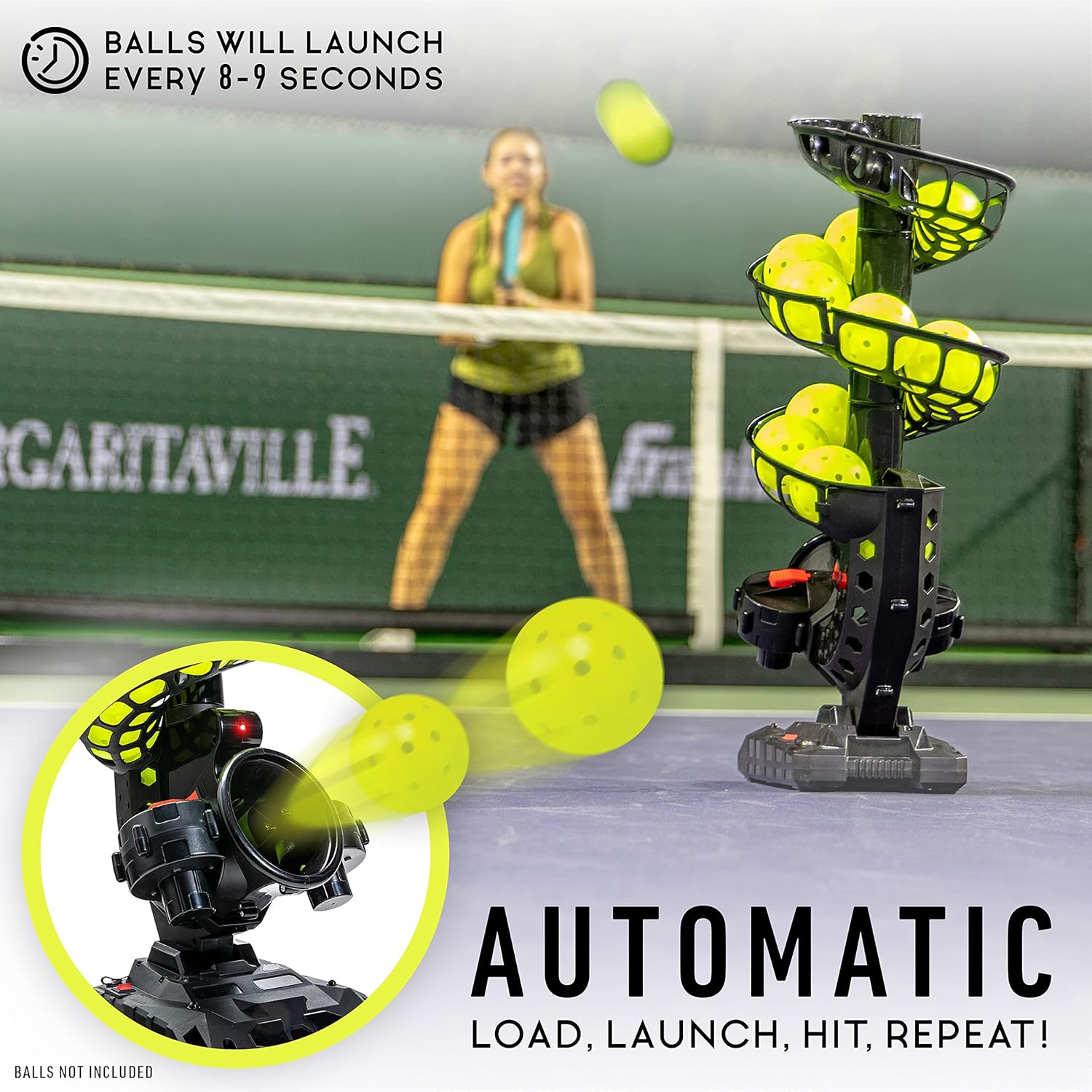
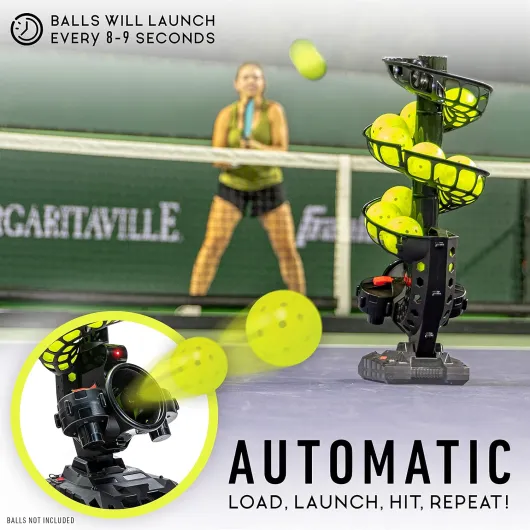
Out of the box, my expectations were pretty realistic. This is clearly a low-end machine compared to the big, heavy, expensive launchers you see at clubs. I wasn’t expecting crazy features, just something that can toss balls every few seconds so I can groove my forehand, backhand, and some volleys. The listing says it holds 15 balls and fires every 8–9 seconds, which sounded about right for solo drills.
After using it for a few sessions, I’d sum it up like this: it basically does what it says, but it’s not flawless. You can get some decent practice in, but you have to accept misfeeds, the occasional jam, and a bit of “babysitting” between cycles. If you’re expecting plug-and-play perfection, you’ll probably be annoyed. If you’re okay with a bit of fiddling, it’s workable.
So this review is from that angle: casual player, limited budget, just wants to know if this is good enough to practice alone. I’ll walk through how it’s built, how it performs, where it struggles, and whether I think it’s worth the money based on real use, not marketing promises.
Value: cheap entry point, but you pay in hassle
In terms of value, this is very much a “you get what you pay for” situation. The price is low compared to serious pickleball machines, and that’s the main reason to consider it. For the cost of a couple of paddles or a few lessons, you get a device that can feed you balls on demand. If you’re just starting to take pickleball more seriously and want something to help you practice alone without dropping a big chunk of cash, this fills that gap reasonably well.
The trade-off is reliability and polish. You save money upfront, but you deal with misfeeds, occasional jams, and some inconsistency, especially toward the end of each ball cycle. If you’re the kind of person who gets frustrated fast when gear doesn’t work perfectly, the “cheap” price might not feel so cheap once you’re walking back and forth to fix jams every few minutes. There are more expensive machines that are way smoother and more configurable, but you’ll pay several times more for them.
Compared to just paying for ball machine rental at a club (if you even have that option), this can pay for itself fairly quickly if you use it a lot. But it’s not on the same level in terms of performance or durability. I’d say it makes sense for casual players, beginners, or budget-conscious folks who understand they’re buying an entry-level tool. If you’re already spending a lot on gear and play multiple times a week, it might be worth saving longer and getting a better machine instead of settling for this one.
So for value, I’d call it “pretty solid but with strings attached.” Good price, useful when it works, but you have to accept the compromises. If you’re okay with that, it can be a decent addition to your practice routine. If not, you’ll probably regret not going for something higher-end.
Design: light and simple, but you can feel the cost-cutting
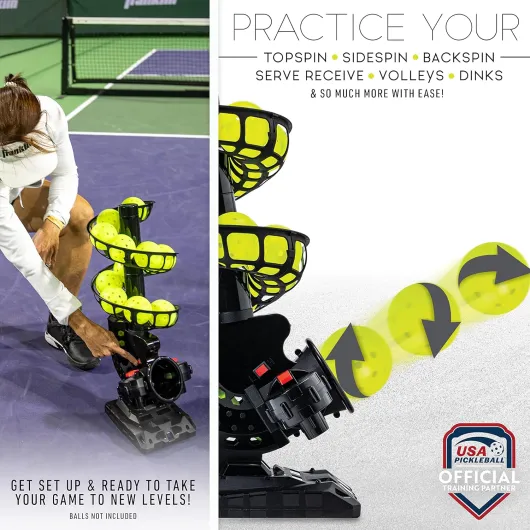
Design-wise, the ProShot is very straightforward. It’s a compact black unit made mostly of plastic (polypropylene according to the specs), with a vertical tube you drop the balls into and a base that houses the motor and the launching rollers. It weighs around 2.5 kg, which is light enough to carry with one hand, even when it’s loaded with balls. That part I liked a lot — compared to heavier machines I’ve tried at clubs, this is easy to toss in the car and haul to the court.
The controls are basic: a power switch, a way to choose between two speeds, and a simple tilt mechanism with three angle settings. No screen, no digital controls, just mechanical positions. The tilt is a bit crude but it works. You can clearly see that this is built to hit a price point, not to impress anyone with engineering. The plastic feels decent but not super tough; if you drop it hard or throw it in the trunk without care, I wouldn’t be surprised if something cracks over time.
One design detail that stands out is the ball feeding track. It’s basically a gravity-fed chute that lets one ball roll down into the rollers every 8–9 seconds. When everything lines up, it’s fine. But the shape and smoothness of the track aren’t perfect, and you can tell that’s where cost-cutting bites. That’s why some users (and me) see misfeeds on the last couple of balls or with older, slightly warped balls. The machine doesn’t have any smart way to correct that; it just stops throwing until you jiggle the balls or clear the jam.
Overall, the design is functional but clearly “budget.” The good part: it’s compact, light, and easy to move and set up. The downside: you feel like you’re using an entry-level plastic gadget. If you treat it gently and don’t expect tank-like build quality, it’s fine. If you’re rough with gear, this probably won’t hold up well in the long run.
Power options: handy flexibility, but not bulletproof
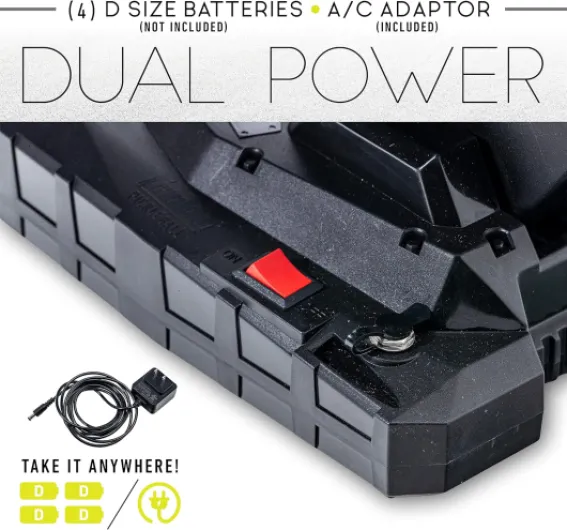
Power-wise, the ProShot gives you two options: 4 D batteries or the built-in AC adapter. I tried both because I wanted to see if there was any difference in performance or reliability. With fresh D batteries, the machine runs fine. The launch strength stays pretty stable for a good while, and I didn’t notice a big drop in power until the batteries were really on their way out. Realistically, if you’re doing a couple of sessions a week, you’ll go through D batteries at a noticeable pace, so rechargeable D cells are worth considering if you plan to use it often.
Using the AC adapter is obviously easier if you have an outlet near your practice spot. In my garage and on one court with a plug nearby, it worked well. No worries about battery life, and the power felt slightly more consistent. I did notice that if the extension cord connection was loose or got tugged, the machine would cut off, so make sure your cable situation is solid. One Amazon reviewer mentioned a unit that stopped working even on AC, which sounds like a defective machine rather than a power design issue, but it’s something to keep in mind.
The downside is that the machine doesn’t have any battery indicator or warning. It just starts to feel weaker or acts weird (more misfeeds, slower rollers) when the batteries are low. You kind of have to guess when it’s time to swap them out. Also, having to buy 4 D batteries right away is a small extra cost people often forget. For a budget device, I would have liked a bit more feedback on power status, but at this price point, they clearly kept it simple.
Overall, I like the flexibility: practice anywhere with batteries, or plug in when possible. Just don’t expect smart power management or any fancy features. Treat it like a basic toy: it runs until it doesn’t, then you swap or plug in and keep going.
Durability: light and somewhat fragile, but backed by decent support
Durability is where the low price starts to show. The plastic body and moving parts don’t exactly scream long-term toughness. I didn’t abuse mine, but even with normal use you can feel that this isn’t built like professional club machines. The ball track and rollers are the weak points. That’s where dust, dirt, and slightly out-of-round balls can cause friction and jams over time. If you’re using it on dusty outdoor courts and tossing it in and out of your trunk a lot, I’d expect wear to show up sooner rather than later.
I haven’t had a full breakdown yet, but reading through other reviews lines up with what I’d expect: some units arrive defective or fail after a handful of uses. One reviewer said their first unit just didn’t work right at all and needed to be returned. Another had it stop working after a few sessions both on batteries and AC. That kind of hit-or-miss reliability is pretty common for cheap mechanical gadgets with motors and plastic internals.
The positive part is Franklin’s customer service seems fairly responsive. One user mentioned calling them after the return window closed, explaining the problem, and getting a replacement unit anyway. That’s actually a big deal with this kind of product. If you get a bad one, at least there’s a decent chance they’ll swap it out. Still, the fact that replacements are needed at all shows the quality control isn’t perfect.
If you buy this, I’d treat it gently: don’t leave it baking in a hot car, don’t drop it, and try to use reasonably new, clean balls. Think of it more as a light-duty training aid than a heavy-duty machine. It should hold up okay for casual use, but I wouldn’t count on it to survive daily club-level abuse for years.
Performance: decent reps, but expect jams and missed shots
On the court, performance is a mixed bag. When the ProShot behaves, it’s actually pretty useful. The launch interval of roughly 8–9 seconds is consistent enough that you can get into a rhythm: hit a shot, reset, wait, hit the next one. The two speed settings give you a noticeable difference in ball pace. On the lower speed, it’s good for shorter feeds and softer shots. On the higher speed, the balls come deeper and faster, enough to work on more aggressive groundstrokes or quicker reaction volleys.
The three angle positions are also handy. On the lowest angle, I used it for dinks and low volleys closer to the net. On the middle setting, it’s more like a standard rally ball from mid-court. On the highest angle, it pushes balls a bit deeper, though it’s still not like a true lob machine. You’re not getting crazy variation, but for basic repetition on forehands and backhands, it gets the job done. You can also move the machine side to side to practice inside-out or cross-court shots.
The problem is consistency across a full cycle. Like other users mentioned, the last one or two balls in the tube often don’t feed properly. Sometimes the machine just sits there spinning without a ball dropping into the rollers. Other times a ball gets stuck halfway, and you have to walk over and nudge it. I also had a couple of full jams where I had to turn it off, clear the track, and start again. It’s not constant, but it’s frequent enough to be annoying — figure maybe 5–10% of balls don’t come out right depending on the batch of balls you use.
So in practice, you get mostly solid feeds with occasional hiccups. If you’re okay with that and just want something to help groove strokes, it’s fine. If you want a machine you can trust to run through a full hopper without touching it, this isn’t it. For the price, I’d call the performance “usable but flawed,” especially compared to higher-end launchers that are way more stable but also much more expensive.
What this thing actually is (and isn’t)
The Franklin ProShot is basically a lightweight plastic bucket on a base with a simple motor and rollers that spit out pickleballs. It’s not a full-blown programmable ball machine. There’s no fancy remote, no random modes, no spin settings, none of that. It’s a basic tosser: you load balls in, set the angle and speed, and it launches one every 8–9 seconds until it’s empty or jams.
The specs say it holds 15 balls, but in practice you can squeeze in about 17 if you stack them, though several users (and me) noticed that the last 1–2 balls often don’t feed properly. So realistically, think of it as a 14–15 ball cycle. That gives you roughly 2–2.5 minutes of continuous shots per load, which is enough for a short drill but not a full workout unless you’re constantly reloading.
There are a couple of basic adjustments: you get two speed settings and three launch angle positions. That’s about it. No fine tuning beyond that. You can set it to lower angles for dinks and shorter shots, or tilt it up more for deeper feeds. It’s powered either by 4 D batteries (not included) or an AC adapter that’s attached to the unit. That flexibility is actually one of the better points, because I’ve used it both in my garage and on outdoor courts.
In simple terms, this is a budget training tool for repetition, not a smart machine that simulates real match play. If you go in with that mindset, it’s easier to live with its flaws. If you’re expecting something close to the bigger, club-level machines, you’re going to be disappointed pretty quickly.
Pros
- Affordable entry-level pickleball launcher compared to higher-end machines
- Lightweight and portable with both battery and AC power options
- Simple controls with two speeds and three angles for basic drills
Cons
- Frequent misfeeds and last balls often not launching properly
- Plastic build feels fragile and long-term durability is questionable
- No advanced features or fine control compared to more expensive machines
Conclusion
Editor's rating
Overall, the Franklin ProShot Automatic Pickleball Launcher is a budget-friendly way to get more reps in, but it’s not a perfect solution. When it’s running smoothly, it does exactly what most casual players need: it tosses balls every 8–9 seconds so you can work on forehands, backhands, dinks, and volleys without needing a partner. The machine is light, easy to carry, simple to set up, and the dual power options (batteries or AC) are genuinely useful. For the price, that’s not bad.
The catch is the reliability and refinement. Misfeeds, the last couple of balls not launching, and the occasional jam are part of the deal. The materials and build feel clearly entry-level, and there’s some risk of getting a dud unit based on other reviews. Franklin’s customer service seems decent, which helps a bit, but you should still assume this is a light-duty, low-end machine, not a club-grade workhorse.
I’d recommend this for beginners or casual players who want an inexpensive practice buddy and don’t mind a bit of fiddling. If you’re on a tight budget and just need something to help build consistency, it can be good value for money. On the other hand, if you want rock-solid reliability, precise control, and zero hassle, you should skip this and look at higher-end launchers, even if it means saving up longer. In short: decent tool for the price, as long as your expectations stay realistic.