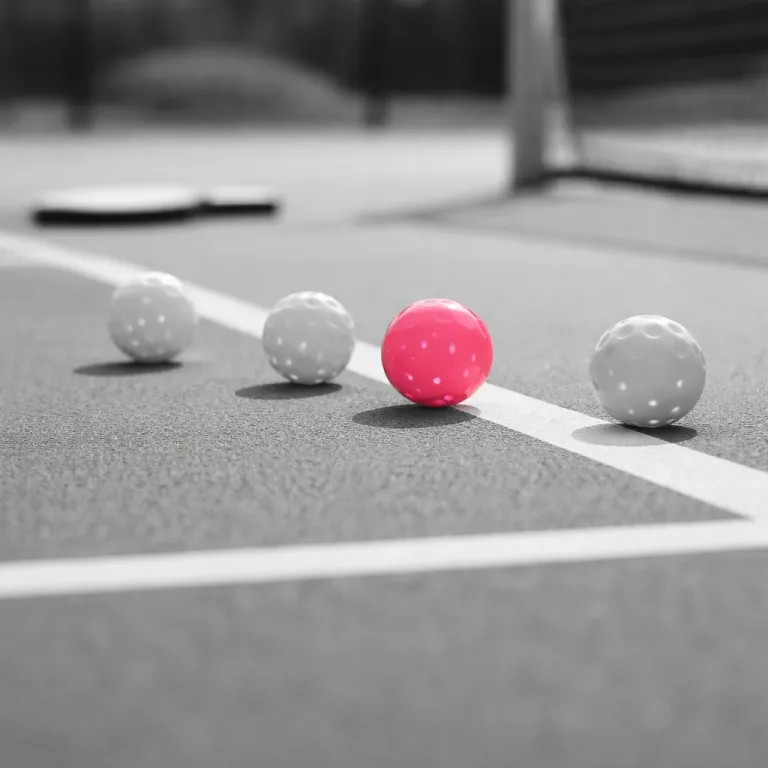
Why the pickleball kitchen exists and what “no volley” really means
The non volley zone, or kitchen, is only 2.13 metres deep but it shapes every serious pickleball rally. Many recreational players learn the basic kitchen rules on day one yet still misread how the zone interacts with momentum, feet placement, and what actually counts as volleying near the net. If you want fewer arguments and more clean points, you need to treat the pickleball kitchen as a defined area with precise rules, not a vague warning painted on the court.
On every standard pickleball court, the non volley zone extends from the net back to the line that is 2.13 metres away, and that entire strip including the line is the volley zone where you cannot hit a volley while touching it. A volley in pickleball is any shot where the ball is struck in the air before the ball bounces, so if your paddle contacts the ball while any part of you or your gear is inside the kitchen, you have committed a fault under the rules. That fault is the same whether your feet are on the line, your toe is barely over the paint, or your step into the kitchen is huge and obvious.
Recreational games at public parks from Seattle’s Green Lake courts to Austin’s South Austin Recreation Center often rely on “honor calls” for every kitchen volley. That works only when players share the same understanding of the rule and agree that the kitchen rules apply equally to singles and doubles games. When everyone treats the non volley zone as a hard boundary rather than a suggestion, rallies at the net become more aggressive yet also more respectful because players know exactly when a fault has occurred.
The momentum rule: when your body carries you into the non volley zone
The most argued part of pickleball kitchen rules is the momentum rule after a hard volley at the net. You are not allowed to volley the ball and then let your momentum carry you into the non volley zone, even if the ball has already bounced on the other side or the rally seems finished. In usa pickleball sanctioned play, that momentum volley is a fault the instant your feet or anything you are wearing or holding touch the kitchen after the shot.
Here is the key detail that many players miss during a fast game on a crowded court. The rule does not care whether the ball bounced twice, whether the ball bounces out, or whether your opponents even manage to return the shot, because the fault momentum is tied to your continuous motion after volleying. If your momentum from the volleying action causes you to step into the zone, jump and land in the kitchen, or fall forward so that your paddle or hand touches inside the non volley zone, the fault is called even if the ball is dead.
Think of it this way during your next league night or ladder play at the local community center. Once you commit to a kitchen volley from just outside the line, your responsibility under the rules kitchen framework is to control your body so that no part of you crosses into the area until your momentum has fully stopped. Recent discussions of how new pickleball rule changes will impact your game have not altered this core momentum rule, so whether you are playing casual rec games or a usa pickleball regional tournament, nvz momentum violations are treated exactly the same.
What counts as “in the kitchen” – feet, paddles, hats, and dropped phones
Arguments about the pickleball kitchen often start with a simple question about what actually has to land in the zone nvz for a fault to occur. Under the official rules pickleball framework, the non volley zone includes the court surface, the lines, and the space above them, and contact by any part of your body or anything you are wearing or holding can create a fault. That means your feet, your paddle, your hat, or even a phone in your pocket can all trigger a kitchen violation if they touch inside the zone during or after a volley.
Imagine you are stretched out at the net at the Cayce Pickleball Complex in South Carolina, where tight courts and aggressive play make every centimetre matter. You reach for a sharp crosscourt volley ball, your feet stay behind the line, but your paddle follows through and drops from your hand so that it slides into the non volley zone while the ball is still in play. Because the paddle was part of your volleying action and it ended up inside the kitchen before your momentum stopped, that is treated as a fault under the momentum rule, even though your shoes never crossed the line.
The same logic applies when the ball bounced first and you are simply chasing a dink that lands deep in the volley zone. If the ball bounces inside the kitchen, you are free to step kitchen, reach inside kitchen, and play the shot as long as you are not volleying and the ball has clearly bounced. For players who are still learning the double bounce rule and want a deeper breakdown of how the ball bounced requirements interact with the non volley zone, it is worth reading a detailed guide to understanding the double bounce rule in pickleball so you can separate groundstroke freedoms from volley restrictions.
Timing your return to the non volley zone after a volley
Once you hit a volley near the net, the clock in your head should start ticking on when you can safely enter the kitchen again. The usa pickleball rule is simple but unforgiving, because you must wait until your momentum from that volley has completely stopped before you step into the non volley zone. Only after that point can you move forward, step kitchen, and reposition inside the area to play the next ball that bounces.
On a fast hard court at a place like the Pickleball Zone in Bend, Oregon, the pace of play makes this timing feel tricky. You might hit a firm kitchen volley, see your opponent pop the ball up, and feel tempted to lunge forward into the volley zone to finish the point, yet if your original momentum has not fully ended, that second move into the kitchen still counts as nvz momentum from the first shot. The rule treats all continuous motion after the volley as part of the same play, so you cannot dodge the fault momentum by pausing for a fraction of a second and then letting your feet slide onto the line.
Smart players train this by practicing controlled split steps just behind the kitchen line, especially in doubles games where court coverage is shared. After every volleying exchange, they land with balanced feet outside the non volley zone, let their bodies settle, and only then choose whether to move inside kitchen to reach a dink or retreat to the baseline for a reset. Over time, this habit turns the momentum volley risk into a weapon, because you can attack confidently at the net without fearing that an uncontrolled step will land in the kitchen and hand away a cheap point.
Doubles dynamics: partners, line calls, and shared responsibility in the non volley zone
Doubles pickleball adds another layer of complexity to kitchen rules because two players share the same tight space at the net. A common misconception is that your partner standing inside the non volley zone during your volley automatically creates a fault, but the rule is more precise than that. The fault only occurs if the player who volleys the ball, or anything they are wearing or holding, contacts the kitchen or the kitchen line due to their own momentum.
Picture a mixed doubles game at a busy community park where one partner camps inside the volley zone to handle dinks while the other hovers just behind the line. If the player inside kitchen simply stands still while their partner outside the zone volleys ball after ball, there is no violation because the non volley restriction applies only to the person actually volleying. However, if the inside player reaches up to volley a ball while their feet are in the area, or if their momentum rule violation causes them to fall forward and land kitchen with a hand or paddle, that is a clear fault under the rules pickleball officials enforce in tournaments.
Line calls around the kitchen line also demand shared focus and honesty from both players on a team. The kitchen line is part of the non volley zone, so when the ball bounces on that line, it is considered to have bounced inside the kitchen and is therefore in, which means you may step kitchen to play it but may not volley it while touching the line. Good doubles teams talk about these edge cases before the game starts, agree on how they will call close balls near the net, and treat every disputed call as a chance to protect trust rather than steal a point.
Practical scenarios that settle real kitchen arguments on public courts
Most weekend arguments about pickleball kitchen rules come from messy, real world plays that do not look like the clean diagrams in the rulebook. Take a scenario where you are at the Cayce Pickleball Complex and you sprint forward from mid court, reach the non volley zone line, and smash a volley ball while your feet stay just outside the paint. If your momentum then carries you forward so that you step kitchen after the ball has already bounced twice on the other side, the correct call is still a fault because nvz momentum does not care when the rally technically ended.
Another classic situation involves a ball that clips the net cord and dies short, forcing you to decide in a split second whether the ball bounced inside the volley zone or not. If the ball bounces clearly inside the non volley zone, you are allowed to move your feet into the area, reach inside kitchen, and play a soft dink because you are no longer volleying and the ball bounces have already satisfied the double bounce requirement earlier in the rally. The only time this becomes a rules kitchen issue is when a player tries to volley a ball that has not yet bounced while any part of their body or gear is touching the zone nvz, which instantly creates a fault momentum risk if they are still moving forward.
Finally, remember that the non volley zone is not a dead space but a tactical platform in every serious game. Strong players use the pickleball kitchen to absorb pace, reset points, and create angles, stepping in only after the ball bounced and then retreating so they can attack the next high ball from just behind the line. If you treat the kitchen pickleball rules as a set of tools rather than a list of punishments, your play at the net becomes calmer, your arguments shrink, and your wins start coming from the quality of your shots instead of confusion about where your feet happened to land.
Key statistics about non volley zone play in pickleball
- On a standard pickleball court, the non volley zone is 2.13 metres deep on each side of the net, which means roughly 19 percent of the total court length is governed by kitchen specific rules (usa pickleball court specifications).
- Analyses of match footage from high level tournaments show that more than 60 percent of rallies include at least one shot played from inside the kitchen area, highlighting how central the non volley zone is to modern strategy (various coaching and analytics reviews).
- Coaches who track unforced errors at the 3.0 to 3.5 level report that kitchen related faults, including illegal volleys and nvz momentum violations, account for roughly one in five lost points in recreational doubles games (compiled clinic statistics from multiple teaching pros).
- Instructional programs that include specific drills on stopping momentum before the kitchen line have documented reductions of more than 30 percent in non volley zone faults among regular participants over a six week training block (reported by community centers and club teaching staffs).
FAQ: common questions about pickleball kitchen rules
Can I ever step into the kitchen after hitting a volley
You may step into the kitchen only after your momentum from the volley has completely stopped and the rally has moved on to a new phase of play. If your continuous motion from the volley carries you into the non volley zone at any time, that is a fault even if the ball is already dead. The safest habit is to regain balance behind the line, pause, and then step forward only when you need to play a ball that has bounced.
Does my partner being in the kitchen make my volley illegal
Your partner standing in the kitchen does not automatically make your volley illegal. The non volley restriction applies to the player who actually hits the volley and to anything they are wearing or holding, not to their partner’s static position. A fault occurs only if the volleying player or their gear contacts the non volley zone due to their own momentum.
Is the kitchen line in or out when the ball lands on it
The kitchen line is part of the non volley zone, so a ball that lands on that line is considered in. When the ball bounces on the line, you are allowed to step into the kitchen to play it because it has bounced, but you may not volley a ball while touching that line. Many disputes vanish when both teams agree before the game that “line is in” for all non volley zone calls.
What happens if my paddle or hat falls into the kitchen after a volley
If your paddle, hat, or any item you are wearing or holding falls into the kitchen as a result of your momentum after a volley, it is treated as if your body entered the zone and is therefore a fault. The rule treats equipment as an extension of the player during the play. Dropping something into the non volley zone when the ball is not in play, such as between points, does not create any violation.
Can I jump from inside the kitchen and volley the ball in the air
You are not allowed to jump from inside the kitchen and volley the ball, even if you land outside the non volley zone, because the rule requires that both takeoff and landing be outside the zone for a legal airborne volley. Jumping from behind the line, hitting the volley in the air, and then landing outside the kitchen is legal as long as no part of you or your gear touches the non volley zone during the motion. Any contact with the kitchen at takeoff, during flight, or on landing turns that spectacular shot into a simple fault.