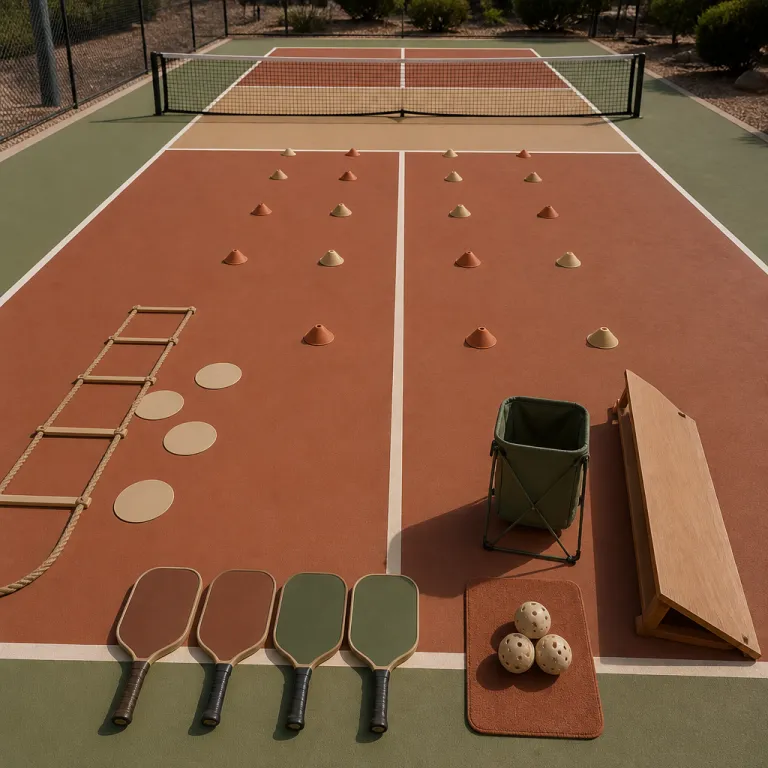
Why touch focused pickleball drills for intermediate players change your game
Most pickleball players between 3.0 and 4.0 already hit hard. The real gap at this level is touch, the quiet skill that lets a pickleball player put the ball exactly where opponents hate it most. If you want to move forward in level, you need pickleball drills for intermediate players that train control, not just bigger shots.
On public courts from Austin’s South Austin Recreation Center to Seattle’s Green Lake, you see the same pattern with players during open play. They rip a speed ball from the baseline, then lose the point on a rushed hit shot at the kitchen because their drilling never taught them how to slow the game down. A focused 20 minute pickleball drill routine builds consistency under pressure in a way that two hours of random games never will.
This routine is built around four simple but demanding pickleball drills that fit on any court. Each drill uses the same ball, the same paddle, and the same lines, yet it attacks a different part of your decision making and touch. Run the full sequence three or four days per week, and you will feel your shots settle, your control sharpen, and your confidence rise when balls air out in fast exchanges.
Warm up dinking: five minutes that reset your touch
Start at the kitchen line with your partner, both of you on the right side of the court. The goal of this first drill is simple but brutal for many pickleball players, because every dink must clear the net by less than 15 centimetres while still landing in the kitchen. This kind of precise drill play forces you to feel the ball on the paddle face instead of muscling every shot.
Use a light shuffle step along the baseline kitchen zone, staying low and balanced as you hit balls cross court. One player aims deep into the far corner of the kitchen while the other player works shorter dinks that barely pass the net, and both players focus on the same smooth swing to build consistency. If a ball pops too high into the air, freeze and ask why that hit went wrong, because this is where deliberate practice helps players change habits instead of just repeating them.
Rotate sides every 60 to 90 seconds so both players feel forehand and backhand dinks under the same constraint. You are not trying to win a game here, you are trying to train your brain to see a soft shot as the default answer whenever opponents drive a ball at you. For extra feedback, some players use a mixing drill paddle as explained in this guide on better pickleball training with a drill paddle, which slightly changes the feel of the hit and punishes mishits during dinking practice.
Block volleys: learning to absorb pace instead of fighting it
Once your touch is awake, move to a five minute block volley drill that teaches real control against pace. One pickleball player stands at the baseline and drives a firm ball toward the opponent’s body, while the other player holds the kitchen line and focuses only on resetting the shot softly back into the kitchen. The player at the net is not allowed to counterattack, only to block, because the purpose is to reduce speed ball energy and keep balls air low over the net.
Think of your paddle as a shock absorber rather than a hammer when you hit balls in this drill. Keep your grip pressure around three on a scale of ten, let the ball come to you, and use a compact motion that feels more like catching than swinging, which is exactly how top pickleball defenders survive heavy drives from advanced opponents. After 20 to 30 balls, switch roles so each partner feels the difference between driving a hit shot from the baseline and calmly resetting it from the kitchen.
If you train alone, a portable rebounder with marked kitchen lines, such as this solo accuracy trainer for dinks and volleys, lets you simulate the same pickleball drilling pattern. Stand two to three metres from the net, drive the ball firmly, then block the rebound back into an imaginary kitchen target, repeating the drill until your resets land softly. This kind of structured pickleball drill builds consistency in your defensive shots and helps players stay calm when a real opponent is trying to blast through them during a game.
Drop shot ladder: owning the transition zone step by step
The third part of this 20 minute routine is the drop shot ladder, which turns the scary transition zone into familiar ground. Start on the baseline and hit a third shot drop that must land in the kitchen with a medium high arc, then move forward two or three steps and repeat the same drop shot from the new distance. Your goal is to keep the arc and landing spot identical from the baseline, from the transition zone, and finally from just behind the kitchen line.
Many intermediate pickleball players only practice the third shot from the baseline, so they panic when a ball forces them to hit from mid court. This ladder drill fixes that gap by forcing you to adjust swing length and paddle angle while keeping the same soft contact, which is how you build consistency in your drops under real pressure. After every successful sequence of three shots, reset to the baseline kitchen start and run the ladder again until you can move forward without changing the quality of your hit.
Work both forehand and backhand sides, and alternate cross court and straight ahead targets so your decision making stays active. If you spray a ball long or leave it high enough for opponents to crush, pause and check your feet, because most bad drops come from players hitting while still drifting through the transition zone. Over time, this single pickleball drill will make the space between the baseline and the kitchen feel less like a danger area and more like a place where you can calmly shape the ball.
Live rally constraint: one full point under a strict touch rule
The final five minutes turn all that drilling into something that feels like a real game. Play live points with your partner, starting each rally with a serve and a return, but add one hard rule for both players, which is that no one may hit a shot higher than hip level. This forces you to choose a dink, a drop shot, or a soft roll instead of a put away, and it keeps the ball in play long enough to stress your control.
Because you cannot swing freely, you will notice how often you normally bail out of a rally with a rushed hit shot. The constraint exposes lazy footwork in the transition zone, poor spacing at the kitchen, and any tendency to float balls air too high when you are off balance, which is exactly what strong opponents punish. After each rally, take five seconds to name the one decision making error or technical flaw that ended the point, then replay the same pattern and correct it on the next sequence.
Rotate serve and return roles so both pickleball players feel pressure from different positions on the court. If you train in a busy park, you can even run this constraint with four players in doubles, which makes every pickleball player on the team accountable for soft control instead of just one hero at the net. Over time, this kind of live drill play turns touch into your default setting, so when a real ball sits up you can finally choose whether to finish or to reset.
Why 20 focused minutes beat two hours of open play
Recreational players often assume that more games automatically mean more progress. In reality, two hours of open play usually give you maybe 15 to 20 meaningful third shot attempts, a handful of pressured dinks, and almost no structured work in the transition zone. A 20 minute block of targeted pickleball drills for intermediate players gives you hundreds of purposeful touches on the ball, which is why it moves the needle faster.
Sports science on deliberate practice shows that short, intense focus windows three or four times per week create faster skill gains than occasional marathon sessions, and pickleball is no exception. When you run this routine, every drill has a clear goal, immediate feedback, and a built in constraint, so your brain knows exactly what to adjust on the next shot instead of just surviving another chaotic game. That is the difference between mindless pickleball drilling and practice that truly helps players climb from a 3.0 rating toward 4.0 and beyond.
This matters even more as the average age of the pickleball community shifts, as analysed in this breakdown of how the typical pickleball player is getting younger. Younger, fitter opponents will hit balls harder and attack more often, so your edge must come from control, not from trying to match raw power. In that environment, the players who invest in structured pickleball drills, not just casual games, will own the kitchen and dictate the pace of play.
Pro level habits you can steal from top pickleball players
Watch top pickleball pros during warm ups, and you will notice how much time they spend on soft skills. A player like anna bright does not just blast drives from the baseline, she and her partner will run tight dinking patterns, controlled third shot drops, and specific block drills before they ever play a point. That same mindset is what turns this 20 minute routine from a casual hit into a serious training block for ambitious pickleball players.
High level drilling is not about fancy cones or complicated patterns, it is about repeating the same simple shot under slightly different constraints until your body owns it. Pros treat every ball in practice as if an opponent is on the other side, which is why their decision making in matches looks automatic when they move forward through the transition zone. If you bring that attitude to your own pickleball drills for intermediate players, you will feel the difference the next time a speed ball comes at your chest and you calmly turn it into a soft reset.
Set a clear weekly plan, such as three sessions of this routine plus one longer day of games, and track how many clean drops, controlled dinks, and successful resets you hit in each drill. Over a few weeks, you will see the numbers climb, your unforced errors drop, and your confidence at the kitchen rise, which is the real sign that you build consistency rather than just swinging harder. In the end, what separates serious players from the crowd is not the logo on their paddle, but how they use a simple pickleball drill to turn every ball into a chance to improve.
Key statistics on focused pickleball practice
- Sports skill research from deliberate practice studies shows that focused sessions of 20 to 30 minutes, repeated three to four times per week, can produce faster improvement than a single long weekly session of 90 minutes or more, because attention and quality stay higher throughout the shorter blocks.
- Analyses of recreational pickleball sessions indicate that in two hours of open play, a typical intermediate player may hit fewer than 30 true third shot drops under pressure, while a 20 minute drop shot ladder drill can easily create more than 80 to 100 controlled attempts in one focused block.
- Tracking data from competitive clubs in the United States suggest that players who add at least two structured drilling sessions per week often gain roughly 0.25 to 0.5 rating points over a season, compared with minimal rating change for players who only participate in casual games.
- Observational timing on public courts shows that warm up dinking and soft control work usually occupy less than 10 percent of total play time for most groups, even though these skills directly influence more than half of all points decided at the kitchen line.
FAQ: 20 minute touch focused pickleball routine
How often should intermediate players run this 20 minute routine ?
Most intermediate players will benefit from running this routine three or four times per week, ideally before or after regular games. That frequency gives your body enough repetition to lock in better touch without causing excessive fatigue. If you feel fresh and focused, you can add a fourth day, but keep each block tight and deliberate.
Can I do these drills without a partner ?
You can adapt most of the drills with a rebounder net or a solid wall. For example, you can practice dinks and block volleys by aiming at a taped kitchen target on the wall and tracking how many balls land in the zone. Live rally constraints obviously require another player, but the other three drills translate well to solo work.
How long before I see improvement in my touch ?
If you run the full routine three times per week, many players notice better control at the kitchen within three to four weeks. You will likely feel more confident on third shot drops first, then on dinks and resets during faster rallies. The key is to keep the constraints strict so you do not drift back into lazy habits.
Should I still play regular games if I focus on drilling ?
Yes, you still need real games to test your skills under pressure and against different opponents. A good balance for many intermediate players is two or three days of open play plus two or three short drilling sessions like this 20 minute routine. Think of drills as your laboratory and games as your exam, not as an either or choice.
Do I need special equipment for these pickleball drills for intermediate players ?
You can run the entire routine with a standard paddle, a few balls, and access to a marked court. Optional tools like a rebounder net or a dedicated drill paddle can add variety and feedback, but they are not required. What matters far more is your focus on touch, control, and consistent technique during every repetition.