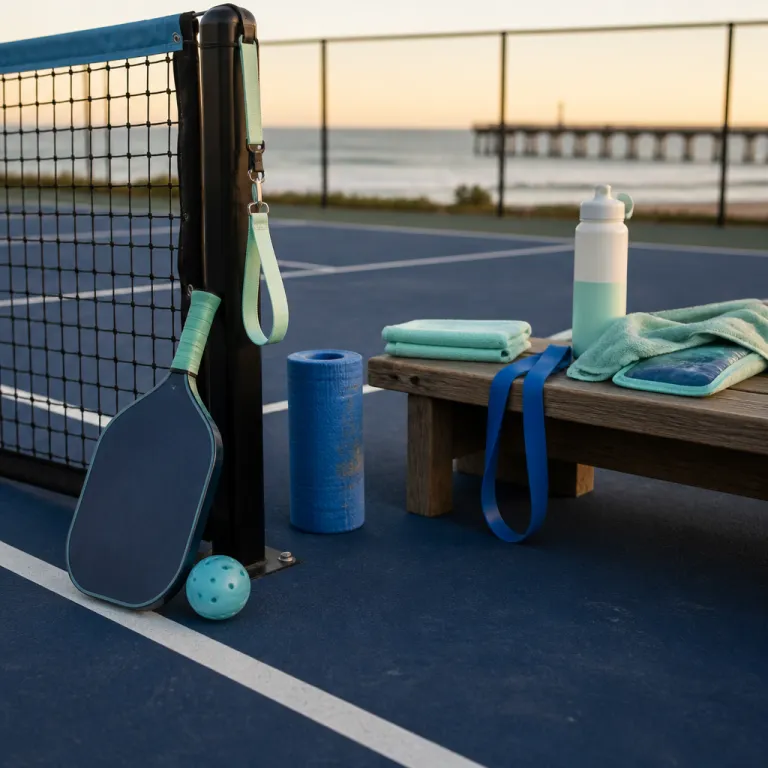
Why a pickleball cool down recovery routine matters for repeat players
Most pickleball players step off the court, chat a bit, then drive home. For seniors logging four or five games a week, that habit quietly turns normal muscle soreness into stubborn shoulder and hip injuries that limit how often you can actually play. A structured pickleball cool down recovery routine is the small investment that keeps your body available for the next game, not stuck on the couch with ice packs.
Quick post-match checklist (about 15 minutes total)
- 5 minutes: gentle upper body stretches (shoulders, elbows, wrists)
- 5 minutes: lower body work for hips, knees, calves, and ankles
- 5 minutes: foam rolling, child’s pose, and quiet breathing
Pickleball loads the upper body in a very specific way, especially the paddle side shoulder during overhead dinks, speed ups, and erne attempts that demand repeated internal rotation under fatigue. That pattern hammers the rotator cuff muscles and the small stabilizers around the shoulder joint, so cooling down with targeted stretches and light recovery work is not optional if you want to prevent injuries rather than react to them. Sports medicine guidelines for overhead athletes, including clinical reviews on shoulder overuse in racket and paddle sports, consistently emphasize gradual downshifting of shoulder load to protect the rotator cuff and surrounding tendons, especially in older players.
There is also a difference between healthy recovery and early warning signs that many pickleball players miss. Normal delayed onset muscle soreness peaks a day or two after a hard game and eases once you start moving, while tendinopathy pain is sharper, more localized, and often worsens when you load that same muscle again. Clinical descriptions of DOMS versus tendon pain highlight this contrast in timing and location, and a consistent pickleball cool down recovery routine helps you feel these patterns clearly, because you repeat the same stretches and holds three times per week and notice when one arm, one side, or one muscle suddenly protests.
A 5 minute upper body cool down for shoulder saving
Start your pickleball cool down with the joints that work hardest, which means the shoulders, elbows, and wrists on both arms. Stand feet shoulder width apart near the fence, let your paddle rest, and shake each arm down for about 10 seconds to signal that the game is over and the cooling down phase has begun. This simple reset prepares the muscles for more focused stretching instead of snapping straight from high intensity to sitting in the car.
Next, perform a gentle pickleball stretch for the back of the shoulder that mimics a sleeper stretch without forcing the joint. Lie on your non paddle side if you are comfortable on the ground, or stand and place your paddle side forearm against the fence, then use the opposite hand gently to guide the arm across the body until you feel a mild pull in the rear shoulder muscle. Hold this position for 20 to 30 seconds, repeat it three times, and then switch sides for 20 to 30 seconds per hold so both shoulders share the recovery work. Older players who feel unstable on the ground can stay standing and keep the knees slightly bent for balance, and anyone with known shoulder impingement or rotator cuff irritation should keep the arm slightly lower than shoulder height and stop before any sharp or pinching pain.
For the chest and front shoulder, stand with your feet shoulder width apart and place one hand gently on the fence behind you at about shoulder height. Rotate your body away until you feel the muscle stretching across the front of the shoulder and upper body, then hold 20 to 30 seconds while breathing slowly through the nose. Repeat this stretch three times per side, because balanced stretches on both sides help improve flexibility and prevent injuries that often show up when one shoulder is much tighter than the other after a long down routine. If reaching behind is uncomfortable, lower the hand a few inches or step closer to the fence to reduce the intensity, and if you have a history of shoulder instability or dislocation, limit the rotation and keep the elbow slightly bent to stay in a safer range.
Lower body stretches that protect hips, knees, and ankles
Pickleball footwork is all about split steps, lateral shuffles, and quick recovery steps back to the kitchen line. That constant side to side movement loads the calves, hip flexors, and lateral ankle muscles in ways that feel fine during the game but can stiffen badly without a proper cool down. A lower body routine that you repeat three times per week will keep those joints ready for tournament formats from round robin to double elimination without relying on pain pills.
Begin by standing with your feet shoulder width apart and stepping one foot back into a gentle lunge, keeping the front knee stacked over the ankle. You should feel a stretch in the hip flexor of the back leg and a mild pull through the quadriceps muscle, which helps reduce muscle soreness from all the quick forward lunges at the non volley zone. Hold this position for 20 to 30 seconds, then switch legs for another 20 to 30 seconds, and repeat the sequence three times to give both sides equal recovery attention. If balance is an issue, lightly rest one hand on the fence or net post while you hold the stretch, and if you have knee arthritis or previous meniscus surgery, keep the bend shallower and avoid letting the front knee travel far past the toes.
Then shift to the calves and ankles, which quietly absorb every hard stop and change of direction. Stand feet shoulder width apart facing the fence, place both hands on it, and step one foot back with the heel pressed down while the front knee bends, feeling the muscle stretching along the back of the lower leg. Hold 20 to 30 seconds, then switch sides for 20 to 30 seconds, and repeat three times, because these simple stretches help prevent injuries like Achilles irritation and lateral ankle strain that can end a playing streak faster than any missed dink. Players with sensitive Achilles tendons can shorten the step back and keep a slight bend in the back knee to make the stretch more comfortable, and those with chronic ankle sprains should focus on a controlled stance rather than forcing the heel flat.
Foam rolling, breathing, and smart recovery choices
The last five minutes of your pickleball cool down recovery routine belong to quieter work that still pays off. Grab a short foam roller and sit on a bench or mat near the court, then roll the upper back, glutes, and side hip muscles for 30 to 45 seconds each, letting your body weight provide gentle pressure. This kind of self massage helps the muscles relax after repeated stretches and can reduce next day muscle soreness without needing aggressive deep tissue work, and sports medicine position statements on recovery often describe light soft tissue work as a reasonable option for active older adults.
After rolling, move into a supported child pose on a mat or towel, with your knees slightly wider than shoulder width and your arms reaching forward. Let your chest sink down toward the ground while your hands gently pull forward, feeling a long stretch through the upper body, lats, and the small muscles around the shoulder blades that stabilize every volley. Hold this child pose for 30 to 45 seconds, come up slowly, and repeat it three times, using each round to lengthen the breath and calm the nervous system after the intensity of the game. If kneeling bothers your knees, place a folded towel under them or rest your hips higher on a cushion, and if you have significant knee arthritis or recent knee replacement, you can instead sit in a chair and lean your chest toward your thighs while reaching your arms forward on a table.
Finish with two minutes of quiet nasal breathing while lying on your back, one hand on the chest and one on the belly. This is not just relaxation; it is part of cooling down because it shifts your body from a fight or flight state into a recovery mode where tissues repair more efficiently. When you pair this breathing with smart choices like gentle walking instead of total rest on off days, you help your muscles, tendons, and joints adapt to frequent play rather than break down from it, and you follow the general recovery recommendations found in many clinical reviews on exercise for older recreational athletes.
How to read pain signals and adjust your routine
A good pickleball cool down recovery routine does more than stretch muscles; it teaches you to listen to your body. When you repeat the same stretches and holds three times per week, you start to notice patterns, like one shoulder resisting when you gently pull the arm across the chest or one calf refusing to relax when you press the heel down. Those small differences are often the first signs that a muscle or tendon is overloaded and needs smarter recovery, not just more games.
Normal delayed onset muscle soreness feels dull, spreads across a larger area, and usually improves once you warm up and start moving. Early tendinopathy or joint irritation feels sharper, sits in a very specific spot, and often worsens when you load that same muscle again, even after a careful cool down. If you feel that kind of pain during your routine, shorten the range of motion, reduce how long you hold each stretch to 10 to 15 seconds, and consider swapping one or two games for a lighter practice session with a ball machine that lets you control volume and pace.
Over time, your down routine becomes a quick diagnostic tool, not just a checklist. When your upper body stretches feel smooth and your lower body work in the hips and ankles feels balanced, you can confidently schedule more play without fearing hidden injuries. When something feels off, you respect that signal, adjust the intensity, and let this routine help you stay on court for the long run instead of chasing one more hard game that your body is not ready to handle.
FAQ
How long should a pickleball cool down take after league play ?
A practical pickleball cool down recovery routine for frequent players takes about 15 minutes. Aim for five minutes on upper body stretches, five minutes on lower body work, and five minutes on foam rolling plus breathing. That duration is short enough to fit after most games but long enough to help prevent injuries.
What is the best shoulder stretch for pickleball players over 60 ?
A cross body shoulder stretch done standing is both safe and effective. Stand with your feet shoulder width apart, bring one arm across your chest, and use the other hand gently to pull it closer until you feel a mild stretch in the back of the shoulder. Hold 20 to 30 seconds, repeat three times, then switch sides for another 20 to 30 seconds so both shoulders share the recovery work.
How can I tell if my soreness is normal or a warning sign ?
Normal muscle soreness feels dull, spreads over a larger area, and usually improves once you start moving again. Warning pain from tendons or joints is sharper, more localized, and often worsens when you load that same area, even after a careful cool down. If pain persists for several sessions or interferes with daily tasks, reduce play volume and consult a medical professional.
Should I use ice or movement after a hard tournament day ?
Ice can help with short term pain and swelling, especially right after an acute tweak or sprain. For general post tournament fatigue, gentle movement such as walking, light stretching, and a structured down routine usually supports better recovery than complete rest. Many players benefit from combining brief icing on specific sore spots with active recovery for the rest of the body.
Can a cool down really improve my on court performance ?
Yes, a consistent cool down helps maintain joint range of motion, muscle flexibility, and tissue resilience, all of which support better movement patterns. When your hips, shoulders, and ankles move freely, your split step, reach, and paddle control improve without extra effort. Over weeks, that means more reliable footwork, cleaner strokes, and fewer missed balls due to stiffness or pain.