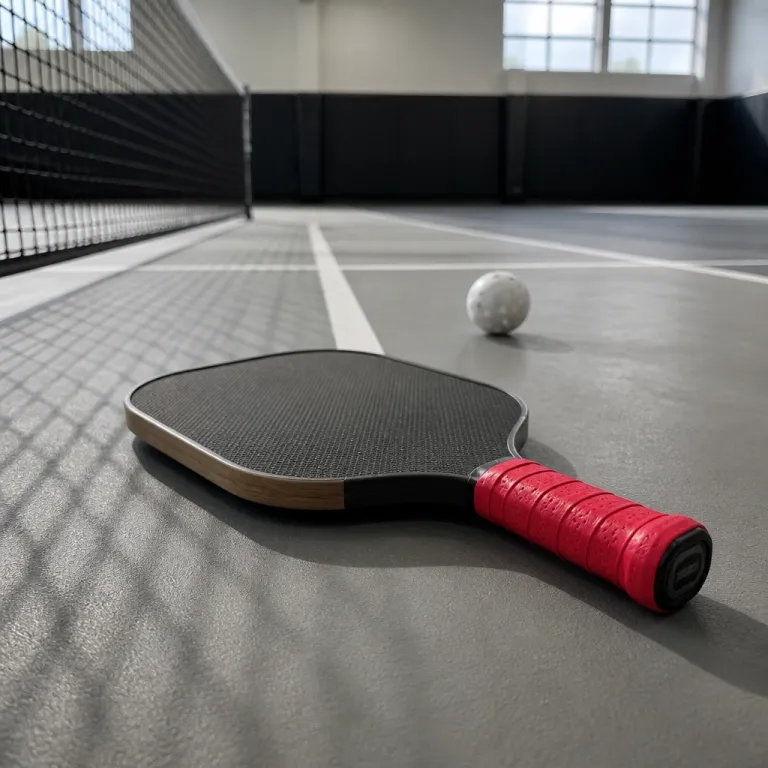
Why in pickleball you can hit two types of shots defines every rally
In pickleball you can hit two types of shots that shape the entire point: a soft, control-oriented ball and a firm, attacking strike. When you understand how a touch shot and a power shot interact, you start to see the court as a chessboard rather than a simple rectangle. This shift in perspective changes how you swing, where you place each shot, and how you apply pressure on the opponent’s side of the court.
Every rally begins with a serve and a return, but the real story starts with your first chance to hit aggressively or with touch. On one side you have the drive, volley, roll shot, and other power options players use to push the ball deep, while on the other side you have the dink, third-shot drop, and gentle reset that force a bounce in the kitchen. The balance between these two families of shots determines whether your opponent struggles to control contact or calmly resets the rally.
Think of your paddle as a dial that constantly shifts between attack and control. When you angle the paddle face open and reduce swing speed, you create a soft shot that lands short and low over the net. When you close the paddle face slightly and accelerate through contact, you hit a volley or drive with pace that pins your opponent behind the non-volley zone line and exposes gaps on the court.
Understanding soft versus hard shots in pickleball strategy
At its core, pickleball strategy rests on knowing when a soft shot or a hard shot gives you the higher percentage play. Soft options such as the dink, a controlled return of serve, and the third shot drop are designed to make the ball bounce low near the kitchen so the opponent must hit upward. Hard options such as the drive, a firm volley taken early, and an aggressive swing off a short return aim to rush the opponent and force a weak reply.
During a typical game you constantly alternate between these two types of shots. When you are pushed deep behind the baseline, a controlled drop shot with a relaxed paddle helps you reset the rally and reach a neutral position at the kitchen line. Once you are established at that advanced position, you can switch to a firm volley or forehand or backhand drive whenever your opponent leaves a ball sitting too high above the net.
Training these patterns requires deliberate practice rather than random hitting. Many advanced players use structured drilling sessions, focusing one day on soft dinks and another day on drives and volley patterns. A simple benchmark is to complete three sets of 25 cross-court dinks without more than three errors per set, then three sets of 20 controlled drives, tracking how many land deep past the service line. Over time your brain learns to read bounce height, opponent position, and rules constraints so quickly that the choice between a soft control shot and a hard attacking hit becomes automatic.
How paddle face, contact point, and grip shape every shot pickleball players hit
Technical details of paddle control decide whether in pickleball you can hit two types of shots with real precision or just hope for the best. The angle of the paddle face at contact, the height of the ball relative to the net, and the firmness of your grip all influence whether the ball floats softly into the kitchen or rockets deep into the opponent’s court. Small changes in these variables can turn a safe drop shot into a risky swing that sails long and creates a fault.
For soft shots players usually keep a lighter grip and a slightly open paddle face. This combination lets the ball meet the paddle with a cushioned feel, so the shot travels slowly and lands close to the net with a gentle bounce. For hard drives and volley attacks, you firm up the grip, close the paddle face a little, and strike the ball in front of your body, using a compact forehand or backhand motion that transfers energy efficiently from your legs to the paddle.
Grip quality is often the hidden factor behind consistent contact. If your hand slips or your wrist collapses, even a well chosen shot pattern will break down under pressure, so working on a stable yet relaxed hold is essential. A simple drill is to hit 20 soft dinks cross-court with a loose grip, then 20 firm drives down the line with a slightly tighter grip, focusing on keeping the same contact point on every swing and noting how many in each set land in your intended target zone.
Shot selection from the serve to the kitchen line
Every point begins with a choice that already reflects the idea that in pickleball you can hit two types of shots. On the serve you may use a traditional volley serve with a firm hit and deep placement, or a more controlled drop serve that emphasizes reliable bounce and precise targeting. Both serves must follow pickleball rules about contact below the waist and an upward swing, yet within those limits you still decide whether to prioritize power or control.
After the serve the return of serve becomes the next key decision point. A deep, high return that pushes the opponent back allows you to advance quickly to the kitchen and claim the most valuable position on the court. If you instead float a short ball that lands near the middle, you invite an aggressive drive or volley from the serving team, and you may be forced into a defensive drop just to keep the rally alive.
Once the serving team faces its third shot, the strategic split between soft and hard options becomes obvious. A third shot drive uses pace to surprise the opponent, while a third shot drop aims to land softly in the kitchen and neutralize the positional disadvantage. One practical rule of thumb is to drive waist-high balls that sit up and to drop anything that is below net height, adjusting for the score, wind, and opponent tendencies. Many coaches suggest charting 20 service games and noting how often a successful third-shot drop leads to both partners reaching the non-volley zone compared with a missed drive.
Attacking versus defending at the kitchen and mid court
When both teams reach the kitchen line, rallies often turn into a test of patience and precision. At this stage in pickleball you can hit two types of shots that either maintain a soft exchange or abruptly change pace to attack. The soft phase usually consists of dink patterns, where each player guides the ball over the net with minimal arc, forcing a low bounce that makes it hard for the opponent to swing aggressively.
During these dinking rallies, your goal is to move the opponent side to side and create a slight opening. A poorly executed dink that sits too high or drifts toward the middle of the court becomes an invitation for a sharp volley or roll shot players use to accelerate the pace. The defender then has to react quickly, often using a reflex block with a stable paddle to absorb speed and reset the rally back into a soft pattern.
Mid court exchanges highlight the same tension between control and aggression. When a ball lands around your feet, a gentle drop or reset shot that barely clears the net is usually the safest option, because swinging hard from that low contact height often leads to a fault into the net. When the bounce is higher around waist level, you can confidently drive with a compact forehand or backhand swing, aiming deep into the opponent’s court to regain the initiative. A useful practice game is to play to 11 points where any successful reset from mid court earns a bonus point, reinforcing smart decision-making under pressure.
Common faults and how smart shot choices prevent them
Many unforced errors in pickleball come from choosing the wrong type of shot for the situation rather than from poor mechanics alone. Players often try to hit too hard when off balance or stretched wide, sending the ball high and long instead of using a controlled drop shot to reset. Others play an overly cautious shot when they receive a high, slow ball that begs for an attacking drive into open space on the opponent’s side.
Understanding that in pickleball you can hit two types of shots helps you diagnose these patterns. When you recognize a defensive position, such as being pulled behind the baseline or jammed at your feet, you should favor soft shots players call resets, using a relaxed paddle and open paddle face to create a safe bounce. When you see your opponent floating a ball high above the net, you can shift instantly to a firm volley or overhead, trusting your forehand and backhand fundamentals to finish the rally without committing a fault.
Rules awareness also plays a role in avoiding avoidable mistakes. Knowing the nuances of volley serve legality, understanding when a drop serve is permitted, and respecting non-volley zone restrictions around the kitchen all influence where and how you attempt contact. A useful practice habit is to play short games where any kitchen fault or illegal serve costs two points instead of one, which quickly sharpens your focus on clean, legal execution and reinforces sound shot selection.
Key statistics and performance benchmarks in pickleball shot selection
- Observers of competitive doubles often note that a large share of rallies are decided within the first five shots, which underlines how early choices between a soft drop shot and a hard drive strongly influence outcomes.
- Coaches who track training sessions frequently find that teams who can execute their third shot drop consistently gain more control of the net than teams who rely mainly on third shot drives.
- Video review of elite players shows that many winners at the kitchen line come from attacking a bounce that rises above net height, confirming the value of patiently using soft dinks until a high ball appears.
- Serve and return charting from high-level play suggests that when returns land close to the baseline, serving teams are forced into defensive drop shots far more often, reducing their chance to win the rally.
FAQ: shot selection and the two main shot families in pickleball
What does it mean that in pickleball you can hit two types of shots ?
This phrase refers to the broad division between soft control shots, such as dinks and drop shots, and hard attacking shots, such as drives and volleys. Soft shots aim to create a low bounce and neutralize pressure, while hard shots aim to rush the opponent and finish the rally. Effective players learn to switch between these two families based on ball height, court position, and opponent tendencies.
When should I use a drop shot instead of a drive ?
A drop shot is usually best when you are behind the baseline or receiving a low ball that would be risky to hit hard. In that situation a gentle arc that lands in the kitchen gives you time to move forward and reach a stronger position. A drive is better when the ball sits higher above the net and you are balanced, because you can hit through the ball and force a weak reply.
How do I avoid faults when volleying near the kitchen ?
To avoid faults you must respect the non-volley zone rules and keep your feet behind the kitchen line whenever you hit volley shots out of the air. Focus on making contact in front of your body with a stable paddle face, rather than overreaching into the kitchen. If the ball drops too low, let it bounce and play a soft reset instead of forcing an off balance volley.
Why do coaches emphasize dinking so much in pickleball training ?
Coaches emphasize dinking because it teaches touch, patience, and precise ball placement at the kitchen line, where many rallies are decided. Consistent dinks keep the bounce low and prevent the opponent from attacking with a drive or overhead. Once you can sustain long dink rallies, you can selectively speed up the ball at the right moment and control the tempo of the game.
How can I practice both soft and hard shots efficiently ?
An efficient practice session alternates between drills for soft control, such as cross-court dinks and third shot drops, and drills for power, such as drives and put-away volleys. Working in pairs, you can designate specific rallies where one player only hits soft shots while the other attacks, then switch roles. A simple format is to play to 7 points where you earn a bonus point every time you correctly choose a soft reset from a defensive position or a hard put-away from a clear attacking opportunity.
End-of-article checklist: applying soft and hard shot decisions
- Serve and return: aim for deep placement, then decide quickly whether a third shot drop or drive fits the ball height and your balance.
- Non-volley zone play: use consistent dink strategy to keep the ball low until a high bounce appears that you can attack safely.
- Mid court defense: choose a soft reset when the ball is at your feet; swing harder only when contact rises toward waist level.
- Grip and paddle face: maintain a lighter grip and open face for touch shots, and a firmer grip with a slightly closed face for power.
- Practice goals: track how many third-shot drops, dinks, and drives you can execute in a row without errors to measure progress.