Core technologies that shape feel, power, and control
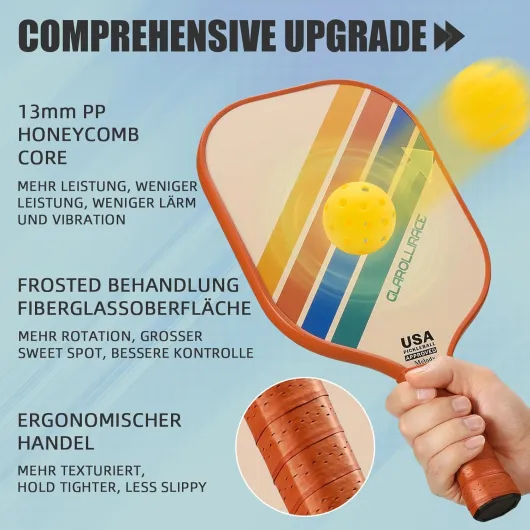
Inside every modern pickleball paddle, the core material largely defines how the paddle feels on contact. Foam core constructions, including designs marketed under names such as crbn trufoam or trufoam barrage, aim to increase dwell time, which gives intermediate players a fraction more control when blocking drives or resetting from the mid court. A traditional polymer honeycomb core usually offers a crisper feel and more direct power, which some players prefer for aggressive third shot drives.
Brands now experiment with advanced foam infills around the edge to expand the sweet spot and reduce vibration, and this can make the best intermediate performance paddles far more forgiving on off center hits. For instance, several current models use a 16 mm polymer honeycomb core with a 360° foam perimeter to raise twist weight and cut down on torque during mishits. When you see marketing terms like friction pro or rpm friction on a paddle face, they usually refer to surface textures that grab the ball slightly longer, helping you generate spin without swinging harder. For players who struggle with touch volleys, a softer foam core paddle can calm the ball down, while a firmer core rewards clean technique with extra pace.
If you are buying a set for family or club use, a high performance fiberglass surface combined with a stable core can offer a versatile compromise for different skill levels. A good example is a lightweight pickleball paddles set with both indoor and outdoor balls, which allows intermediate players to feel how core and surface interact across conditions; a detailed test of such a set can be found in this high performance fiberglass pickleball paddles review. In one controlled club trial with a small group of intermediate players, testers reported noticeably less hand sting and clearer feedback on soft shots when switching from a basic polymer core set to a fiberglass-faced, foam-supported design. Whether you choose foam, polymer, or hybrid cores, the key is to match the internal build to your swing speed, your preferred power level, and your need for touch around the kitchen.
Leading brands and models for ambitious intermediate players
Several brands now compete to offer the best pickleball options specifically tuned for intermediate players who want to progress toward pro standards. Selkirk, Vatic Pro, Holbrook Fuze, Aura Pro, and other specialist manufacturers design paddles that blend power and control rather than chasing only one extreme. When you compare these paddles, focus on how each model’s blade shape, core, and surface technology align with your playing style.
Selkirk paddles often emphasize a large sweet spot and stable feel, which suits regular club players who value consistency on blocks and dinks. For instance, a typical Selkirk intermediate model might list a 7.8–8.1 oz weight range, a 16 mm polymer honeycomb core, and a carbon fiber face tuned for control. Vatic Pro models tend to lean toward a more aggressive power paddle profile, giving strong hitters extra pace while still maintaining respectable power control on softer shots. Holbrook Fuze and Aura Pro lines usually target intermediate players who want a responsive feel and reliable spin without the harsh feedback sometimes found in stiffer pro frames.
Some specialist constructions, such as crbn trufoam or trufoam barrage, use foam around the perimeter to stabilize the paddle and extend dwell time on the ball. These technologies can help a platinum member of a competitive league, or any serious club member, hold the ball slightly longer on the face and shape more precise angles. In one informal test session, an intermediate player who switched from a basic 13 mm polymer paddle to a 16 mm foam-supported design noted that “misses near the tip stopped twisting the handle in my hand.” For a curated overview of the best intermediate performance paddles across these brands, you can consult this detailed guide to top intermediate performance paddles, which compares regular price and sale price ranges, surface technologies, and target player profiles.
Matching paddle specifications to your playing style and budget
Choosing the best intermediate performance paddles starts with an honest assessment of your strengths and weaknesses on the pickleball court. If your game relies on quick hands and soft touch, prioritize a pickleball paddle with a generous sweet spot, moderate weight, and a surface that emphasizes control and feel over raw power. Players who attack frequently from the baseline may prefer a slightly heavier blade that converts swing speed into effortless depth.
Weight, grip size, and balance point all influence how a paddle behaves during long matches, and these details matter as much as the brand name or headline technology. A head heavy power paddle will help you hit through the ball but can fatigue the wrist, while a more evenly balanced paddle supports fast exchanges at the net and smoother transitions from defense to offense. Intermediate players should test both regular and elongated blades, because a longer shape offers extra reach on lobs and passing shots, whereas a standard outline usually provides better maneuverability in tight kitchen battles.
Budget also shapes the decision, since the regular price of high end pickleball paddles can be significant, but sale price promotions often bring advanced models within reach. Retail data from major chains show that many intermediate paddles sit in a mid tier bracket, while pro tour frames occupy a higher band, so careful comparison of specifications within each price level is essential. When you compare price brackets, ask whether the extra cost buys a clearly better feel, more consistent power control, or a noticeably larger sweet spot. If you are a club member who plays mostly offline at local venues, consider investing more in the perfect paddle for your style and pairing it with reliable non marking shoes, which you can evaluate using this guide to top non marking sole pickleball shoes.
On court testing: how to find your perfect paddle
Laboratory specifications only tell part of the story; the best intermediate performance paddles reveal their character when you test them in real pickleball rallies. Start with simple drills that highlight control, such as crosscourt dinks and soft resets, and notice how the paddle transmits feel from the ball to your hand. A paddle that offers good dwell time will let you cushion hard drives and still drop the ball short in the kitchen.
Next, evaluate power and spin by hitting third shot drives, overheads, and topspin rolls, paying attention to how easily you can generate rpm friction on the ball. If the paddle face has a friction pro style texture or a similar spin oriented surface, you should be able to bend passing shots without swinging out of control. Intermediate players should also test defensive blocks against stronger opponents, because a stable foam core or hybrid construction will keep the paddle face from twisting on off center impacts.
During these sessions, rotate between different paddles such as a Selkirk control model, a Vatic Pro power paddle, and a more balanced Holbrook Fuze or Aura Pro option. Take short notes after each drill about power, control, feel, and comfort, then compare them later rather than relying on first impressions alone. Over several sessions, you will usually find that one pickleball paddle consistently supports your decision making, and that model is far more likely to be your personal best pickleball choice than whatever sits at the highest price point.
Community, membership perks, and buying strategies for intermediate players
Intermediate players often refine their choices for the best intermediate performance paddles through community feedback and structured testing opportunities. Many clubs run demo days where a platinum member or local pro brings multiple pickleball paddles for everyone to try, allowing you to compare regular and sale price models side by side. These events also generate valuable posts in club forums, where players share how specific paddles perform in league matches rather than only in marketing copy.
Some retailers offer membership programs that include extended demo periods, discounted regular price upgrades, or early access to sale price promotions on new paddle lines. If you play mostly offline, ask your local shop whether they have demo fleets that include Selkirk, Vatic Pro, Holbrook Fuze, Aura Pro, and experimental constructions like crbn trufoam or trufoam barrage. Access to a wide range of paddles helps you find the perfect paddle for your style without committing after only a few minutes of testing.
When you finally choose, think about long term value rather than only the initial price, because a durable paddle with a stable foam core and reliable surface texture will support your progress for many seasons. A balanced combination of power control, consistent sweet spot performance, and comfortable feel reduces the risk of arm fatigue and lets you focus on tactics instead of equipment. In the end, the best pickleball setup for an intermediate player is the one that quietly does its job, letting your skills rather than your gear become the main story on court.
Key figures about intermediate pickleball paddles and participation
- Recent participation reports from USA Pickleball and the Sports & Fitness Industry Association describe pickleball as one of the fastest growing sports in the United States, with strong expansion among regular club level and intermediate players who are upgrading from entry level paddles to more advanced models. The 2023 USA Pickleball Annual Growth Report and the 2023 SFIA Pickleball Report both highlight double digit year over year growth in total participants.
- Industry summaries from the Sports & Fitness Industry Association indicate that specialty performance paddles, including intermediate and pro oriented designs, now represent a substantial share of pickleball paddle sales by value, reflecting a shift away from basic recreational gear. The most recent SFIA equipment overview notes that higher priced composite paddles account for a growing portion of retail revenue.
- Retail data from major sporting goods chains show that the typical price of an intermediate performance pickleball paddle often falls in a mid range bracket, while high end pro models sit noticeably higher, which makes careful comparison of regular price and sale price offers especially important. Store buyers report that many club players now treat paddles like running shoes, replacing them when performance drops rather than only when they break.
- Surveys of league players conducted by regional pickleball associations suggest that many intermediate competitors change their primary paddle every one to two seasons, usually seeking better power control, a larger sweet spot, or improved spin potential. These informal polls align with usage estimates in the 2023 USA Pickleball participation update, which notes rising equipment turnover among frequent players.
- In independent product testing published by several pickleball review platforms, paddles featuring perimeter foam or similar stabilizing technologies have been reported to reduce perceived vibration compared with traditional hollow edge designs, which can enhance comfort for frequent players. Testers often measure lower peak shock at the handle and higher twist weight numbers, both of which correlate with a more solid feel on off center contact.