Summary
Editor's rating
Value for money: solid buy if you prioritize control and spin
Design: control shape with a bigger sweet spot (mostly true)
Comfort & grip: great handle, but weight can catch up to you
Materials & build: solid, not cheap, but not bulletproof either
Durability after a few weeks: looks promising, but not tested for years
On-court performance: control and spin first, power second
What you actually get out of the box
Pros
- Very good control and touch for dinks, drops, and resets
- Carbon face gives noticeable spin on topspin and slice shots
- Stable, forgiving sweet spot with solid build and comfy, tacky grip
Cons
- A bit on the heavy side, can feel tiring in long, fast kitchen battles
- Power is only moderate; not ideal if you want a pure power paddle

Specifications
View full product page →| Brand | Paddletek |
A control paddle that doesn’t feel like a toy
I’ve been playing pickleball 3–4 times a week for a few years now, mostly rec play with some low-level tournaments. I picked up the Paddletek Tempest Wave PRO-C in Wildfire (red) because I wanted a proper control paddle with more spin, and I was getting tired of my cheaper graphite paddle that felt dead on touch shots. I used this Tempest as my main paddle for about three weeks, roughly 20–25 sessions, indoors and outdoors.
The short version: it’s a control-focused, spin-friendly paddle with a slightly heavier, solid feel. It’s not some magic wand, but it’s clearly a step up from entry-level paddles. It helped my dinks, resets, and topspin drives, but it did feel a bit tiring in the hand during fast kitchen battles after a couple of hours.
What surprised me most was the balance and stability. Off-center hits, especially on the backhand side, didn’t twist the paddle as much as I’m used to. That torsional weighting they talk about isn’t just marketing fluff; you can actually feel the head stay more stable when you catch the ball closer to the edge. On the other hand, if you’re very sensitive to weight, you’ll notice it’s not a featherweight.
So this review is coming from someone who actually sweated with it, not just bounced a ball in the living room. I’ll walk through how it’s built, how it plays, where it shines, and where it annoyed me a bit. It’s a pretty solid paddle, but it’s not perfect and there are a few things you should know before dropping the cash.
Value for money: solid buy if you prioritize control and spin
Price-wise, the Tempest Wave PRO-C sits in the mid-to-upper range of paddles – not the cheapest, not the priciest. For that money, you’re getting a real performance paddle with a proper carbon face, a solid core, and a comfortable grip. Compared to big-name competitors like some Selkirk or JOOLA models, it’s usually a bit cheaper while still feeling like a “serious” paddle, not a starter toy. One Amazon review even mentioned choosing this over a Selkirk they got at the same time, mainly because of the balanced feel.
In terms of what you actually gain for the price, the main value is in control, spin, and stability. If those are the parts of your game you care about – dinks, resets, topspin drives, reliable blocks – you’re getting good return on your money. The paddle helped me clean up my soft game and gave me more confidence hitting with spin near the lines. That’s worth something if you’re past the total beginner stage and want gear that supports more precise play.
On the flip side, if you’re a casual player who only hits once every couple of weeks, or you just want max power to smash everything, this might feel like overkill or the wrong tool. You could spend less and still have fun. Also, if you’re very sensitive to paddle weight, you might end up buying something lighter later, which would make this feel like a half step.
Overall, I’d say the value is pretty good, especially if you find it on sale. It’s not a bargain-bin steal, but you are paying for noticeable performance and build quality. For intermediate to advanced rec players who actually care about touch and spin, the price makes sense. For super budget-conscious beginners, it might be a bit much.
Design: control shape with a bigger sweet spot (mostly true)
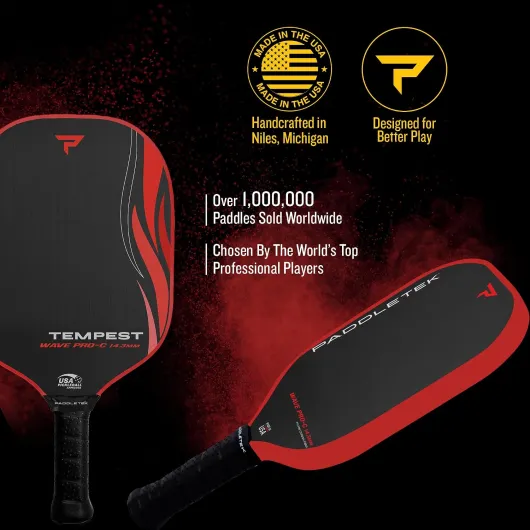
The design focus here is clearly control and forgiveness. Paddletek calls it a Sweet Spot expanding oval shape, and while that sounds like brochure talk, in practice the sweet spot does feel larger than my older square-ish graphite paddle. When I hit slightly high or towards the sides, the paddle didn’t punish me as much. The ball still came off with decent pace and direction, instead of those dead, wobbly shots you sometimes get with cheaper builds.
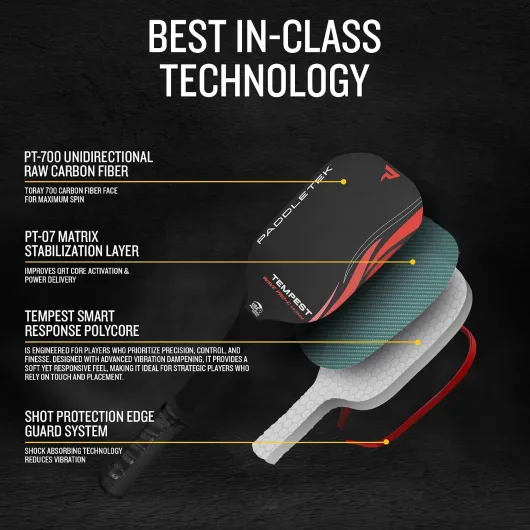
The face is PT-700 unidirectional carbon fiber, which is supposed to help with spin and consistency. Compared to my previous fiberglass paddle, this one grabbed the ball better, especially on topspin drives and heavy topspin rolls from the baseline. I wouldn’t say it’s night and day, but the spin is clearly better. I could aim a bit closer to the baseline and trust the ball to dip more reliably. That translated into a few extra forced errors from opponents when they tried to block my drives.
The shape is slightly elongated but not extreme. You get a bit more reach on overheads and wide dinks without feeling like you’re swinging a tennis racket. At the net, the design helps with blocking – the paddle face feels stable, and the torsional weighting means mishits near the edge don’t twist as much in your hand. The trade-off is that in very fast hand battles, that same design plus the weight can make it feel just a touch slower to maneuver compared to lighter, shorter paddles.
Overall, I’d say the design is thought-through: bigger effective hitting area, reliable spin, and a shape that suits all-court play. If you come from a super light, wide body, you’ll notice a different feel and timing, but after a few sessions, I adjusted pretty well. It’s not some fancy collectible piece; it’s a functional, performance-focused design that does what it says with a slight bias toward control over raw speed.
Comfort & grip: great handle, but weight can catch up to you
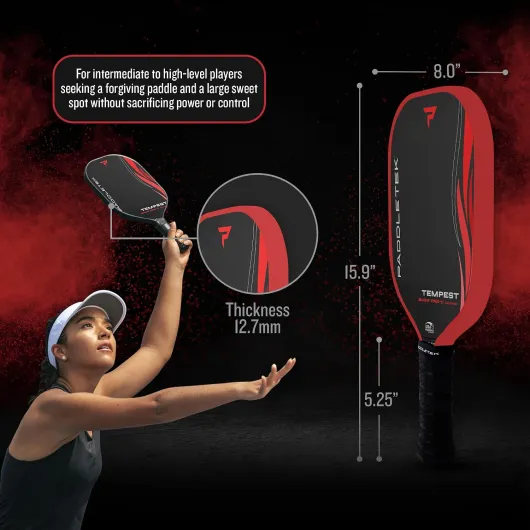
The handle is one of the best parts of this paddle. It’s a tennis-style, ergonomic grip with a 4.5" circumference, and it feels very natural if you have any tennis or squash background. The high-tack grip is actually grippy, not slippery. Even when my hand got a bit sweaty during outdoor play, I didn’t feel the paddle twisting or sliding. I didn’t have to over-squeeze the handle to feel secure, which is good for the wrist and forearm.
Length-wise, the handle is comfortable for both one-handed and two-handed backhands. I have medium-sized hands, and I could fit a second hand on there without feeling cramped. If you rely on a two-handed backhand for drives or counters, this grip size and length are pretty user-friendly. I didn’t feel any hot spots or weird pressure points from the grip shape either.
Now, the downside: the overall weight and swing feel. After about 90 minutes of fairly intense play (lots of volleys and hand-speed drills at the kitchen), I started to feel some fatigue in my wrist. It’s not outrageously heavy, but it’s definitely on the solid side. In slower games or if you’re not playing high-speed exchanges constantly, it’s fine. But if your style is very hands-focused and you love quick firefights at the net, you might feel it dragging a tiny bit compared to lighter paddles.
In terms of vibrations, it’s pretty controlled. Mishits don’t send a painful buzz up your arm, which I appreciated after using a stiffer, cheaper paddle before. So comfort is good overall, with the caveat that weight-sensitive players or people with elbow/wrist issues might want to try it first if possible. The grip and ergonomics are a win; the mass is the only thing that might bother some people.
Materials & build: solid, not cheap, but not bulletproof either
On paper, the Tempest Wave PRO-C sounds high-end: polymer honeycomb core, PT-700 unidirectional carbon fiber face, carbon fiber / graphite frame. In the hand, it matches that description pretty well. The surface has that slightly textured, grippy feel you expect from modern carbon paddles, and the core doesn’t feel hollow or rattly. When you hit the ball clean, you get a sharp but controlled pop, not that dull thud from bargain paddles.
The edge guard seems well integrated. After a few weeks of play, including some unintentional scrapes on indoor and outdoor courts, I only saw cosmetic scuffing. No separation, no peeling. I’m not gentle with my gear, and I toss the paddle into my bag with shoes and balls, so if it were poorly built, I’d expect to see chips or face bubbling by now. So far, no structural issues. That said, I can’t speak for long-term durability over a full year, but the first month gives me confidence.
The one thing to note is the weight and balance. The materials and torsional weighting give it a slightly head-heavy feel. That’s great for stability and power on drives, but you do feel it in your wrist and forearm during long sessions. If you’re coming from something like a very light beginner paddle, this will feel more substantial. A couple of Amazon reviewers mentioned it felt a bit heavy, and I agree – not crazy heavy, but noticeable if you’re sensitive to that.
Overall, the materials and build quality feel pretty solid for the price range. It doesn’t have that cheap plastic vibe at all. If you’re worried about delamination or edges falling apart, I didn’t see any red flags in my testing period. Just don’t expect it to magically resist every scrape and clash; it’s still a paddle, not a tank.
Durability after a few weeks: looks promising, but not tested for years
In about three weeks of regular play (roughly 20–25 sessions), the Tempest Wave PRO-C held up better than I expected. I’m not delicate with my gear: I toss it in my bag, I’ve clipped it on the court, and I’ve had a couple of paddle clashes at the net. So far, the face shows only light cosmetic wear – some smudges and faint marks, but no chips, no bubbling, and no dead spots that I can feel.
The edge guard is doing its job. I had two pretty solid ground scrapes going for low balls, and it only left surface scratches on the guard itself. No separation from the face, no weird gaps forming. That’s usually where cheaper paddles start to fail first, so seeing it hold up gives me a bit of confidence. The core still feels consistent across the face, with no hollow or soft zones developing yet.
The grip has stayed tacky and intact. I sweat a fair amount, and I usually have to overgrip cheaper paddles within a week because the stock grip turns slick or starts peeling. Here, after three weeks, the grip is still usable as-is. It’s a bit less sticky than day one, but nothing dramatic. I’ll probably add an overgrip eventually, but that’s more preference than necessity right now.
Of course, I can’t tell you how it’ll look after a full season or a year of heavy play. But based on my use and the Amazon reviews saying it’s held up for months of multi-times-a-week play, I’d say durability seems solid for the price. It’s not indestructible, but there are no early warning signs like rattles, loose guards, or dead spots that sometimes show up early on cheaper builds.
On-court performance: control and spin first, power second
On court, the Tempest Wave PRO-C is clearly a control and spin paddle. My dinks and resets improved almost immediately compared to my old fiberglass paddle. The 14.3 mm core gives you a nice blend of touch and stability. Soft shots at the kitchen felt predictable – I could drop the ball short or mid-depth without it jumping off the face unexpectedly. When opponents were driving hard at me, the paddle helped absorb pace and send the ball back low, which is exactly what I wanted.
Spin is where it stands out for me. The carbon face grabs the ball well enough that topspin drives and rolls really dip. I could aim closer to the baseline and still bring the ball down in time. I also noticed my slice serves and slice returns had more bite, making the ball skid a bit more. It’s not wild, but clearly better than plain smooth graphite. If you like using spin as part of your game, this paddle supports that style nicely.
Power-wise, it’s moderate. You can hit hard enough, especially with good technique, but it doesn’t give you free bombs. From the baseline, I could drive deep with plenty of topspin, but I had to swing. If you’re coming from a pure power paddle, this will feel more controlled and a bit tamer. Personally, I liked that because it kept my shots in more often, but if you rely on the paddle to do the heavy lifting, you might find it a bit underwhelming.
At the net in fast exchanges, it’s a bit of a mixed bag: the stability is great for blocking and countering, but the slight heaviness can slow down your hand speed a little. I noticed this especially against younger, very fast players – I had to focus more on compact movements. Overall, I’d rate performance as strong for control players, solid for spin, and decent but not standout for raw power.
What you actually get out of the box
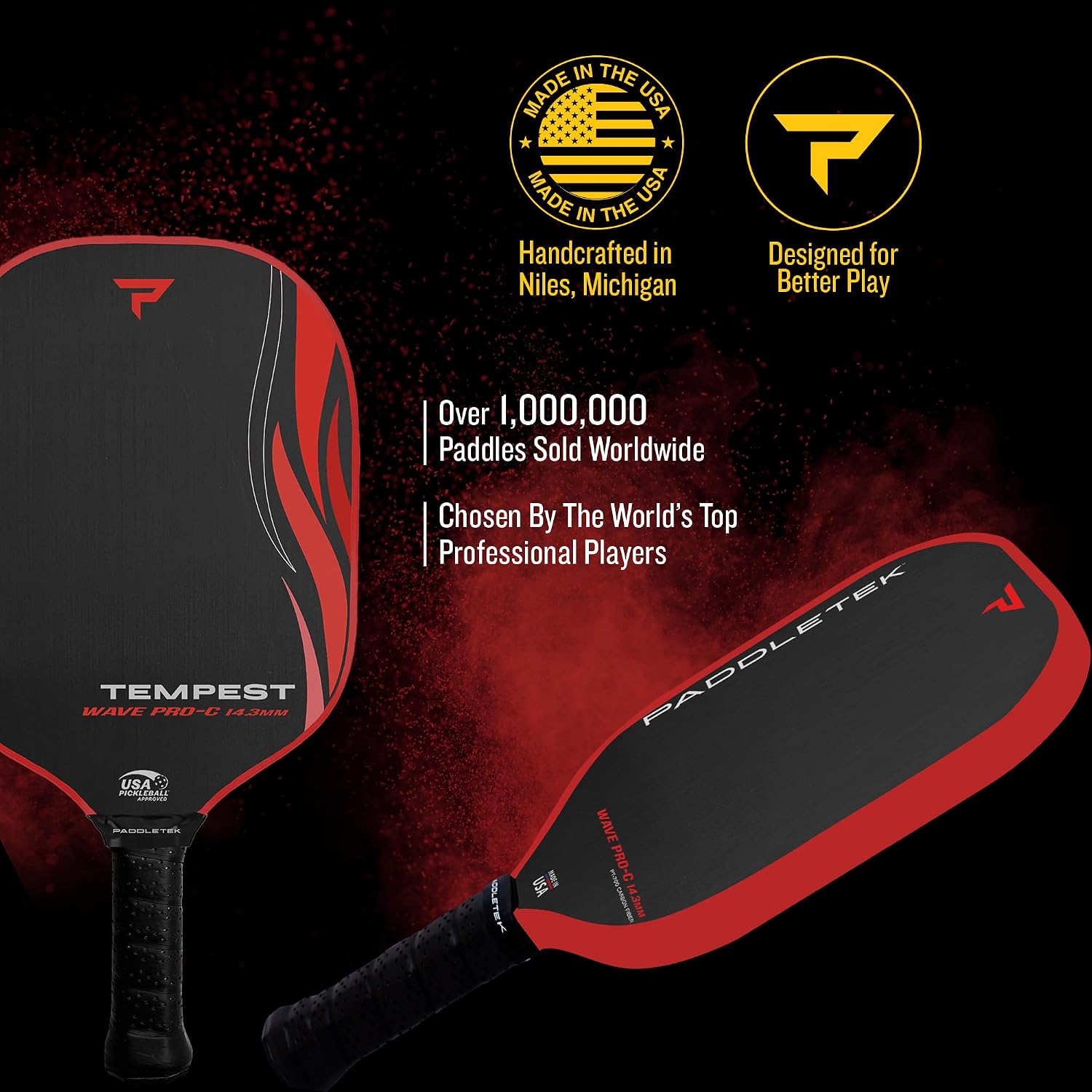
Out of the box, the Tempest Wave PRO-C looks like a serious paddle, not a cheap Amazon special. The Wildfire red design is simple: mostly dark face with a red accent and the Paddletek branding. Nothing flashy, which I liked. The shape is a slightly elongated oval, but not one of those super long skinny paddles. It still feels pretty standard in the hand, just with a bit more reach than a classic widebody.
The specs matter here: it’s around 0.24 kg (about 8.5 oz), 14.3 mm core thickness, carbon fiber / graphite face, and a 4.5" grip. On paper, that screams control and stability with decent power, and that’s basically how it plays. The paddle is USAPA approved, so you can use it in tournaments if that matters to you. It comes unstrung because, well, it’s a paddle, not a tennis racket – that spec is just generic listing noise.
In hand, it feels solid and slightly head-heavy, but not like a brick. When I first picked it up, my thought was, “Okay, this is built better than my old $60 paddle.” The edge guard is noticeable but not bulky, and you can see it’s there to take some abuse on ground scrapes. After a few weeks, mine had a couple of scuffs on the guard but nothing that looked close to failing.
Overall, presentation is pretty straightforward: no fancy case, no extra grip tape, no nonsense. Just the paddle. If you’re expecting a premium unboxing experience, you’ll be disappointed, but if you just want a ready-to-play, decent-quality paddle out of the wrapper, that’s exactly what this is. Nothing more, nothing less.
Pros
- Very good control and touch for dinks, drops, and resets
- Carbon face gives noticeable spin on topspin and slice shots
- Stable, forgiving sweet spot with solid build and comfy, tacky grip
Cons
- A bit on the heavy side, can feel tiring in long, fast kitchen battles
- Power is only moderate; not ideal if you want a pure power paddle
Conclusion
Editor's rating
After a few solid weeks with the Paddletek Tempest Wave PRO-C, my takeaway is simple: it’s a control-focused, spin-capable paddle with a slightly heavy, stable feel. It helped my soft game and gave me more confidence on topspin drives and slices. The grip is comfortable, the build feels solid, and the sweet spot is forgiving enough that off-center hits don’t instantly die. It feels like real gear, not an entry-level compromise.
It’s not perfect, though. The weight will bother players who are very sensitive to paddle mass or who live for super quick hand battles at the kitchen. Power is decent but not huge, so if your style is all about big drives and put-aways with minimal effort, you might want something more power-oriented. And for very casual players who only hit occasionally, the price might be more than you really need to spend.
I’d recommend this paddle to intermediate and up rec players who value control, spin, and stability, and who don’t mind a slightly heavier feel. If you’re moving up from a cheap Amazon paddle and want something more serious without jumping to the most expensive brands, this is a strong option. If you have arm issues, or you want the lightest, fastest thing out there, I’d probably look at a lighter model instead.