Summary
Editor's rating
Value: strong paddle, but you’re paying for the name too
Design: looks like a "pro" paddle, plays like one too
Comfort and grip: good in the hand, but not the lightest
Materials: full carbon build that feels solid, not gimmicky
Durability: feels robust, no early issues so far
Performance: control and spin first, power if you work for it
What you actually get with the Ben Johns Perseus CFS 16
Pros
- Large, stable sweet spot with good control and consistency across the face
- Textured carbon surface provides noticeable spin for serves and topspin shots
- Comfortable grip and solid, low-vibration feel suitable for frequent play
Cons
- Less free power than some thinner or fiberglass paddles in the same price range
- High price point, partly paying for brand and signature rather than pure performance

Specifications
View full product page →| Brand | JOOLA |
A "pro" paddle for regular folks: worth it or just hype?
I’ve been playing pickleball 3–4 times a week for a couple of years, mostly at an intermediate level. Until now I was using mid-range composite paddles in the 60–100€ range. I picked up the JOOLA Ben Johns Perseus CFS 16mm because I wanted to see if a “pro” paddle with Ben Johns’ name on it actually changes anything for a regular player, or if it’s just branding. I used it for about three weeks in rec games and a small local tournament.
The short version: it’s a control-oriented, carbon-faced paddle that feels solid and precise, but it also punishes lazy technique. If you’re looking for a magic power boost with zero adjustment, this is not it. If you’re already comfortable with dinks, resets and spin, there’s a lot to like here, especially at the net.
What struck me first was the big sweet spot and how stable it feels on blocks and volleys. Mishits near the edge were still usable, not dead like on some cheaper paddles I’ve had. On the other hand, my drives were a bit flatter the first few sessions – I had to swing through more and use my legs to get back the same put-away power I had with a thinner, poppier paddle.
Overall, after a dozen sessions, I’d say this paddle is pretty solid for intermediate and advanced players who value control and spin more than raw power. It’s not perfect, and for the price there are competitors that offer similar performance, but it’s definitely not just a gimmicky signature model. It genuinely changed how I play at the kitchen line, for the better.
Value: strong paddle, but you’re paying for the name too
Let’s talk about the awkward part: price vs value. This paddle sits in the higher price range compared to entry and mid-level paddles. You’re clearly paying for a mix of the JOOLA brand, the Ben Johns signature, and the tech (carbon face, 16mm core, Charged Carbon surface). If you’re a casual player who hits the courts once a month, it’s probably overkill. A cheaper composite paddle will get the job done for much less money.
For regular intermediates and advanced players, the value starts to make more sense. You get a big, stable sweet spot, reliable spin, and a durable build. I’ve used cheaper paddles that lost their pop or texture pretty fast, which meant replacing them sooner. If the Perseus holds its feel for a long time (and so far it looks like it will), the higher upfront cost spreads out over more months of play. That’s not glamorous, but it’s practical.
Compared to other high-end paddles I’ve tried or seen my partners use, the Perseus lands in a “good but not unbeatable” spot. There are competitors around the same price that offer a bit more free power or slightly grittier surfaces. Where this one stands out is the mix of control, spin, and comfort, plus the trust in JOOLA’s build quality. You’re not getting a bargain, but you’re not getting ripped off either.
So in terms of value, I’d say: if you’re serious about playing, enjoy a control and spin-focused game, and don’t mind paying for a branded, well-built paddle, this is a reasonable buy. If your budget is tight or you’re still learning basic strokes, I’d start cheaper and upgrade later. The paddle is good; whether it’s worth the price depends mainly on how often you play and how much you’ll actually use its strengths.
Design: looks like a "pro" paddle, plays like one too
Visually, the Perseus CFS 16 has that minimal, serious look you’d expect from a paddle tied to a top player. Mine has a dark carbon face with clean branding and Ben Johns’ signature on it. No loud colors, no wild patterns. Personally, I like that – it looks like something you’d see on a pro court, not a toy from a sporting goods bin. If you like flashy graphics, this will feel a bit plain, but at least it doesn’t scream for attention.
The shape is an elongated rectangle with rounded corners, which gives you extra reach at the net. I noticed it right away when poaching and when stretching for wide dinks. Compared to a more traditional, wider paddle I used before, I had a bit less surface area horizontally but more vertical reach. After a few sessions, I adjusted and actually preferred the extra reach for blocks and overheads.
Balance-wise, it feels slightly head-heavy but not extreme. With the 16mm core, it’s more stable than whippy. If you like super fast, ultra-light paddles at the net, this might feel a bit slower at first. I got used to it after a couple of days, and the trade-off is more stability on hard drives coming at you. The edges are clean, and the edge guard is low-profile – I had a couple of skims near the frame that still played fine.
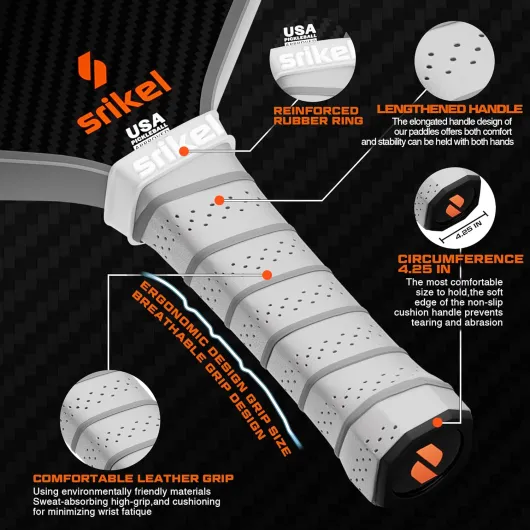
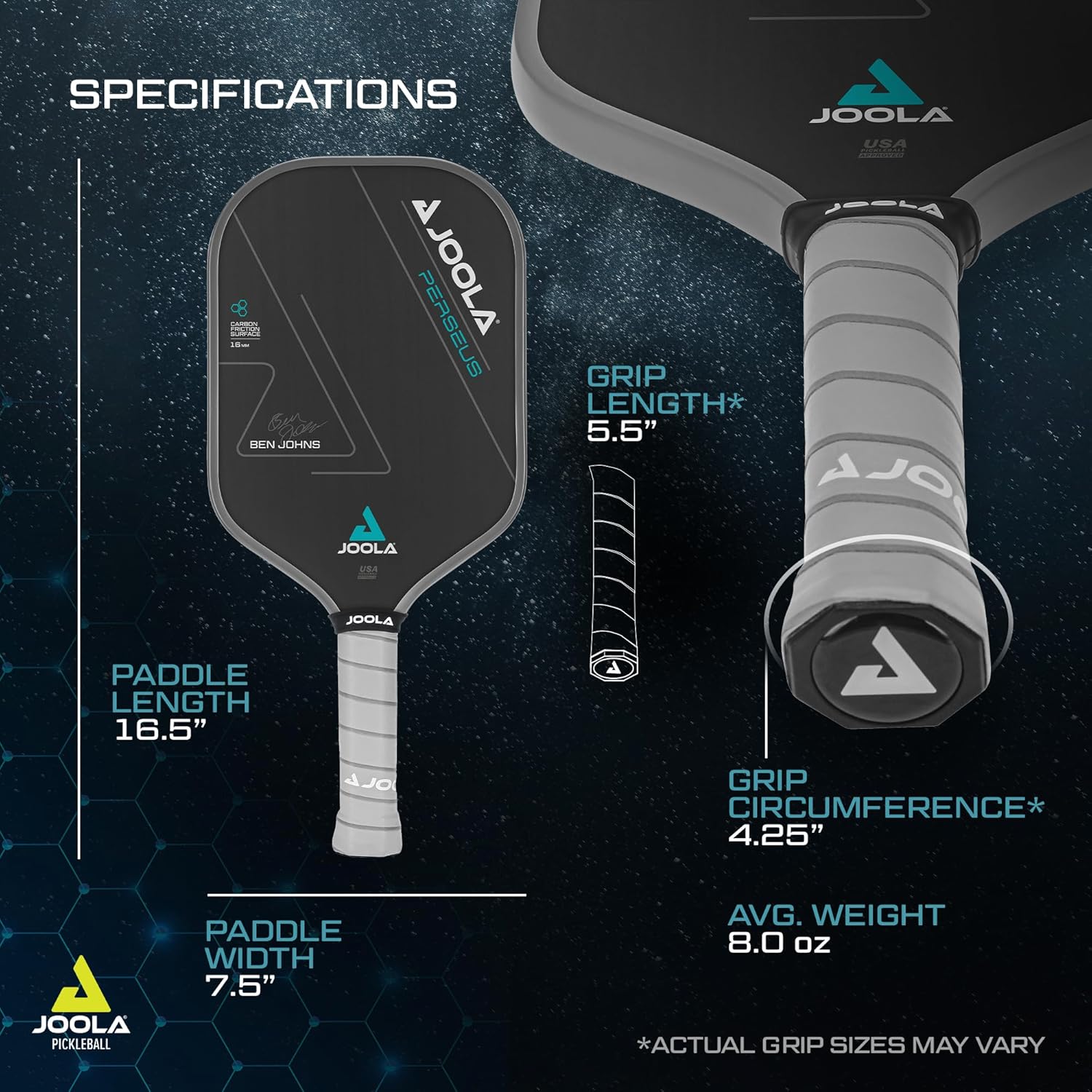
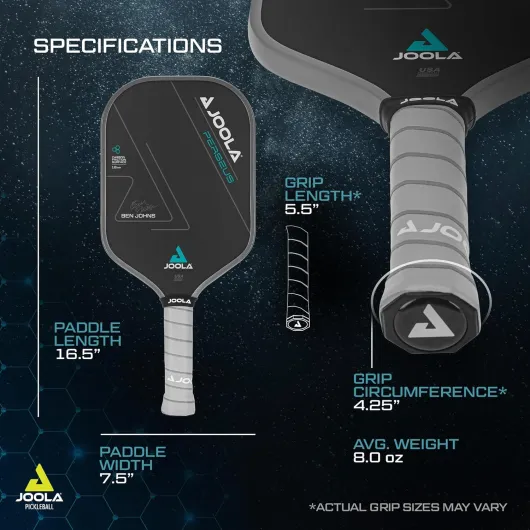
The handle design is also worth mentioning: 5.5" grip length is on the longer side, so two-handed backhands are comfortable. I didn’t feel cramped at all. The grip diameter (4.25") is pretty standard; if you have very small or very large hands you might need an overgrip or some build-up. Overall, the design is practical and thought-out. It’s not trying to be fancy; it’s clearly built for people who care about how it plays more than how it looks on Instagram.
Comfort and grip: good in the hand, but not the lightest
In terms of comfort, the paddle sits in a pretty good spot. At around 8 oz, it’s not ultra-light, but it’s not a brick either. After a couple of two-hour sessions, my arm felt fine, and I didn’t get that forearm fatigue I sometimes get with heavier, head-heavy paddles. If you’re very sensitive to weight or have elbow issues, you might still want something lighter, but for most players, this weight is manageable.
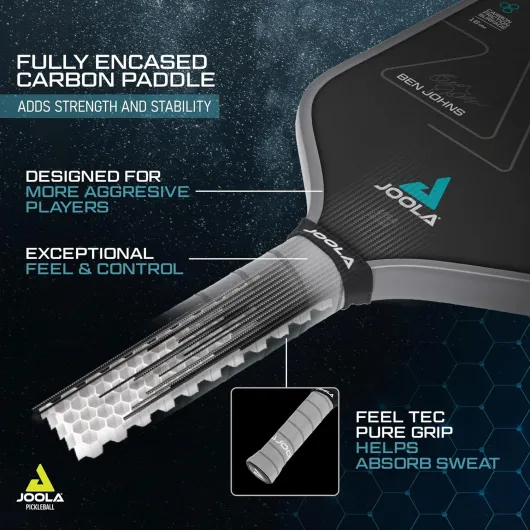
The Feel-Tec Pure Grip is actually one of the things I liked most. It’s tacky without feeling sticky, and it does a good job absorbing sweat. I played some humid evening games where my previous paddle’s grip turned into a slippery mess. With the Perseus, I only wiped my hand on my shorts occasionally, and the grip stayed usable. The 4.25" circumference felt standard to me – I added a thin overgrip after a week just because that’s what I’m used to, not because it was necessary.
Shock and vibration are well controlled. Off-center hits don’t send a sting up your arm like some cheap paddles. The combination of the 16mm core and carbon frame spreads out the impact nicely. I had a few hard drives hit close to the tip, and while I could feel they weren’t perfect, they didn’t hurt or feel jarring. If you’ve had elbow or wrist issues in the past, this calmer, muted feel can help.
The only downside comfort-wise is that, with the elongated shape and slightly head-heavy balance, quick hand battles at the net can feel a touch slower than with a super light, shorter paddle. I noticed it when reacting to rapid-fire volleys. It’s not terrible, but if your whole game is speed at the kitchen, you might want something faster. For a mixed playstyle (drives, dinks, blocks), I found the comfort and handling to be pretty well balanced overall.
Materials: full carbon build that feels solid, not gimmicky
The main selling point here is the carbon fiber construction, both in the face and the way the paddle is fully encased. Compared to cheaper composite or fiberglass paddles I’ve used, the Perseus feels more solid and consistent. When you hit the ball, there’s less vibration in the handle and more of a muted, crisp contact. If you’re coming from a very poppy fiberglass paddle, it might feel a bit dead at first, but after a few sessions you start to appreciate how predictable it is.
The 16mm polymer core (they don’t shout about it in the description, but that’s what it is in this category) gives the paddle a softer, control-friendly feel. Dinks sit on the paddle face a bit longer, so you can guide them more precisely. On resets, the ball doesn’t rocket off unless you really push it. That’s a plus if you like a controlled short game, but if you rely on the paddle to do most of the work on power shots, you might miss the trampoline effect of thinner cores.
The surface uses JOOLA’s Charged Carbon tech, basically a textured carbon layer. In actual play, I could generate more spin on serves and topspin drives compared to my older mid-range composite. My slice serves bit more, and I got more dip on heavy topspin rolls. It’s not night and day, but it’s noticeable. One Amazon review in Japanese also mentions it’s great for spin serves, and I’d agree – if you already know how to brush the ball, the surface helps.
Overall, the materials feel reliable and built for regular use. I didn’t notice any early wear, delamination, or weird buzzing, even after a couple of accidental clashes with other paddles. It’s not indestructible, but compared to budget paddles, the build quality and material choice justify a good chunk of the price. You’re paying less for cosmetics and more for a consistent hit across the whole face.
Durability: feels robust, no early issues so far
Durability is always tricky to judge in a short test, but there are some clear signs. After three weeks of regular play (3–4 times a week), plus a couple of paddle clashes and some scrapes on rough courts, the Perseus still looks and feels solid. The carbon-encased design seems to do its job: there’s no visible separation between the face and the edge, no weird buzzing, and no soft spots developing.
The surface texture has held up better than I expected. Some textured paddles lose their grip fast and become almost smooth after a month. Here, the Charged Carbon surface is still clearly grippy. If I rub a ball across it, it still catches, just maybe a hair less than day one. That’s normal wear, and it hasn’t affected my spin in any noticeable way yet. I’d expect the grit to gradually tone down over several months, but not vanish overnight.
The edge guard has taken a few hits from low scoops and accidental taps on the court. It shows minor cosmetic scuffs but nothing structural. I’ve had cheaper paddles where the edge guard started peeling or denting badly after a couple of similar knocks. Here, it’s just normal wear. The handle and grip haven’t loosened or twisted, which is another good sign – some paddles develop a slight wiggle at the handle after repeated hard hits.
So far, I’d rate durability as pretty solid for the price bracket. Of course, if you’re the type who slams paddles or leaves them in a hot car, nothing will survive that forever. But for a regular player who takes basic care of their gear, this feels like it will comfortably last through heavy weekly play without losing its characteristics too quickly. The full carbon construction doesn’t feel like marketing talk; it behaves like a well-built piece of equipment.
Performance: control and spin first, power if you work for it
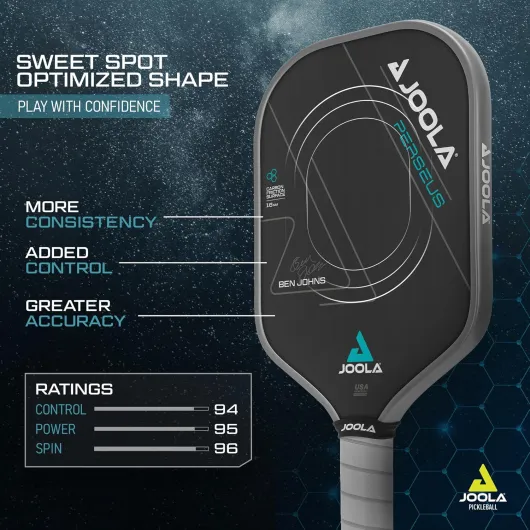
On court, the main thing I noticed is that this paddle is very control-focused. At the kitchen line, dinks and soft shots are easy to place. The thicker 16mm core and large sweet spot let you absorb pace and drop the ball short more reliably than with my thinner, punchier paddle. My third shot drops, which are usually decent but not great, actually improved – I was sending fewer balls long and getting more consistent arcs into the kitchen.
Spin is above average. Serves with topspin or slice had more movement, and my topspin rolls from the baseline dipped faster. It’s not like the ball suddenly becomes a UFO, but opponents did comment that my serves were kicking up more. That lines up with some of the Amazon reviews mentioning better spin and improved play. If you know how to brush the ball, the surface helps; if you just hit flat, you won’t magically get spin out of nowhere.
Power is where opinions might split. Compared to more “power” paddles, the Perseus is more controlled and slightly muted. My flat drives felt a bit less explosive unless I really stepped in and swung through. Put-aways at the net were still fine, but I had to be more deliberate with my mechanics. For me, that’s not a bad thing – it forced me to use better technique instead of just relying on paddle pop. But if you’re coming from a stiff, thin paddle that launches the ball, you might initially feel underpowered.
Defensively, the paddle shines. Blocks, counters, and resets are very stable thanks to the thicker core and carbon encasing. When someone rips a drive at you, you can just angle the paddle and the ball comes off predictably, without flying to the back fence. For doubles play and for players who like to grind out points at the net, this is a strong point. Overall, the performance is tailored to players who care about placement, spin, and consistency more than raw power. If that sounds like your style, it fits well.
What you actually get with the Ben Johns Perseus CFS 16
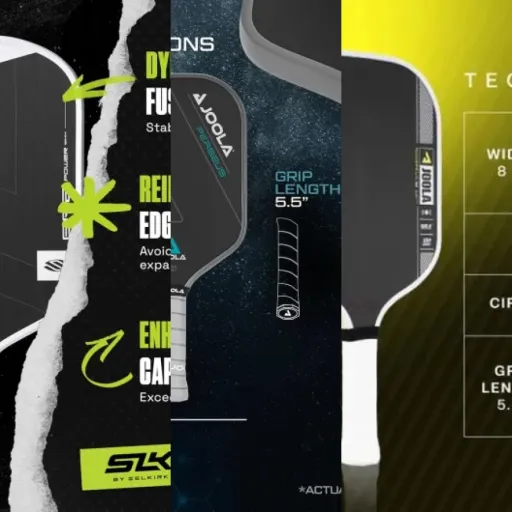
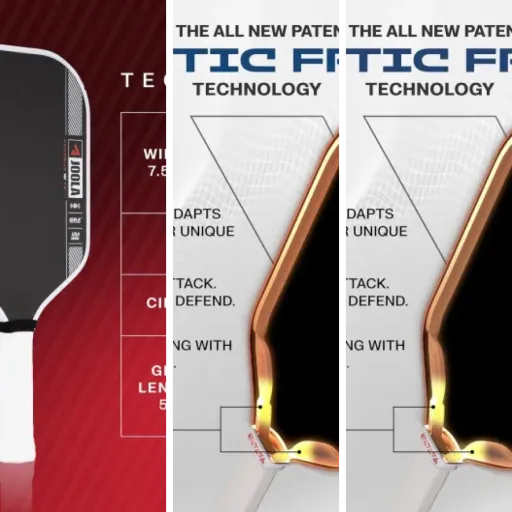
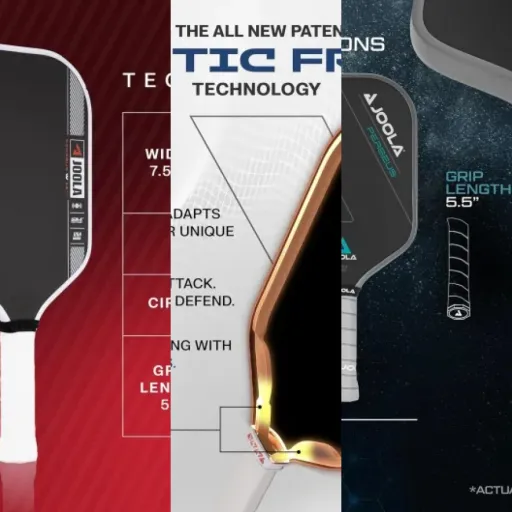
On paper, the specs are pretty standard for a modern, control-focused paddle: 16mm thickness, 16.5" length, 7.5" width, around 8 oz, 5.5" grip length and 4.25" grip size. So you’re getting that elongated shape with a slightly longer handle, which is nice if you use a two-handed backhand or just like more room on the grip. It’s USAPA certified, so no worries for leagues or tournaments.
The face uses JOOLA’s Charged Carbon Surface Technology, which basically means a textured carbon fiber surface meant to give you more spin and a sharper, crisp feel. In practice, the surface is pretty gritty out of the box. When you rub a ball across it, you can feel it grab. After a couple of weeks, the texture was still there, maybe a tiny bit smoother but nothing dramatic. So from a presentation point of view, it ticks the “spin paddle” box without being a sandpaper monster.
The paddle is fully encased in carbon, which is supposed to help with durability and consistency across the face. Compared to some cheaper paddles I’ve used, there’s definitely fewer “dead” zones near the edges. The sweet spot is big and forgiving for a paddle aimed at advanced players. It comes unstrung (obviously, it’s a paddle, not a racket), and there’s no case or extra grip in the box – just the bare paddle.
In terms of target user, JOOLA markets this clearly toward advanced and competitive players, but in my opinion, a motivated intermediate can use it just fine. Beginners might manage, but I think they’d be paying for features they won’t really use yet, like the higher spin potential and the more controlled, slightly muted feel. So as a package, it’s a serious tool, not a toy, and it’s set up that way from the get-go.
Pros
- Large, stable sweet spot with good control and consistency across the face
- Textured carbon surface provides noticeable spin for serves and topspin shots
- Comfortable grip and solid, low-vibration feel suitable for frequent play
Cons
- Less free power than some thinner or fiberglass paddles in the same price range
- High price point, partly paying for brand and signature rather than pure performance
Conclusion
Editor's rating
The JOOLA Ben Johns Perseus CFS 16 is a solid choice for players who care about control, spin, and a stable feel more than raw, effortless power. The 16mm core, large sweet spot, and carbon construction make it very reliable on dinks, drops, blocks, and resets. If your game revolves around winning at the kitchen line and you already have decent technique, this paddle helps you be more precise and consistent. The grip is comfortable, the build feels robust, and the surface offers enough texture for clear spin gains over cheaper paddles.
It’s not perfect. Out of the box, it’s not the liveliest power paddle, and players coming from thinner or fiberglass paddles might feel a bit underwhelmed on flat drives and put-aways until they adjust. It’s also on the expensive side, and there are other paddles in the same price range that compete strongly. You’re paying partly for the Ben Johns name and JOOLA’s reputation, not just raw performance numbers.
In short: if you’re an intermediate to advanced player who plays often and likes a controlled, spin-heavy style, the Perseus CFS 16 is a pretty solid, dependable option. If you’re a beginner, a casual player, or someone who just wants maximum pop for the least money, there are cheaper and more forgiving paddles that will suit you better. This one rewards clean strokes and regular play; it’s a tool for people who are serious about improving, not a shortcut for instant power.