Summary
Editor's rating
Is it worth the money? Depends what you expect
Shape, balance, and how it actually feels in hand
Comfort and feel: fine for long sessions, but not the softest out there
Carbon fiber build that feels solid but not mind-blowing for the price
Early signs on durability and build quality
On-court performance: control-focused with decent but not crazy power
What you actually get vs what you think you’re buying
Pros
- Very stable and control-focused, especially good for dinks, drops, and resets
- Elongated shape and rounded corners give extra reach and a forgiving sweet spot
- Solid carbon fiber build with good feedback and decent comfort for long sessions
Cons
- Packaging and included accessories are minimal and don’t match the price or some listings
- Power is decent but not strong enough to clearly stand out from cheaper alternatives
- Value for money is questionable if you’re not a serious, control-focused player
Specifications
View full product page →| Brand | JOOLA |
A premium paddle that doesn’t exactly feel premium out of the box
I’ve been playing pickleball regularly for a few years now, and I’ve gone through my share of paddles from cheap Amazon sets to higher-end brands. I picked up the JOOLA Pro V Perseus 16mm because I wanted something with more control and a bit more punch at the net, and because everyone keeps talking about the Ben Johns line. So I went in expecting a top-tier paddle experience, not just on court but also in how it’s presented and what’s included.
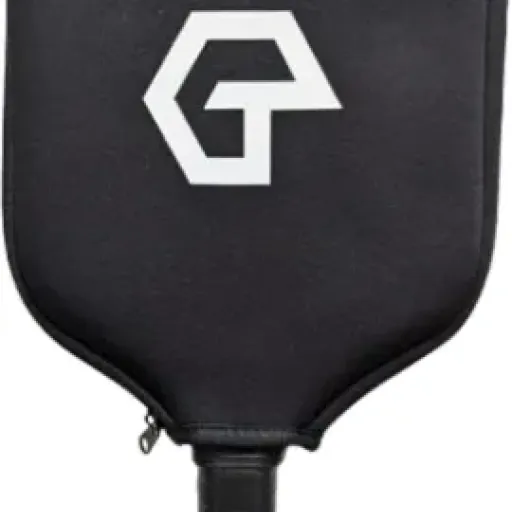
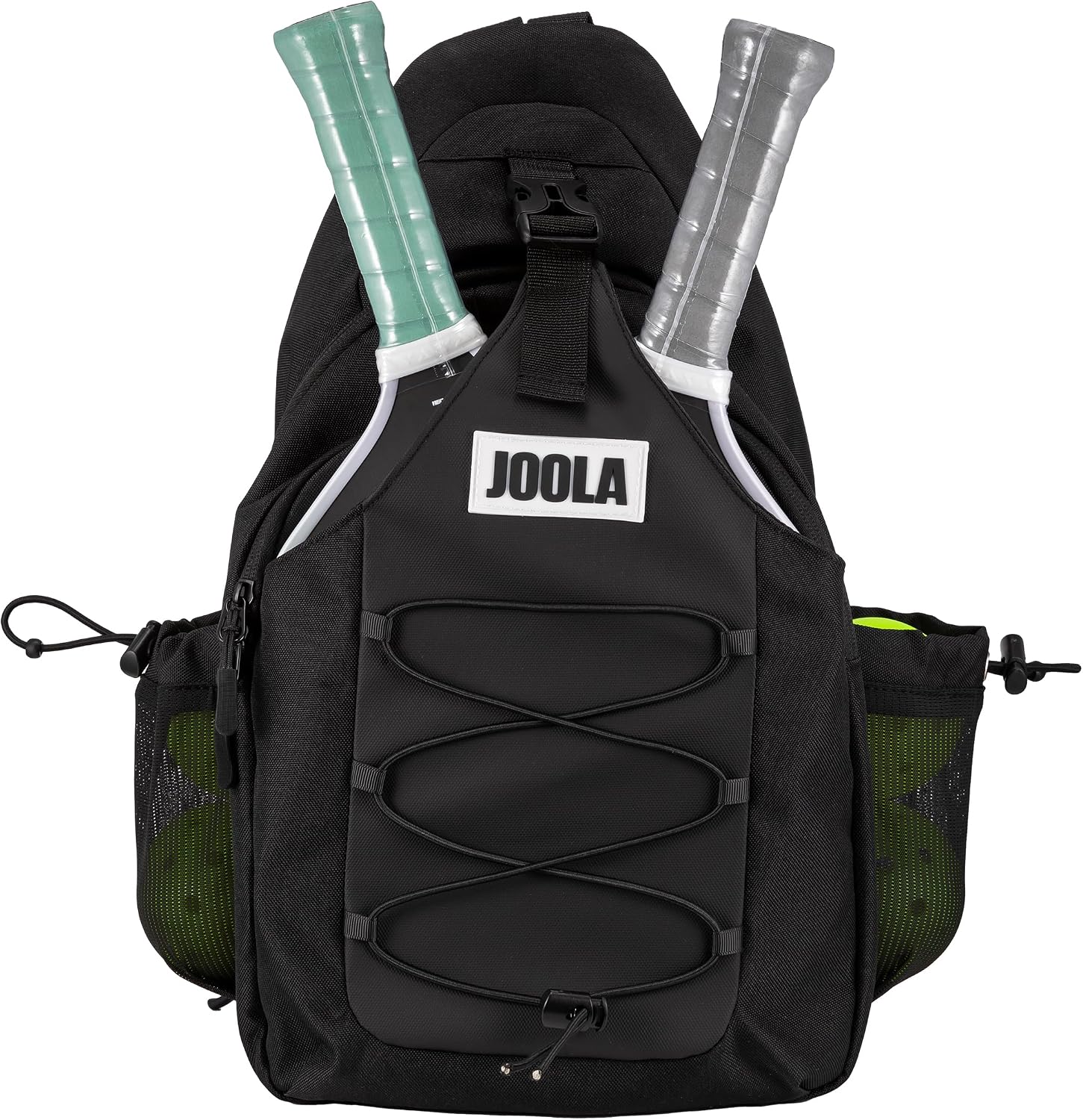
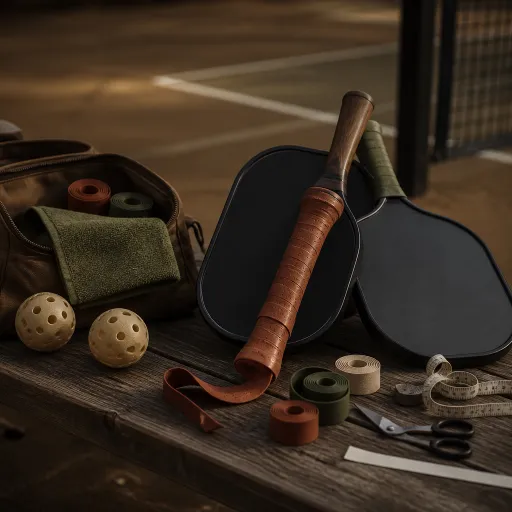
First reality check: when this thing arrived, it came basically naked. Just the paddle in a plastic sleeve, no case, no overgrip, no edge tape, nothing. For a paddle in this price range, that’s pretty underwhelming. I’d seen listings and photos showing a nice box, extra grip, stickers, clear edge guard tape, the whole “premium” vibe. In practice, you get a good paddle, but the unboxing experience feels closer to a mid-range product.
Once I got over the packaging letdown, I focused on how it actually plays. I used it for about two weeks, 4–5 sessions a week, mostly rec games and a small local tournament. My main goals were: more reliable control on dinks and resets, enough pop for counters, and a shape that would help me at the net on quick exchanges. The Perseus 16mm is clearly built for that kind of player: someone who already has decent mechanics and wants consistent performance more than raw power.
Overall, my first impression is this: on court it’s pretty solid and feels like a serious tool, but everything around it (packaging, accessories, app registration) feels a bit lazy for the price. If you only care about how it plays, there’s a lot to like. If you also care about “premium” treatment and extras, you might feel a bit ripped off compared to what the product page suggests.
Is it worth the money? Depends what you expect
This is where the Perseus 16mm is a bit tricky. As a pure playing tool, it’s good. As a full package for the price, it’s less convincing. You’re paying a premium price, largely for the JOOLA name, the Ben Johns association, and a well-tuned control paddle. If you’re already a serious player, you’ll probably feel the difference versus a random cheap paddle. But if you compare it to mid-range carbon paddles that cost half or two-thirds of the price, the gap is smaller than you might hope.
The main things that hurt the value for me are: no real accessories (no cover, no overgrip, no edge tape), basic packaging, and the sometimes finicky NFC/app experience. Several Amazon reviews mention expecting extras that never showed up, and I’m in the same boat. For a paddle near the top of the price range, you expect at least a decent unboxing and a couple of small add-ons. The fact that you often pay more on Amazon than on the JOOLA site and still don’t get those extras makes it feel even more off.
On the positive side, if you’re a control-focused player and you actually use what this paddle offers – stable sweet spot, good touch, reliable blocking and countering – you’ll get your money’s worth in terms of on-court performance. It’s not just hype; it does play well. But if you’re more casual, or you’re just curious about an upgrade, I’d say there are cheaper paddles that will get you 80–90% of the performance for a lot less money. In that case, the value isn’t great.
So for me, the value rating lands in the middle. It’s not a rip-off, because the paddle performs, but it’s definitely not a bargain. It makes the most sense for players who already know what they want (control, stability, reach) and are okay paying extra for a known brand and a tournament-approved, tour-level style paddle. If you’re budget-conscious or still figuring out your play style, I’d look at something less expensive first.
Shape, balance, and how it actually feels in hand
The Perseus 16mm I tested has that elongated, modern shape that’s pretty common in higher-end paddles right now. The main design idea is more reach and a stable sweet spot, especially for aggressive net play. The corners are rounded, which helps keep the hitting zone stable even when you’re stretching for a ball. On court, that checks out: when I was fully extended on a volley, mishits felt more controlled than with some cheaper square-ish paddles I’ve used.
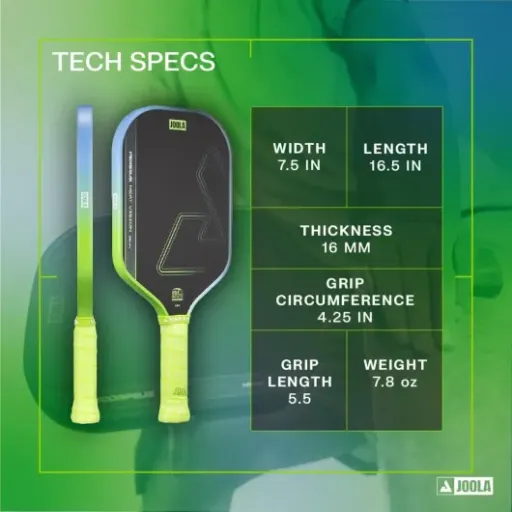
Weight-wise, it’s on the heavier side, but not a brick. The listed weight is about 0.56 kg, but mine felt slightly lighter, probably in the mid-8 oz range once converted correctly from the actual paddle spec (the Amazon listing weight is a bit confusing). The balance leans slightly toward the head, which helps with power on drives and overheads. At the same time, the throat design keeps it from feeling too clumsy on quick hand battles at the kitchen. I could still react fast on blocks and counters, but if you’re coming from a super light paddle, you will feel the extra heft.
The throat area is slimmer and more open, which JOOLA claims helps with flexibility and energy storage. In practice, it gives the paddle a clean look and a bit of a modern tennis racket vibe. The face has that carbon fiber texture that’s now pretty standard in this price range. It doesn’t scream for attention, but it looks like a serious tool, not a toy. The graphics are fine, nothing flashy, but I actually prefer that. After a few sessions, the face showed normal scuffing from the ball, but nothing worrying.
Overall, the design is functional and geared toward control and reach, not style points. If you like compact, wide-body paddles, you might not love this shape; if you’re into elongated paddles for better reach on volleys and drives, this fits right in. I wouldn’t buy it for looks alone, but it does give you the feeling of holding a proper performance paddle once you’re on the court.
Comfort and feel: fine for long sessions, but not the softest out there
Comfort-wise, the Perseus 16mm sits in a decent middle ground. It’s stable and doesn’t buzz your arm on every mishit, which is good, but it’s not the softest or most arm-friendly paddle I’ve ever used. I played a few 2–3 hour sessions back-to-back, and I didn’t come away with sore elbows or wrists, but I did notice that it’s not as plush as some other 16mm control paddles I’ve tried.
The stock grip size is around 5.5, which for me (medium hands) felt slightly on the larger side once I added an overgrip. Out of the box, the grip is okay: decently tacky, not too hard, but I prefer a bit more cushioning, so I wrapped it immediately. If you have smaller hands, be aware that with an extra overgrip it might feel chunky. The handle length and shape are comfortable for both one-handed and two-handed backhands, at least for my style. I never felt cramped, even on quick resets where I had to adjust my grip mid-rally.
One thing I liked is that the paddle doesn’t feel overly head-heavy, so you don’t get that dragging feeling in your wrist during long dink rallies or fast hands exchanges. At the same time, it’s not a featherweight, so if you’re very sensitive to weight or have arm issues, you might want to add a softer overgrip or maybe look for something slightly lighter. The sound and feedback are firm but not harsh: you get a clear sense of where you hit on the face, which helps with touch, but it’s not a painful sting on mishits.
Overall, I’d say comfort is good but not standout. It’s totally fine for regular play and even longer sessions, but if you’re coming from arm problems or you like super cushy, dampened paddles, this isn’t going to feel like a pillow. It’s a performance-focused feel, with enough comfort to be usable, but clearly tuned more toward feedback and control than pure softness.
Carbon fiber build that feels solid but not mind-blowing for the price
On paper, the materials are what you’d expect from a higher-end paddle: carbon fiber frame, carbon fiber face, and JOOLA’s Feel-Tec handle material. It’s a 16mm core, so you’re clearly in the control/thicker core category. The carbon fiber surface gives decent grip on the ball for spin, and the thicker core helps with stability and touch shots. Nothing revolutionary here, but it’s the current standard for serious paddles.
Compared to some cheaper carbon paddles I’ve tried (roughly half the price), the Perseus does feel a bit more solid. There’s less vibration on off-center hits, and the face feels more consistent across the sweet spot. One Amazon review mentioned that the sound is less muted than the previous generation, and that matches what I felt. It has a more “alive” feel on contact, not that super dead, hollow thunk some thick-core paddles have. If you like a bit of feedback in your hand, you’ll probably appreciate that.
That said, if you’re hoping the materials will clearly justify the big price jump over mid-range paddles, it’s not that clear-cut. Yes, the build feels good, but it doesn’t feel twice as good as a paddle that costs half as much. The edge guard is standard and not especially thick, so I’d still recommend adding edge tape if you’re picky about chips and scratches. The handle feels solid, no creaks or flex, and the stock grip is okay but nothing special – I rewrapped mine with an overgrip after the first couple of sessions.
In short, the materials are solid and in line with what a performance paddle should have, but they don’t blow you away. You’re mostly paying for tuning, brand, and the Ben Johns association rather than some magical new material. If you’re upgrading from a basic fiberglass or low-end composite paddle, you’ll feel a clear bump. If you’re coming from another recent carbon control paddle, the jump will be more subtle.
Early signs on durability and build quality
I haven’t had this paddle for months, so I can’t pretend I know how it will look after a full season, but after a couple of weeks of regular play there are some early signs. The overall build feels solid and there’s no obvious weak spot so far. No rattles, no loose edge guard, and the face hasn’t started peeling or bubbling. That’s already better than a few cheaper paddles I’ve tried that started buzzing or chipping after a short time.
The face shows normal wear: light scuffing from the balls, a few marks from ground scrapes or hitting the court on low digs, but nothing that looks like structural damage. The carbon texture still feels present, not completely worn smooth. The edge guard has a couple of tiny dings from clipping the ground and the net post, but that’s pretty normal. If you care a lot about cosmetics, you’ll probably want to add clear edge tape from day one because the guard isn’t especially thick or beefy. It protects, but it doesn’t hide all abuse.
The handle and grip area feel sturdy. I don’t feel any flex or looseness where the handle meets the paddle face, which is something I’ve seen on cheaper frames over time. The Feel-Tec material under the grip hasn’t compressed weirdly or shifted. I re-gripped it once, and everything underneath looked clean and well put together. Given JOOLA’s reputation and the 10-year spare part availability mentioned, I’d expect the internal structure to hold up decently if you don’t abuse it.
Based on what I’ve seen so far, durability seems good but not bulletproof. It feels like a proper performance paddle that should last a solid amount of time for a regular player, but I wouldn’t expect it to look pristine if you’re diving on courts and banging it on fences. For the price, I’d like to see slightly more robust edge protection, but in terms of core and face integrity, it’s on track to be reliable.
On-court performance: control-focused with decent but not crazy power
This is where the Perseus 16mm makes more sense. It’s clearly built for control and pressure, not raw blasting power. In kitchen play, I liked it a lot. Dinks, drops, and resets feel predictable. The thicker 16mm core plus the carbon face gives you a good mix of stability and touch. I found it pretty easy to soften hard drives back into the kitchen and to keep my dinks low when I actually focused on my technique. The sweet spot feels generous, and even when I caught the ball a bit toward the edges, it didn’t die completely.
On drives and serves, it has enough punch, but it’s not a rocket launcher. One of the Amazon reviews mentions that it “pushes enough but doesn’t impress,” and I agree. Compared to some power-oriented paddles or thinner 13mm cores, the Perseus 16mm feels more controlled and a bit tamer in terms of raw speed. That can be good or bad depending on your style. If you tend to over-hit and send balls long, this paddle can help you rein that in. If you rely on easy power and want the paddle to do the work, you might find it a bit underwhelming.
At the net, in fast hands battles, the extra reach and stability really show. I had a lot of confidence blocking and countering, especially against people who like to rip the ball. The paddle doesn’t twist as much on off-center contacts, and the elongated shape helps you get a paddle on balls you’d otherwise miss with a shorter design. Spin is decent; the textured face grabs the ball enough for topspin rolls and slices, but it’s not dramatically spinnier than other carbon paddles I’ve tried. It gets the job done, but it won’t suddenly turn you into a spin machine.
Overall, performance is strong if you’re looking for a control-first paddle that still has reasonable pop. If you’re an intermediate to advanced player who likes to construct points, work the kitchen, and use counters more than brute force, you’ll probably enjoy how it plays. If you’re a newer player hoping an expensive paddle will magically add power and winners to your game, this is not that kind of tool. It rewards clean technique more than it bails you out.
What you actually get vs what you think you’re buying
The biggest gap with this paddle is between the expectation created by the online listing and what actually shows up at your door. The Amazon page and some photos make it look like you’re getting a full premium kit: box, overgrip, stickers, clear edge tape, maybe even a nicely designed insert. In reality, multiple buyers (me included) got just the paddle in a simple plastic bag. No case, no grip tape, no extras. For a product that costs around what a decent entry-level paddle + bag + grips would cost together, it feels a bit cheap.
One user mentioned paying more on Amazon than on the JOOLA website and still not getting the promised extras, which matches my experience. I had to buy my own overgrip and edge tape separately. Not a huge deal if you’re used to customizing your paddle, but when a listing clearly shows these things, it’s hard not to feel misled. Another review mentioned the NFC registration through the JOOLA Infinity app not working at first and only kicking in after days of trying. I had a similar issue: the NFC tag didn’t register right away, and I had to fiddle with different phone positions and try again later.
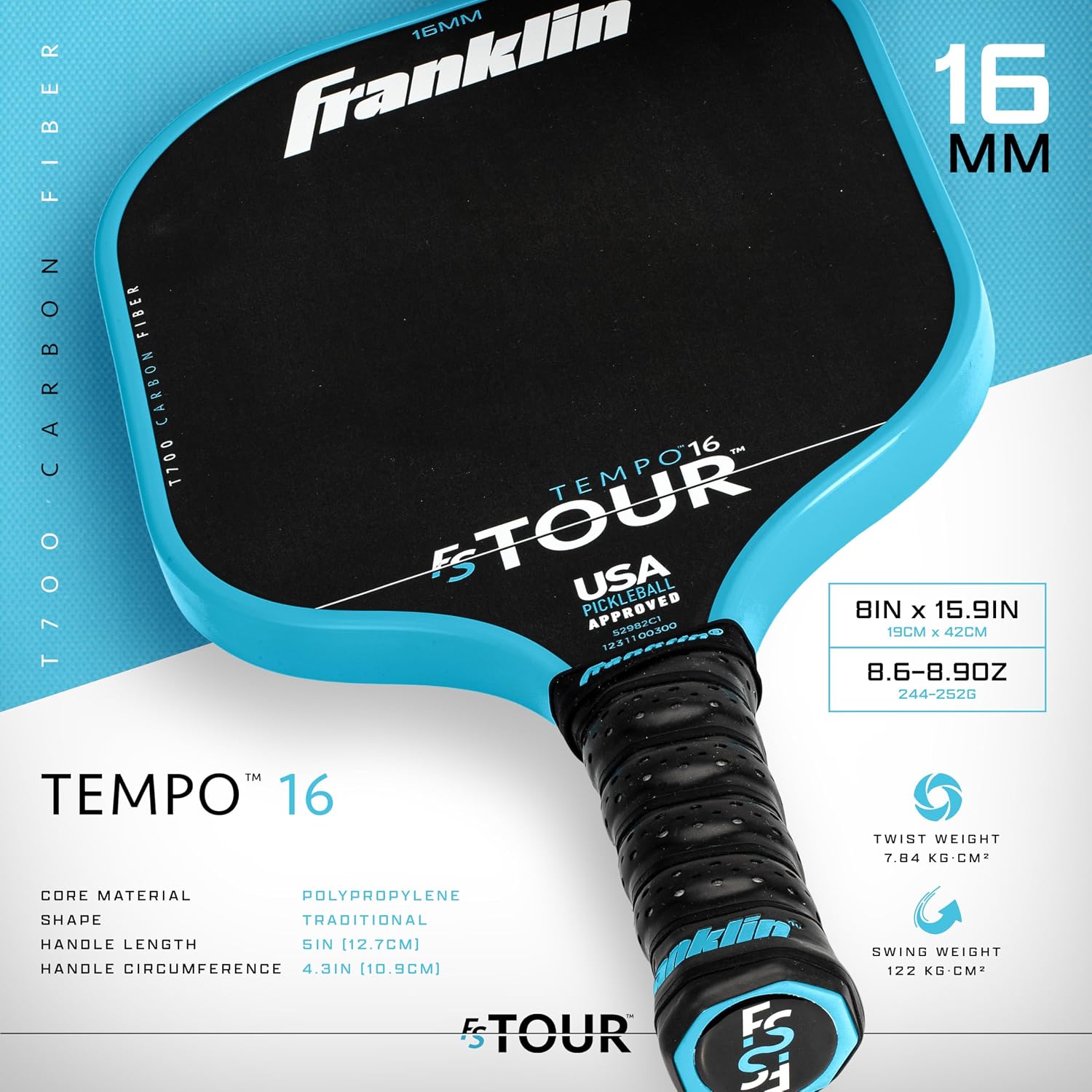
In terms of raw information, the paddle is clearly labeled: 16mm thickness, carbon fiber face, adult size, made in China, 0.56 kg (which is roughly 12.3 oz, though my scale showed slightly less). It’s USAP/UPA-A approved, so no worries for tournaments. You do feel like you’re buying a serious piece of equipment, but the way it’s presented doesn’t match the price point. It’s closer to buying a mid-range tennis racket frame that shows up unstrung and bare, except here you don’t even get a basic cover.
If you’re the kind of person who cares about the “premium” feel when you unbox an expensive product, this will probably annoy you. If you just want a good paddle and don’t care about the rest, you can ignore that part. Still, for this price, I expected at least a simple padded cover and one overgrip. Other brands at lower prices manage to include that, so JOOLA is clearly saving costs here and leaning on the Ben Johns name and the performance to justify the tag.
Pros
- Very stable and control-focused, especially good for dinks, drops, and resets
- Elongated shape and rounded corners give extra reach and a forgiving sweet spot
- Solid carbon fiber build with good feedback and decent comfort for long sessions
Cons
- Packaging and included accessories are minimal and don’t match the price or some listings
- Power is decent but not strong enough to clearly stand out from cheaper alternatives
- Value for money is questionable if you’re not a serious, control-focused player
Conclusion
Editor's rating
The JOOLA Pro V Perseus 16mm is a solid control-oriented paddle that feels like a serious piece of gear once you step on the court. It gives you a stable sweet spot, good touch for dinks and drops, and enough pop for counters without turning every shot into a rocket. The elongated shape and rounded corners help at the net, especially on volleys and stretches, and the carbon fiber build feels consistent and reliable. If you already have decent technique and you like to apply pressure through placement and fast hands rather than pure power, this paddle fits that style pretty well.
Where it falls short is in everything around the actual playing experience. The packaging is barebones, there are basically no accessories, and the online listings can be misleading about what’s included. Considering the price, that stings a bit. The performance is good, but not so far ahead of cheaper carbon paddles that it automatically justifies the cost for everyone. If you’re a committed intermediate or advanced player who wants a control-focused, tour-style paddle from a big brand, you’ll probably be happy with how it plays. If you’re more casual, on a budget, or easily annoyed by weak value for money, you might want to look at more affordable options or buy directly from JOOLA to at least know exactly what you’re getting.