Summary
Editor's rating
Value: are you paying for performance or for the Ben Johns name?
Design: shape, feel in hand, and that ‘pop’
Comfort: grip, weight, and fatigue after long sessions
Materials: carbon everywhere, with pros and cons
Durability after several weeks: solid so far, but watch for QC
Performance on court: control, power, and spin in real play
What you actually get when you buy it
Pros
- Very good control and forgiveness, especially on dinks, drops, and resets
- Textured carbon face provides solid spin and a satisfying pop on the sweet spot
- Comfortable balance and low vibration, with decent durability from the carbon frame and edge guard
Cons
- Power is only average; you need good technique to generate pace
- Price partly reflects branding, with no extras like a paddle cover included
- Some reports of quality control/condition issues when bought online

Specifications
View full product page →| Brand | JOOLA |
A ‘pro’ paddle for regular players?
I’ve been testing the JOOLA Pickleball Paddle Pro IV Ben Johns Perseus Pro IV 16mm for a few weeks now, mixing rec play and a couple of small local tournaments. I’m not Ben Johns, nowhere close, but I play 3–4 times a week and I’ve gone through a handful of mid- to high-range paddles. I picked this one up partly out of curiosity about the whole Ben Johns hype and partly because I wanted more control than my power-heavy paddle.
Right away, this feels like a paddle aimed at players who like to slow the game down and win at the kitchen, not people who only care about blasting drives. The honeycomb core and the 16 mm thickness give it a pretty soft, plush feel. If you come from a thin, power-focused paddle, you’ll probably notice the difference on day one: less raw punch, more control in resets and dinks. That matches what some Amazon reviews say about resets being a pleasure and the paddle feeling forgiving.
During my first sessions, I focused on how easy it was to adjust from my usual paddle. The weight (around 0.37 kg / ~13 oz depending on grip tape etc.) doesn’t feel heavy in the hand, but it’s not a feather either. After two hours of play, my arm didn’t feel trashed, which is already a win. Transitioning from baseline drives to kitchen play was fairly smooth, especially when I stopped trying to force power and let the paddle’s soft response work in my favor.
So, first impression: this is a control-first, spin-friendly paddle with decent pop, not a rocket launcher. If you’re expecting some magic pro-level power just because it has Ben Johns’ name on it, you might be underwhelmed. If what you want is a more forgiving, accurate paddle for dinks, blocks, and resets, then it starts to make more sense. But it’s not perfect, and for the price there are a few things that bug me, which I’ll get into below.
Value: are you paying for performance or for the Ben Johns name?
On the value for money side, this paddle sits in that higher mid-range to premium bracket, depending on where and when you buy it. You’re paying for the JOOLA brand, the Ben Johns association, and the full carbon build. Performance-wise, it absolutely plays like a quality paddle, especially if you care about control and spin. But you also have to be honest: a chunk of the price is for the name on the face and the tournament certifications, not just raw materials.
If you’re an intermediate player who plays often and wants a control-oriented, spin-friendly paddle that feels solid and forgiving, the price can be justified. It’s nicer than the random cheap Amazon paddles and it does feel more stable and precise. The Amazon rating around 4/5 also reflects that: most people seem happy, with some minor complaints about power or condition on arrival. For someone playing casually once a month, though, this might be overkill; you won’t really use what you’re paying for.
Where the value feels a bit thin is around the lack of extras and the fact that power is only average. No cover, no accessories, and you might still want to add an overgrip or lead tape to tune it. Also, there are other paddles in the same price range that offer a bit more pop if that’s your priority. So it really depends on your play style: if you want control, this is competitive; if you want power, there are better deals.
Overall, I’d say the value is good but not outstanding. You get a serious paddle that performs well and should last, but you’re also paying a branding tax. If that bothers you, you can find similar performance from less hyped brands. If you like the JOOLA/Ben Johns connection and you want something tournament-ready and control-oriented, the price becomes easier to swallow.
Design: shape, feel in hand, and that ‘pop’
The design of the Pro IV Perseus 16 leans toward a modern, slightly elongated shape, but it doesn’t feel extreme in any direction. It has enough length to reach a bit more at the kitchen without feeling like a paddleboard. The face has a textured carbon fiber surface, which you can actually feel with your fingers – not super rough like sandpaper, but there’s enough grip on the ball to help with spin. That matches what one Amazon reviewer mentioned about “stunning spin capabilities” and the nice pop on the sweet spot.
The carbon-framed edge guard is a nice touch from a practical point of view. I tend to scrape the paddle on low dinks and digs, and after a few weeks of use, the edge guard has minor cosmetic marks but nothing alarming. No peeling or obvious separation so far. The frame feels rigid, which helps with stability on off-center hits. It also gives the paddle a more solid vibe than cheaper composite paddles that sometimes feel hollow.
In hand, the paddle has a balanced feel, not super head-heavy. If you’ve played with very head-heavy paddles, you know they can help with power but get tiring and clumsy at the net. This one sits somewhere in the middle. I found hand speed at the kitchen decent; I could still react quickly on fast exchanges. When you hit the sweet spot, you do get a satisfying “pop” sound and feel, but it’s not overly loud or harsh. Miss-hits are more muted but still controllable, which is good if you’re still tightening up your consistency.
Design-wise, I’d say JOOLA did a good job of prioritizing control and versatility over looking flashy. The paddle isn’t eye-catching in a flashy way, but it feels like a serious tool. If you like bright colors and crazy graphics, this might feel a bit boring. If you prefer something that looks professional and low-key, it fits that role. Just don’t expect the design to blow you away; it’s functional and that’s about it.
Comfort: grip, weight, and fatigue after long sessions
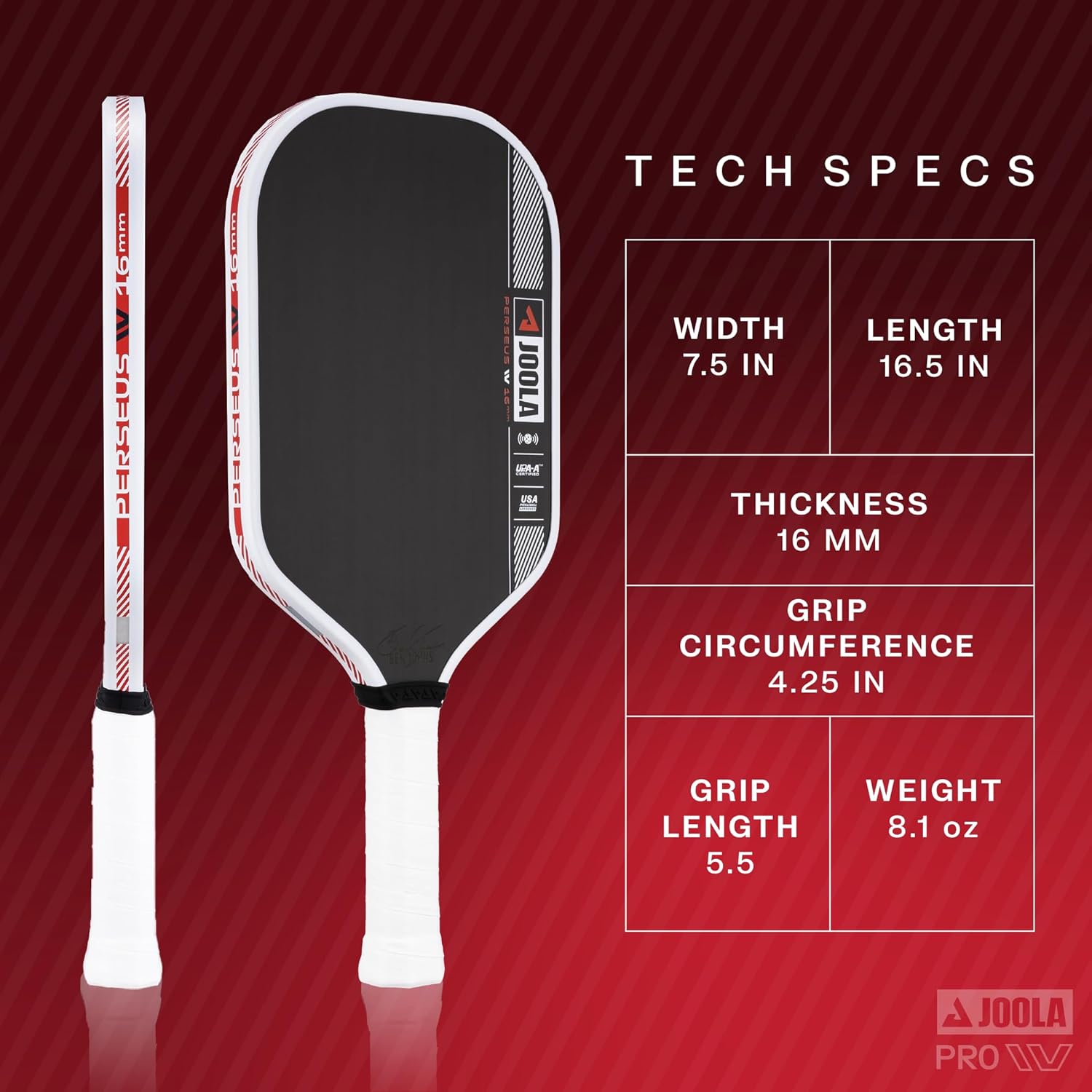
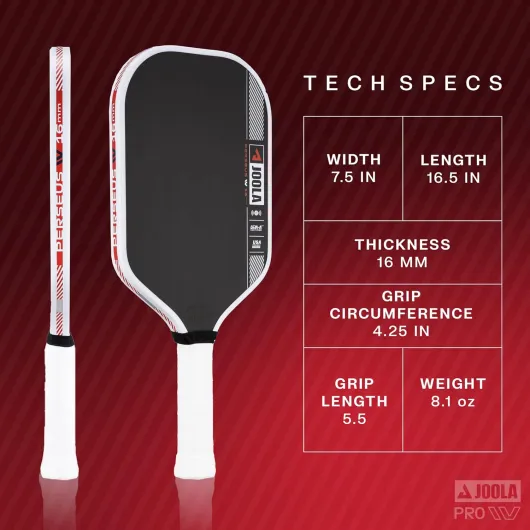
Comfort-wise, this paddle is pretty decent, but there are a few details worth mentioning. The listed weight is around 0.37 kg, which is roughly 13 oz. On court, it doesn’t feel overly heavy, probably because of the balanced distribution. I could play two-hour sessions without my wrist or elbow screaming, which is not always the case with heavier, head-heavy paddles. That said, if you’re used to very light paddles, you will feel the difference for the first few games.
The grip size is 5.5 inches, which refers to the length, not the circumference. The actual circumference feels like a standard medium. The stock grip is decent: it’s slightly tacky, has a bit of cushioning, and doesn’t feel cheap. I played with it as-is for a week, then added a thin overgrip to get a bit more sweat control. If you have very small hands, you might find it a bit chunky once you add an overgrip, but for most adult players it’s fine. No weird pressure points or slippery feeling, even in hotter conditions.
What I really noticed in terms of comfort is how the 16 mm core and softer feel help with vibration. Mishits on the edge or near the top don’t send a harsh shock into your arm. I’ve had paddles where a bad hit near the edge felt like hitting a metal pole; this one is much more forgiving. If you have a sensitive elbow or you’re worried about tendonitis, that softer impact feel is a plus. It’s not magic, but it’s gentler than many stiffer, thinner paddles.
Overall, I’d rate comfort as good but not perfect. The balance and vibration damping are strong points. The weight is manageable for most players, but if you’re extremely sensitive to weight or have wrist issues, you might want to look at slightly lighter options. Still, for regular adult players, I had no major complaints after several weeks of play.
Materials: carbon everywhere, with pros and cons
The JOOLA Pro IV Perseus 16 is basically a full carbon setup: carbon fiber frame, carbon fiber shaft (well, handle region), and a textured carbon face. Inside, you get a 16 mm reactive honeycomb core, which is pretty standard for modern control paddles. On paper, that combo should give a solid blend of stiffness on the frame and a softer, more cushioned feel in the core. In practice, that’s roughly what you get: the face feels firm on hard drives but still forgiving on blocks and dinks.
Compared to cheaper fiberglass or composite paddles I’ve used, the carbon here gives better consistency across the face. Off-center hits don’t die completely, and the paddle doesn’t flex in weird ways. You can feel that the sweet spot is reasonably big, especially side to side. Top and bottom are less forgiving, but that’s normal. The “charged carbon” marketing line is hard to verify, but I will say the surface grabs the ball fairly well without feeling sticky or wearing down fast, at least in the short term.
One thing about carbon paddles is that they can feel a bit “dead” if the core is too soft or if the weight isn’t well balanced. Here, JOOLA seems to have tuned the core for control, so if you’re hunting for pure power, you might feel like the materials are holding you back a bit. I had to swing harder to get the same pace I get from a thinner, more power-oriented paddle. On the other hand, the materials make it easier to keep the ball in when defending or resetting, which is clearly what this model is built for.
In short, the materials are solid and in line with the price bracket, but they’re tuned more for precision and feel than for raw punch. If you’re upgrading from a cheap Amazon beginner paddle, you’ll notice the step up in both feel and consistency. If you already own another high-end carbon paddle, this won’t feel revolutionary; it’s more of a different flavor of the same general recipe.
Durability after several weeks: solid so far, but watch for QC
Durability is always tricky to judge long term, but after several weeks of 3–4 sessions per week, the Pro IV Perseus 16 is holding up pretty well. The carbon face shows the usual light scuff marks from balls and the occasional scrape, but nothing beyond normal wear. The texture is still there; it hasn’t gone smooth or shiny yet. I’ve hit the ground a few times on low digs, and while there are small cosmetic marks, there’s no cracking or delamination so far.
The carbon-framed edge guard seems to do its job. No peeling, no weird gaps, and no rattling sounds inside the paddle, which I’ve had with cheaper models after a short time. The handle feels solid with no flex or creaks, and the stock grip hasn’t started unwinding. I tend to grip pretty hard on volleys, and I’ve had some paddles where the handle started to feel loose after a month; this one still feels tight.
That said, looking at some Amazon feedback, there are hints of quality control issues on the retail side, like the buyer who got a paddle with someone else’s name written on it. That’s more of an Amazon warehouse/returns problem than a materials problem, but it’s still something to keep in mind. If you order online, check your paddle carefully when it arrives: look for any odd marks, edge guard separation, or a warped face. Mine arrived clean and new, but not everyone seems to have the same experience.
So far, I’d say durability is reassuring for the price, but I can’t claim it will last forever. Carbon paddles do wear down eventually, especially the face texture. If you play a lot, expect normal wear, but nothing I’ve seen suggests this one is fragile. Just be ready to contact the seller quickly if your unit shows up looking used or damaged, because that does happen according to at least one review.
Performance on court: control, power, and spin in real play
On court, the JOOLA Pro IV Perseus 16 clearly leans toward control and defense, which matches how JOOLA markets it. In dinking and resets, the paddle really shines. The soft 16 mm core and the carbon face give you a lot of margin to absorb pace and drop the ball short. I noticed right away that my third shot drops and kitchen resets were more consistent than with my thinner, power-focused paddle. You can take a firm incoming ball, block it, and the paddle doesn’t overreact – the ball tends to land in, not sail long.
Power-wise, it’s a bit of a mixed bag. If you have good mechanics and you swing through the ball, you can hit plenty hard. But compared to some other paddles I’ve tried, there is no free power here. One Amazon review mentioned not feeling a huge amount of power, and I agree. From the baseline, drives need a proper swing; if you’re lazy with your stroke, the ball sits up instead of penetrating. At the net, speed-ups are precise, but they don’t feel as explosive as with a thinner core or a more head-heavy paddle. So if your whole game is just blasting winners, this might feel a bit tame.
Spin is where the paddle does quite well. The textured carbon surface gives enough grip to shape topspin drives and slice serves. I could get good kick on my serves and nice dip on topspin rolls from the kitchen. It’s not like the ball suddenly turns into a yo-yo, but for normal intermediate play, it’s more than enough. That lines up with the user review talking about "stunning spin capabilities" and that satisfying pop on the sweet spot.
In fast hands battles at the net, the balance helps. The paddle comes around quickly enough, and the sweet spot is forgiving enough that slight mishits still make it over. I felt confident blocking drives and resetting into the kitchen. Overall, I’d say performance is strong if you care about control, consistency, and spin, and only average if you’re chasing maximum power. It rewards proper technique more than brute force, which some players will like and others won’t.
What you actually get when you buy it
Out of the box, the JOOLA Pro IV Perseus 16 looks like what it is: a branded pro-style paddle with a pretty clean design and not much extra. You get the paddle, that’s it. No cover, no extras, no grip tape in the box. For this price point, I would have liked at least a basic sleeve to keep it from getting dinged in the bag, but you’re on your own there. The packaging is simple cardboard, nothing fancy but it protects the paddle fine.
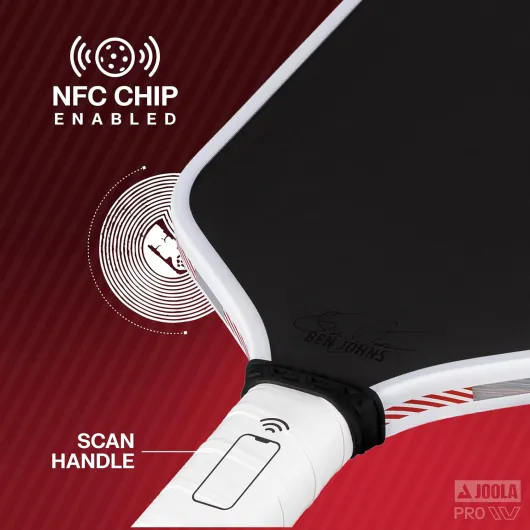
The branding leans heavily on Ben Johns and the various certifications: USAP PBCoR 43 certified, UPA-A pro certified. That’s nice for league and tournament players because it means you won’t run into any rule issues. But from a regular user point of view, it feels a bit like JOOLA is selling the pro name as much as the actual tech. The face has his signature and the usual JOOLA logos. On Amazon, one user even got a paddle with someone else’s name scribbled over it, which suggests some quality control issues at the warehouse level, at least for used/returned items being sold as new.
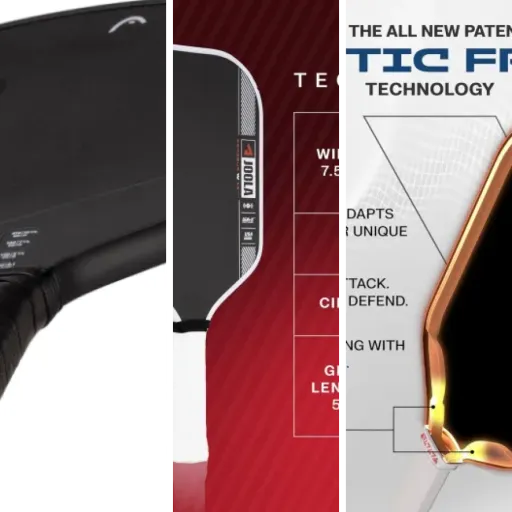
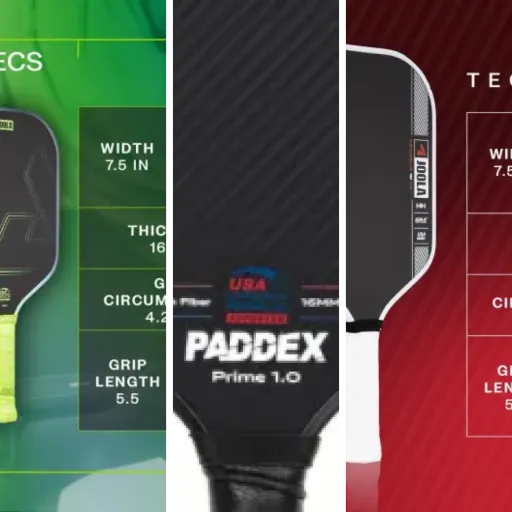
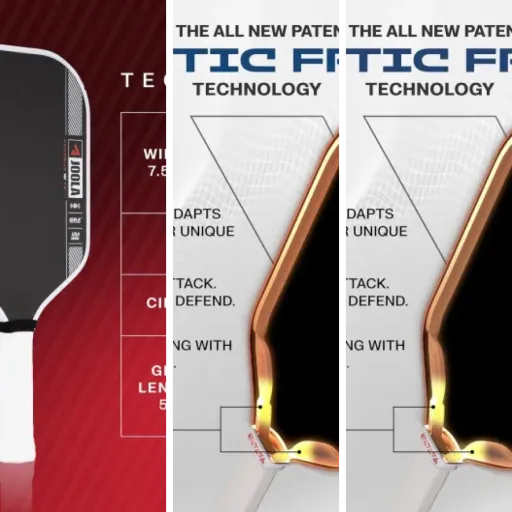
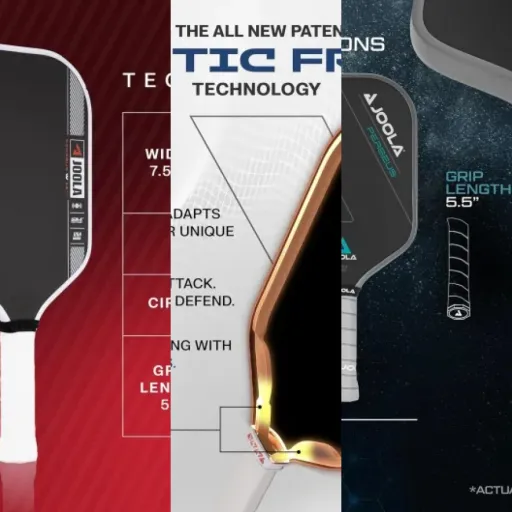
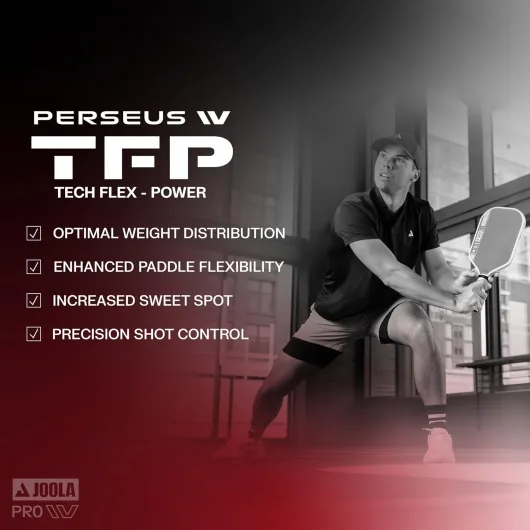
Spec-wise, JOOLA advertises the TechFlex Power (TFP) technology, a charged carbon surface, and a 16 mm reactive honeycomb core. In plain language: thick core for control and stability, textured carbon for spin and a bit of extra pop, and supposedly better energy return. Most of this you can feel in play more than you can see. The paddle doesn’t scream “tech” at first glance; it just looks like a standard modern carbon pickleball paddle.
Overall, the presentation is pretty solid but basic. You’re paying for the paddle itself and the brand, not for a premium unboxing experience. If that matters to you, you might be a bit underwhelmed. If you care more about what happens on court than in the living room, the no-frills approach is fine, but I still think a simple cover should be standard at this price.
Pros
- Very good control and forgiveness, especially on dinks, drops, and resets
- Textured carbon face provides solid spin and a satisfying pop on the sweet spot
- Comfortable balance and low vibration, with decent durability from the carbon frame and edge guard
Cons
- Power is only average; you need good technique to generate pace
- Price partly reflects branding, with no extras like a paddle cover included
- Some reports of quality control/condition issues when bought online
Conclusion
Editor's rating
The JOOLA Pickleball Paddle Pro IV Ben Johns Perseus Pro IV 16 is a solid choice if you’re looking for control, spin, and a forgiving feel, and you’re okay with giving up some free power. The 16 mm honeycomb core and carbon face make dinks, resets, and blocks easier to manage, and the textured surface helps you put decent spin on serves and drives. Comfort is good, with manageable weight and low vibration, and durability looks reassuring after several weeks of play. It feels like a proper tool for players who like to think their way through points instead of just swinging as hard as possible.
On the flip side, the paddle doesn’t deliver huge power unless your technique is already strong. If you’re hoping the Ben Johns branding will magically add speed to your shots, that’s not going to happen. The lack of extras in the box and some reported issues with paddles arriving in less-than-new condition also hurt the overall value a bit. For the price, you’re clearly paying partly for the name and certifications. I’d recommend this paddle to intermediate and up players who play regularly, value control over brute force, and want a USAP-certified, pro-style paddle that feels consistent and stable. If you’re a beginner on a budget, or a power-hungry player who wants a rocket off the face, you might be better off looking at other options in the same price range.