Summary
Editor's rating
Is it worth the money compared to other paddles?
Shape, balance, and how it actually feels in hand
Grip, feel, and fatigue after a couple of long sessions
Raw carbon face and thick core: what it means in real play
Build quality after a few weeks of real use
On-court performance: control first, power second
What you actually get with the Halo Control XL
Pros
- Very good control and consistency on dinks, drops, and resets
- Raw carbon face provides noticeable spin on serves and rolls
- Comfortable, cushioned grip and soft feel that’s easy on the arm
Cons
- Less free power than thinner, power-focused paddles
- No cover or extras included despite mid-range pricing

Specifications
View full product page →| Brand | Selkirk Sport |
Control paddle for people who actually like to dink
I’ve been playing pickleball 3–4 times a week for a few years now, mostly rec play with some low-level tournaments on weekends. I picked up the Selkirk SLK Halo Control XL (the green one, 16 mm "Control" core) because I wanted more control and spin than my cheap composite paddle, without paying the full price of the high-end Selkirk models. I’ve used it for about three weeks now, roughly 15–18 hours of play, indoors and outdoors.
Right away, the paddle feels like it’s built for people who like to slow the game down: lots of dinks, resets, and third-shot drops. The weight range (around 7.7–8.0 oz) sits in that middle zone where you still have decent punch, but you’re clearly not holding a pure power paddle. If you’re coming from a big-box store paddle, it’ll feel more solid and a bit more head-heavy, but in a good way for control.
The main thing that stood out in the first few sessions was the raw carbon face and how easily it grabs the ball. Even without changing my swing much, I was putting more spin on serves and rolls. It doesn’t magically fix bad technique, but it definitely helps the ball dip and stay in. The sound is a bit muted and “thuddy” compared to my old fiberglass paddle, which took a couple of games to get used to.
Overall, first impression: this is a control-first paddle with legit spin, decent power if you swing through, and a shape that feels forgiving. It’s not perfect and there’s better pure power out there, but if you mainly care about consistency and fewer balls flying long, it does the job pretty well.
Is it worth the money compared to other paddles?
In terms of value for money, I’d call the Selkirk SLK Halo Control XL good but not dirt cheap. You’re paying for a legit raw carbon face, a thicker control core, and a known manufacturer. It’s not as expensive as top-end pro models, but it’s clearly a step above entry-level Amazon specials. I grabbed mine during a sale, and at that price it felt like a very fair deal. At full price, it’s still reasonable if you actually care about control and spin and plan to play regularly.
Compared to random no-name paddles that claim “carbon” but feel dead or inconsistent, the Halo Control really does play better: bigger sweet spot, more predictable response, and more spin. On the other hand, if you already own a high-end raw carbon paddle, this isn’t some big upgrade; it’s more like a solid mid-high tier option for people who don’t want to pay the absolute top price. The Amazon rating of 4.7/5 with comments like “good racket for the price” and “bon contrôle pour le jeu près du filet” match my experience: you’re getting what you pay for.
Where the value could be better is the lack of extras: no cover, no overgrip, nothing. Also, if you’re a pure power player, you might feel like you’re paying for control features you don’t really want. In that case, a thinner, more power-focused paddle in the same price range might suit you more. But if you’re in that beginner-to-intermediate+ range wanting to build a soft game, this paddle gives you a legit tool without jumping all the way into the most expensive segment.
So overall, I’d say value is solid: not a steal, not overpriced. It makes sense if you’re playing at least once or twice a week and want a reliable, spin-friendly control paddle from a recognized brand, without going full pro-budget.
Shape, balance, and how it actually feels in hand
The design is pretty straightforward but thought-through. The 16" length with a 7.85" width gives you that elongated look without going into extreme skinny territory. On court, that translates to a bit more reach on overheads and at the kitchen, while still giving you enough width so you’re not whiffing everything off the edge. The sweet spot feels slightly higher than dead center, which I like for volleying and blocking at the net.
Balance-wise, my paddle came in at about 7.9 oz on a kitchen scale and feels slightly head-heavy, but not in a tiring way. The extra weight in the head helps with stability on blocks and resets. When I’m defending hard drives, the paddle doesn’t twist as much in my hand compared to my lighter composite stick. The trade-off is that super-fast hands battles at the net take a tiny bit more effort, but I got used to it after a couple of sessions.
Visually, it’s pretty clean: dark carbon face with simple branding and a lime green accent. Nothing fancy, but at least it doesn’t look cheap or overloaded with graphics. The edges are protected with a standard edge guard, which so far has handled a few scrapes with the court and fence without chipping. I’ve hit the edge on low digs a couple of times, and besides some superficial scuffing, nothing serious has happened.
From a practical point of view, the design favors players who like to play a controlled, slightly more technical game. If you stand at the baseline and try to crush every ball, the paddle works, but it’s clearly not optimized for that. It shines more when you’re at the kitchen, moving your wrist around, rolling balls, and placing shots. Overall, the design isn’t flashy but it’s smart, and it supports the control identity the paddle is sold with.
Grip, feel, and fatigue after a couple of long sessions
Comfort-wise, this paddle is pretty solid but not perfect. The SLK faux leather grip is one of the better stock grips I’ve tried in this price range. It’s slightly cushioned, has a tacky feel, and doesn’t get too slick when your hands get sweaty. I played a couple of two-hour sessions without overgrip, and while my hand was a bit damp, the paddle didn’t start twisting or slipping. Eventually I wrapped an overgrip on it just out of habit, but you can totally play with it as is.
The grip size feels a hair bigger than the 4.25" spec, at least compared to my other paddles labeled the same. For my medium-sized hands, it’s comfortable, but if you have very small hands, you might prefer something slimmer or add a thinner replacement grip. One of the Amazon reviews mentioned it worked well for a woman’s hand, and that matches what a friend of mine (small-handed female player) said: chunky at first, but fine after a few games.
On contact, the paddle has a muted, soft feel. There’s not a lot of vibration or ringing, even on off-center hits. That’s nice if you have elbow or wrist sensitivity. A buddy with a history of tennis elbow tried it and said it felt easier on his arm than his stiff, thinner-core paddle. The flip side is that you lose some of that “lively” pop feeling; if you like a very crisp response, this might feel a bit dull.
In terms of fatigue, the roughly 7.8–7.9 oz weight is manageable for long sessions. After three back-to-back games, my arm felt fine. The slightly head-heavy balance can be felt in fast kitchen exchanges, but it didn’t feel like a workout tool. Overall, comfort is a strong point: good grip, soft feel, and no weird shocks. Not luxurious, but practical and friendly to regular play.
Raw carbon face and thick core: what it means in real play
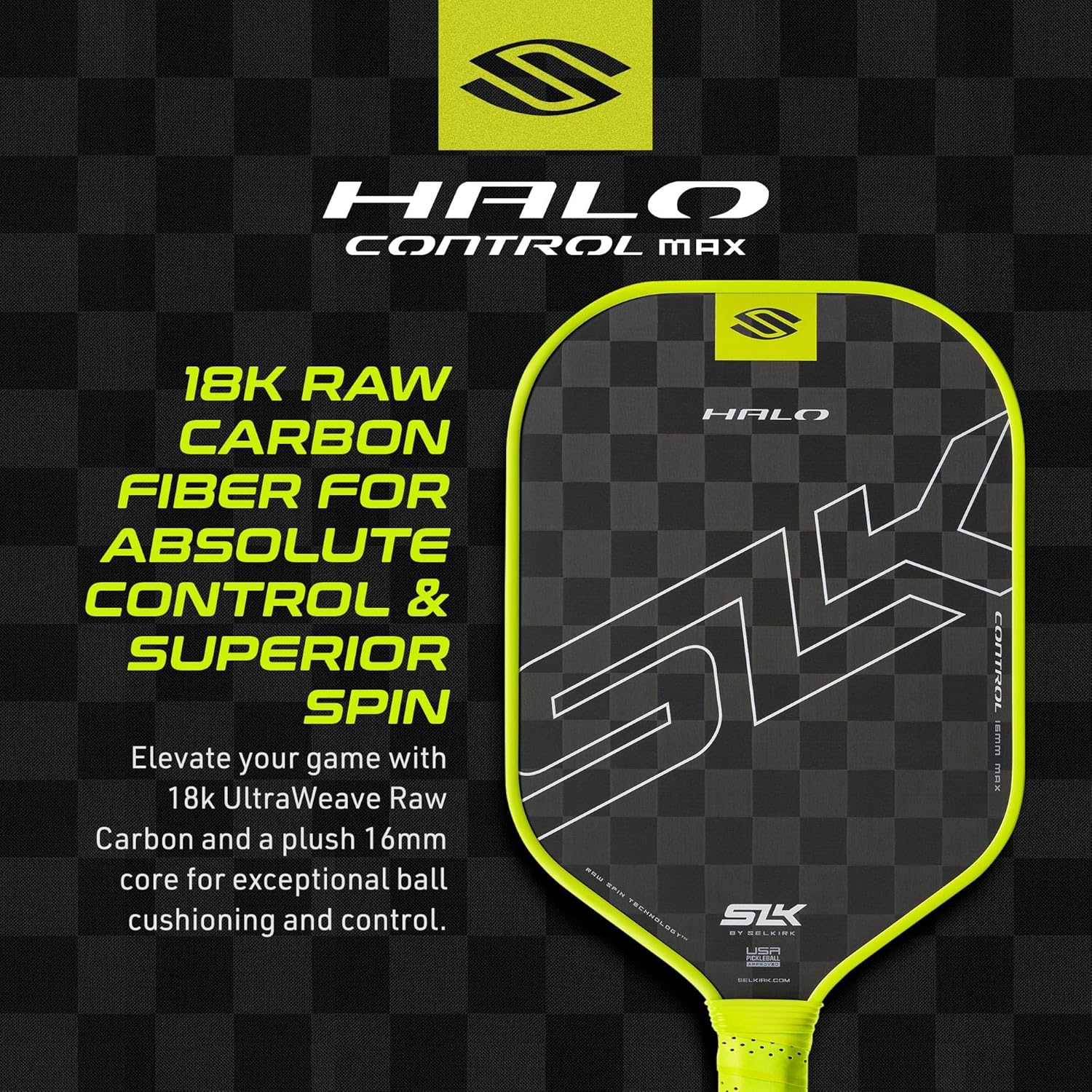
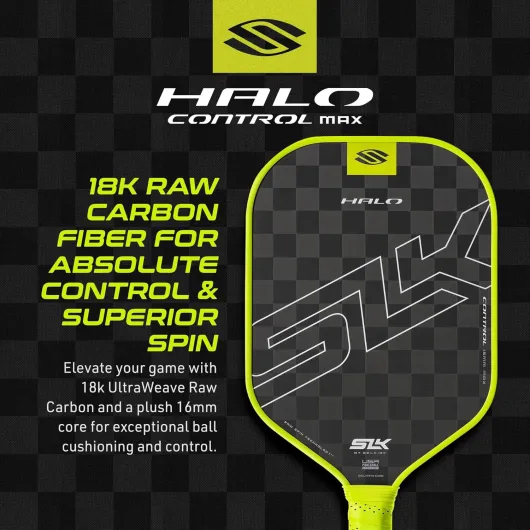
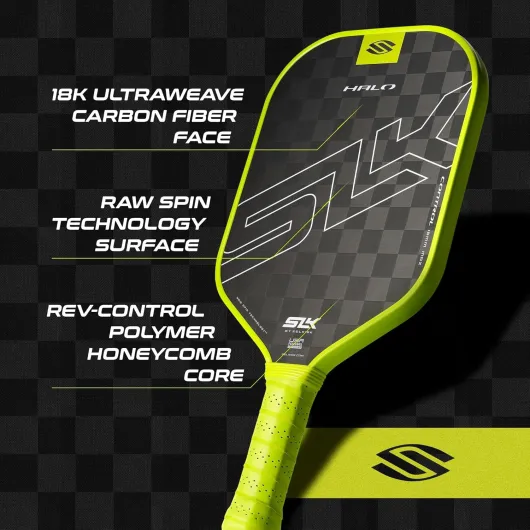
The big selling point here is the 18k UltraWeave raw carbon fiber face combined with a 16 mm Rev-Control polymer core. In normal words: thick core for control and a rough carbon surface for spin. Compared to my older fiberglass paddle, the ball sinks into the face a bit more, and you feel like you have that extra split second to direct it. On soft shots, that makes a real difference. My third-shot drops and dinks stopped sailing long as often, even when I was a bit late.
The raw carbon texture is not just a buzzword. If you rub your fingers over the face, you can clearly feel the roughness. On court, that helps a lot with topspin serves, roll volleys, and shaped drives. I’m not a spin wizard, but I noticed balls dipping in that used to go long with my smoother paddle. It also helped with slice returns; the ball stayed low and skidded more. It doesn’t magically add 50% spin to your game, but it definitely gives you more grip on the ball if you already try to brush.
The 16 mm core is clearly tuned for control and a big sweet spot. Mishits near the edges still lose power, but they’re less punishing than on thinner paddles I’ve used. When I was tired and not hitting perfectly, the Halo Control still put the ball in play more often than my 13 mm paddle. The downside of that thick core is that raw power is a bit muted. You can still hit winners, but you have to swing through. If you rely on the paddle to do the work, you might find it a bit tame.
Overall, the materials feel solid and modern. It’s basically using the trendy raw carbon tech but at a slightly more accessible level than top-tier pro models. For the price, the build feels fair. I haven’t had any delamination, weird buzzing, or dead spots so far, and I’ve used it in mixed temperatures, indoors and outdoors. Time will tell, but after a few weeks, the materials look and feel like they can handle regular play.
Build quality after a few weeks of real use
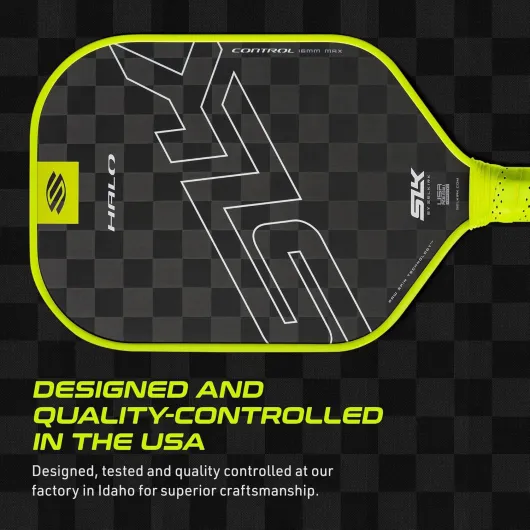
Durability is always tricky to judge in just a few weeks, but I can at least share what I’ve seen so far. I’ve used the Halo Control XL for roughly 15–18 hours of play, both indoors on gym floors and outdoors on rougher courts. The edge guard has taken a few hits from low digs and one clumsy drop on concrete. It has some scuffs, but no cracks, peeling, or gaps where the face meets the guard. That’s a good sign, because some cheaper paddles start separating there pretty fast.
The raw carbon face still looks in good shape. The texture is slightly smoother in the main contact zone compared to day one, but it’s still clearly grippy to the touch and on the ball. I’m not seeing any chips, dead spots, or weird buzzing sounds inside the core. I’ve also left it in a warm car once (not recommended, but it happens), and it didn’t warp or show any obvious damage afterward.
The grip has held up decently. The faux leather outer layer hasn’t started peeling or shifting, and the stitching and tape are still in place. I sweat a fair amount, and after wiping it down post-session, it’s stayed in good condition. Over time I’d expect to regrip it like any other paddle, but there’s nothing worrying after the first few weeks. One Amazon review mentioned good quality, and that lines up with what I’m seeing.
Of course, this is not a tank; if you constantly slam it on the ground or bang it against fences, you’ll eventually see damage. But for normal use, the build feels solid for the price. No red flags so far. If anything changes with longer-term use (face wearing out too fast, core going dead), that would be the main concern, but based on the current condition and other user ratings (4.7/5), it seems to hold up reasonably well.
On-court performance: control first, power second
This is where the Halo Control XL makes the most sense. At the net, the paddle shines. Dinks, blocks, and resets feel really controlled. The thick core and big sweet spot help you keep the ball low without having to baby every shot. When I was under pressure and just trying to get the ball back into the kitchen, the paddle did a good job of absorbing pace and dropping the ball short instead of popping it up. A couple of my regular partners even commented that my soft game looked more consistent with this paddle compared to my old fiberglass one.
For serves and returns, the raw carbon face helps with spin. My topspin serves kicked a bit higher and dipped in more often. Slice returns stayed low, which made life harder for the opponent at the net. Power-wise, serves are decent but not huge. If you really swing, you can still get a heavy ball, but compared to a dedicated power paddle, you’ll notice you have to work more for it. On groundstrokes, you can drive the ball, but the paddle feels like it’s telling you, “Let’s place it smart instead of just smashing it.”
Where it really helps is third-shot drops and roll shots. With my previous paddle, my drops were very hit or miss, especially under pressure. With the Halo Control, I’m getting more drops to land in the kitchen, even if my swing isn’t perfect. The extra dwell time and softer feel make it easier to judge the depth. Roll volleys from the mid-court also feel more controlled; I can brush and aim for the opponent’s feet without spraying as much.
The downside: if your style is all about big drives and put-aways, you might find it a bit underwhelming. You can still finish points, but you won’t get the same free power as with a thinner-core power paddle. In hands battles, it’s stable but not lightning quick; players who love ultra-light setups might feel a bit slowed down. But for most rec and intermediate players who want more balls in and fewer unforced errors, the overall performance is very solid and lines up well with the “Control” name.
What you actually get with the Halo Control XL
On paper, the Selkirk SLK Halo Control XL checks a lot of the boxes players talk about right now: 16 mm Rev-Control polymer core, 18k UltraWeave raw carbon fiber face, USAPA approved, and a weight around 7.7–8.0 oz. The "XL" here is Selkirk’s elongated-ish shape at 16" x 7.85", which is basically a slightly longer paddle with a bit of extra reach but still a decent width. It’s sold as an all-around, control-focused option, not a rocket launcher.
Out of the box, it’s pretty simple: you get the paddle and that’s it. No cover, no extras, just some cardboard and plastic. For the price point, a basic cover would have been nice, but it’s not a deal breaker. The green color looks like the product photos: bright lime accents on a mostly dark face. It’s not flashy in a fancy way, but it’s easy to spot in a bag with other paddles.
The grip is listed as 4.25" circumference with a handle length of around 4.85". In real life, it feels slightly thicker than some 4.25" grips I’ve used. If you have very small hands, you might notice it, but most people around my group (men and women) said it felt fine after a couple of games. The faux leather grip has a soft, tacky feel, and there’s enough padding that mishits don’t sting as much as on some harder handles.
In terms of target player, I’d say the presentation matches what you get: a control paddle that any level can use, but that really makes sense for intermediate players who are starting to care about spin, drops, and consistency more than just blasting the ball. Beginners can handle it, but they might not fully use the spin potential yet. If you’re already into the whole “soft game” thing, the specs and feel are pretty aligned with that style.
Pros
- Very good control and consistency on dinks, drops, and resets
- Raw carbon face provides noticeable spin on serves and rolls
- Comfortable, cushioned grip and soft feel that’s easy on the arm
Cons
- Less free power than thinner, power-focused paddles
- No cover or extras included despite mid-range pricing
Conclusion
Editor's rating
After a few weeks with the Selkirk SLK Halo Control XL, my take is pretty simple: if you like control, spin, and a softer feel, this paddle does the job well. The 16 mm Rev-Control core and 18k raw carbon face genuinely help with dinks, drops, and spin serves. It’s stable on blocks, easy on the arm, and the sweet spot is forgiving enough that you don’t get punished for every slight mishit. The grip is comfortable out of the box, and the overall build feels solid for regular play.
It’s not perfect, though. Power is decent but not huge, so if your whole game is smashing and ripping drives, you might feel like you’re working harder than with a thinner power paddle. There are no extras in the box, and at full retail it’s not a bargain-bin option. But considering the performance and the 4.7/5 user rating, the price feels justified if you’re serious about improving your soft game.
I’d recommend this paddle for beginners who plan to stick with the sport, and especially for intermediate players who are starting to care about spin, consistency, and playing smart at the kitchen. If you already own a high-end pro carbon paddle, this won’t suddenly change your life. And if you only want raw power, you should look at a thinner, more aggressive core. For everyone else who wants a reliable, control-focused paddle that feels modern and well-built, the Halo Control XL is a pretty solid choice.