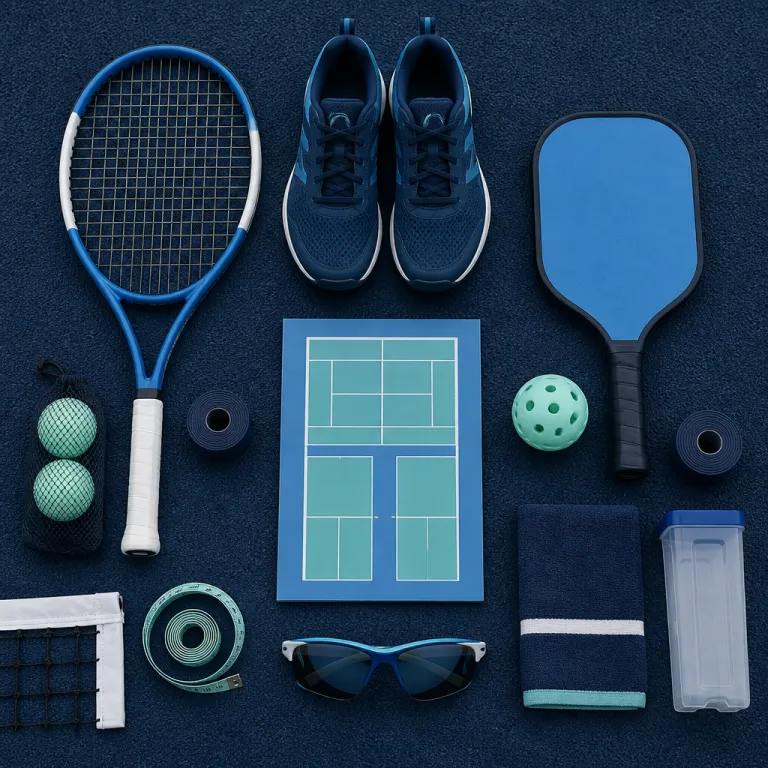
What is the difference between tennis and pickleball as a sport
When people ask what’s the difference between tennis and pickleball, they are really comparing two racket sports that share a family resemblance but feel very different once you start playing points. The tennis game grew around powerful groundstrokes on a large court, while pickleball developed as a more compact sport that rewards control, angles, and quick reactions between players at the net. Both games are played with a ball over a net, yet the rhythm of each rally and the physical demands on players differ in very specific ways.
In tennis, players use a strung racket to hit pressurized tennis balls across a tennis court that measures about 78 feet (23.77 metres) long and 27 feet (8.23 metres) wide for singles. In pickleball, players use a solid pickleball paddle to strike a perforated plastic ball on a pickleball court that is only 44 feet (13.41 metres) long and 20 feet (6.10 metres) wide, which means the court size is much smaller and rallies unfold at closer range between opponents. This smaller court changes how the game is played, because players reach the ball with fewer steps and spend more time in fast exchanges at the kitchen line rather than in long baseline rallies.
Both sports are usually played as singles or doubles, but the tempo and intensity feel different for most players. Tennis players often cover many feet of distance in a single point, while pickleball players move in shorter bursts and rely on soft shots, dinks, and quick volleys between pickleball paddles at the non-volley zone. If you are choosing between tennis and pickleball as your main sport, you will notice that tennis rewards endurance and heavy topspin, whereas pickleball rewards touch, anticipation, and smart placement of balls.
Net height, serve rules, and how rallies unfold between tennis and pickleball
Another key part of what’s the difference between tennis and pickleball lies in the net, the serve, and how each rally develops. A standard tennis net is about 3.5 feet (1.07 metres) high at the posts and 3 feet (0.91 metres) at the centre, while a pickleball net is slightly lower at roughly 3.25 feet (0.99 metres) at the posts and 34 inches (0.86 metres) at the centre, which subtly changes how high the ball must travel between players. This lower pickleball net encourages flatter shots and faster exchanges at the kitchen line, whereas the higher tennis net combined with heavier tennis balls favours looping topspin and higher trajectories.
The serve in tennis is an overhead motion that can reach very high speeds, and many tennis players build their entire game around a powerful first serve that pushes opponents far behind the baseline. In pickleball, the serve is underhand and must be hit below the waist with the paddle, and it must land beyond the non-volley zone, which means the serve is more about starting the game than winning free points between pickleball opponents. Because the serve is less dominant in pickleball tennis style play, rallies tend to last longer in terms of shot count, and the emphasis shifts to soft control, patient dinking, and strategic placement of balls rather than outright power.
If you want a deeper technical breakdown of net height and its impact on play, you can read a detailed comparison of pickleball net and tennis net dimensions in this guide to net heights for pickleball and tennis. Those net differences between tennis and pickleball may seem small in centimetres, yet they influence how high players clear the net, how aggressively they can aim at the lines, and how comfortable beginners feel when they first learn to play. For many new players, the lower pickleball net and underhand serve reduce intimidation and make the sport feel more accessible than traditional tennis.
Court size, layout, and how space shapes the game
Space on the court is one of the most visible differences between tennis and pickleball, and it strongly affects how each sport is played. A full tennis court is about 78 feet (23.77 metres) long and 36 feet (10.97 metres) wide for doubles, which gives players a very large area to cover during a game. By contrast, a pickleball court is only 44 feet (13.41 metres) long and 20 feet (6.10 metres) wide, so the smaller court compresses the action and keeps players much closer to the net and to each other.
Because tennis courts are so large, tennis players often rely on deep groundstrokes, heavy topspin, and lobs that push opponents far behind the baseline, creating long running distance between shots. On pickleball courts, the compact court size and the presence of the non-volley zone, also called the kitchen, encourage players to move forward and engage in quick exchanges at the net with their paddles. This spatial difference between pickleball and tennis means that footwork patterns, recovery steps, and tactical positioning feel very different even though both sports use a similar scoring concept of points and games.
If you are trying to choose the right playing space for your needs, a detailed explanation of pickleball court versus tennis court layouts can help you decide which game suits your body and schedule. You can explore a full breakdown of tennis court and pickleball court dimensions in this analysis of court size for tennis and pickleball, which clarifies how many courts fit into a given facility. In practice, several pickleball courts can fit inside one tennis court, so clubs and municipalities can host more players and more games in the same space, which partly explains the rapid growth of pickleball as a community sport.
Equipment differences between tennis and pickleball balls, paddles, and feel
When you hold the equipment in your hands, what’s the difference between tennis and pickleball becomes very tangible. Tennis uses a strung racket and pressurized tennis balls covered in felt, which produce significant spin, pace, and a heavier impact on the arm. Pickleball uses a solid pickleball paddle and a hollow plastic ball with holes, which creates less spin, a softer impact, and a distinct sound when the ball is played between paddles at the net.
The average tennis racket is longer and heavier than a typical pickleball paddle, and tennis balls travel faster and bounce higher on the court surface, especially on hard courts. Pickleball paddles are usually made from composite, graphite, or polymer materials, and they are shorter and lighter, which helps players react quickly at the net on a smaller court where balls arrive in rapid succession. Because the ball in pickleball is lighter and slower than a tennis ball, players have more time to position their feet and paddle, which makes the sport more accessible for beginners and for older athletes returning to racket sports.
Many tennis players who transition to pickleball tennis style play notice that their existing tennis equipment does not transfer directly, so they invest in specific pickleball paddles and shoes suited to the smaller court and different movement patterns. A quality pickleball paddle will offer a balanced mix of control and power, while a good tennis racket is often tuned for spin and pace from the baseline. If you enjoy table tennis, you may find that the touch and reflexes used at the pickleball net feel closer to that sport than to traditional baseline tennis, even though the court and equipment are obviously larger than a table.
How movement, fitness, and injury risk compare between tennis and pickleball
Physical demands are central to understanding what’s the difference between tennis and pickleball for your body and long term health. Tennis is usually played on a larger court that requires more running, more abrupt changes of direction, and more overhead motions, which can stress the shoulders, knees, and ankles over many games. Pickleball, played on a smaller court with an underhand serve and shorter rallies in terms of distance, often places less cumulative load on the joints, although the quick lateral steps near the net still require good balance and strength between the legs.
On a full size tennis court, players may sprint several metres in a single point, especially when chasing lobs or wide serves, and this repeated high impact movement can be demanding for recreational athletes. On a pickleball court, the shorter court size means players usually move fewer metres per rally, but they perform many small adjustment steps and quick lunges at the kitchen line, which challenges stability and reaction time between pickleball partners. For many adults returning to racket sports after a break, the reduced running in pickleball makes the sport feel more sustainable, while still providing a strong cardiovascular workout and coordination training.
In both sports, proper footwear and warm up routines are essential pieces of equipment that help prevent injuries and keep players on the court longer. Tennis shoes are designed for the sliding and longer strides seen on tennis courts, whereas shoes for pickleball emphasize grip and quick starts on a smaller court where the ball can change direction quickly. If you are unsure which sport will suit your current fitness level, consider trying both tennis and pickleball in short sessions, paying attention to how your joints feel after each game and how comfortable you are moving between the baseline and the net.
Learning curve, strategy, and how to choose between tennis and pickleball
For many beginners, the learning curve is the most practical aspect of what’s the difference between tennis and pickleball when deciding where to invest time. Tennis technique involves complex grips, high speed serves, and heavy topspin strokes, so new players often need many hours of practice before they can rally consistently across the full length of a tennis court. Pickleball, with its underhand serve, lighter ball, and smaller court, usually allows players to rally and enjoy a game much sooner, which can be very motivating between friends and family members.
Strategically, tennis rewards powerful serves, deep groundstrokes, and aggressive patterns that open space on a large court, while pickleball rewards patience, soft dinks, and quick volleys at the net where players stand only a few feet apart. The differences between these tactical priorities mean that tennis pickleball crossovers must adjust their instincts when they switch sports, especially when they move from long baseline rallies to compact exchanges at the kitchen line. If you want to accelerate your progress in pickleball, training tools such as a portable rebounder or mini net can help you groove your dinks and volleys at home, and a product like this pickleball practice rebounder and mini net trainer offers a practical way to repeat key shots without needing a full court.
When choosing between pickleball and tennis as your main sport, think about your goals, your schedule, and your local facilities, including how many tennis courts and pickleball courts are available nearby. If you enjoy long rallies, powerful serves, and covering a large court, tennis may suit you better, while if you prefer social doubles play, quick net exchanges, and a smaller court, pickleball will probably feel more enjoyable. Many players now treat pickleball tennis combinations as complementary, using pickleball to build touch and reflexes while still enjoying the tradition and challenge of the classic tennis game.
How pickleball and tennis fit into facilities, communities, and other racket sports
Beyond technique and equipment, what’s the difference between tennis and pickleball also shows up in how clubs and communities organize their facilities. Because a standard tennis court is so large, venue managers can often convert one tennis court into several pickleball courts, which increases capacity and allows more games to be played at the same time. This flexibility has encouraged many sports centres to add pickleball courts alongside existing tennis courts, creating mixed environments where both sports thrive between different age groups.
From a programming perspective, tennis has a long tradition of structured coaching, junior pathways, and sanctioned tournaments, while pickleball is rapidly building its own competitive circuits and social leagues. The smaller court and lighter equipment in pickleball make it easier to run inclusive events where players of different ages and abilities can play together, and this social aspect is a major difference between pickleball and some more formal tennis environments. At the same time, advanced pickleball players now train with the same seriousness as high level tennis players, using drills, video analysis, and strength work to refine their game.
When you compare pickleball to table tennis, you can see another layer of connection between racket sports that rely on quick reactions and precise placement of balls over a net. Table tennis is played on a much smaller surface, yet the emphasis on spin, angles, and timing feels familiar to many pickleball players who spend most of the game near the non-volley zone. Whether you choose tennis, pickleball, or a mix of both, understanding the structural differences between the sports, from court size to equipment and community culture, will help you make informed decisions about where to invest your time and energy.
Key statistics about tennis and pickleball
- According to the Sports & Fitness Industry Association’s 2023 report on U.S. participation trends, pickleball participation in the United States grew by more than 150 percent over the previous three years, while tennis participation grew at a slower but steady rate over the same timeframe, highlighting different growth dynamics between the two sports.
- Standard court dimensions show that a tennis court playing area is roughly 196 square metres for singles and about 260 square metres for doubles, while a pickleball court is about 81 square metres, meaning that approximately three pickleball courts can fit into the space of one tennis court in many facilities when you account for run-off areas and safe spacing between courts.
- Typical net heights differ slightly, with a tennis net standing about 0.91 metres high at the centre and a pickleball net about 0.86 metres, a difference of roughly 5 centimetres that still has a noticeable impact on shot trajectories and margin for error.
- Recreational match duration often varies, as a casual doubles tennis match can last 90 minutes or more, while many social pickleball games to 11 points finish in 15 to 25 minutes, allowing players to rotate partners and play multiple games in a single session.
- Equipment costs for beginners are generally lower in pickleball, where a decent paddle and a pack of balls can cost significantly less than a quality tennis racket, restringing, and multiple cans of tennis balls over a season, which can influence new players choosing between the sports.
FAQ about the difference between tennis and pickleball
What is the main difference between tennis and pickleball for beginners
The main difference for beginners is that pickleball is played on a smaller court with an underhand serve and a lighter plastic ball, so it is usually easier to rally and keep the ball in play. Tennis uses a larger court, a heavier felt covered ball, and an overhead serve, which require more technique and physical effort to control. Many new players find they can enjoy full games of pickleball sooner, while tennis may demand more coaching and practice at the start.
Is pickleball easier on the joints than tennis
Pickleball is often easier on the joints because the court is smaller, the movements are shorter, and the serve is underhand, which reduces stress on the shoulders and knees. Tennis involves more running over long distances, more abrupt stops, and more overhead motions, all of which can increase impact on the body over time. That said, both sports still require proper footwear, warm up, and good technique to minimize injury risk.
Can tennis players switch to pickleball quickly
Many tennis players switch to pickleball quickly because they already understand basic racket skills, footwork, and net play. However, they must adjust to the different ball, the solid paddle, the lower net, and the importance of soft dinks and kitchen play, which are less common in traditional baseline tennis. With a few weeks of focused practice, most tennis players can become competitive in recreational pickleball doubles.
Can a tennis court be converted into pickleball courts
Yes, a standard tennis court can be converted into multiple pickleball courts by adding new lines and portable nets. Because a pickleball court is much smaller than a tennis court, facilities often fit two to four pickleball courts within the footprint of one tennis court, depending on layout and safety margins. This conversion allows clubs and municipalities to serve more players and offer both sports without building entirely new infrastructure.
Which sport is better for overall fitness, tennis or pickleball
Tennis generally provides a higher intensity cardiovascular workout because of the larger court, longer rallies, and greater running demands. Pickleball still offers strong fitness benefits, especially for coordination, balance, and quick reactions, but with less sustained sprinting and impact on the joints. The better sport for your fitness is the one you will play consistently, so personal enjoyment and access to courts should guide your choice.