Summary
Editor's rating
Value: strong performance, weak packaging, and not cheap
Design: classic Epic shape, modern face, basic packaging
Comfort: solid feel with decent vibration control, but not a featherweight
Materials: thick control core and a genuinely grippy carbon face
Durability: solid so far, but I’d still use a cover
Performance: control first, with enough pop and easy spin
What you actually get for your money
Pros
- Very controlled feel with a thick 16 mm core that helps on dinks, drops, and resets
- Grippy 12K raw carbon face makes it easy to generate topspin and slice
- Solid, thermoformed construction with a forgiving sweet spot and decent vibration dampening
Cons
- High price for a paddle that ships with basic packaging and no cover
- Leans more toward control than pure power, so not ideal if you only care about maximum pop

Specifications
View full product page →| Brand | Selkirk Sport |
A pricey paddle I actually kept in my bag
I’ve been messing around with pickleball paddles for a couple of years now, from cheap Amazon two-packs to some of the better-known carbon paddles. I picked up this Selkirk Sport Vanguard Pro Epic in midweight specifically to see if the hype around their “control with power” thing was real, or just marketing talk. I’m not sponsored, I paid for it, and I’ve been using it mainly in rec games 3–4 times a week plus a couple of round robins.
Right away, I noticed two things: the price bites a bit, and the paddle doesn’t feel like a toy. It’s clearly in the “serious player” category. The weight (around 8 oz / 0.29 kg) sits in that mid range where you can still react at the net but your drives don’t feel weak. I switched to this from a cheaper fiberglass paddle and the difference in feel on contact was pretty obvious after a single session.
Over roughly three weeks of play, I focused on three areas: how much control I really had on dinks and drops, how much free power it gave me on drives and serves, and how forgiving the sweet spot actually was when I got lazy with my footwork. I also paid attention to comfort – my elbow gets cranky with stiffer paddles – and whether the edgeless-style design caused any durability issues.
To keep it simple: it’s a good paddle for intermediate and up, especially if you like to play at the kitchen and still swing hard when you get a sitter. It’s not perfect, it’s not cheap, and there are definitely some compromises, but I didn’t feel like I’d wasted my money, which is already a good sign at this price point.
Value: strong performance, weak packaging, and not cheap
Let’s be honest: this Selkirk Vanguard Pro Epic is not a budget paddle. You’re paying premium money here, and that always raises the question: is it actually worth it, or are you just buying a logo? After using it for a good stretch, I’d say the value depends a lot on where you are in your pickleball journey. For a regular recreational player who’s already moved past the starter phase and plays a few times a week, the consistency, control, and spin you get from this paddle do justify the price more than I expected.
Compared to my cheap Target paddle, the difference is real: bigger sweet spot, more controlled touch on soft shots, and much easier spin. I also compared it to a mid-range carbon paddle a friend has (roughly half the price), and the Selkirk still felt a bit more solid and predictable, especially on resets and dinks. So you’re not just paying for branding; there is a noticeable performance bump, particularly if you care about control and spin.
On the downside, there are a few things that drag the value score down a bit. The packaging is barebones, no cover, no rigid box, which feels cheap at this price point. Also, if you’re a casual player who only hits once or twice a month, you probably won’t fully take advantage of what this paddle offers. In that case, it’s overkill, and a cheaper carbon or composite paddle will feel fine and save you a chunk of money.
So in terms of value, I’d put it like this: if you’re an intermediate or advanced player who actually uses their gear often and likes a control-focused paddle with real spin and solid build quality, the price, while high, is defensible. If you’re new to the game or very price-sensitive, there are better deals out there, and this one will feel like you’re paying a premium for features you don’t really use yet.

Design: classic Epic shape, modern face, basic packaging
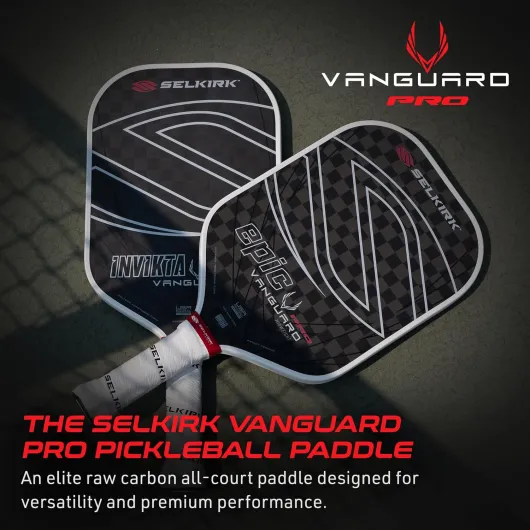
Design-wise, this is pretty restrained. The color I had was charcoal, so it’s mostly dark with some subtle graphics. If you’re into loud, neon paddles, this isn’t that. I actually liked the low-key look; it doesn’t scream across the court, which is fine by me. The Epic (all-around) shape feels very standard: not too long, not too wide, and it fills the hand the way a normal paddle should. That makes switching from entry-level paddles pretty easy – nothing weird to get used to.
The paddle uses this 360 Proto Molding and Flexfoam perimeter stuff. In practice, what I noticed is that mishits near the edge didn’t die as much as on my old fiberglass paddle. You still feel it when you hit off-center, but the ball doesn’t just fall off the paddle. That’s probably the combination of the thick core and the molded edge. It’s not fully edgeless in the gimmicky sense; it’s more like a clean edge that doesn’t catch the ball and feels solid when you tap it.
One downside on design is the packaging and included protection. It arrived in basically a soft bag, no hard case, no foam around the edges. At this price, that feels cheap. Another Amazon reviewer said the same thing in French, and I agree. For a premium paddle, I’d expect at least a semi-rigid cover or something that doesn’t make you nervous when the delivery guy tosses it. Functionally, the paddle was fine out of the box, but the first impression is a bit underwhelming.
In the hand, though, the design choices make sense. The face has a clear texture – you can feel the raw carbon weave under your fingers – and the transition from the handle to the face is smooth. The grip cap doesn’t dig into your palm on two-handed backhands. Overall, the design is practical more than flashy. It feels like they focused on playability and less on “wow” factor, which I’m okay with, but if you’re buying this as a gift, just know the unboxing experience is pretty plain.
Comfort: solid feel with decent vibration control, but not a featherweight
Comfort was a big one for me because my elbow gets sore with stiff or head-heavy paddles. The Vanguard Pro Epic sits in a midweight range, and you can feel that. It’s not ultra-light and flicky, but it’s also not a brick. After a couple of two-hour sessions, my arm felt fine, which was a pleasant surprise. The thick 16 mm core and the foam perimeter definitely help with vibration; mishits don’t buzz through the handle like they do on cheaper paddles.
The grip size at 4 1/4" is pretty standard. Out of the box, the grip felt slightly on the firmer side with a light tack. I added an overgrip for sweat and a bit more cushioning, and that made a big difference in comfort. With the overgrip, I could play full sessions without any hotspots or blisters. If you’ve got very small hands, you might find it a bit chunky with an overgrip, but for average hands it’s fine. The handle length is good for one-handed play and just enough for a compact two-handed backhand.
One thing to note: because this paddle has some real pop when you swing, if your technique is sloppy and you’re muscling the ball with your arm, you may still feel some strain over long sessions. This isn’t a super-damp pillow; it’s a control paddle with backbone. When I kept my strokes clean and used my legs and core, my elbow was happy. When I got lazy and arm-swinged my serves, I could feel it a bit more. So comfort is good, but you still need halfway decent mechanics.
In short, for an advanced-leaning carbon paddle, I’d rate comfort as above average. It’s more forgiving on the joints than a lot of thinner, stiff power paddles, but if you’re coming from a super soft, cheap composite, you’ll notice the extra stiffness. If you have serious elbow or shoulder issues, I’d try to test one before buying, but for most regular players, it’s very playable over long sessions.
Materials: thick control core and a genuinely grippy carbon face
The materials are where this paddle actually earns some of its price. The core is a 16 mm polypropylene honeycomb, which is thicker than the usual 13 mm budget paddles. In real use, that thickness gives you a softer, more controlled feel on contact. When you block a hard drive at the net, the ball doesn’t shoot off like a rocket – it sits on the paddle a split second longer, which makes it easier to keep it in. That’s the main thing I noticed switching from my thinner, cheaper paddle.
The face is a 12K quad-layer raw carbon fiber, which basically means four layers of fairly stiff carbon with a noticeable texture. When you drag your finger across it, you can feel the grip. On court, that translated into very easy topspin on serves and drives. I don’t have a lab to measure spin, but compared to my fiberglass paddle, I was getting more dip on cross-court drives and more kick on roll volleys without having to swing harder. The ball bites into the face instead of just sliding off.
The frame and shaft are also carbon fiber, and with the thermoformed build, the whole thing feels like one solid piece rather than a face glued to a core. When you tap around the edge, there aren’t any hollow or rattly spots. The Flexfoam perimeter is supposed to absorb vibrations and enlarge the sweet spot. I can’t see it, obviously, but I did notice fewer harsh vibrations on mishits compared to some cheaper paddles that ring in your hand when you catch the ball near the edge.
Overall, I’d say the materials feel pretty high-end, but you’re paying for it. If you’re the type who blows through cheap paddles or you’re starting to play tournaments, this level of build makes sense. If you only play once a month, the extra carbon layers and fancy core might be overkill. Still, from a pure materials point of view, nothing here feels gimmicky – it’s just a solid, stiff carbon paddle with a thick, control-focused core.
Durability: solid so far, but I’d still use a cover
Durability is always tricky to judge quickly, but after about three weeks of regular play (roughly 20+ hours), the Vanguard Pro Epic has held up pretty well. The edge area, with the so-called Aero-DuraEdge and Flexfoam, still looks intact. I’ve had a few clashes at the net and a couple of minor taps on the court, and there are only light cosmetic marks, nothing that looks like structural damage. The face hasn’t started to peel or separate, which I’ve seen on some cheaper paddles.
The textured carbon face has kept its grip so far. I don’t baby my gear, but I also don’t drag it on the ground. After all those sessions, the surface still feels rough enough to generate spin. No visible dead spots or soft spots in the core either. When I bounce a ball around the face, the sound is consistent, which is usually a decent sign that the internal structure is still fine. The handle and grip wrap haven’t loosened or twisted.
My main complaint around durability isn’t the build itself but the lack of protective packaging and included cover. It ships in a simple bag, and that’s it. I immediately put it in an old paddle cover I had lying around because I didn’t trust tossing a bare $200-ish paddle into my bag with keys and water bottles. If you don’t already own a cover, I’d strongly suggest buying one, because the carbon face will scratch if you’re careless. The French Amazon reviewer calling out the flimsy packaging is right – at this price, they should protect it better from the start.
Overall, though, the paddle feels sturdy and well-built. No rattles, no loose edges, no weird flexing. If it keeps aging the way it has in the first month, I’d be confident using it as my main paddle for a long time. Just don’t expect the brand to do the protecting for you – you’ll need to take basic care of it yourself.
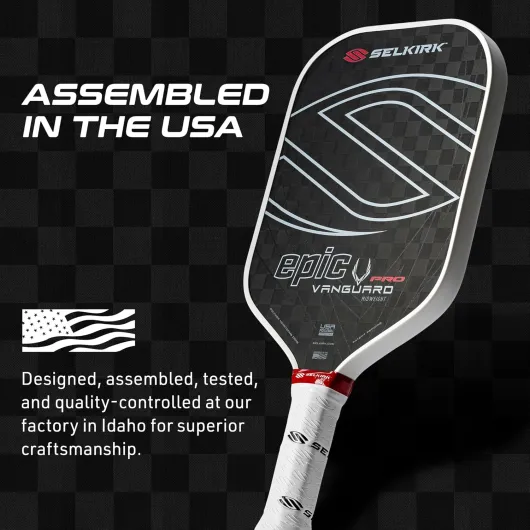
Performance: control first, with enough pop and easy spin
Performance-wise, this paddle leans clearly toward control with usable power, not a pure cannon. At the kitchen line, it feels very predictable. Dinks sit nicely, and I felt comfortable aiming close to the net tape without spraying balls long all the time. The thick core really shows up here: the ball doesn’t rebound wildly, so you can be pretty aggressive with your swing on dinks and still keep it short. Resetting hard drives from the baseline was also easier than with my old paddle – the ball tends to drop in instead of flying.
On serves and drives, there’s enough pop that you don’t feel undergunned. It’s not as explosive as some thinner thermoformed paddles I’ve tried, but when you swing through the ball, you get plenty of pace and a lot of spin. I was consistently pushing opponents back with deep, topspin-heavy drives, and I got more unforced errors from them just because the ball jumped up higher than they expected. If your game relies on heavy spin rather than pure flat power, this paddle fits that style really well.
At the net in fast exchanges, the midweight build is a nice balance. I could still react to speed-ups without feeling late, but the paddle had enough mass to punch volleys through when I had the chance. The sweet spot feels large – not magical, but forgiving. Off-center hits near the top still carried decent depth. Only real mishits on the very edge felt dead. Compared to my cheap Target starter paddle, the consistency across the face is noticeably better. Fewer random rockets or dead drops.
The downside is if you’re looking for a pure power paddle that bails you out with free speed on lazy swings, this isn’t it. You still have to swing properly to get the most out of it. For intermediate and advanced players who like to build points with control, spin, and then finish hard, the performance is very solid. For brand-new players or people chasing max power with minimal effort, there are cheaper or more power-focused options that might fit better.
What you actually get for your money
On paper, this thing sounds like a tech brochure: X5+ 16 mm polypropylene honeycomb core, 12K quad-layer raw carbon fiber face, 360 Proto Molding, Flexfoam perimeter, Aero-DuraEdge, and all that. In real life, what that boils down to is a thick control-oriented core with a pretty grippy carbon face and a slightly more solid, molded feel than the usual budget paddles. The version I used is the Epic shape (all-around) in midweight, which basically means a classic-sized head and a normal-length handle, not one of those extra-long elongated paddles.
The paddle is listed at around 0.29 kg (about 8.1–8.3 oz in my case when I weighed it with an overgrip), with a 4 1/4" grip. That grip size felt standard – not tiny, not huge. I added a single overgrip and it felt right for my medium hands. The balance is slightly head-heavy compared to my old Target starter paddle, but not by much. It’s enough that you notice more punch on drives and overheads without feeling like you’re swinging a hammer.
Selkirk markets this as an “advanced” level paddle, and I kind of agree. A total beginner can use it, but you’re paying for details like touch on soft shots, consistent bounce across the face, and spin. If you’re just learning how to keep the ball in, a cheaper paddle will do the job. Where this one starts to make sense is when you’re already trying to shape shots – topspin drives, heavy drops, and controlled dinks into tight windows.
One thing the listing doesn’t really show is that it ships as just the paddle – no cover, no case, nothing fancy. For this price, I would’ve liked at least a basic cover. A French reviewer on Amazon is right: the packaging is basically a bag, and that’s it. So in terms of what you physically get: one solid paddle, barebones presentation, and that’s all. No bells and whistles, you’re clearly paying for the paddle itself, not the extras.
Pros
- Very controlled feel with a thick 16 mm core that helps on dinks, drops, and resets
- Grippy 12K raw carbon face makes it easy to generate topspin and slice
- Solid, thermoformed construction with a forgiving sweet spot and decent vibration dampening
Cons
- High price for a paddle that ships with basic packaging and no cover
- Leans more toward control than pure power, so not ideal if you only care about maximum pop
Conclusion
Editor's rating
Overall, the Selkirk Sport Vanguard Pro Epic midweight is a strong control-oriented paddle with enough power and a very grippy carbon face. In real play, it shines in the soft game: dinks, drops, and resets feel predictable, and the thick 16 mm core helps keep the ball in when you’re under pressure. When you decide to swing, there’s plenty of pop on serves and drives, especially if you like using topspin. The build feels solid, the materials are clearly high-end, and after a few weeks of use there are no signs of structural issues.
It’s not perfect, though. The biggest downside for me is the value story: the paddle itself performs well, but the basic packaging and lack of a cover make the price a bit harder to swallow. It’s also clearly aimed at intermediate and advanced players; beginners won’t fully benefit from what it offers and might be better off saving money with a simpler paddle. If you’re a regular player who already understands the soft game and wants more consistency, spin, and a larger sweet spot, this is a solid upgrade and feels like a paddle you can grow with. If you’re more casual, or you just want raw power with less emphasis on control, you can probably find something cheaper that fits your needs better.