Summary
Editor's rating
Is it worth the price?
Open-throat shape: cool look, different balance
Handle length and feel: good for two-handed backhands
Hybrid face and composite frame: how it actually feels
Build quality after a couple of weeks
On-court performance: power, control, and spin in real games
What you actually get in the box
Pros
- Good power and solid spin thanks to the hybrid fiberglass face
- Extended handle and elongated shape work well for two-handed backhands and extra reach
- Fast, maneuverable feel from the open-throat, bladder-moulded frame design
Cons
- Leans more towards power than pure control, so touch shots take some adjustment
- Higher price with no included cover or extras and a white finish that shows dirt quickly

Specifications
View full product page →| Brand | Wilson |
Tennis racket vibes on a pickleball court
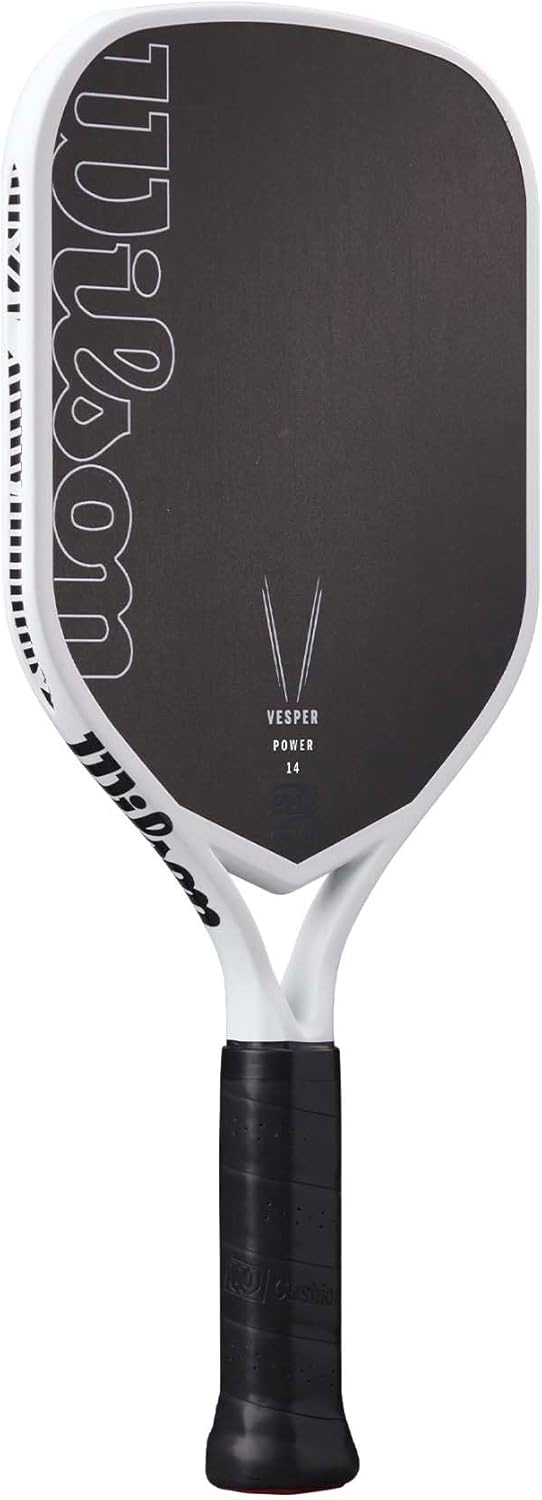
I’ve been playing pickleball 3–4 times a week for a while, and I’m very used to classic, solid paddles with a more squared-off shape. The Wilson Vesper Power 14 caught my eye because it looks a lot like a tennis racket with that open-throat frame. I played with it for about two weeks, mixing rec games and a small local ladder night, to see if it’s just a gimmick or if it actually brings something useful.
The short version: it’s clearly built for people who like to swing through the ball and generate their own power, especially if you have a tennis background. The elongated head and longer handle really stand out compared to most standard pickleball paddles. It doesn’t feel like a toy; it feels like a proper piece of sports gear with some thought put into the frame and materials.
That said, it’s not perfect. There’s a learning curve with the balance and the open-throat feel. If you’re coming from a big, thick, quiet control paddle, this one is going to feel quite different on the first few sessions. I had a couple of mishits and timing issues at the kitchen line before I got used to how it swings and how the sweet spot sits.
So this review is basically my straight feedback after those two weeks: how it plays, what I liked, what annoyed me a bit, and who I think will actually get value out of this instead of just paying for a cool-looking Wilson product. No marketing fluff, just how it felt on court.
Is it worth the price?
On the value for money side, this paddle sits in the higher price bracket, especially compared to basic composite paddles. You’re paying for the Wilson name, the unique open-throat design, and the hybrid materials. If you’re a casual player who hits the court once a month, it’s probably overkill. You can get something cheaper that will be perfectly fine for occasional games.
For regular intermediate or advanced players, it becomes a more interesting question. You get a paddle that offers real power, decent spin, and a design that actually changes how it plays, not just how it looks. If you have a tennis background and like the idea of a longer handle for two-handed backhands and a racket-like swing feel, the value improves a lot because you’ll actually use those features.
On the downside, there are other paddles in the same price range that offer slightly better touch and control, and some come with extras like covers or more protective edge guards. Here, you’re basically paying the full price for just the paddle. Also, if you’re more of a soft-game player who lives at the kitchen line, you might not fully benefit from the power-oriented design, which makes it feel a bit expensive for what you personally get out of it.
Overall, I’d say the value is good but not outstanding. It makes the most sense for players who: play often, like to attack, possibly come from tennis, and want something that feels familiar in the hand. If that’s you, the money feels reasonably spent. If you’re more budget-focused or fully control-oriented, there are cheaper or better-matched options that might suit you more.
Open-throat shape: cool look, different balance
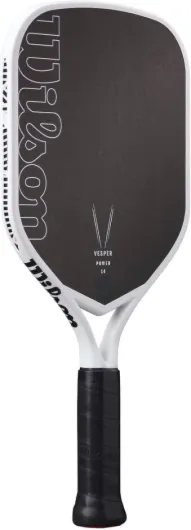
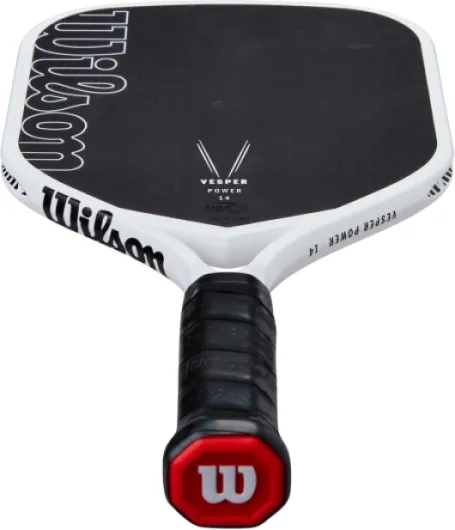
The design is the main talking point with this paddle. The open-frame, open-throat style really does change how it swings. Compared to a typical thick, solid-core paddle, this one feels faster through the air. I noticed it especially on quick exchanges at the net: when someone rifled a ball at my body, I could get the face in place a bit faster than with my chunkier control paddle. The elongated shape also gives you more reach on wide dinks and lobs, which helped me a couple of times when I was slightly out of position.
On the downside, that same design shifts the sweet spot slightly higher up the face than I’m used to. During the first few sessions, I had a few shots that felt a bit dead when I hit too close to the throat area. Once I adjusted and tried to strike the ball a bit higher on the paddle, it felt much better. If you’re used to traditional paddles, expect a short adjustment period where your contact point needs to move.
Visually, the mostly white color with clean lines looks nice, but it does get dirty fast. After one dusty outdoor session, the edges and grip already showed marks. If you’re picky about keeping gear looking fresh, you’ll be wiping it down a lot. The open throat also collects some dust and ball fuzz; nothing serious, just a small annoyance if you’re particular about gear cleanliness.
In practice, the design is not just for show. You really feel the quicker swing and the extra reach, especially if you come from tennis and like to take a more aggressive swing path. But it also means the paddle feels a bit less forgiving low on the face, so beginner or very casual players may find it less friendly at first compared to a more traditional, wide-body control paddle.
Handle length and feel: good for two-handed backhands
Comfort-wise, the extended one-piece handle is one of the big positives. I use a two-handed backhand sometimes, especially when I’m pushed deep, and the extra length makes that much easier. On this paddle, I could fit both hands comfortably without feeling cramped. Compared to my standard paddle with a shorter handle, this felt a lot closer to a tennis grip, which is great if you’re coming from that sport.
The stock grip size (4 1/4") is right in the middle. Out of the box it felt fine, but after a couple of sweatier sessions, I added an overgrip for more tack and slightly more thickness. With that, the paddle felt very secure in my hand, and I didn’t have any twisting on off-center hits. The one-piece handle construction feels solid; no creaks, no flex between handle and face, even when I really went after drives.
In terms of vibration and feel in the arm, it’s pretty comfortable. It’s not the softest paddle I’ve ever tried, but I didn’t feel any harsh shock, even when I caught the ball near the frame. I played a few long sessions back-to-back and didn’t notice any extra wrist or elbow fatigue compared to my regular setup. If you’re sensitive to vibration, I’d say this sits in the middle: not super damped, but also not pingy or annoying.
The only minor comfort downside for me is the elongated shape combined with the open throat. On quick reaction shots at the kitchen, it took a few games before my brain fully adjusted to where the sweet spot is, so early on I had some slightly jarring mishits. Once I adapted, it was fine, but it’s worth mentioning if you’re used to a more traditional, standard-length paddle with a big, obvious sweet spot in the center.
Hybrid face and composite frame: how it actually feels
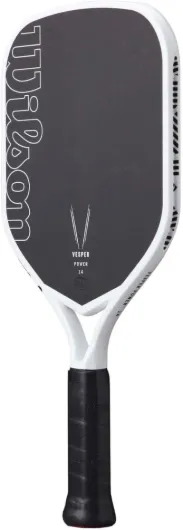
The paddle uses a fiberglass hybrid face with a 70% polypropylene / 30% carbon setup and a carbon fibre shaft / handle area. On court, this combo feels on the livelier side compared to full carbon control paddles. There’s a decent pop off the face without feeling like a trampoline. Drives from the baseline come off with good pace even when you don’t swing out 100%, which will help players who don’t have huge swings but still want some free power.
The surface has enough grit for spin. It’s not the sharpest texture I’ve felt, but it’s clearly there. I could get my usual topspin on drives and some slice on serves without having to overwork my wrist. If you’re a heavy spin junkie, there are paddles with rougher faces, but for normal play it’s pretty solid. After two weeks, the texture still felt the same; no obvious smoothing yet, but that’s something you only really judge after a couple of months.
The frame itself, made from synthetic resins / composites, feels sturdy and doesn’t flex in a weird way. Wilson talks about enhanced compaction and bend, but in real terms, what I noticed is a slightly softer impact feel than some stiff carbon paddles. There’s a bit of give on contact which makes blocks and resets feel more controlled, but it’s not a pillow; you still get feedback in your hand when you mishit or catch the ball near the edges.
Overall, the materials feel like they’re chosen for a balance of power and control, leaning slightly towards power. You’re not getting a super plush, dead feel here. It’s more of a modern, responsive face that rewards clean strokes. If you like a muted, very quiet paddle, this might feel a bit lively. If you like some pop and a clear sense of where you hit the ball, the material mix works pretty well.
Build quality after a couple of weeks
In terms of durability, two weeks isn’t enough to judge long-term, but I can at least talk about early signs. After several outdoor sessions, including some on rougher courts, the frame held up fine. No chips on the edges beyond tiny cosmetic marks, and no cracks or weird sounds from the bladder-moulded frame. I did accidentally clip the ground once on a low dig, and it left a small scuff but nothing that affected performance.
The hybrid face still looked and felt the same at the end of the test period. The grit was intact, and there was no obvious smoothing in my usual contact zone. I’d expect some gradual wear over months, like with any textured paddle, but nothing in these first weeks raised a red flag. The white color does show ball marks and dirt more than darker paddles, so cosmetically it will age faster, but that doesn’t mean it’s structurally weak.
The handle and grip area stayed tight with no looseness or twisting. I’ve had cheaper paddles where the handle starts to feel slightly wobbly after a handful of sessions; that didn’t happen here. The carbon fibre shaft / handle feels solid, and the one-piece design likely helps avoid the usual joint issues between handle and face.
With a 2-year manufacturer warranty from Wilson, I’m reasonably confident they expect this thing to hold up for regular players. Obviously, if you’re slamming it on the ground or constantly scraping it on concrete, nothing will survive that gracefully. But for normal intermediate/advanced play, the build quality and early durability seem pretty reliable. I’d rate it as solid so far, with the only complaint being more about how quickly the white surface shows wear, not about the actual structure.
On-court performance: power, control, and spin in real games
Let’s talk about how it actually plays. In terms of power, this paddle does its job. Drives and serves have good pace without much effort. I noticed my deep serves landing closer to the baseline more consistently compared to my thicker control paddle, and opponents had a bit more trouble attacking short returns. When I stepped in and ripped a forehand, the ball carried well, so if you like to attack from the baseline, you’ll probably enjoy this.
On the control side, it’s decent but not top-tier. Dinks and soft drops are manageable, but you have to be a bit more precise with your touch. The face has some pop, so if your hands are tense, you’ll occasionally send a dink a little higher or deeper than planned. After a few sessions, I adjusted by softening my grip and focusing on a shorter swing, and then it became more predictable. Still, if your whole game is soft touch and resets, there are more naturally controlled paddles out there.
Spin is pretty solid. I could hit topspin rolls and aggressive third-shot drops with enough bite to dip into the court. My slice serve also had some decent movement. It’s not crazy spin, but it’s definitely usable and consistent. I didn’t feel like I had to overcompensate to get the ball to dip, which is all I really ask from a hybrid face like this.
In fast exchanges at the net, the lighter, fast-swinging feel is a clear plus. I could get the paddle up quickly for blocks and counters, and the open-throat design didn’t feel unstable. The only time I felt slightly exposed was on off-center contact low on the face: the ball lost more energy than I expected. Once I trained myself to hit a bit higher on the face, that issue mostly disappeared. Overall performance: strong for intermediate to advanced players who like to attack and are willing to adapt for a few sessions.
What you actually get in the box
Out of the box, it’s pretty barebones: you get the Wilson Vesper Power 14 paddle and that’s it. No cover, no edge guard tape, no dampener gimmicks, nothing. For the price point this sits at, I would have liked at least a simple paddle cover, especially since the finish is mostly white and will show dirt and scuffs quickly. So if you grab this, budget for a cheap cover or towel in your bag.
The paddle itself is elongated, about 35 cm long and 15 cm wide, with an extended one-piece handle. Grip size is 4 1/4" (size 2), which felt pretty standard to me, similar to a medium tennis grip. If you like a thicker handle, you’ll probably want to add an overgrip right away. I wrapped one after the first session because I prefer a slightly chunkier feel and a bit more tack when my hands get sweaty.
The open-throat design is the first thing people commented on at the courts. It literally looks like a shrunk-down tennis racket without strings, which some players loved and others found a bit weird. Wilson calls it a bladder-moulded frame, which is a fancy way of saying the frame is one piece and hollow, so the weight distribution is more like a tennis racket than a classic solid-core paddle. In hand, it feels light and quick, not head-heavy.
Overall first impression: the paddle looks modern and a bit flashy, clearly different from the standard blocky paddles. Presentation is simple and straightforward, but for the price, Wilson could have thrown in one or two basic extras. Still, if you only care about the paddle itself and not the unboxing experience, it gets the job done.
Pros
- Good power and solid spin thanks to the hybrid fiberglass face
- Extended handle and elongated shape work well for two-handed backhands and extra reach
- Fast, maneuverable feel from the open-throat, bladder-moulded frame design
Cons
- Leans more towards power than pure control, so touch shots take some adjustment
- Higher price with no included cover or extras and a white finish that shows dirt quickly
Conclusion
Editor's rating
After a couple of weeks on court, the Wilson Vesper Power 14 feels like a paddle that’s clearly built with a specific type of player in mind. It suits people who like to swing through the ball, enjoy some free power, and maybe have a tennis background. The elongated shape, extended handle, and open-throat design all push it in that direction. You get good pace on drives and serves, solid spin, and quick maneuverability at the net once you get used to the balance.
It’s not the ideal choice if your game is all about touch and ultra-precise dinks. The face has some pop, and the sweet spot sits a bit higher, so there’s an adjustment period and it’s not the softest, most forgiving control paddle out there. Also, the price is on the higher side considering you only get the paddle and no extras. The white finish looks nice but shows wear fast, which may bother some people.
If you’re an intermediate or advanced player who plays regularly, likes to attack, and appreciates a more tennis-like feel with a longer handle and quick swing, this paddle makes sense and is fun to use. If you’re a beginner, very casual, or heavily focused on the soft game and maximum control for the lowest cost, I’d look at simpler, cheaper paddles first. Overall, it’s a pretty solid, power-leaning option with a distinctive design that actually affects how it plays, not just how it looks.