How experts define the best pickleball paddle brands for serious players
Serious pickleball players judge top paddle brands by how consistently a paddle performs under pressure, not just by marketing claims. A manufacturer earns a place among the best pickleball companies when its paddles combine power, control, and spin in a way that holds up across long tournament days and different playing conditions. For a person seeking information, understanding how a pickleball paddle behaves at the kitchen line versus deep in the court is the first real filter when comparing elite equipment.
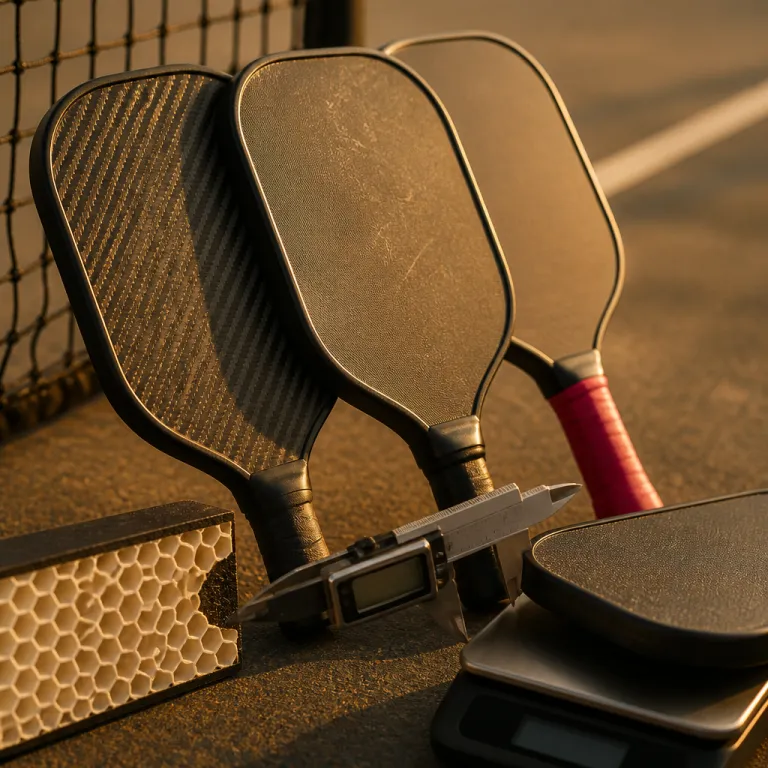
Every high level paddle starts with a carefully engineered core that balances touch and power. Polymer honeycomb cores dominate the performance segment because they dampen vibration while still letting a power paddle generate heavy pace from the baseline. When you read brand specifications, pay attention to whether the core is optimized for control paddle precision, raw power paddle aggression, or a blended power–control profile, and note published thickness ranges such as 13–14 mm for firmer response versus 16–20 mm for softer feel.
Face materials separate entry level paddles from true pro level tools. Carbon fiber faces, especially on models from established performance lines, increase friction on the ball and raise effective spin and rpm without sacrificing durability. A textured carbon fiber face also enlarges the sweet spot, which helps both recreational players and pro athletes hit cleaner dinks at the kitchen and more confident drives from mid court; independent lab tests from major retailers often show carbon fiber paddles producing higher spin rates than fiberglass or basic composite faces.
Core, foam, and face technologies that shape modern pickleball paddles
Inside many of the leading performance paddles, the core is no longer a simple slab of polymer. Brands now inject foam around the perimeter or inside the core to stabilize the paddle and reduce twisting on off center hits. This foam technology turns a standard court paddle into a more forgiving tool that keeps the ball on line even when players contact outside the ideal sweet spot, a trend documented in product descriptions and third party play tests from specialty retailers.
A dedicated foam paddle or families of foam paddles use denser materials to add perimeter weighting and improve power control. When a manufacturer pairs a tuned foam core with a carbon fiber face, the result is a power paddle that still offers enough control for delicate kitchen play and third shot drops. Some brands even market hybrid control paddle designs that use partial foam injection to keep the paddle maneuverable for fast hand battles, often listing swingweight numbers so players can compare how quickly different models move through the air.
Texture and friction on the paddle face matter just as much as the internal core. Lines with aggressively textured surfaces aim to maximize spin while staying within official regulations on surface roughness. If you check a detailed technical sheet from a leading brand or read an in depth review of a modern composite model in an article like exploring the world of Prince pickleball, you will see how face texture, foam placement, and core thickness interact to create a specific performance identity that can be measured in spin, power, and control ratings.
Leading performance families: Joola, Vatic Pro, Aura Pro and beyond
Among the most respected pickleball paddle brands, Joola has become a reference point for pro level performance. The company’s flagship lines focus on a blend of power and control that suits aggressive players who still need touch at the kitchen. Many touring pro athletes now rely on a Joola pickleball paddle for its predictable feel and large sweet spot during long match days, with popular models typically weighing around 7.8–8.4 ounces and offering 16 mm cores for a stable, controlled response.
Vatic Pro has built its reputation on high performance carbon fiber constructions at relatively accessible prices. A Vatic Pro court paddle typically uses a thermoformed shell with a polymer core and foam injected edges, which stiffens the frame and boosts power without losing control on blocks. For players who want a power paddle that can still carve spin, these Vatic Pro paddles often sit near the top of independent best pickleball rankings from reviewers who publish measured spin rates, power scores, and swingweight data to compare models objectively.
Aura Pro families, along with emerging boutique brands, target players who care deeply about feel and feedback; Aura Pro is an example of a smaller performance label rather than a mass market manufacturer. An Aura Pro elongated paddle gives extra reach at the kitchen and on overheads, while its tuned core and face balance spin with directional control. To understand how these performance products are reshaping expectations, it is worth reading about high performance centers in features such as how HPC pickleball is reshaping performance products and play in Honolulu, where serious players test new paddles under demanding conditions and provide feedback that influences future designs.
Shape, balance, and feel: matching a paddle to your playing style
Shape is one of the most overlooked factors when people compare advanced pickleball paddles. A traditional shape court paddle offers a wider sweet spot and more forgiveness, while an elongated design trades some width for extra reach and leverage. Players who live at the kitchen and prioritize hand speed often prefer standard shapes, whereas singles specialists may gravitate toward elongated paddles for added power on serves and drives; spec sheets usually list dimensions so you can see whether a model leans wider or longer.
Weight and balance determine how a pickleball paddle feels during quick exchanges. Head heavy power paddles generate easier pace but can fatigue the arm, while more evenly balanced control paddles excel in fast volley battles and soft game finesse. When you check specifications, look for how the brand describes swing weight, then read user feedback or lab style measurements to see whether the real world feel matches the marketing language and whether the listed static weight aligns with your comfort range.
Grip size and handle length also influence control and comfort. A longer handle on an elongated paddle helps two handed backhand players, but a shorter grip can improve maneuverability for compact strokes at the kitchen line. Before you commit to what you consider the best pickleball model for your style, test different paddles if possible and pay attention to how the foam, core, and face interact to transmit vibration into your hand, noting whether any buzzing or harshness appears on off center contact.
Specialized technologies: friction, spin, and advanced surface engineering
Spin has become a defining feature in how players rank high end pickleball paddle brands. Textured carbon fiber faces, combined with engineered friction layers, allow a modern pickleball paddle to grab the ball and generate heavy topspin or biting slice. Lines marketed with names like Friction Pro or rpm-focused surfaces signal that the brand has prioritized spin without ignoring control, and some testing organizations now publish measured spin values so players can compare how different surfaces perform.
These friction technologies work in tandem with the underlying core and foam structures. A paddle with a stiff thermoformed shell and foam supported core can return more energy to the ball, while the textured face adds directional control and spin. When brands tune power and control correctly, players get a paddle that drives the ball deep yet still drops softly into the kitchen when needed, a balance often reflected in third party power and control scores that summarize on court testing.
Some manufacturers experiment with unconventional naming and design cues to highlight innovation. A jelly bean themed cosmetic or an Mpp Turbo inspired graphic may look playful, but underneath the paint you still find serious carbon fiber layups and carefully tuned cores. For a person seeking information, the key is to read beyond the marketing code names and check whether the performance claims align with independent testing, published specifications, and visible tournament usage by competitive players.
How to evaluate value, ethics, and long term performance
Value in premium pickleball paddles is not only about price. A high end paddle that maintains its performance for several seasons can cost less per hour of play than a cheaper model that loses its sweet spot quickly. When you read long term reviews, look for comments about face durability, core stability, and whether foam paddles retain their original feel, and compare those observations with any warranty or play guarantee the brand offers.
Ethical and inclusive practices increasingly influence how serious players choose brands. Some manufacturers invest in community courts and training programs, while others focus on high margin pro lines without supporting broader access to the sport. Articles such as the analysis of who actually gets access to new pickleball courts highlight why equipment choices and brand behavior matter beyond pure performance, especially when local facilities and coaching resources are unevenly distributed.
When you check a brand catalog, pay attention to warranty terms, transparency about materials, and whether the company supports both recreational players and pro level athletes. A label like Joola or Vatic Pro on the face is a starting point, but your final judgment of the best pickleball options should weigh feel, power, control, spin, and the way each paddle aligns with your values. In the end, the most trusted pickleball paddle brands are those whose paddles help you play your game more confidently on every part of the court while also contributing positively to the broader pickleball community.
Key statistics on pickleball paddles and performance trends
- According to the Sports & Fitness Industry Association (SFIA), pickleball participation in the United States grew by more than 150 percent over a recent three year span, which has pushed brands to release dozens of new pickleball paddles each season to meet demand. (Source: SFIA 2023 Pickleball Report; see SFIA’s official publications for the full methodology and exact figures.)
- Industry reports from major retailers and trade publications indicate that carbon fiber faced paddles now account for well over half of performance paddle sales, reflecting a clear shift toward higher spin and power–control technologies among competitive players. (Based on aggregated retailer category reports and manufacturer disclosures summarized in public earnings calls and trade articles.)
- Player surveys from large tournaments suggest that a majority of pro and high level amateur competitors now use paddles with some form of foam core or edge foam, indicating that stability and enlarged sweet spots have become central to perceptions of the best pickleball equipment. (Self reported survey data from event organizers and equipment testers; exact percentages vary by event and are typically reported as directional trends rather than precise market share.)
- Market analyses estimate that premium performance paddles priced above the mid range now represent roughly one third of total paddle revenue, even though they make up a smaller share of unit sales, which underlines how serious players are willing to invest in top tier brands such as Joola and Vatic Pro. (Compiled from public financial statements, specialty retail reports, and category breakdowns published in industry overviews.)
FAQ about the best pickleball paddle brands for serious players
What makes a pickleball paddle brand truly elite for competitive play ?
An elite brand consistently delivers paddles with reliable cores, durable faces, and predictable feel across multiple models. It should offer clear distinctions between power paddles, control paddles, and balanced options, while maintaining quality control from one paddle to the next. Tournament presence and adoption by high level players also signal that a brand belongs among the best pickleball manufacturers, especially when specific models appear frequently in pro brackets and televised matches.
How important is carbon fiber in modern pickleball paddles ?
Carbon fiber has become a cornerstone material for performance paddles because it is light, stiff, and durable. When combined with textured surfaces, it increases spin potential and enlarges the effective sweet spot without adding excessive weight. For players who value both power and control, carbon fiber faces are now a practical standard rather than a luxury, and many of the most discussed paddles in independent reviews use some form of carbon fiber or carbon composite layup.
Should I choose an elongated paddle or a standard shape ?
Elongated paddles suit players who want extra reach on serves, overheads, and passing shots, especially in singles. Standard shape paddles provide a wider sweet spot and often feel more stable in fast kitchen exchanges and doubles play. Your choice should reflect where you win most points and whether you prioritize reach or forgiveness, so it is worth demoing both shapes and noting how each affects your confidence on key shots.
Are foam core paddles better than traditional polymer cores ?
Foam core or foam injected paddles are not automatically better, but they do offer specific advantages. Perimeter foam can reduce twisting on off center hits and make the paddle feel more solid, which many players interpret as better control. Traditional polymer cores remain popular because they provide a familiar response and can be tuned for either soft touch or higher power, so the best choice depends on your feel preferences and how much stability you want on mishits.
How often should a serious player replace a pickleball paddle ?
Competitive players who train and compete several times per week often replace their main paddle every 12 to 18 months, depending on wear. Over time, the core can soften and the face texture can fade, reducing spin and power. Monitoring changes in feel, sound, and control is more reliable than following a fixed calendar schedule, and many serious players keep a backup paddle of the same model to compare performance as their primary paddle ages.