Summary

Editor's rating

★★★★★ ★★★★★

Value for money: who should consider it

★★★★★ ★★★★★

Design and feel in the hand

★★★★★ ★★★★★

Comfort, grip, and fatigue over longer sessions

★★★★★ ★★★★★

Materials and build quality: strong on paper, mixed in practice

★★★★★ ★★★★★

Durability and long-term concerns

★★★★★ ★★★★★

Power, control, and spin on the court

★★★★★ ★★★★★

What you actually get out of the box

★★★★★ ★★★★★

Pros

  • Very good spin thanks to T700 raw carbon face
  • Nice balance of control and usable power for intermediate players
  • Includes a solid PU leather cover and is USA Pickleball approved

Cons

  • Edge guard durability is questionable based on user reports
  • Firm, slightly boardy feel won’t suit players who prefer a soft, plush response
  • Build and finish feel a bit less refined than some similarly priced big-brand paddles
Brand Phantom Pickleball

Raw carbon, big spin, small brand: worth a shot?

I’ve been playing pickleball 3–4 times a week for a while now, mainly with mid-range carbon paddles from better-known brands. I grabbed the Phantom Trinity T700 mostly out of curiosity: thermoformed, raw carbon, 14 mm core, but from a smaller name. On paper it ticks all the trendy boxes, and the price is in that “serious but not crazy” range. I used it for about three weeks in rec play and a small local tournament to see if it could actually hang with the bigger brands.

Right away, this paddle felt like something aimed at players who already know what they’re doing. The touch at the kitchen, the way the ball grabs the face, the liveliness in drives – it’s not a beginner toy. At the same time, it’s not some uncontrollable rocket. It sits in that awkward middle ground between power and control that can be great if it fits your style, and annoying if it doesn’t.

During my tests, I focused on three things: spin potential, consistency on mishits, and comfort over long sessions. I also paid attention to how the build held up, because a couple of online reviews mentioned the edge guard breaking down after a few months. I obviously couldn’t fast-forward time, but I did inspect it regularly and compared it to my other thermoformed paddles.

Overall, I’d say this: it’s a pretty solid paddle for intermediate to advanced rec players who like spin and a firmer feel, but it’s not perfect. The performance is there, but the brand still feels a bit "work in progress" on long-term durability and finish. If you’re okay with that trade-off, it can be a good buy. If you want something bulletproof from day one, I’d look around a bit more.

Value for money: who should consider it

★★★★★ ★★★★★

In terms of value, the Phantom Trinity sits in that mid-to-upper price range where you start comparing it to bigger names. For the money, you’re getting modern tech: T700 raw carbon, thermoformed build, foam-filled perimeter, and a decent PU leather cover. Performance-wise, it definitely plays in the same league as other serious paddles: good spin, solid control, and enough power for most intermediate players.

The catch is that for a similar price, you can find paddles from more established brands with slightly more polished build quality and maybe fewer question marks around long-term durability. So the real question is: are you okay betting on a smaller brand that gives you strong performance but might not be as proven over time? If yes, then the Trinity is pretty solid value. If you want something you never have to think about, you might lean toward a bigger name.

For intermediate to advanced rec players who want spin and a firmer control feel, I think the price is fair. You’re basically paying for on-court performance, not a fancy logo. The included cover is a nice bonus that saves you from buying one separately. For pure beginners, I’d say it’s probably overkill: you can spend less and not notice most of the tech here, or you might even prefer something a bit softer and more forgiving.

Overall, I’d rate the value as good but not mind-blowing. It’s not a bargain basement steal, but you’re not getting ripped off either. If the paddle’s specific feel – firm, spinny, control-leaning 14 mm – matches what you’re after, then the price makes sense. If you’re just paddle-shopping blindly, there are safer all-round choices in the same budget from brands with longer track records.

51KEhJQJbQL._AC_SL1500_

Design and feel in the hand

★★★★★ ★★★★★

Design-wise, the Trinity is pretty distinctive. It doesn’t look like a clone of the usual big-brand paddles. The graphics are a bit bold and conversation-starting, which some people in my group liked and others thought looked a bit busy. Personally, I don’t really care what’s printed on the face as long as the surface is functional, but if you like your gear to stand out a bit, this one does that.

The shape is elongated but not extreme, so you get a bit more reach at the net without it feeling like a plank. The edge guard is advertised as low profile, and that’s accurate: it’s slimmer than some of my older paddles. It helps keep off-the-frame mishits from feeling too jarring, but it doesn’t add much bulk. The flip side is that a thin edge guard can be more prone to damage, and one Amazon review mentioned the plastic edge falling apart after about three months. Mine obviously hasn’t been through that much abuse yet, but I can see how a thinner guard might not age as well if you’re constantly scraping it on the court.

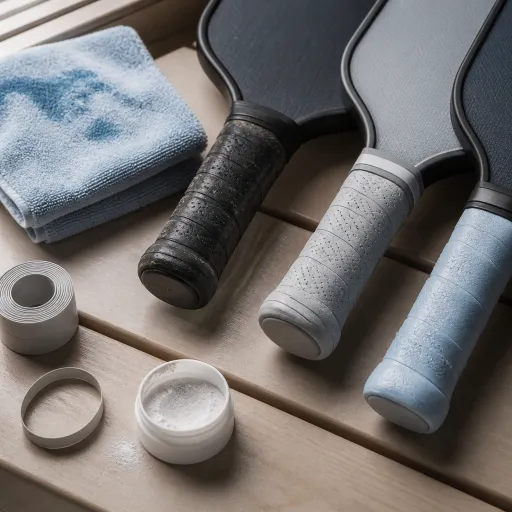
The grip design is pretty straightforward: no ridge, slightly tacky, and rounded. It works fine for both left and right-handed players, and I didn’t feel any weird hot spots or seams digging into my palm. It’s not the best grip I’ve ever used, but it’s absolutely usable out of the box. If you’re picky, you’ll probably throw an overgrip on it anyway, which is what I did after a few sessions when the sweat started to build up.

On the court, the design choices come together in a paddle that feels balanced slightly towards the head, but not so much that it’s tiring. Volleys feel quick enough, and you can still whip through the ball on serves and drives. It doesn’t feel toy-like or cheap – it feels like a real performance tool – but there’s also nothing ultra premium about the finish that would make you go "wow" when you first pick it up. It’s functional and pretty solid, just not mind-blowing.

Comfort, grip, and fatigue over longer sessions

★★★★★ ★★★★★

Comfort-wise, I’d put the Trinity in the "firm but manageable" category. It’s not a plush, dampened pillow like some 16 mm control paddles, but it’s not a harsh board either. The foam-filled perimeter does cut down some of the vibration, especially on center hits. When you strike the sweet spot, contact feels crisp and clean. When you catch the ball near the top or sides, you definitely feel more feedback in your hand and forearm, but it never felt painful to me – just more direct.

The grip is 5.5 inches, which worked well for my medium-sized hands. The diameter feels pretty average – not too skinny, not too chunky. The stock grip has a mild tackiness and a bit of cushioning. I played a few two-hour sessions without an overgrip and didn’t get any blisters, which is a good sign. After those first sessions, I added an overgrip mostly for sweat control, not because the original grip was uncomfortable.

In terms of overall fatigue, the paddle feels reasonably balanced. It’s not super head-heavy, so quick exchanges at the net are fine. I didn’t notice my wrist or shoulder getting sore faster than usual. The only time I really felt some extra stress was when I mishit hard drives near the edge – that sends a bit of a jolt through the arm. If you’ve had elbow issues in the past and you tend to miss the sweet spot a lot, that’s something to keep in mind. A softer, thicker paddle might treat your joints more kindly.

After a few weeks, I’d say comfort is decent but not the Trinity’s main selling point. It’s fine for most players, and I had no problem using it as my main paddle during that time. But if your top priority is a super soft, arm-friendly feel, there are better options. This one is more about feedback and firmness than pure cushioning.

61mOB41qmBL._AC_SL1080_

Materials and build quality: strong on paper, mixed in practice

★★★★★ ★★★★★

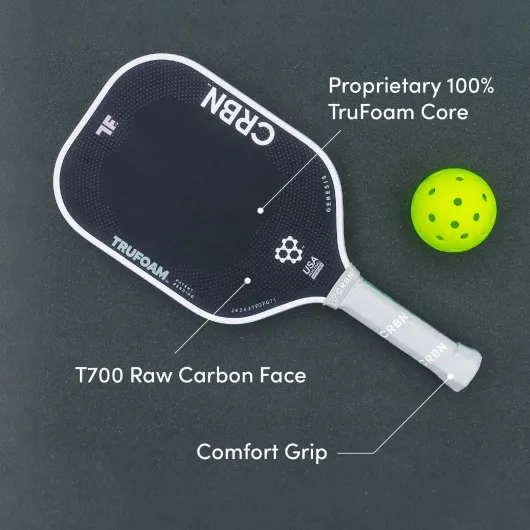
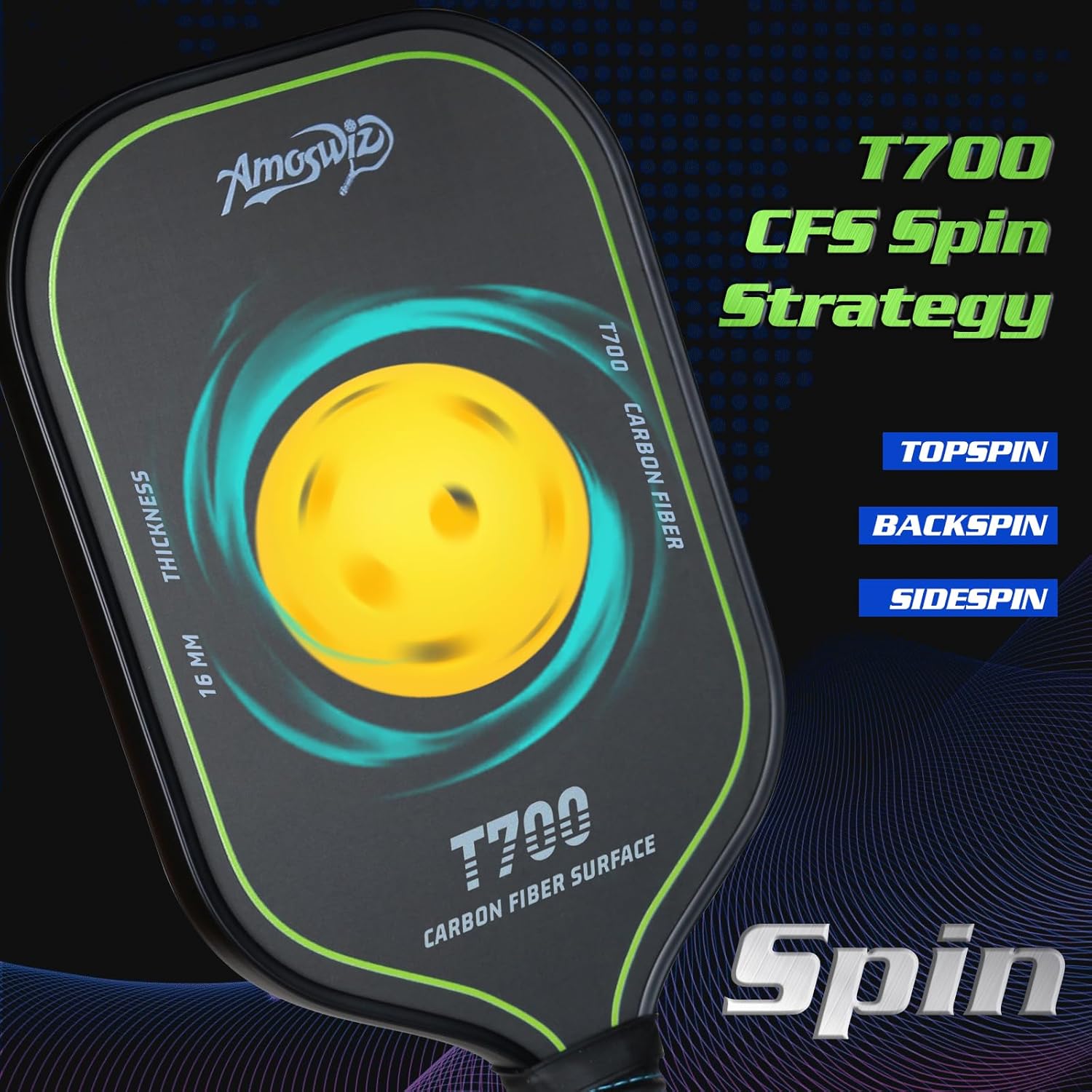
On paper, the materials are exactly what you’d expect from a modern performance paddle: T700 raw carbon fiber face, thermoformed construction, foam-filled perimeter, and a polypropylene honeycomb core. That combo is supposed to give you spin, power, a bigger sweet spot, and less vibration. During play, I’d say most of that checks out. The carbon face definitely grabs the ball well, and the paddle feels pretty stiff, which helps with punch and blocks.

The 14 mm C4 polypropylene core is interesting. Usually 14 mm paddles lean more towards power and pop, with a bit less forgiveness. This one feels slightly different. It’s not a rocket launcher. It actually plays closer to a control paddle with a firmer, boardier feel, as one Amazon reviewer mentioned. The sweet spot is pretty generous, and hits towards the edge still get over the net, but you do feel a bit more shock in the arm when you catch it near the frame.

Where I’m a bit less convinced is the edge guard and overall long-term durability. After three weeks, mine still looks fine – just the usual scuffs from digging for low balls and a couple of light chips from paddle clashes. But seeing a verified buyer say their edge guard started falling apart around three months does raise an eyebrow. The low-profile guard is nice for playability, but there’s a trade-off in how much abuse it can take. If you’re someone who constantly drags the paddle on concrete or plays on rough courts, I wouldn’t expect this to age like a tank.

Overall, the materials choice is solid for performance, but the build doesn’t give the same bulletproof feel as some bigger-name paddles in the same price range. It’s good enough, and for many players it will hold up fine, but if you’re rough on your gear or expect a paddle to look fresh after a season, you might be a bit disappointed. The brand seems to have decent customer service, though, so there’s that as a safety net if something goes wrong early.

Durability and long-term concerns

★★★★★ ★★★★★

Durability is the one area where I’m a bit cautious. In my three weeks of use – roughly 15–20 hours of play – the Trinity held up fine. The face shows normal wear for a raw carbon paddle: light ball marks, some cosmetic scuffs, but no delamination or bubbling. The thermoformed structure feels solid, and there’s no rattling or weird sounds. So in the short term, it behaves like a decent quality paddle.

The edge guard is where the red flag comes in. One verified Amazon buyer mentioned that after about three months, the plastic edge started falling apart, and they were pretty annoyed considering this is sold as a premium model. Looking at the design, I can see how this could happen: the edge is low-profile and relatively thin, which is nice for play but doesn’t leave a lot of material to absorb repeated scrapes on rough courts. If you tend to drag the paddle on the ground or often collide with other paddles, I wouldn’t be surprised if chips and cracks show up sooner than on chunkier guards.

The good news is that Phantom’s customer service seems responsive. Another reviewer had an issue, contacted the company, and got a replacement quickly from someone fairly high up in the brand. That doesn’t fix the design itself, but at least they’re not ghosting people when something goes wrong. So if you do have a failure early on, you’ve got a decent chance of getting it sorted.

Realistically, I’d say this paddle should last a regular rec player a season if you’re not brutal with it. If you play daily on rough courts or expect it to look perfect after months of abuse, you might be disappointed. For the price, I was hoping for a slightly tougher edge solution. It’s not terrible, but it’s not bulletproof either, and that’s worth keeping in mind before you buy.

71ahjNyQt5L._AC_SL1080_

Power, control, and spin on the court

★★★★★ ★★★★★

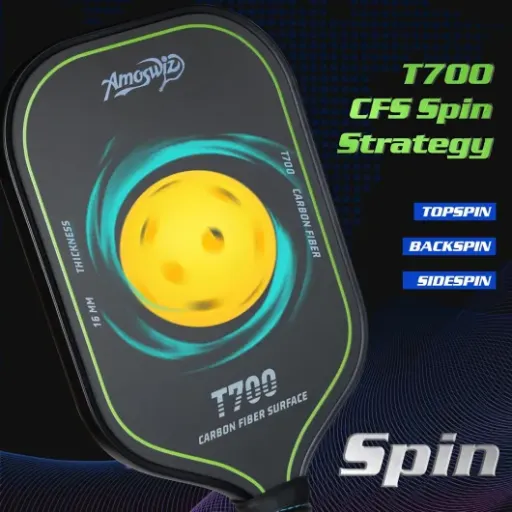
Performance is where this paddle actually holds its own. Let’s start with spin. The T700 raw carbon face grabs the ball well. I could get a lot of topspin on drives and heavy cut on third shot drops and serves. Compared to my other T700 paddles, I’d say it’s on the higher end of spin, but not the absolute top. One Amazon reviewer called the surface "more spinny than typical T700 but not the most spin" and I’d agree. It’s very good, but I’ve used one or two paddles that bite the ball even more. Still, for most rec players, spin will not be a problem here.

On power, things are a bit more nuanced. For a 14 mm paddle, I expected more raw pop. It hits harder than a soft 16 mm control paddle, but it’s not as explosive as some other 14 mm thermoformed paddles. Drives and serves have decent pace once you time it right, but you do need to swing. If you’re looking for a paddle that adds free power to a lazy swing, this isn’t it. It behaves more like a control-oriented core in a 14 mm thickness, which again lines up with that "boardy control" comment from another user.

Where it shines is consistency and control at the kitchen. Drops, dinks, and resets feel pretty reliable once you adjust to the firmness. The sweet spot is forgiving enough that you don’t have to be perfect, and the face gives predictable response. I found my third shot drops settling nicely into the kitchen once I got the touch dialed in. Blocks and counters also feel solid – the paddle is stiff enough that you can just stick it out and redirect pace without too much effort.

In match play, I’d describe the Trinity as a control-leaning all-rounder with strong spin. It gives you enough pop to finish points, but it rewards good mechanics more than it bails you out. If you’re an intermediate or advanced player who likes to shape shots and use spin, it can work well. If you’re a newer player relying on the paddle to do the work for you, you might find it a bit unforgiving and not as "helpful" as some other options.

What you actually get out of the box

★★★★★ ★★★★★

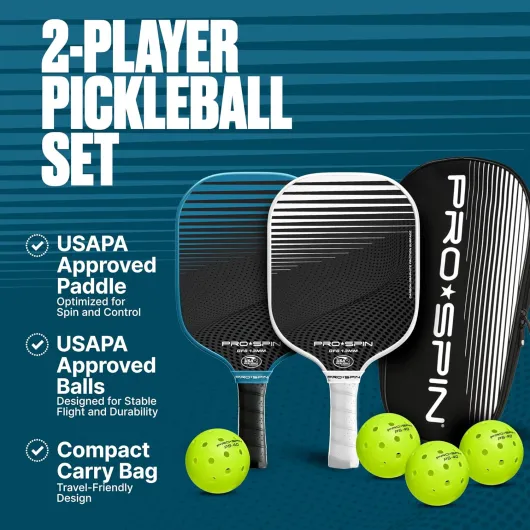
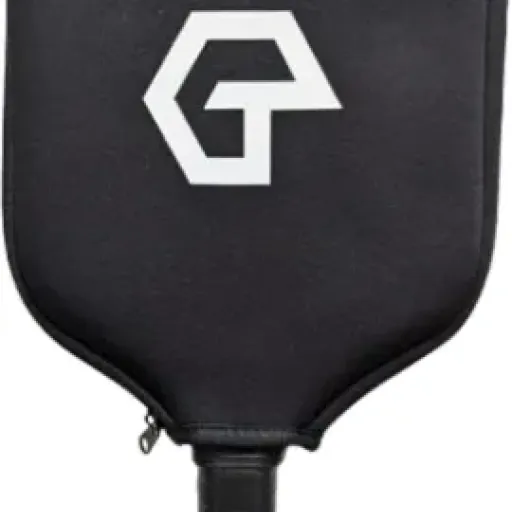
Out of the box, the Phantom Trinity looks and feels like a serious paddle. You get the paddle itself and a PU leather cover that’s actually nicer than the usual thin neoprene sleeves. The cover has a bit of structure to it, decent padding, and a zipper that doesn’t feel flimsy. If you’re used to tossing your paddle in a bag with keys and other junk, the cover is genuinely useful, not just a gimmick.

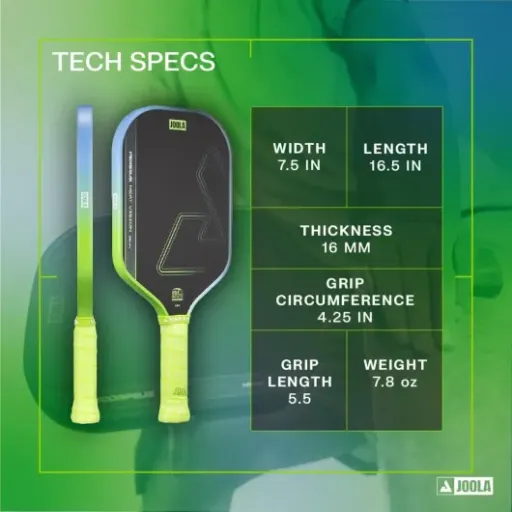
The paddle is a standard elongated shape: about 41.9 cm long and 19.1 cm wide. It’s thermoformed with a T700 raw carbon fiber face and a 14 mm C4 polypropylene honeycomb core. On paper, that’s pretty much the current trend: raw carbon for spin, thermoformed for stiffness and power, foam-filled perimeter to reduce vibration and improve sweet spot. Grip length is listed at 5.5 inches, which is fairly standard and works for both one-handed and two-handed backhands.

The thing that stands out when you first hold it is the firm, slightly stiff feel. Even just bouncing a ball off it in the driveway, you can tell it’s not a plush, soft control paddle. When you tap around the edges, the sweet spot feels fairly generous, and mishits don’t sound super dead. Compared to a typical 16 mm control paddle, it feels more lively and a bit more direct in feedback.

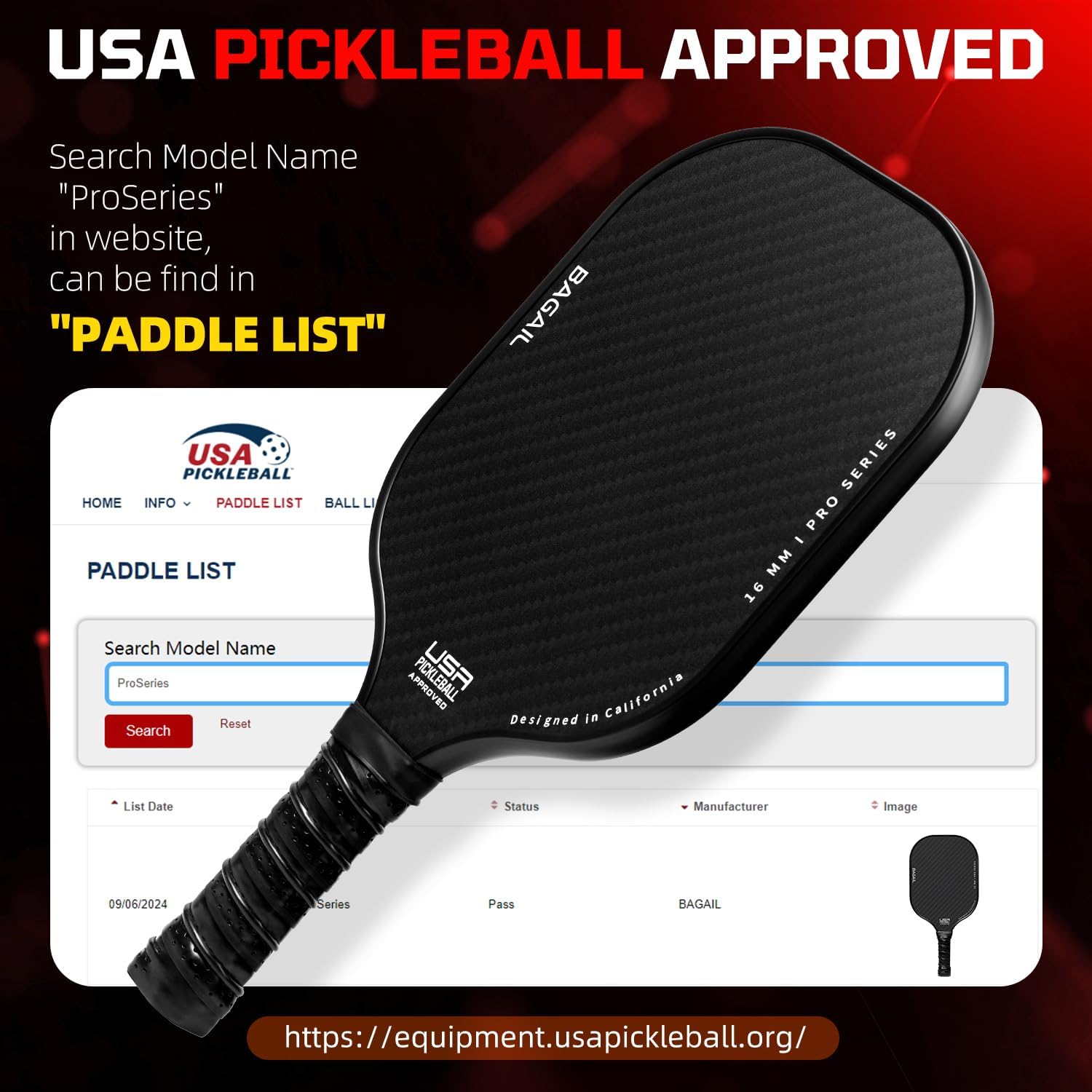
As for the brand, Phantom isn’t a giant name, but they try to present this as their "Advanced Response Series" top-end model, aimed at intermediate to pro players. The paddle is USA Pickleball approved, so it’s legal for tournaments. That checks an important box if you plan to compete. Overall, presentation is solid: nothing fancy, but it looks like a proper performance paddle, not some cheap Amazon special.

Pros

  • Very good spin thanks to T700 raw carbon face
  • Nice balance of control and usable power for intermediate players
  • Includes a solid PU leather cover and is USA Pickleball approved

Cons

  • Edge guard durability is questionable based on user reports
  • Firm, slightly boardy feel won’t suit players who prefer a soft, plush response
  • Build and finish feel a bit less refined than some similarly priced big-brand paddles

Conclusion

Editor's rating

★★★★★ ★★★★★

After a few weeks with the Phantom Trinity T700, my take is pretty straightforward: it’s a spin-friendly, control-leaning thermoformed paddle that plays well but has a few rough edges, mainly around long-term durability and overall finish. On court, it does the job: you get plenty of spin, a decent mix of power and control, and a sweet spot that’s forgiving enough for competitive rec play. If you already have some experience and like a firmer, more direct feel, it’s easy to adjust to and can definitely keep up with more famous paddles.

The downsides are mostly around build confidence. The low-profile edge guard is nice for play but might not handle months of abuse as well as thicker guards, and the overall feel isn’t as refined as some big-brand alternatives in the same price bracket. The good news is that Phantom’s customer service seems responsive, which softens the risk a bit if you run into problems early.

I’d recommend this paddle to intermediate and advanced rec players who want strong spin, decent power, and a firm, feedback-heavy feel, and who don’t mind taking a chance on a smaller brand. If you’re a total beginner, you can spend less and be just as happy. If you’re obsessed with durability and want something that feels bombproof, I’d look elsewhere or at least be ready to lean on the warranty if needed.

See offer Amazon

Sub-ratings

Value for money: who should consider it

★★★★★ ★★★★★

Design and feel in the hand

★★★★★ ★★★★★

Comfort, grip, and fatigue over longer sessions

★★★★★ ★★★★★

Materials and build quality: strong on paper, mixed in practice

★★★★★ ★★★★★

Durability and long-term concerns

★★★★★ ★★★★★

Power, control, and spin on the court

★★★★★ ★★★★★

What you actually get out of the box

★★★★★ ★★★★★
Published on
Phantom Trinity T700 Raw Carbon Fiber Pickleball Paddle - 14mm Thermoformed Pro Pickle Ball Paddle with Premium Pickleball Paddle Cover – C4 Polypropylene Power Core Pickleball Racket Phantom Trinity T700 Raw Carbon Fiber Pickleball Paddle - 14mm Thermoformed Pro Pickle Ball Paddle with Premium Pickleball Paddle Cover – C4 Polypropylene Power Core Pickleball Racket
🔥
See offer Amazon