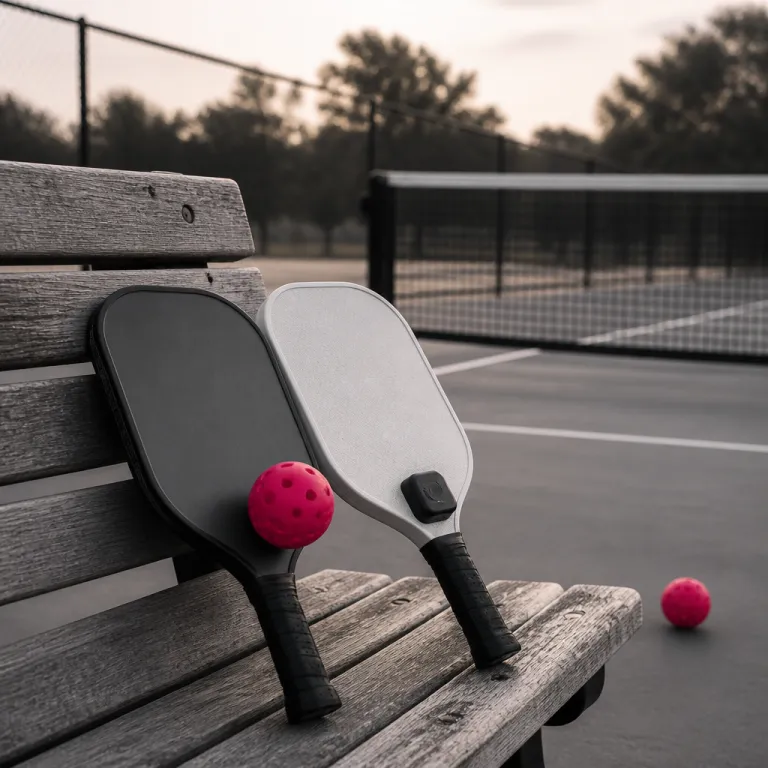
What smart pickleball paddles really track — and what they miss
Smart paddles promise to turn every rally into usable data. For a competitive amateur player trying to judge whether a smart pickleball paddle is worth it, the first step is understanding exactly what the sensors inside the paddle can and cannot see. If you know what the paddle measures, you can decide whether that information will actually change your pickleball training or just clutter your phone with charts.
Most current smart pickleball systems embed a small sensor module in the butt cap of the paddle handle. That module tracks swing speed, impact location on the paddle face, and rough estimates of shot type by combining accelerometer and gyroscope data with impact timing from the ball. Some smart paddles also infer spin and power by modeling how fast the paddle is rotating at contact, but they still cannot read the actual RPM on the ball the way high end tennis labs do.
When you ask whether a smart pickleball paddle is worth it, you are really asking whether those swing and impact metrics will help you win more points. For 4.0 and 4.5 players who already have solid hand eye coordination and repeatable mechanics, the answer can be yes, because the data exposes patterns you feel but cannot quantify. For 3.0 players still fighting basic control, the same data often just confirms what you already know — too many mishits, too many dead spots, and not enough balls landing in the sweet spot.
A typical smart pickleball paddle tracks where on the face you contact the ball on every rally. Over a month of league play at a busy public park in Phoenix, that heat map can show whether your third shot drops are drifting toward the paddle edge or staying near the center sweet spot. If you see a cluster of impacts near the throat, you know your swing path is late and your swing speed is bleeding power before the ball even crosses the net.
Impact location data also reveals whether your paddle choice is masking flaws. A foam injected core or thicker polymer honeycomb can make off center shots feel softer, but the sensor will still flag those contacts as outside the optimal spot. That is where the question of a smart pickleball paddle being worth it becomes less about tech and more about brutal honesty, because the paddle will not flatter your skill level the way marketing copy does.
Shot classification is the flashiest promise in smart pickleball marketing. The system labels dinks, drives, drops, lobs, and the occasional kill shot based on swing speed and angle, then shows you a breakdown of how many aggressive shots you hit versus neutral or defensive ones. For a 4.0 player trying to sharpen a kill shot pattern out of the transition zone, that ratio matters a lot more than for a 3.0 player still learning to keep the ball in play.
What the paddle cannot see is just as important as what it tracks. No sensor in the handle can judge your court positioning, your partner spacing, or your decision to pull the trigger on a kill instead of resetting the rally with a soft shot. That means a smart pickleball paddle is worth it only if you are ready to pair its numbers with video or in person coaching that explains the tactical context behind every data point.
Materials still matter more than microchips when it comes to raw performance. A carbon fiber face with a thermoformed edge and injected foam perimeter will change how the ball comes off the paddle far more than any sensor module will, especially for players chasing more spin and power. If you already obsess over core thickness, swing weight, and how different pickleball paddles feel on a low drive, then you are the kind of player who might squeeze real value out of smart paddles.
Price is the final missing piece in this first layer of analysis. When a smart pickleball paddle carries a regular price that is roughly $80 to $150 higher than a comparable non smart pro paddle, you are paying a premium for data, not for better carbon fiber or a larger sweet spot. That premium only makes sense if you will actually open the app after every session and adjust your training plan instead of just admiring the graphs once and forgetting them.
Why 4.0 and 4.5 players can actually use smart paddle data
For a 4.0 player grinding DUPR points at a crowded complex in Mesa, the question of whether a smart pickleball paddle is worth it is really a question about marginal gains. At that level, your mechanics are mostly stable, your hand eye coordination is reliable under pressure, and your errors cluster in predictable patterns over a tournament cycle. Smart paddles shine when a player already has a foundation and just needs a sharper lens on specific weaknesses.
Take the third shot drop, the shot that separates strong recreational players from true tournament threats. A smart pickleball system can tag every third shot you hit, measure swing speed, and show where on the paddle face you contacted the ball, then correlate that with whether the ball landed deep in the kitchen or floated high enough for a pro style counter. Over three weeks of league and ladder play, you might see that your drops from the left side have higher swing speed and more consistent sweet spot contact than your drops from the right, which tells you exactly where to focus your next block of pickleball training.
Spin is another area where 4.0 players can turn data into wins. A textured carbon fiber face already helps you grab the ball and shape topspin drives or heavy slice returns, but a smart pickleball paddle can show whether your spin oriented shots actually differ in swing path and impact location from your flat drives. If the numbers show almost identical swing speed and contact points between your spin attempts and your regular shots, you know the problem is not the paddle but your technique.
Control versus power trade offs become clearer when you can see them quantified. A player who switches from a softer foam core control paddle to a stiffer thermoformed pro paddle might feel more pop on drives but less touch on dinks, yet feelings are notoriously unreliable after a long tournament day. Smart paddles can show that your average ball speed on drives jumped by 8 percent while your unforced error rate on soft shots at the kitchen line also climbed, which forces a real conversation about whether that extra power is worth the lost control.
For 4.0 and 4.5 players, the real value of a smart pickleball paddle lies in targeted training blocks. You can run a focused four week cycle where every session emphasizes one pattern, like crosscourt dink exchanges into a surprise speed up and kill shot, then check whether your impact map tightens around the ideal spot on the paddle face. Week one, you might simply log baseline data on your current patterns; weeks two and three, you drill one pattern per session and compare swing speed and mishit rate; week four, you stress test in match play and confirm that the same gains show up under pressure.
That is also where a smart pickleball paddle is worth it compared with a standard high performance set of pickleball paddles. A traditional fiberglass or carbon fiber paddle set, like a high performance fiberglass surface kit with indoor and outdoor balls, gives you great feel but no feedback loop beyond what your body senses. A smart system adds a layer of quantified performance that can guide when to change paddles, when to adjust grip pressure, and when to tweak your ready position for better hand eye reactions at the kitchen.
In this performance band, the price premium starts to look more like a coaching fee than a gadget tax. If a smart pickleball paddle costs roughly $120 to $200 more than a comparable USA Pickleball approved pro paddle, but it helps you identify that your backhand roll volley is the weak link costing you four points per match, the return on investment can be real. Over a full season of sanctioned events, a single match swing in your favor can justify the extra cost if it moves you deeper into draws and closer to seeding.
There is also a psychological edge for serious players who respond well to numbers. Seeing your average swing speed climb over a month of focused strength and pickleball training can reinforce good habits in a way that vague compliments from partners never do. For data oriented competitors, that feedback loop is exactly what makes a smart pickleball paddle worth it, because it turns every casual rec game into a mini testing session.
Finally, smart paddles can help 4.0 players manage fatigue and injury risk. By tracking how many high speed shots and kill shot attempts you log in a week, the system can flag when your volume spikes beyond your normal range, which is when elbow and shoulder issues tend to appear. That kind of workload monitoring is overkill for a casual player, but for someone chasing the best pickleball performance they can squeeze out of their body, it is another argument in favor of the tech.
Why 3.0 players should probably wait on smart paddle tech
For 3.0 players still learning to keep the ball in play, the calculus around whether a smart pickleball paddle is worth it looks very different. At this stage, your biggest leaks are usually footwork, basic paddle angle control, and inconsistent contact rather than subtle differences in swing speed or spin rate. A sensor packed paddle cannot fix fundamentals that have not been built yet, and the data it generates can easily distract from the real work.
Most 3.0 players already know they mishit too many balls and struggle to find the sweet spot on their pickleball paddle. A smart system that shows a chaotic impact map with lots of dead spots near the edges does not add much actionable insight, because the prescription is the same either way, which is more simple reps with a coach or a structured beginner program. In that context, a well balanced USA Pickleball approved starter set with four paddles and a bag often delivers far better value than a single expensive smart paddle.
There is also a risk that 3.0 players fixate on the wrong metrics. When you are still learning how to track the ball and build reliable hand eye coordination, chasing higher swing speed numbers can push you toward wild, out of control swings that spray shots long. The temptation to hit a highlight reel kill shot on every rally grows when the app rewards you with flashy power stats, even though the smartest path to improvement is usually a boring focus on soft shots and consistent dinks.
Price sensitivity matters more at this level too. A smart pickleball paddle that costs two or three times the regular price of a solid composite beginner paddle eats into the budget you could spend on group clinics, private lessons, or extra open play sessions. For most 3.0 players, those investments in coaching and court time will move the performance needle far more than any smart paddles or shot tracking apps can.
Another issue is data overload without context. A 3.0 player might see that their forehand drive has lower average power than their backhand, then waste weeks trying to muscle the ball harder instead of learning proper weight transfer and paddle path. Without a coach or experienced partner to interpret the numbers, the smart pickleball paddle is worth it only to the extent that it nudges you toward better habits, and at this stage it often does the opposite.
There is also the simple fact that many 3.0 players are still experimenting with basic paddle shapes, weights, and grips. You might not yet know whether you prefer a longer handle for two handed backhands or a wider face for more forgiveness on blocks, and locking that experimentation into a single expensive smart pickleball paddle can slow your learning. A more flexible approach is to rotate through a few different pickleball paddles, borrow from friends, and use a versatile backpack or racket bag to carry your small arsenal between local courts.
From a skill development standpoint, the best pickleball path for a 3.0 player is usually a mix of structured drills and lots of game reps. Simple exercises like crosscourt dink rallies, cooperative third shot drop patterns, and controlled volley exchanges at the kitchen line build control and eye coordination far more efficiently than staring at post match dashboards. Until you can reliably execute those patterns under light pressure, a smart pickleball paddle is worth it mostly as a novelty, not as a core training tool.
There is also the issue of long term engagement with the tech. Tennis went through this cycle with smart sensors a decade ago, and independent reports on connected tennis devices suggested that only a small single digit percentage of recreational players were still using them after the first few months. For example, internal usage summaries shared around 2016–2017 by several major tennis sensor brands and cited in trade press indicated that fewer than about 5 percent of buyers were still syncing data regularly at the three month mark, which implies that the initial excitement fades quickly once the numbers stop feeling new.
In short, if you are hovering around 3.0 and wondering whether a smart pickleball paddle is worth it, the honest answer is probably not yet. Spend that money on a reliable USA Pickleball approved paddle set, a few quality balls, and maybe a structured beginner clinic that teaches you how to move, how to hold the paddle, and how to build a repeatable swing. Once those foundations are in place and you start flirting with 3.5 or 4.0, the equation changes and the data begins to have something solid to latch onto.
Privacy, batteries, and when to actually buy into smart paddle tech
Beyond performance, the question of whether a smart pickleball paddle is worth it has two under discussed layers, which are privacy and practicality. Every swing you take with a sensor enabled paddle generates data that lives somewhere, usually on a company server that may or may not have clear policies about retention, sharing, and anonymization. Competitive players who care about their edge should think carefully about who owns their shot patterns and whether that information could eventually be used in ways they do not control.
Battery life is the other unglamorous reality that marketing rarely highlights. A smart pickleball paddle that dies halfway through a long ladder session at a busy USA Pickleball sanctioned club in Austin is just a regular paddle with extra weight in the handle, and that is not what you paid the premium price for. If you are the kind of player who already struggles to keep your phone charged, adding another device to the nightly charging routine might quietly erode the value proposition.
There is also the question of ecosystem lock in. Some smart paddles pair only with a proprietary app, while others integrate with broader platforms that sync with DUPR or other rating systems, and that difference matters if you plan to track performance across seasons. A smart pickleball paddle is worth it only if the software side will still be supported and updated several product cycles from now, because a dead app turns your high tech paddle into an overpriced club.
From a pure equipment standpoint, you still need to evaluate a smart pickleball paddle like any other pro paddle. Check the swing weight, overall mass, balance point, and face material, then compare them with your current favorite carbon fiber or fiberglass model to see whether the on court feel matches your game. If the smart version forces you into a heavier or more head loaded setup than you like, no amount of data will compensate for the loss of control on fast kitchen exchanges.
For 4.0 and 4.5 players, a simple rule of thumb can help decide whether a smart pickleball paddle is worth it right now. If you already review match video, log your practice sessions, and adjust your training blocks based on specific patterns, then adding quantified swing and impact data is a logical next step. If you rarely look at stats beyond the final score, you are unlikely to squeeze enough value out of the tech to justify the higher regular price compared with a top tier non smart paddle.
For 3.0 players, the better move is usually to wait at least two product cycles. Early smart paddles will improve quickly as companies refine their sensors, algorithms, and app interfaces, and prices tend to drop once the first wave of enthusiasts has paid the premium. By the time you reach a solid 3.5 or low 4.0 level, the hardware will be better, the software will be more stable, and you will have the skill base to actually use the data.
One more practical angle is how you carry and protect your growing pile of gear. As you add more paddles, balls, and accessories, a purpose built backpack or racket bag that can hold multiple pickleball paddles and balls becomes more important than whether one of those paddles is smart. A well designed bag with a shoe compartment and space for both smart and traditional paddles will probably see more daily use than any single piece of tech.
Ultimately, the smartest investment is still in your own skill, not in sensors. A smart pickleball paddle is worth it only if it amplifies a training habit you already have, not if it is supposed to create that habit from scratch. The players who benefit most will be the ones who treat the data as a coach in their pocket, not as a shortcut around the slow, repetitive work of building world class control and shot selection.
Key statistics on smart paddles, tracking tech, and player behavior
- Market research on connected tennis sensors has reported that only a small single digit percentage of recreational players were still using their smart tracking devices three months after purchase. Internal usage data shared by major brands such as Babolat Play and Sony Smart Tennis Sensor and summarized in tennis industry reports around 2016–2018 consistently pointed to sub 10 percent active usage after the first quarter, which suggests that long term engagement with similar smart pickleball systems may also be limited for casual players.
- Industry trend reports on racket sports technology have identified AI coaching tools, smart paddles, and shot tracking apps as one of the fastest growing segments by percentage growth, even though they still represent a small fraction of total paddle and racket sales worldwide. For example, several 2022–2023 racket sports equipment overviews from market intelligence firms estimated that connected products still accounted for well under 10 percent of total unit volume despite double digit annual growth rates.
- Data from rating platforms such as DUPR indicates that the largest cluster of competitive amateur pickleball players sits between 3.5 and 4.0, which is exactly the band where smart paddle data can start to influence targeted training and match preparation. DUPR’s own public summaries and presentations to tournament organizers in 2022–2023 have repeatedly highlighted this 3.5–4.0 range as the densest portion of their rating distribution.
- Surveys of recreational racket sport participants consistently show that players who invest in coaching and structured training improve their performance ratings significantly faster than those who only buy new equipment. For instance, several national tennis and pickleball association member surveys between 2019 and 2023 have reported that players taking weekly lessons or clinics move up rating bands roughly twice as fast as peers who primarily upgrade gear, which reinforces the idea that a smart pickleball paddle is worth it mainly when paired with deliberate practice.
- Analysts tracking connected fitness devices have reported that app retention rates beyond six months are typically below 30 percent for non professional users. Longitudinal studies on wearables and fitness apps published between 2018 and 2022, along with mobile analytics firm benchmarks, commonly cite sub 25–30 percent six month retention for general consumer cohorts, a figure that smart pickleball platforms will need to beat if they want to deliver lasting value rather than short term novelty.