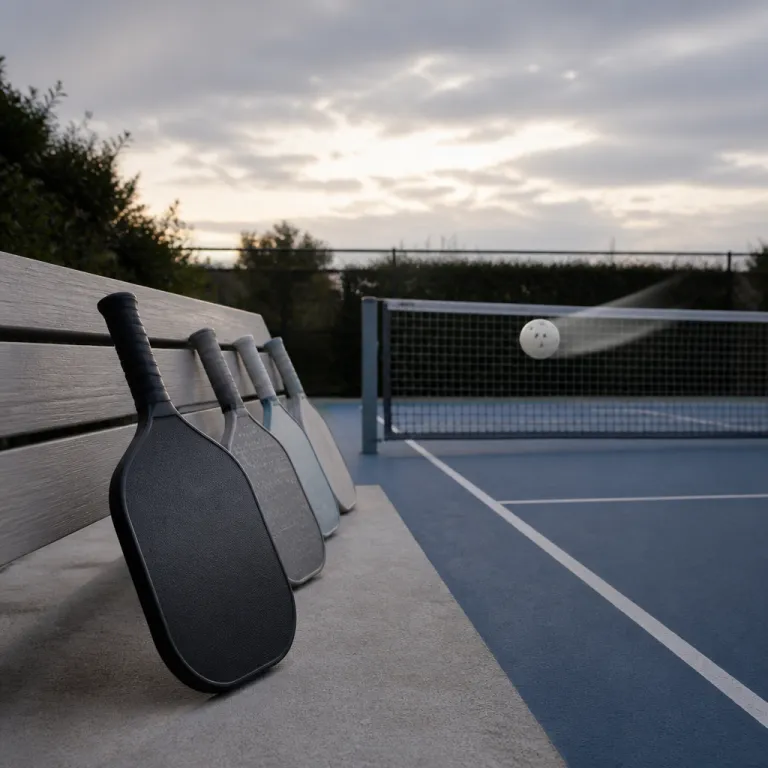
The real meaning of the best pickleball paddle for spin
Every player searching for the best pickleball paddle for spin is really asking one thing. They want a pickleball paddle that turns racket head speed into reliable paddle spin without sacrificing control on third shot drops or blocks at the kitchen. The best pickleball choice for you depends less on marketing claims and more on how your swing speed, technique, and preferred ball interact with the paddle core and surface.
Competitive pickleball players at the 3.5 to 4.5 level often assume that raw carbon fiber automatically means the best pickleball spin, yet lab tests and real court sessions in places like Dreamland in Dripping Springs or public courts in Phoenix show a more nuanced picture. A raw carbon surface can generate elite rpm friction on the ball, but only if the player can accelerate the paddle fast enough and consistently find the sweet spot under pressure. For many players, a slightly softer core or a hybrid fiber pickleball surface gives better spin control because mishits stay in and the paddle face does not twist as violently.
When you build your own short list of pickleball paddles, think in terms of a triangle. One corner is power, another is control, and the third is spin, and every paddle moves that balance differently for different players. A so called power paddle with a stiff core and thin profile might feel like the best paddle for spin in warm conditions with a hard ball, while the same model can feel wild and unforgiving on a cold morning league match where the ball skids and your timing is off.
The CRBN TruFoam spin test and who actually benefits
CRBN’s TruFoam Genesis and TruFoam Waves paddles have pushed spin numbers into territory that used to belong only to heavily textured tennis strings. In controlled testing with a consistent swing path and speed, these raw carbon fiber faces paired with the TruFoam injected core produced some of the highest paddle spin rpm friction we have seen from any usapa approved pickleball paddle. On court, that translated into kick serves that jumped shoulder high and crosscourt rolls that dove inside the sideline at the last second.
The TruFoam core is not just marketing language about foam; it is a foam injected perimeter that enlarges the effective sweet spot and stabilizes the paddle on off center contact. That extra stability matters when you are late on a fast ball and need both control power and enough spin control to dip the shot back into the court. In our testing with 4.0 and 4.5 pro pickleball hopefuls, the TruFoam Genesis 4 in particular felt like a true power paddle that still allowed precise resets, especially for players who already generate above average swing speed.
For players who want a detailed breakdown of a similar construction, the CRBN X Series power pickleball paddle carbon fiber review shows how foam injected edges and a raw carbon face can expand the sweet spot and maintain spin deeper into the paddle’s lifespan. Those same design ideas appear in the TruFoam line, where the combination of carbon fiber, foam, and a tuned core thickness gives both power paddles and more control oriented paddles a consistent feel across the face. If you already swing aggressively and like to shape the ball on every rally, the TruFoam family sits near the top of any best pickleball paddle for spin list.
The spin floor: when grit finally starts to matter
Most marketing around the best pickleball paddle for spin assumes that more surface friction automatically helps every player. Reality on public courts from Seattle’s Green Lake to Austin’s South Austin Recreation Center is harsher, because many players never reach the swing speed where raw carbon or rpm friction technologies separate from a basic textured composite. If your swing path is short and your contact point floats, you will not unlock the full paddle spin potential of a high end raw carbon fiber face.
Think of a spin floor as the minimum racket head speed you need before surface grit becomes the limiting factor instead of your mechanics. Below that floor, a softer core or a slightly thicker fiber pickleball face often produces more usable spin control because the ball stays on the paddle longer and you feel the shot better. Once you cross that threshold, usually around the level where you can reliably topspin roll a third shot from the baseline, the difference between a basic composite and a true raw carbon surface like CRBN, Joola Perseus, or Selkirk Vanguard Power Air becomes obvious.
Players who are still developing should not chase every new friction pro or rpm friction claim at any price, because technique and footwork will deliver more spin than a new paddle. A smart path is to choose from graphite or carbon faced pickleball paddles that balance control and power, such as several models in this top graphite pickleball paddles guide, then upgrade to a more aggressive raw carbon face once your coach or hitting partners notice that your ball already jumps off the court. That way, when you finally invest in what feels like the best pickleball paddle for spin, you will actually have the swing to use it.
Three cheaper alternatives under 180 dollars that still bring serious spin
Not every player needs or can justify the highest price tier of raw carbon fiber paddles, especially when league fees, travel, and ball costs already add up. The good news is that the grit durability shift in recent seasons has narrowed the gap between flagship models and mid price power paddles that still offer strong paddle spin and control power. Several usapa approved paddles now use permanent texture or advanced fiber layups that keep spin performance stable beyond the first few dozen hours.
First on the list of value options are certain Joola carbon fiber pickleball paddles that pair a responsive core with a slightly softer face, giving players a blend of power and control that works for both drives and dinks. These paddles may not match the absolute rpm friction of a top CRBN TruFoam or a Selkirk Sport Vanguard Power Air, but they come close enough that most players below high level pro pickleball will not notice a meaningful difference. When you factor in the lower price and the ability to buy two paddles for the cost of one flagship, they become a practical best pickleball choice for spin curious players.
Second, several Selkirk Sport models in the Vanguard and Vanguard Power families offer a fiber pickleball construction that emphasizes a large sweet spot and predictable launch angle, which helps players keep aggressive topspin drives inside the baseline. A paddle Selkirk design like the Vanguard Power Air focuses on a power paddle identity, yet its textured surface still gives plenty of spin control for kick serves and roll volleys. Third, some emerging brands now mix foam injected edges with hybrid carbon and glass fiber faces, creating paddles that feel plush on soft shots but still bite the ball hard enough to belong in any best pickleball paddle for spin conversation.
How Selkirk, Joola, and others really compare on spin and feel
Brand names like Selkirk, Joola, and CRBN dominate conversations about the best pickleball paddle for spin, but the logo on the throat tells you less than the combination of core, face material, and overall swing weight. Selkirk Sport has built its reputation on consistent quality control and a clear split between control paddles and power paddles, especially in the Vanguard and Vanguard Power lines. Joola, by contrast, leans into aggressive shapes and elongated paddles that trade a bit of forgiveness for extra reach and leverage on the ball.
When you compare a Selkirk Vanguard Power Air to a Joola raw carbon model, you feel two different philosophies about how a pickleball paddle should load and unload energy. The Selkirk paddle often feels springier off the sweet spot, giving easy power on drives but demanding precise spin control on touch shots near the kitchen. Joola’s raw carbon fiber faces tend to feel slightly deader on soft contact, which some players interpret as better control, while still generating heavy paddle spin when you accelerate through the ball.
CRBN’s TruFoam paddles sit somewhere between those extremes, with a foam supported core that damps vibration yet still delivers strong power when you swing fully. For many competitive players, the choice among Selkirk paddles, Joola paddles, and CRBN paddles comes down to which feel inspires confidence on the fifth ball of a long rally rather than which brand claims the best pickleball spin in a brochure. If you can, borrow a teammate’s paddle for a full session and pay attention to how your arm feels, how often you hit the sweet spot, and whether your misses are long, wide, or into the net.
A simple drill to test whether you truly need a spin focused paddle
Before you spend serious money chasing the best pickleball paddle for spin, run a quick court test that separates marketing from mechanics. Head to your local courts, whether that is a busy complex in Naples or a quieter set of lines at a city park in Denver, and bring both your current paddle and any demo paddles you can borrow. Use the same ball for every test, because different ball brands and temperatures can change spin and power more than most players realize.
Start at the baseline and hit twenty topspin third shot drops crosscourt with your current pickleball paddle, aiming to land each ball in a one metre deep target zone near the opponent’s kitchen line. Count how many land in the box, how many sail long, and how many die into the net, then repeat the same drill with a raw carbon fiber or friction pro style paddle that claims higher rpm friction. If your consistency and depth control improve significantly with the spin focused paddle, you are likely above the spin floor and ready to benefit from a true best pickleball paddle for spin.
Next, move to the kitchen and hit twenty roll volleys and twenty topspin dinks with each paddle, again tracking how often you clip the tape or float the ball high. Pay attention to whether the new paddle’s sweet spot feels larger and whether mishits twist the handle in your hand less, because that is where foam injected cores and tuned fiber layups quietly earn their price. If the difference feels marginal, your money might be better spent on coaching, footwork drills, or even upgrading to more reliable net posts using a guide such as this one on how to choose reliable pickleball net posts for a stable court.
Grit decay, warranties, and how long spin really lasts
Even the best pickleball paddle for spin will not feel brand new forever, especially if you play four or five times a week on rough outdoor courts. Raw carbon fiber faces and textured coatings gradually lose surface friction as the ball scuffs the paddle and micro peaks wear down, which means your maximum paddle spin and rpm friction slowly decline over dozens of hours. Most players notice this first on serves and aggressive roll shots, where the ball stops jumping sideways or dipping as violently as it did during the first month.
Manufacturers like Selkirk Sport, Joola, and CRBN design their pickleball paddles to stay usapa approved throughout the paddle’s intended lifespan, but that does not guarantee that the initial spin level will remain constant. Some brands now use more durable grit technologies or etched raw carbon surfaces that hold texture longer than older sprayed coatings, narrowing the performance gap between new and broken in paddles. If you log your playing time and track how your serve and return patterns change, you can often predict when a paddle is sliding out of your personal best pickleball zone for spin and control.
Warranty policies usually cover structural failures such as core delamination, cracked edges, or loose foam, not normal grit wear, so do not expect a free replacement just because your spin dropped after heavy use. That said, if you see clear dead zones where the ball sounds hollow or feels mushy, or if the face bubbles away from the core, contact the brand with photos and purchase data. Keeping one primary paddle and one backup in rotation can extend the useful life of both, maintain more consistent spin control, and give you a safety net before a big pro pickleball qualifier or local money event.
Key statistics about spin paddles and performance
- Search interest for the phrase best pickleball paddle for spin reaches roughly 2,900 monthly searches on major engines, indicating strong commercial intent among players looking to upgrade gear.
- Independent lab tests have shown that many raw carbon fiber paddles lose a meaningful portion of their initial spin performance after approximately 30 to 50 hours of heavy play, especially when used with rough outdoor balls.
- Foam injected edge technology, such as the TruFoam style cores, can expand the effective sweet spot by several percentage points across the face, which reduces mishits and improves control power for intermediate players.
- In structured drills, players who already generate high swing speed often gain more than 10 percent additional spin when switching from a basic composite face to a high friction raw carbon surface, while slower swingers see much smaller gains.
- Warranty periods for premium pickleball paddles typically range from three months to one year, and they usually cover structural failures but not normal grit wear or gradual loss of spin.
FAQ about the best pickleball paddle for spin
How do I know if a spin focused paddle will actually help me?
If you can already hit consistent topspin drives and roll volleys that dip inside the baseline with a basic paddle, a raw carbon or textured face will likely add noticeable spin. Run structured drills comparing your current paddle to a high friction model and track how many balls land in your target zones. A clear jump in consistency and ball movement means you are ready for a true spin oriented pickleball paddle.
Is raw carbon always better than composite for spin?
Raw carbon fiber surfaces generally produce higher peak spin than smooth composites when tested at the same swing speed. However, many intermediate players benefit more from a forgiving core and larger sweet spot than from maximum rpm friction. If you mishit often or struggle with depth control, a balanced composite or hybrid face might outperform a harsher raw carbon option for your game.
How long does the spin on a paddle usually last?
For players who log several sessions per week, most textured or raw carbon paddles maintain strong spin for roughly a few dozen hours before gradually declining. You will notice the change first on serves and aggressive topspin shots, where the ball stops kicking as sharply. Rotating between two paddles and avoiding scraping the face on the court can extend the useful spin life.
Are heavier paddles better for generating spin?
A slightly heavier paddle can help some players generate more spin because the extra mass stabilizes the face and increases plow through. However, if the weight slows your swing or strains your arm, your effective spin may drop despite the theoretical advantage. Aim for the heaviest weight you can swing comfortably for an entire match without fatigue.
What matters more for spin, the core or the surface texture?
Surface texture and material largely determine the maximum spin potential, while the core and overall design decide how easy it is to access that spin under pressure. A gritty face on top of an unstable or overly bouncy core can feel wild and inconsistent. The best pickleball paddle for spin combines a high friction surface with a core and swing weight that match your technique and preferred playing style.