How open play works when it is your first time
Walking into open play for the first time can feel like crashing a family reunion. The game itself is simple enough once you learn where the ball should go, but the unwritten rules around the court, the kitchen, and the paddle rack can be tougher than any shot. Think of your first session as joining a long running doubles team rotation, where every serve, every ball bounce, and every change of side follows a rhythm regular players barely notice.
Most community pickleball courts run some version of a paddle rack system, where you slide your paddle into a fence mounted holder to claim your place in the next game. When you arrive as a brand new player, ask quietly which courts are for open play and which are reserved, then walk over to the rack and place your paddle head in line with the others on the right side. That single move tells the serving team and the waiting players that you are ready to play, without you needing to chase anyone between the net posts or shout across a busy court.
Rotations usually work in fours, so the first four paddles in the rack form the next team match on the next available court. After each game, the four players leave, slide their paddles to the back of the rack, and the next four step onto the pickleball courts to serve ball and hit ball. As a beginner, follow that flow even if you lose quickly, because respecting the rotation matters more than whether your serve clears the ball net or your third shot lands in the kitchen.
Reading skill levels, signage, and where beginners should stand
Most busy facilities split their pickleball courts by skill level, which can intimidate anyone walking into open play for the first time. You might see signs for 2.5, 3.0, or 3.5 game levels, and those numbers shape who should play where and how fast the ball will bounce back at you. A quiet truth is that a posted 3.0 court often drifts toward 3.5 as stronger players slide in, so reading the actual play matters more than the plastic sign zip tied to the net.
If this is your first time playing, start on the lowest posted level or on any court marked “novice” or “social”. Stand near the kitchen line during warmups and watch how often the ball lands near the volley zone, how high the serve ball travels, and whether players are trying soft drop ball shots or only swinging hard to hit ball. When the pace looks manageable and you feel you can return serve at least half the time, slide your paddle into that rack and join the next serving team.
Parents bringing kids or younger adults can look for family friendly places to play, such as community centers that run beginner blocks or youth focused sessions. A good example is a local camp style program that teaches kids how to learn play through games, like those described in this guide to engaging young players with a fun pickleball camp. Whether you are on taped lines over old tennis courts or purpose built pickleball courts, the right court for a new player is the one where the ball bounce speed and shot selection match your current comfort, not your ego.
Five phrases that get a first timer in and out smoothly
Language is the real secret weapon for nervous newcomers, because the right short phrases show you respect the game and the players. When you walk up to a busy court, start with “Hi, is this open play and where should I put my paddle to get in the next game?” and then listen before you serve any opinions. That one question acknowledges the local rotation, whether they use a straight paddle rack, a whiteboard, or a “four on, four off” system near the net.
Once your team is called, use “This is my first time, can someone remind me where the service court is and how the bounce rule works?” to unlock a quick rules refresher. You will usually get a friendly breakdown of why the server must let the ball bounce on the return serve, when you can volley serve or use a drop serve, and why stepping into the kitchen to hit ball out of the air is a fault. During play, “Nice shot” and “Yours” are the two words that keep your team organized and your paddle head pointed at the right side of the court.
After the game, say “Thanks for the play, I am still trying to learn play, any quick tip on my serve ball or my third shot?” and then accept one piece of advice. That might be about letting the drop ball fall a little lower before you hit third, or about aiming your serve deeper into the service court to keep the ball net out of play. If you want structured feedback, look for recurring sessions like these Friday paddle sessions that enhance your game, where coaches expect first time players and build drills around the bounce, the third shot, and safe movement in the volley zone.
Gear minimums and what to actually own by your third game
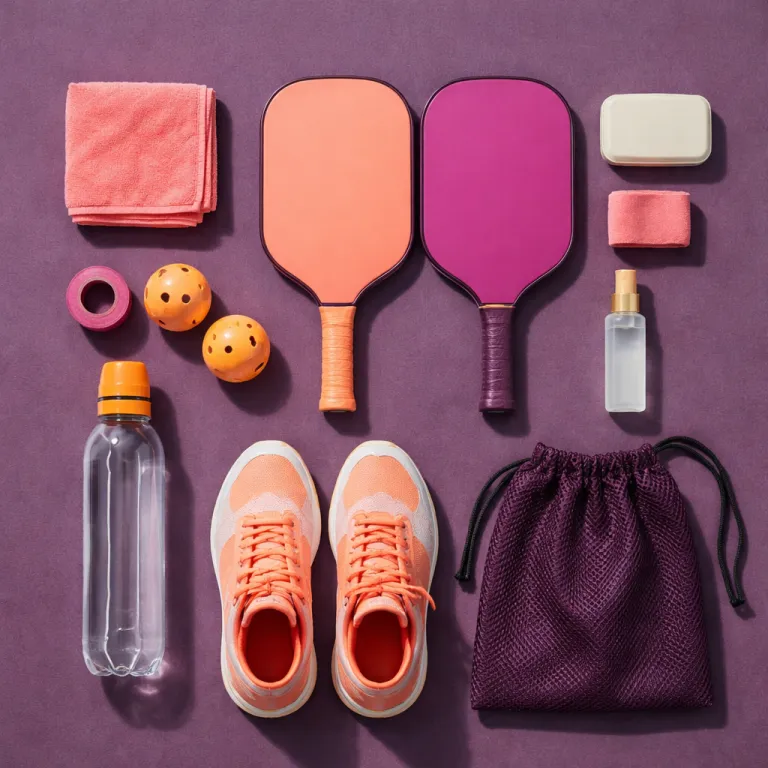
For a first visit to the courts, you do not need a full gear bag, but a few smart choices make the game safer and more enjoyable. Start by borrowing a house paddle or a friend’s backup for your first play, then pay attention to how heavy it feels when you hit ball repeatedly and how stable the paddle head stays on off center contacts. Many community centers and places to play keep a bucket of loaner paddles near the net, which is perfect for testing whether you prefer a lighter 7.5–7.8 ounce composite or a slightly heavier 8.0–8.3 ounce polymer core option.
By your third game, the three items worth owning are a basic but consistent paddle, court friendly shoes, and a couple of outdoor balls that match what your local courts use. Shoes matter more than any fancy serve or third shot, because sliding on dusty converted tennis courts or slick indoor wood can turn a simple ball bounce into a twisted ankle. A mid range paddle with a polymer honeycomb core and a fiberglass face gives enough power to serve ball deep while still letting you soften a drop ball into the kitchen without the ball flying past the volley zone.
As you learn more and start to play regularly, you can refine your gear based on how you like to hit third and whether you win more points at the net or from the baseline. A control oriented paddle helps if you love to return serve and then work your way into the volley zone, while a slightly stiffer face rewards an aggressive serve and firm shot through the middle of the opposing team. Whatever you choose, remember that the best setup for a new player is the one that lets you focus on the court, the bounce rule, and friendly players, not on babying a fragile piece of equipment.
One simple home drill so you do not feel lost on day one
You can make your first open play session far less stressful by doing a single, focused drill at home before you ever step onto a court. Stand three to four metres from a wall, draw a tape line about 90 centimetres off the ground to mimic a net, and practice a gentle serve ball motion that sends the ball over that line and lets it bounce once before you hit ball again. This simple pattern builds the feel for the bounce rule, the timing of a drop ball, and the rhythm of a soft third shot long before you hear real players calling the score.
Next, move closer and work on controlled volleys by tapping the ball against the wall without letting it touch the ground, which simulates quick exchanges at the kitchen line and in the volley zone. Focus on keeping the paddle head slightly above your wrist and your shot compact, because that same shape will help you when you return serve or hit third into a real service court. Ten minutes of this drill every other day means that when you finally play on true pickleball courts, your body already knows how to soften the ball bounce instead of swatting wildly.
When you are ready to move from the wall to real places to play, look up local facilities through national resources such as USA Pickleball and then cross check with city parks listings. Articles that profile how Discovery Park tennis and pickleball courts shape play in Seattle show how different cities convert old tennis courts into vibrant pickleball courts with clear kitchen lines and shared etiquette. Whether you end up on painted asphalt, taped lines over tennis courts, or a brand new complex, that one home drill keeps your first day from feeling like chaos and turns it into a manageable, repeatable game you can actually enjoy.
Key statistics about pickleball participation and beginner engagement
- Participation in pickleball has grown rapidly across the United States, with millions of players now using public and private courts in urban, suburban, and rural communities. Recent national reports from USA Pickleball describe it as one of the fastest growing recreational sports in the country.
- Many municipalities report that pickleball courts are among the most requested new recreational facilities, often repurposing underused tennis courts to meet demand. Cities such as Seattle, Austin, and Naples have added dedicated complexes or striped shared courts to keep up with local interest.
- Beginner focused open play sessions and clinics tend to fill quickly, indicating strong interest from first time players who want structured guidance on rules and etiquette. Parks departments frequently schedule “learn to play” blocks during off peak hours to give novices space and coaching.
- National organizations track sanctioned events and membership growth, showing a steady increase in both casual and competitive participation across age groups. That growth includes youth, working adults, and retirees, which is why many facilities now post clear signage and rotation rules to help newcomers blend in smoothly.
Frequently asked questions about first time pickleball play
Where should I stand on the court as a complete beginner?
As a new player, start a step or two behind the baseline when you are the server or the returner, then move toward the kitchen line after the first two bounces have happened. Staying too close to the net early makes deep serves and lobs hard to handle, while standing too far back leaves you vulnerable once the rally settles near the kitchen. Watch your partner and mirror their movement so your team keeps a consistent side by side shape.
How do I know which paddle rack or rotation system to follow?
Every venue handles rotations slightly differently, so ask a simple question as soon as you arrive, such as “Is there a paddle rack here and how do you rotate players?” Some places use a straight line rack where the first four paddles form the next game, while others group paddles by skill level or by winners and challengers. Once you understand the local system, follow it exactly, because respecting the rotation is a core part of pickleball etiquette.
What is the minimum gear I need for my first pickleball session?
For your first outing, you only need comfortable athletic clothing, non marking court shoes, and access to a paddle and a few balls. Many community centers and parks will lend you a basic paddle, so you can delay buying your own until you know what weight and grip size you prefer. Eye protection and a water bottle are smart additions, especially on outdoor courts where sun and heat can be factors.
How can I practice at home before stepping onto a real court?
You can make good progress with a simple wall drill that mimics serving and soft third shot drops. Stand a few metres from a wall, mark a line at net height, and practice sending the ball over that line, letting it bounce, and then guiding it back with a relaxed swing. This builds timing, touch, and confidence so that your first live rally on a real court feels familiar instead of overwhelming.
What should I say if I am nervous about slowing others down?
Honesty works best, so tell your partners “This is my first time, I am still learning, thanks for any patience.” Most recreational players are happy to help if they know you are new and respectful of the rotation and the rules. Focus on calling the score clearly, moving safely, and keeping rallies going, and you will usually be invited back for more games.
First five things to do when you arrive for open play
- Walk in, find the organizer or a friendly regular, and ask whether the current session is open play for all levels.
- Locate the paddle rack or sign up board and learn how the rotation works before you step onto any court.
- Watch one full game on the lowest level court so you can gauge ball bounce speed, shot pace, and basic etiquette.
- Place your paddle in the correct spot in the rack, then stay nearby so you hear when your team is called to play.
- Introduce yourself to your partner, mention that it is your first time, and agree on simple cues like “Mine” and “Yours” before the first serve.