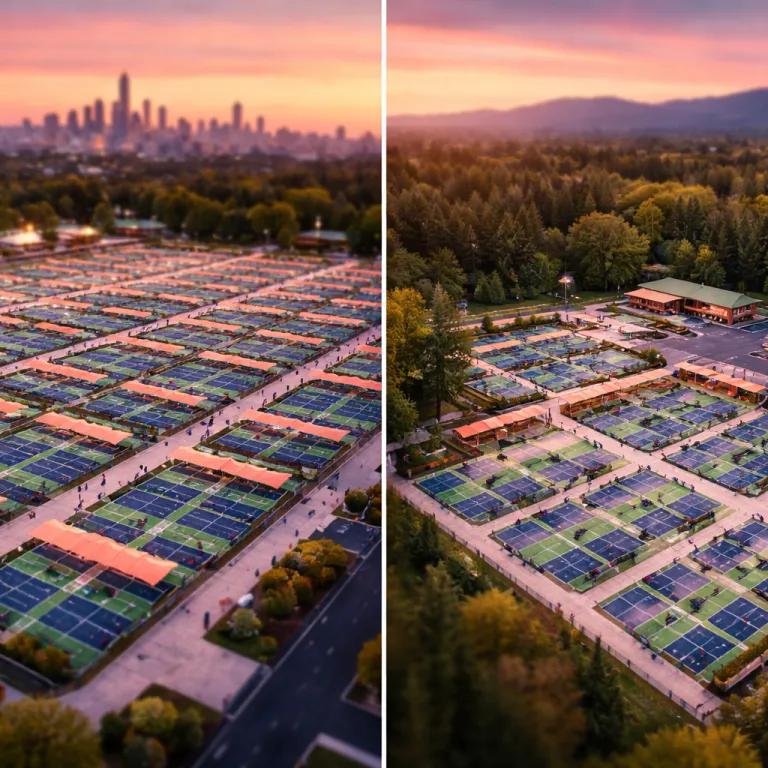
Why Pickleball Court Shortages Persist in 2026
Where the new courts are — and where the lines still form
Public park pickleball courts in major United States cities have multiplied rapidly, yet the pickleball court shortage story in 2026 is still about people waiting in line. According to a 2023 USA Pickleball facilities snapshot and city parks reports compiled by the Sports & Fitness Industry Association (SFIA), the number of public courts in the 100 largest cities climbed from roughly 420 to about 3,182 over roughly a seven-year span. Still, most players feel that peak hours just shifted the queue from one park to another rather than clearing it. When a pickleball player finishes work at 17:30 and heads to a neighborhood court or shared tennis structure, they still often face 60 to 90 minutes of dead time before they can play.
Look closely at where the new pickleball courts are landing and a pattern emerges, because the bulk of the approximately $152.8 million in recent facility spending is flowing into private pickleball club projects, retrofitted tennis clubs, and indoor–outdoor complexes that target higher income members. Chicago’s push toward more than 100 courts, documented in its 2025 Park District capital plan, and Medford’s 19-court mega complex in Oregon, described in city planning and parks commission reports, sound impressive, yet many of these pickleball facilities are clustered near existing sports clubs rather than in dense apartment zones where demand is highest. That leaves public operators scrambling to keep courts playable at older parks while private clubs quietly capture the most motivated pickleball players and competitive players who can pay for guaranteed court time.
For the average player in a mid-sized city, the 2026 reality is that outdoor courts at public facilities still carry the heaviest utilization during peak hours, especially between 17:00 and 21:00 on weekdays. Parks departments in cities such as Denver, Raleigh, and Columbus report that their simple four-court layouts now serve hundreds of players per week, with informal leagues and drop-in sessions stretching hours well past sunset. In one midwestern city utilization snapshot, a typical weekday showed courts at 30–40 percent use from 08:00 to 15:00, jumping to more than 90 percent between 17:30 and 20:30. In Denver, for example, a 2024 Denver Parks & Recreation utilization summary for the Gates Tennis Center pickleball conversion recorded evening occupancy above 85 percent on most weekdays during summer months. When those same players see social media posts about gleaming dedicated pickleball venues opening across the United States, the gap between headline growth and lived experience becomes impossible to ignore.
Public retrofits versus private clubs: who really gets to play
Money is not the problem in the pickleball industry right now, because approximately $152.8 million in recent facility build-outs and a construction leader like America Sports Construction reporting about $25 million in annual revenue from court projects in its latest public statements show that business pickleball is booming. The real issue is the model of where those pickleball facilities are built and how operators price access, which determines whether the court crunch eases for everyday players or only for club members. A private pickleball club can charge $20 to $40 per hour for a single court, while a public facility might charge nothing yet still deliver more total hours of play per week.
Public park retrofits usually mean taping or painting pickleball courts onto existing tennis surfaces, and that shared structure keeps costs low but also fuels conflict over how to keep courts available for both sports. Private clubs, by contrast, tend to build dedicated pickleball layouts with 8 to 16 courts, pro shop services, and league programming that targets competitive players who want predictable court time and indoor–outdoor options. During peak hours, those clubs can run tightly scheduled leagues and lessons that maximize utilization, but the same peak hours at public courts often devolve into ad hoc paddles on the fence and four-on-four rotations that leave many players watching instead of playing.
Lighting is another quiet fault line in the 2026 court access debate, because a well-lit pickleball facility can effectively double usable hours while an unlit park court goes dark by early evening in winter. Cities that invest in proper LED systems, following best practices similar to those outlined in this guide to choosing the best lighting for a pickleball court, see far better long-term utilization and more inclusive leagues. Yet many parks departments in the United States still rely on aging floodlights or no lights at all, which pushes serious pickleball players toward private clubs and deepens the sense of a two-tier system in local pickleball venues. As one parks planner in Phoenix put it during a 2024 budget hearing, “Every dollar we spend on lights buys us more playable hours than a single new court ever could.”
Peak hour displacement and what mid sized cities should demand next
Even when a city adds new pickleball courts, the 2026 squeeze often shows up as a displacement effect rather than a clean fix, because players simply migrate to the newest facility until that venue hits its own capacity wall. When a shiny indoor–outdoor complex opens with eight dedicated pickleball courts and a bar, the early weeks feel luxurious, but as leagues form and more clubs promote the space on social media, the same 18:00 to 20:00 crunch returns and casual players are squeezed out. Operators then face a choice between prioritizing league revenue or open play, and the business pickleball incentives usually favor structured programs over drop-in games, which reinforces the sense that peak hours are reserved for those who can pay or plan far in advance.
For a reader in a mid-sized United States city, the most effective move is to push local officials for a clear, data-driven report on current court utilization and unmet demand, not just a promise of “more courts someday”. That report should separate public and private facilities, track peak hours, and distinguish between casual pickleball players and competitive players who already belong to clubs, because each group needs different access models. With that data in hand, residents can argue for at least one large pickleball facility with 8 to 12 outdoor courts, lights, and a transparent reservation model, plus satellite courts in neighborhood parks that keep courts within walking distance for older player groups.
Portable nets and temporary lines are still underrated tools in the 2026 pickleball capacity toolkit, especially for schools, churches, and small clubs that want to add space quickly without full construction. A well-organized community group can follow a step-by-step approach similar to this guide on how to choose and set up a portable pickleball court, then work with parks staff to schedule regular play hours that feed into citywide leagues. If you want a concrete example of how local planning shapes real play, look at this detailed local guide to Bonita Canyon pickleball courts in Newport Beach, where a modest facility still manages to serve a broad mix of players, clubs, and ages by spreading court time intelligently across the day.
Key statistics on pickleball courts and facilities
Methodology note: The figures below synthesize USA Pickleball’s 2023 facilities snapshot, SFIA and city parks inventories, municipal capital plans, and contractor revenue statements. Projections such as the “20,000 courts” estimate combine reported public courts with private and club facilities tracked in industry databases and trade association summaries.
- Public park pickleball courts in the 100 largest United States cities increased from about 420 to roughly 3,182 over roughly a seven-year span, representing roughly 650 percent growth, based on combined USA Pickleball and city parks inventories.
- Total pickleball courts across the United States are projected to exceed 20,000, combining public facilities, private clubs, and dedicated pickleball venues tracked by industry facility databases and trade association reports.
- Recent investment in pickleball facility build-outs has reached approximately $152.8 million, covering both indoor–outdoor complexes and public retrofits reported in municipal capital plans and contractor summaries.
- America Sports Construction, a major builder in the pickleball industry, has reported around $25 million in annual revenue from court and facility projects in its latest public statements and industry interviews.
- Some cities, such as Chicago, are targeting more than 100 courts in their park system plans, while others, like Medford in Oregon, are planning single-site complexes with up to 19 courts, according to local planning documents and parks department presentations.
Questions people also ask about pickleball court shortages
Why does the pickleball court shortage persist despite so many new courts
The shortage persists because player demand is growing faster than supply, and many new courts are concentrated in private clubs rather than public parks where most people play. Peak hours in the early evening remain heavily oversubscribed, so even cities with more courts still see long waits. Without better distribution of facilities and smarter scheduling models, the perception of scarcity will continue.
Are private pickleball clubs helping or hurting access for casual players
Private pickleball clubs help by adding high-quality dedicated pickleball courts and structured leagues, which absorb some of the most active players. However, their membership fees and paid court time can exclude casual players, pushing those players back to crowded public facilities. The net effect is a more stratified system where access depends heavily on ability to pay.
What should local governments prioritize when building new pickleball facilities
Local governments should prioritize large clusters of courts in a single pickleball facility, good lighting for extended hours, and clear policies that balance open play with organized leagues. They should also focus on neighborhoods with limited existing facilities to reduce travel barriers for older players. Transparent reporting on utilization and demand helps justify budgets and keeps planning accountable.
How can communities increase court capacity without building permanent new courts
Communities can increase capacity by using portable nets and temporary lines on underused tennis or basketball courts, especially during off-peak hours. Schools, churches, and recreation centers can host scheduled pickleball sessions that relieve pressure on public parks. These flexible setups are relatively low cost and can be adjusted as demand shifts.
Why are peak hours such a critical factor in the court shortage
Peak hours matter because most players are only free to play before work, at lunchtime, or after work, which compresses demand into a narrow window. Even a city with many courts can feel overcrowded if most of its utilization happens between 17:00 and 21:00. Expanding lighting, early morning programming, and flexible league schedules can spread demand more evenly across the day.